
Science, History, Integrated Arts in Special Ed
Science, History, Integrated Arts in Special Ed
Integrating Differentiated Instruction & Understanding by Design
CSU Instructor Open Textbook Adoption Portrait
Abstract: This open textbook is being utilized in a teacher education course for graduate, Education Specialist (i.e. Special Education) credential candidates by Joanne M. Van Boxtel, Ph.D., at California Polytechnic State University, Pomona. The open textbook focuses on curriculum design principles and techniques for year-long and unit-long curriculum planning in K-12 settings. The main motivation to adopt an e-textbook was to provide students with a no-cost text that effectively aligns with the course learning outcomes and provides curriculum mapping models. Most students access the open textbook in e-book format through the library.
About the Textbook
Integrating 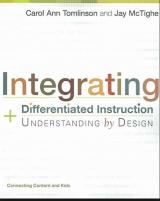 Differentiated Instruction and Understanding by Design
Description:
Leading experts on Differentiated Instruction and Understanding by Design (UbD) explain how to connect these two frameworks to:
- provide students with multiple pathways to meet content standards,
- use the backward design approach to develop curriculum units and lesson plans, and
- inspire student understanding of content through a differentiated assessment approach.
Differentiation techniques are woven throughout the methodology and pedagogical approaches. Find out how a curriculum built on the goal of student understanding, integrated with instructional approaches that emphasize reaching every learner, can provide teachers with more specific teaching targets and more flexible ways to reach them.
Authors:
- Carol Ann Tomlinson - University of Virginia
- Jay McTighe - McTighe & Associates
Formats:
The text is available as an e-book from most libraries. It can also be purchased as a hard copy or e-book from several sources: ASCD ($25), Amazon ($18).
Cost savings:
I used to use “Strategies for Teaching Students with Learning and Behavior Problems”. Currently, the hard copy is priced at $83.84 on Amazon, and e-book purchase is $79.65. Since I teach about 20 students per year, the total savings for students is around $1,600.
Accessibility and diversity statement:
The text is available through the university library and is available as an e-brary text. There are embedded features for improved readability and more accessibility features are coming in quarter 4.
License:
This book is copyrighted by the Association for Supervision and Curriculum Development.
About the Course
TED 422:  Science, History, Integrated Arts in Special Education
Description:
Principles and methodology for assessing and teaching academic content areas within K-12 levels. State standards in history/social science, science, physical education and visual and performing arts. Adapting and modifying curriculum and instruction for student backgrounds, interests, and abilities.
Prerequisites: Must be admitted to the Education Specialist credential program.
GE credit: 4 Units
Learning outcomes:
- Describe the Common Core ELA standards, benchmarks and expectations related to curricula in the history-social science, science, physical education, health, and visual and performing arts content areas.
- Identify and integrate ELD standards as benchmarks and expectations related to K-8 education in the content areas.
- Describe and use a variety of standardized and non-standardized assessment strategies that promote equitable learning opportunities, including effective strategies for students who are culturally, linguistically, ethnically, and socio-economically diverse and at various academic levels and/or abilities.
- Interpret and communicate information related to assessment, curriculum, and instruction.
- Explain and demonstrate a variety of pedagogical approaches in teaching the above-stated content areas.
- Plan and implement lesson and unit plans, which include coordinated and consistent objectives, teaching strategies, materials, and assessment plans.
- Plan and implement specialized instruction for non-native speakers that includes specially designed academic instruction in English (SDAIE) and differentiated instruction strategies.
- Plan and implement lesson plans that infuse the curriculum with themes that promote multi-cultural and gender-equitable curricula in the content areas.
- Involve families and the community ensuring that families of ELL have the opportunity to participate.
- Incorporate learning activities and instructional strategies that enable students from diverse cultural and linguistic backgrounds to access the curriculum using the students’ diversities as strengths and enhancing their self-concepts.
- Plan lessons and activities that facilitate students’ cognitive skills and take into consideration their diverse cultural, linguistic, ethnic and socio-economic backgrounds.
- Use on-going assessment information to select and modify instructional strategies activities, and materials that meet the diverse abilities and interests of students.
- Evaluate instructional materials in the content areas, including textbooks, multimedia, and computer-based materials to ensure their acceptability of content and ethnocultural and gender equity.
Curricular changes:
More application activities aimed at unit and lesson planning were integrated as a result of the text content.
Teaching and learning impacts:
Collaborate more with other faculty:Yes
Use wider range of teaching materials: Yes
Student learning improved: Yes
Student retention improved: Unsure
Any unexpected results: Yes
Collaborate more with other faculty - A colleague in the Education Program is planning to utilize e-books and customized texts from the publisher (Pearson) as a result of the success I had with using e-books and customized texts.
Any unexpected results - I received more unsolicited emails from students in Winter 2016 regarding course satisfaction. Content and rigor of student unit plans improved due to sample curricular frameworks and differentiation techniques presented in the book.
Sample assignment and syllabus:
Sample Assignment
This is the assignment for a Unit Plan.
Sample Rubric
This is the rubric I used for the Unit Plan
Syllabus
This is the syllabus I used for Winter 2015
Textbook Adoption
OER Adoption Process
I was motivated to integrate affordable texts into the course because the nature of the material is practical, hands-on, and covers multiple content areas. I initially planned on using the text to supplement other reading material from a more expensive basic text, which covered teaching strategies at length, but did not address curricular unit and lesson planning techniques. Once I discovered the text was available as an e-book, it made perfect sense to adopt it as the basic text and supplement with other materials to address teaching strategies.
I was pleased to provide students with an affordable, e-book as a basic text. In addition, many students are working in some capacity within K-12 settings; therefore, they are encountering the K-12 curricular frameworks addressed in the text and will be well-prepared to enter the field using current curricular approaches.
Student access:
Students access the e-book through the university library.
Student feedback or participation:
- I believe the e-text was more than sufficient for instruction and provided ample information to what we need for instruction in the classroom...I find that the majority of other textbooks I purchased, except for [professor's name] course, were used very sparingly if at all. It was a huge relief to see that we did not have a textbook requirement for TED422.
- I thought the cost saving aspect was super cool because not many courses allow this feature. I really appreciated the whole e-text and how available it was to us. I would suggest using it again if you had the chance.
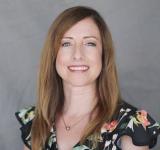
I am an Assistant Professor in the Education Department at Cal Poly Pomona. I teach methods courses in the Education Specialist (i.e., Special Education) credential program.
I am deeply committed to Inclusive Education. Because I am preparing future Special Education teachers, I believe Education Specialist (ES) candidates must be equipped to be instructional leaders and advocates for students with disabilities. I teach evidence-based and research-based best practices for Special Education to train ES candidates with an inclusive pedagogy that will raise student learning expectations and foster collaboration with general education teachers. I believe in mastery learning our “learn by doing” approach at Cal Poly Pomona.
My research interests include Teaching and Learning for Students with Disabilities, Curriculum and Instruction for Students with Disabilities, Inclusive Education, and Transition Aged-Youth.