
ZOOL 113: Human Physiology
ZOOL 113: Human Physiology
Anatomy and Physiology
Common Course ID: BIOL 150
CSU Instructor Open Textbook Adoption Portrait
Abstract: This open textbook is being utilized in a physiology course for undergraduate kinesiology students by Aaron Corcoran, Ph.D., at Humboldt State University. The open textbook provides universal access to high-quality educational materials. The main motivation to adopt an open textbook was to save students money and provide them a variety of ways to interact with course content. Students accessed the open textbook in a variety of ways, including online, on a tablet, and in print.
Reviews: The book has been reviewed by a faculty member from CCC and a faculty member from CSU of the California higher education systems. There is also an Accessibility Evaluation.
About the Textbook
Description:
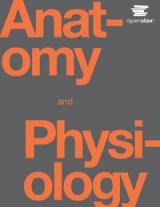
Anatomy and Physiology is a dynamic textbook for the two-semester human anatomy and physiology course for life science and allied health majors. The book is organized by body system and covers standard scope and sequence requirements. Its lucid text, strategically constructed art, career features, and links to external learning tools address the critical teaching and learning challenges in the course. The web-based version of Anatomy and Physiology also features links to surgical videos, histology, and interactive diagrams.
Senior Authors:
- J. Gordon Betts, Tyler Junior College
Formats:
The textbook is available for free online and as a PDF. It can also be ordered from iTunes ($4.99) or in a print version ($52).
Supplemental resources:
This text comes with a variety of supplemental resources, including a getting started guide, pronunciation guide, AnatomyZone, Expert TA, and Sapling Learning, among others. There are separate resources for instructors and students.
Peer reviews:
The book has been reviewed by a faculty member from CCC and a faculty member from CSU of the California higher education systems. There is also an Accessibility Evaluation.
Cost savings:
This text is saving each of 100 students approximately $200, or a total of annual savings for students of $20,000.
Accessibility and diversity statement:
Not all formats of the textbook have been evaluated but the most recent version of this open textbook is available in a Bookshare format which supports DAISY and Braille-Ready-Format (BRF).
License:
Except where otherwise noted, Anatomy and Physiology by OpenStax College is licensed under a Creative Commons Attribution 3.0 Unported License. This license lets others distribute, remix, tweak, and build upon the work, even commercially, as long as they credit the author for the original creation. This is the most accommodating of licenses offered. Recommended for maximum dissemination and use of licensed materials.
About the Course
ZOOL 113: Human Physiology
Description:
Physiological mechanisms of human body. Emphasis: organ level of integration. No credit toward a major in biology, botany, or zoology
Prerequisites: BIOL 104 or BIOL 105 with a grade of C- or higher, or equivalent
GE credit: 4 credits
Learning outcomes:
- Describe the fundamental role and process of physiological homeostasis.
- Apply basic physiological principles such as structure/function relationships and feedback-control systems to the regulation of homeostasis in major organ systems.
- Describe how the endocrine and nervous systems coordinate the actions of cells, tissues, organs, and organ systems.
- Collect physiological data using standard equipment and interpret such data as indicators of normal and pathological physiological functions.
- Interpret quantitative information from formulas, graphs, tables, schematics, simulations, and visualizations, and use this information to draw meaningful inferences.
- Provide specific examples of how evidence-based research and the scientific method have developed our understanding of physiological processes.
Teaching and learning impacts:
Collaborate more with other faculty: Yes
Use wider range of teaching materials: Yes
Student learning improved: Unsure
Student retention improved: Unsure
Any unexpected results: No
Three different instructors currently teach physiology courses at Humboldt State. All three of us have now agreed to use the same open-access textbook for our courses. This allows us to provide a more uniform educational experience for our students and to share teaching materials that we have developed for our classes.
Not only does the OpenStax textbook allow students to interact with the material in a variety of ways, it also facilitates integration between the text and lecture materials. Figures are easily copied directly from the text into PowerPoints, and links can be provided back to the text from the PowerPoints that are distributed to students.
The biggest impact I can be sure of is that all students had access to the textbook. I'd like to think this made a difference in student learning, and future efforts are aimed at testing whether that was the case.
Sample syllabus:
Textbook Adoption
OER Adoption Process
Student access:
Students accessed the text online, on a tablet or downloadable PDF, or by purchasing a low-cost print copy of the book.
Student feedback or participation:
An online survey indicated that 81% (38 of 47) of students preferred an open-access textbook over the alternative of a traditional text.
Aaron J. Corcoran, Ph.D.
I am a lecturer in the biology department at Humboldt State University. I teach both human and animal physiology, and have also helped with animal behavior and mammalogy courses.
I believe that genuine learning experiences begin with a relationship. I feel incredibly fortunate to do what I love every day–studying the co-evolution and physiology of animals and sharing my passion for science with my students. My fundamental goal as an educator is to inspire my students to find their passions and prepare them to excel in their chosen careers. I do that by caring about my students as unique individuals, by modeling my passion for science, and by showing them that not only is learning fun, it is incredibly rewarding.