
Asian Art: ART 337
Asian Art: ART 337
Zen Culture
CSU Instructor Open Textbook Adoption Portrait
Abstract: This open textbook is being utilized in an Art History course for undergraduate students by Kirstin Ellsworth, Ph.D., at California State University Dominguez Hills. The open textbook provides an introduction to Zen philosophy, culture, practices and arts. The main motivation to adopt an open textbook was to provide students with a comprehensive, peer-reviewed source covering basic principles of Zen. Most students access the open textbook using a link provided on the course Blackboard page.
About the Textbook
Description:
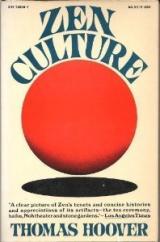
An introduction to key principles of Zen, the history of Zen and different arts associated with Zen. It includes individual sections on the arts of Haiku, dry landscape gardens, tea ceremony, ink painting and ceramics. From the author, "I will attempt to trace the history and characteristics of both Zen and the Zen arts–to explain where they came from, why they arose, what they were intended to do, and how they go about doing it. I have also included some Western-style analysis of their very non-Western qualities.
The aesthetic ideas embedded in Zen culture and its perception-inducing works of art are among the most stunning achievements in world art history. Zen culture, concerned as it is with the process of perception as much as with actual works of art, can open our senses so that we experience anew the arts of both East and West, ancient and modern."
Authors:
- Thomas Hoover
Formats:
Th book is available for free online, as a PDF, a Word document, as an EPUB, and for reading on a Kindle.
Supplemental resources:
There are no supplements with the book, but I used a documentary video that is available through Films on Demand, The Mystical Spirit of the East: Masters and Disciples.
Cost savings:
I used to use Asian Art, by Dorinda Neave, et al. which retails for $110 on Amazon. Since I teach about 25 students each year, this is a potential annual savings for students of $2,750.
License:
Zen Culture is licensed from Project Gutenberg with a Creative Commons Attribution 3.0 United States License. This means You are free to copy and redistribute the material in any medium or format and remix, transform, and build upon the material for any purpose, even commercially. You must give appropriate credit, provide a link to the license, and indicate if changes were made. You may do so in any reasonable manner, but not in any way that suggests the licensor endorses you or your use.

About the Course
ART 337: Asian Art
Description:
A study of the visual arts of China, Korea, and Japan.
Asian Art is organized around the study of different materials used in the creation of art in Asia, many of which are unique to the area. I have taken this approach from Meher McArthur whose study The Arts of Asia: Materials, Techniques, Styles is based upon an exhibition she designed for the USC Pacific Asia Museum in Pasadena. Examining art of the vast region we call “Asia” in terms of materials, allows for examination of work from many countries and time periods.
Prerequisites: ART 110 and Art 111
GE credit: 3 units
Learning Outcomes:
- Identify different materials and techniques associated with arts from Asia
- Evaluate the display of objects from Asia
- Employ terminology, concepts and historical frameworks relevant to arts from Asia
- Analyze the significance of socio-religious structures in the creation of art from Asia
Curricular changes:
Typically Asian Art survey courses focus on China with some attention at the end to Korea and Japan. Because my course is arranged around materials we do not move chronologically and examine areas including Vietnam, Cambodia and India.
Teaching and learning impacts:
Collaborate more with other faculty: Yes
Use wider range of teaching materials: Yes
Student learning improved: Yes
Student retention improved: Unsure
Any unexpected results: Yes
Next time I teach the course, I would like to invite a guest speaker from our faculty in Pacific-Asian Studies
The source encouraged me to include sources dealing with gardens and specific ceramics
Student learning improved if only for exposing students to new ideas
I learned there were a lot of talented art students (not just Art Historians) in the course after the assignment I describe below in the Sample Assignment section.
Sample assignment and syllabus:
Zen Assignment ART 337
This is an assignment I use for ART 337 Asian Art in conjunction with the open access source Zen Culture by Hoover.
Syllabus
This is the syllabus I used for the Fall 2015 class.
Textbook Adoption
OER Adoption Process
My main motivation for choosing the open access source was to save students money. However, I also wanted them to read a text that is a peer-reviewed, scholarly source in the field that is not promoted as an entity with a corporate author (a "traditional" textbook). This source allowed them to read a single author's analysis.
In addition to using the text, we watched segments of documentaries from Films on Demand, also accessed as an open access source, pertaining to Zen.
Student access:
Students access the source using a link on our Blackboard page that connects to our online indexes and material provided by the CSUDH Library on the CSUDH Library main web page.
Student feedback or participation:
I conducted a survey of students at the end of the course regarding the use of the open access source. Twenty-five students in ART 337 (Asian Art) responded to 5 questions with Disagree, Neutral, or Agree. Below are the percentage responses to 3 of the 5 questions. pertaining to the overall use of open access sources.
- I prefer reading a digital book rather than a book printed on paper.
- Agree: 40%
- Neutral: 48%
- Disagree: 6%
- Cost is the primary factor in the use of open access sources such as digital format books in courses.
- Agree: 52%
- Neutral: 24%
- Disagree: 24%
- Using open access sources enhanced the study of topics in this course.
- Agree: 88%
- Neutral: 12%
- Disagree: 0%
I know students enjoyed especially the sections on Gardens and Wabi Sabi.

I am an Assistant Professor of Art History at California State University Dominguez Hills. I teach a wide range of Art History courses including Modern Art, Art from Africa, Women in Art, Asian Art and Art Theory.
"Do not teach; develop individual creativity,” advises Misao Jo, innovator of Japanese Saori weaving. Her words express my view of the role of the teacher and the ultimate goal of education. I believe strongly that when students feel they are respected voices in the negotiation and creation of knowledge, the level of critical analysis deepens as does their sense of agency in the learning process.
As a teacher, I hope always to model methods of inquiry for investigation of material rather than to impose knowledge. I pursue a constructivist approach whereby as the teacher, I facilitate students’ engagement with course topics through active discussion, close reading of texts and works of art, oral presentations, group projects and self-designed, thesis-driven research. Always, I ask students to analyze art from multiple viewpoints so as to demonstrate that there is no single narrative to encompass the meanings of any form of visual culture. My task is to find the best strategies to assist students in the process of evaluating diverse perspectives and in the process identify that particular part of the narrative that stimulates their own sense of creative thought and action.
I am a Modernist (1900-1970) and my special area is American art of the 1960s. I have a love for Japan because of the opportunities I have had to travel there. My father collects Japanese prints so I have had the great fortune of living with the woodblocks and other prints that so captivated American and European artists.