
Environmental Biolog: BIO230
Environmental Biolog: BIO230
Concepts of Biology
CSU Instructor Open Textbook Adoption Portrait
Abstract: This open textbook is being utilized in an environmental biology course for undergraduate students by John Silveus, M.S., at Cal State Monterey Bay. The open textbook conveys the same biological information as traditional text books but does so in simpler terms that these students can easily understand. The main motivation to adopt an open textbook was I did not want to make students pay for a text they would resent buying (as I did many times). Most students access the open textbook online.
Reviews: This book has been reviewed by a CCC faculty member and a CSU faculty member from within the California higher education systems. There is also an Accessibility Evaluation.
About the Textbook
Description:
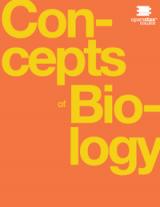
Concepts of Biology is designed for the introductory biology course for nonmajors taught at most two- and four-year colleges. The scope, sequence, and level of the program are designed to match typical course syllabi in the market. Concepts of Biology includes interesting applications, features a rich art program, and conveys the major themes of biology.
Senior Contributing Authors:
Formats:
This textbook is available for free online, as a PDF and as Bookshare. You can also purchase the book on iTunes for $4.99 and as a printed book for $29.
Supplemental resources:
OpenStax provides a variety of supplemental resources for both instructors and students that include a Getting Started Guide, Syllabus Suggestions, Instructor Answer Guide, Supplemental Test Items, PowerPoint Slides, and ACCES.
Peer reviews:
This book has been reviewed by a CCC faculty member and a CSU faculty member from within the California higher education systems. There is also an Accessibility Evaluation.
Cost savings:
A comparable textbook would be Calver's Environmental Biology, which costs $112 on Amazon. Since I teach about 200 students per year, this is a potential annual savings for students of $12,400.
Accessibility and diversity statement:
Not all formats of the textbook have been evaluated, but the most recent version of this open textbook is available in Bookshare format which supports Daisy and Braille-Ready-Format (BRF).
License:
Concepts of Biology is licensed under a Creative Commons Attribution 4.0 International License. This means you are free to copy and redistribute the material in any medium or format and remix, transform, and build upon the material for any purpose, even commercially. You must give appropriate credit, provide a link to the license, and indicate if changes were made. You may do so in any reasonable manner, but not in any way that suggests the licensor endorses you or your use.
About the Course
BIO 230: Environmental  Biology
Description:
This course focuses on the conservation of biodiversity, evolutionary processes that affect conservation and restoration, and the ecological concepts that underlie many environmental issues. These concepts will be grounded in issues in sustainability with a focus on climate change. In addition, the systems nature of environmental issues will be woven through the course. Lab course fee may be charged.
The course this text is used for is titled Environmental Biology, and is targeted towards non-biology students in the Environmental Science and Environmental Studies majors that require knowledge of topics such as Evolution, Biodiversity, and Ecology. After students complete this course, it is expected that they understand these topics, but more importantly that they can relate these topics to changing environmental conditions and related issues. Students must learn the biological subject matter, but do not require the depth of understanding common in a Biology majors text. As such, it was important to be able to present biological concepts to the students without overloading them with information that they could not relate to, or that would not be relevant to their overall course of study.
I adopted the Concepts of Biology open source text from OpenStax after examining several traditional textbooks designed for non-biology majors. Concepts of Biology conveys the same biological information, but does so in simpler terms that these students can easily understand.
Prerequisites: GE Area A1 and (MATH 130 or MATH 150) and (CHEM 109 or FYS 121 and ENVS 201 or FYS 124) or CHEM 110)
GE credit: 4.0
Learning outcomes:
- Students demonstrate scientific content knowledge within the life sciences and its relevance to their own lives.
- Students demonstrate the application of quantitative skills (such as statistics, mathematics and the interpretation of numerical graphical data) to life science problems.
- Students identify differences between science and other ways of constructing knowledge, and evaluate the credibility and scientific value of different sources of scientific information.
- Students demonstrate satisfactory laboratory and/or field methods to collect and evaluate data used in scientific inquiry.
- Students apply standard scientific methods to critically evaluate evidence used to address questions about the natural world and communicate their findings.
Curricular changes:
The BIO 230 course was a new course in 2013; I designed it from the ground up using other BIO courses I have been associated with as a guide.
Teaching and learning impacts:
Collaborate more with other faculty: No
Use wider range of materials: Yes
Student learning improved:Yes Student retention improved:Unsure Any unexpected results:Yes
I have tried to persuade other non-biology major instructors, but at this point have been unsuccessful. Not because they do not like open source, but because they are still trying to appease higher powers.
As previously stated, the use of an open source text allows me to change my course and remove, alter or include a wide range of materials from semester to semester without consequence to the student. I change my course as I see fit for current events or issues without concern that students paid for a text that did not cover the material I wish to cover. FLEXIBILITY
I am sure my students benefit from this flexibility, and student reviews of the course reflect this opinion.
This should be at the top of all of this; I did not KNOW all of these benefits of the open source text at the start. I did it because I did not want to make students pay for a text they would resent buying (as I did many times). However, all that I have testified to has become the truth. I am more free as an instructor, I feel no guilt, and I can make any change I wish without consequence to my students. FLEXIBILITY
Sample assignment and syllabus:
Syllabus
This is the syllabus I used for the Spring 2016 class.
Assignment Template
This is the template I give to students for the assignment.
Assignment
This is an assignment I use for my class.
Textbook Adoption
OER Adoption Process
Most importantly for me as an instructor and former student, was that the text is an open source text, and adopting it would not cost the students hundreds of dollars. While this was important to me as an instructor and former student, it was not important for the immediately obvious reasons.
Because the chosen text does not cost the students, I am free to pick and choose from the chapters and supplemental materials without worry that I have forced students to purchase a text that they will not fully read, utilize, be able to sell back, or will have sitting on their bookcase for the rest of their education with no purpose. By using an open source text, I am free to use or discard portions of the text and alter the material I present within and between semesters without consequence to my students.
Additionally, OpenStax offers the Biology text for biology majors, so if I choose to utilize chapters on certain subject matter in a more in-depth manner, I am free to do so without the addition of another costly text for the students. While this is a class and subject specific situation, it exemplifies the freedom afforded through the use of open source texts for an instructor; I am free to choose the material I present, to change it, and to do so without consequence to my students.
I teach in an inverted course model. Students are required to read and be familiar with the required reading material and take an online reading quiz of the material before the beginning of class. This allows me to assume that they are familiar with the material to be covered so that I can expound upon it, or take the material in different directions based on current events or specific interests of the participants within the learning environment.
I have created quizzes and PowerPoints, and provide online resources such as videos and websites for supplemental material. After the students have the background information, I use quite a few free to student case studies from the National Center for Case Study Teaching in Science (NCCSTS). These are great interactive and inverted teaching tools, and there is a case study for many subjects.
The external supplemental materials I used include:
- self-created quizzes in iLearn (Moodle)
- self-created Powerpoints
- websites and online videos
- free-to-student case studies from the National Center for Case Study Teaching in Science (NCCSTS)
- OpenStax Concept Coach (pilot participant)
Student access:
Studies have shown that some students, specifically science students, prefer to have a printed copy of the required text. OpenStax provides this option to students at a very discounted rate; the cost is exclusively for the cost of printing, and does not include authorship rights or residual payments to the authors for $29.
Since students have access to the online version as well as the PDF, they can use both, depending on which is the most convenient at the time.
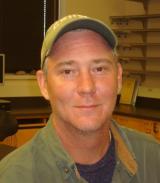
I am a biology professor at Cal State Monterey Bay. I teach Environmental Biology (BIO_230) and Introduction to Environmental Science (ENVS 201).
For the most part I am a believer in the “Inverted Classroom Model”. This model puts the burden of responsibility on the student. They must remain vigilant throughout the semester and be an active participant in their own education. Students are assigned activities or readings to be completed before class, and there is usually an online quiz on the material due before the beginning of class. This forces students to spend time outside of the classroom working with the material; they cannot simply show up to class and expect to do well in the course. I recognize by using online quizzes on the material students may be inclined to work in groups on the quizzes, but I would rather have them working together and discussing the material than not performing the work. Additionally, quizzes are randomized for each student, so if they do work in groups they will be forced to go through each question for each student.
Use of the Inverted Classroom Model also allows me as the instructor to make changes to the course based on current events or student interests. I know that they have read the book chapter on the material, and they have background knowledge of what will be discussed in class, and I am free to take the lecture in any direction I see fit. This is an essential component of the second part of my teaching philosophy. Gone are the days when one needed to attend a certain college and take a class with a certain professor to gain knowledge of a subject. In today’s world, the information is out there and available to everyone. You can become an expert on most any subject from the comfort of your home. The job of a professor is now to show the student why the information is important, why they need to learn it, and how it is relevant to them and the world they live in. Professors must become the “Guide on the Side”, and step away from past roles as the “Sage on the Stage”. Our job is to encourage, support, and give direction to our students, not profess our knowledge.
I have about 8 student researchers per year, usually on a 2-year rotation. Our group focuses on Bioremediation: the reduction of pollutants associated with agricultural and urban runoff, specifically nitrates, phosphates, and pesticides. We are also involved in environmental water quality monitoring in the Salinas Valley and surrounding areas.