
Engineering Physics I Laboratory
Engineering Physics I Laboratory
Engineering Physics I Laboratory Manual
CSU Instructor Open Textbook Adoption Portrait
Abstract: This open textbook is being utilized in an calculus-based physics laboratory course for undergraduate students by Cynthia Trevisan, Ph.D. at California State University Maritime Academy. The open textbook provides worksheets for laboratory exercises to be completed during any given laboratory session. The main motivation to adopt an open textbook was to provide students with resources tailored to the topics explored in an undergraduate general mechanics course at no cost to students. Most students access the open textbook through the University’s Learning Management System.
About the Textbook
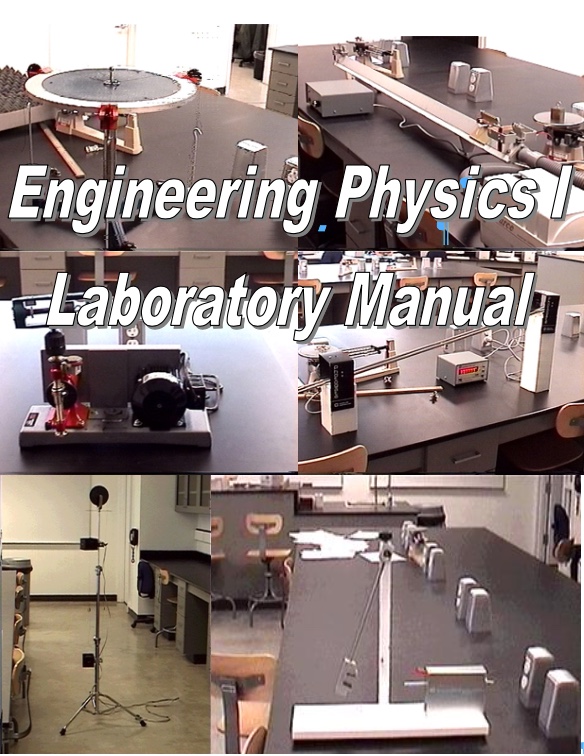
Engineering Physics I Laboratory Manual
Description:
This laboratory manual explores topics that include vectors, kinematics, dynamics, work and energy, momentum, fluids, torques, and simple harmonic motion, among other topics introduced in lower-division general mechanics courses. Experiments are designed to make use of tabletop equipment. Experimental goals, setup, and procedural steps are described in individual worksheets. The worksheets also include post-laboratory questions that students are required to answer and include in laboratory reports.
Lab 1:
Lab 1 - Welcome to Physics Lab.pdf
Lab 2:
Lab 2 - Displacement Velocity Acceleration.pdf
Lab 2 Data Demo for Android Users.xlsx
Lab 2 Second Experiment trial 2.xlsx
Lab 3:
Lab 3 - Composition and Resolution of Vectors.pdf
Lab 4:
Lab 4 - Measuring_gravity_StopWatch.pdf
Lab 4 - Pendulum Gravity template_CT.xlsx
Lab 4 - Measuring_gravity_StopWatch.pdf
Lab 5:
Lab 5 - Projectile Motion - Measure Vo.pdf
Lab 5 - Projectile_Motion_template_CT.xlsx
Lab 6:
Lab 7:
Lab 7 - ArchimedesPrinciple.pdf
Lab 8:
Lab 8 - Conservation of Energy.pdf
Lab 9:
Lab 9 - Ballistic Pendulum - NC.pdf
Lab 10:
Lab 10 - Uniform Circular Motion_Manual_Twirl_CST.pdf
Lab 10-UniformCircularMotion_CST.pdf
Lab 11:
Lab 11 - Torques_and_Equilibrium_NEW.pdf
Authors:
- Jaya Punglia - California State University Maritime Academy
- Kenneth Dobra - California State University Maritime Academy
- Nelson Coates - California State University Maritime Academy
- Matthew Fairbanks - California State University Maritime Academy.
- Cynthia Trevisan - California State University Maritime Academy.
Formats:
Worksheets are posted on the University Learning Management System as Word documents and as pdf files. Students download them from there.
Supplemental resources:
Supplemental resources are routinely created by the instructor as needed to help students learn. As an example, step-by-step instructions on how to create graphs using Excel (such that the graphs follow expected format and laboratory report conventions) are offered as supplementary resources. Sample laboratory reports are also included as additional resources.
Worksheets are used every time a laboratory session meets. Each worksheet describes the purpose of the exercise, the materials to be used for that day’s experiment and its setup, and the experimental procedures that need to be followed. The worksheets also contain tables for the collection of data, as well as post-laboratory questions. For each experiment conducted, students are expected to turn in a laboratory report that includes the data gathered in the worksheet, graphs (if applicable), the answer to all post-laboratory questions, and a summary that includes an analysis of the data. The lab report sections and grading rubric are described in the course syllabus.
The supplemental resources used in this course are:
Cost savings:
I previously used the Physics Laboratory Manual by Davis H. Loyd for this course. It currently retails for $229.55 on Amazon. Since I teach this lab to between 32 and 64 students per year, this is a potential annual saving for students of between $7,345.60 and $14,691.20.
Accessibility and Diversity:
The worksheets that make up this manual and additional resources developed for this course are uploaded to our learning management system. Our institution currently uses Brightspace. In doing so, built-in accessibility features are available to all students. Additionally, hard copies are made available to students who request them. All materials are free of charge to students.
License:
This manual is licensed under a Creative Commons Non-Commercial, Share_Alike license. This license lets others remix, tweak, and build upon your work non-commercially, as long as they credit you and license their new creations under the identical terms.

About the Course

PHY 200L - Engineering Physics I Laboratory
Description: PHY 200L is a laboratory physics course designed to enhance the conceptual learning of physics by adding visual and tactile components through hands-on experience. The course will cover experiments based on the theory provided in Engineering Physics I (PHY 200). Included are the study of vectors, kinematics and dynamics, forces and the equations of motion, Newton’s Laws, Uniform circular motion, work-energy, impulse and momentum, gravitation, simple harmonic motion, buoyancy, heat, and thermodynamics.
This course is intended for students who are majoring in physics, chemistry or engineering. It is also suitable for students needing to comply with physical sciences general education requirements.
Prerequisite: Calculus I (MTH 200)
Co-requisite: Engineering Physics I (PHY 200)
GE credit: 1 unit
Student Learning Outcomes:
Upon successful completion of this course, students will be able to:
- Apply the scientific method and employ scientific reasoning to problems in physics.
- Recognize the fundamental concepts of mechanics.
- Use theories, principles, and models to describe and predict the outcome of an experiment.
- Apply mathematical and computational techniques associated with laws of physics.
- Use computational and problem-solving skills as tools for specific engineering applications.
- Successfully apply new concepts and techniques to practical problems in science and engineering.
Student Learning Objectives
- Demonstrate familiarity with laboratory equipment and its use.
- Perform data collection using experimental devices to gain a physical sense of basic theories, models and principles of physics.
- Recognize the need for precise and accurate measurements.
- Apply the scientific method when analyzing results from measurements, computation of physical quantities and interpretation of data.
- Recognize the limitations of experimental procedures and apply scientific reasoning in the interpretation of measurements and computed values.
- Work in small groups and discuss findings with others.
- Write laboratory reports to describe the laboratory equipment, experiment, and findings.
- Communicate findings and scientific reasoning used to solve problems in physics to the class.
Curricular changes:
The University’s Learning Management System was adopted as the repository for all worksheets. Each lab section meets once a week, so the learning platform was organized such that its content was divided into week blocks. Worksheets and other supplementary resources were posted for each week of the semester.
Teaching and learning impacts:
Collaborate more with other faculty: Yes
Use wider range of teaching materials: Yes
Student learning improved: Unsure
Student retention improved: Unsure
Any unexpected results: No
Creating this resource for students necessarily has us working together to discuss ideas, try out new experiments, and collaborate in the writing of the lab activities. We not only collaborate in the creation of these worksheets, but we also share and discuss the results of these exercises, particularly when we introduce a new experiment. I need to clarify at this point that, during any given semester, there are two or three instructors teaching these labs. We compare what worked and what did not work and work together on making each iteration of an experiment a better experience for students.
Creating our own worksheets also gives us the possibility of using a wider range of teaching materials, because we are not constrained to using experimental setups that are limited to particular lab equipment.
Sample syllabus and assignment:
Syllabus:This is the syllabus we used in Spring 2019.
Assignments: These are some of the assignments we used in the class:
Prelab 3 - Composition and Resolution of Vectors.pdf
Prelab 4 - Pendulum Gravity.pdf
Prelab 5 - Projectile Motion.pdf
Prelab 8 - Conservation of Energy (200L).pdf
Prelab 9 - Ballistic Pendulum.pdf
Textbook Adoption
OER Adoption Process
The motivation behind creating and adopting an open laboratory manual for this course was multifold. It allowed instructors to link learning objectives to experiments designed to use available equipment. Creating in-house worksheets also introduced the flexibility of adding components to the equipment already possessed, therefore making it more affordable to adopt new technology by making it possible to acquire individual components instead of expensive experimental kits. Last, all resources created are made available to students free of charge, helping students save money.
Student access:
Students can access the laboratory manual via our institution’s Learning Management System. The worksheets that constitute this manual, as well as any supplementary materials, are posted in blocks corresponding to each week of the semester during which laboratory sessions meet. Students have the ability to download the files onto their own computers if desired. Additionally, printed copies of the worksheets are handed out in the laboratory to those students who request hard copies.
Student feedback or participation:
Students have expressed great satisfaction with not having to incur any expenses for this course via informal polling. No official survey of student satisfaction on the laboratory manual has yet been conducted. Suggestions for improvement from students and other faculty members are encouraged and incorporated in successive iterations of the worksheets. Worksheets, therefore, undergo continuous evolution and updating.
Actual comments include:
- Wow, it is awesome that we do not need to buy anything for this lab! That is so helpful!
- We do not even need to buy a laboratory notebook (of the type they are required to purchase for their chemistry labs by Hayden-McNeil, for example)? That is great! It is hard enough to pay for college alone. Adding the cost of books makes it so much harder.
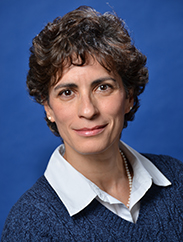
I am a Professor of Physics at California State University Maritime Academy.
In addition to physics labs, I also teach calculus-based and algebra-based physics lectures that cover the topics contained in any lower-division physics series, including mechanics, energy, fluids, electricity and magnetism, among other topics. Our institution does not offer upper-division physics courses because we do not offer a major (nor minor) BS degree in Physics. In the past, I taught several courses in mathematics at Cal Maritime, including Calculus I and II, Calculus for Business, and Elementary Statistics.
My teaching philosophy has evolved over time and continues to do so as I grow as an instructor and work towards becoming a better teacher with each iteration. I find it important to revisit fundamental questions that explore how to inspire students and ignite their intellectual curiosity. We are curious beings, and I aspire to help students learn and develop passion for the world of ideas. I believe it is possible to connect a wide range of interests and experiences with topics in physics. I also believe that it is important to challenge students with tasks that are difficult yet achievable, so that they gain a sense of accomplishment and self-confidence with each successful experience, and that they process each mistake as an opportunity to learn.
I maintain active research collaborations with scientists at the Lawrence Berkeley National Laboratory and with scientists at the University of California, Davis, among other institutions. I also work on state-of-the-art quantum mechanical calculations in the theory of photon and electron collisions with greenhouse gases and other molecules relevant to energy applications, such as solar energy conversion. I am currently studying the molecular-frame photoelectron angular distributions for polyatomic molecules that are produced after a core-level or a valence electron is removed due to the absorption of an X-ray photon.