
The Behaviorist Theory
The Behaviorist Theory
Behaviorism is the basis of all learning. Many career paths in America follow the behaviorist approach to gain user motivation. Schools, hospitals, and business centers use the behaviorist approach to motivate learners or buyers.
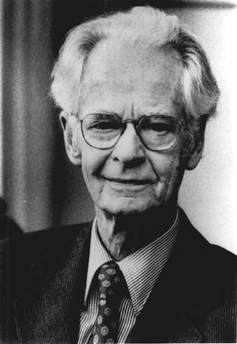
Skinner's Publishing
B.F. Skinner wrote many books about the behaviorist theory and his ideas behind operant conditioning. Skinner published 26 books on his ideas of behaviorism. He is most famous for his book Walden Two.
Walden Two:
This story is a futuristic, utopian community where the members operated in a manner of consequences and rewards. This story reflects on Skinner's beliefs that learning is acquired through observations. The characters in his story, were invited to common areas among other citizens. Their actions/behaviors in these common areas reflect their consequences. The main character, Frazier and Buris realize they prefer life at Walden is better than their previous town.
Types of Assessments
Writing Rubric-This rubric is what I have created in kid friendly terms of what the state look for in the writing assingment given on the third grade ELA test.
Writing Prompt- This writing prompt is for the McGraw-Hill Wonders curricululm. The stories come from our textbooks and are aligned to state standards. Thisprompt is written to similiar state practice testing sites.
21st Century Teaching & Learning
21st century learning is dependent on problem solving and communication. The factors that play into being up-to-date with these skills are actively communicating with peers, completing tasks that require problem solving, and be driven by motivation.
Using the ASSURE model, learners must utilize many types of media, be involved, and evaluate in order to become successful in a course.
Philosophy
The use of technology should be used in moderation in my instructional design philosophy. Many theories are reflective upon social learning, observations, and interactions. Accessing technology fully takes away from these types of interactions. Technology can be incorporated into courses for enrichment purposes. Technology such as videos, presentations, and games should be incorporated for visual learners, in moderation.
Conclusion
Instruction design is important because it is everywhere. It can be found in a variety of places, from hospitals to schools. Instructional design offers many strategies and theories that connects a variety of learners. Instructional design is important because this is the trend our country is headed towards. As educators, we must be prepared to tackle whatever the world throws our way.
Biography
B.F. Skinner is the father of the theory of behaviorism. Skinner was born in 1904 from a small town in Pennsylvania. Skinner was cared for by his father, a lawyer, and a mother who cared for the home. Skinner and his younger brother were always interested in the mobility of objects. Growing up, Skinner enjoyed school and went to college to become a writer. After failed attempts, he decided to study psychology. Skinner attended Harvard and shortly after began conducting research on human behavior.
Skinner then developed the idea of the Skinner box. This consisted of Skinner holding animals in a box to track their behavior in their current environments. His first experiment consisted of keeping rats and observing how they found their food. Next, he experimented with pigeons. He observed the pigeons pecking at an object to release food. Comparable to his findings, he reviewed Pavlov’s theory. He stated there was a difference. Pavlov’s theory was dependent on a stimulus to get the desired reaction, while his theory was evidenced by a change in environment.
In his later life, Skinner continued to research pigeons. He attempted to use them in World War ll. He achieved a position at Indiana University, where he left and finished his career at Harvard. Skinner wrote Walden Two, where communities behaved in a manner that resulted in rewards and punishments. Skinner continued to write many books about his theory and how it applies to human behavior.
Shortly after Skinner was diagnosed with Leukemia where he died in Massachusetts in 1990.
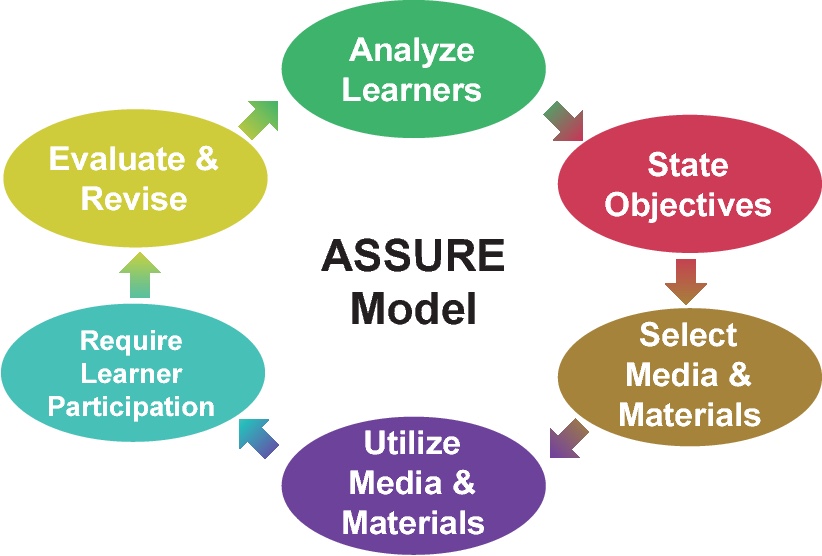
The ASSURE model is best suited to match the behaviorist theory. The ASSURE model is designed for the learner’s preferences. The ASSURE model was created to ensure that courses had technology integration from the beginning to the end.
The ASSURE model begins with analyzing the target audience. Once the audience is determined, objectives must be written for your course. The materials must then be selected and how learners will utilize those materials. Require learned response is engaging students and ensuring participation in the course. Lastly, is the final step of evaluation, educators and learners will complete evaluations of the course.
The ASSURE model is effective because it requires teachers to plan for a purposeful use of technology. As stated in the article, “New Trends in Education and their Implementations”, effective use of this model leads to active students, engagement through technology, and varying levels of teaching styles” (Sezer et al., 2013, pg. 137).
Behaviorism
Theory
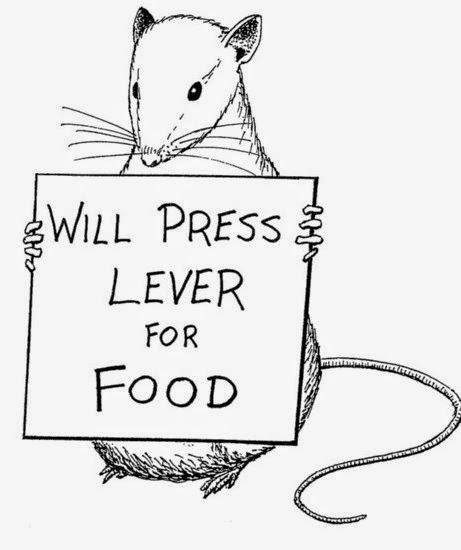
B.F. Skinner’s behaviorist theory assumes that a behavior is produced due to a reward or consequence. The purpose of the behaviorist theory is to get a response due to a stimuli.
The ideas behind B.F. Skinner’s behaviorist theory is human/nonhuman behaviors are dependent on the environment of the audience. Skinner’s research proves that when provided rewards, positive behaviors are elevated.
Concepts
One concept associated with behaviorism is reinforcement. Whether this be a behavior that is wanted in your classroom or business, or an intended outcome on an assignment. To reinforce a behavior is to strengthen the behavior in hopes this behavior happens again in the future. For example, primary teachers allow students 5 minutes of “free time” if they get a 100% on a formative assessment. This encourages students to work harder on their classroom assignments to earn free time.
Another concept following behaviorism is observation. Observations are used in the behaviorist theory due to learner interactions. An audience makes observations on their peer’s actions to reveal an outcome- either positive or negative. In Skinner’s study with rats, each rat observed other rats finding food in different locations. This observation lead to feeding for all rats.
Strategies
*Multi-paragraph Writing- Completing a writing assignment to prepare for the third grade ELA test. Students will work on composing a multi-paragraph essay using two texts. By the end of the lesson, students that are able to form a hearty essay will be given free time for the duration of the assignment. Those who do not score at least a 7/10 on the state rubric, must go back and revise their work to meet the state rubric. Students will be asked to peer edit and revise if needed.
These strategies are used in my school district to enforce positive behaviors and learning environments. Thus far in my career they have been successful in maintaining student's egagement and achievement.
References
Behavioral theory | Behavior | Mcat | Khan Academy. (2013). Retrieved from https://www.youtube.com/watch?v=x7wZCtFWblE
B.F. Skinner In 2 Minutes. (2016). Retrieved from https://www.youtube.com/watch?v=tqabCNrenZo
Bryant, L., Balfour, N., Brown, M., Eversole, S., Land, R., Roberts, R., … Purpose Associates. (2011, April 14). Behaviorism.
Retrieved January 17, 2020, from https://www.funderstanding.com/theory/behaviorism/
Creating SMART Objectives for PR Campaigns Leads to Better Measurement of Outcomes. (2017, April 25). Retrieved
from http://gonderpr.com/smart-objectives-better-measure-pr-campaign-outcomes/
LaRocca, B. (2019, April 8). Growth Mindset Toolkit. Retrieved January 17, 2020, from
https://www.transformingeducation.org/growth-mindset-toolkit/
MindShift. (2015, December 15). How to Make Sure That Project-based Learning is Applied Well in Schools. Retrieved
January 17, 2020, from https://www.kqed.org/mindshift/42910/how-to-make-sure-that-project-based-learning-is-applied-well-in-schools
Zhang, C. (2012, March 29). Constructivism---its assumptions, principles and application in a classroom. Retrieved January 14, 2020, from
http://virtuesinmelbourne.blogspot.com/2012/03/constructivism-its-assumptions.html