Internship for the Center for Research and Grants (CRG)
Internship for the Center for Research and Grants (CRG)
2020 Field Placement Internship Portfolio
Holly Pittard-Ingram, Center for Research and Grants - Vidant Health, and Brody School of Medicine - Department of Public Health
Timeline:
20-40 hours a week, from January 8, 2020 - March 5, 2020. Total of 253 hours.
Position:
Graduate Public Health Intern, Lead Intern at CRG
The activities outlined below are divided into 3 categories: (1) Long-Term - these are activities that lasted for most of the duration of the internship; (2) Self-Initiated - these are activities that I took initiative and created on my own, or asked my supervisor for permission to create; and (3) Team-Oriented- these are activities that had a team focus.
Additionally, activities are categorized as 'task' or 'product.' A 'task' refers to any activity that acted as a stepping stone to and end goal or product. A 'product' refers to activities that I saw throughout multiple stages of development where they were created, drafted, and/or finalized to be used at CRG in the future.
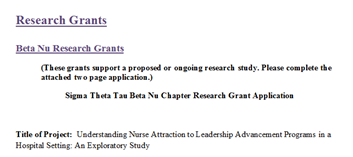
Product: Beta Nu Grant: Worked with a team to edit this grant for a study to explore nurse attraction to nurse leadership advancement programs in the hospital setting. The study aims to identify and compare themes for nurse attraction to leadership advancement themes within five groups of nurses. A qualitative approach utilizing focus group methodology will be employed for this study.
Task: IRB Ancillary Review Organization: Worked on reviewing IRB submissions (particularly exempt and expedited) and updated a weekly binder & organizer for Ms. Wooten regarding needed revisions and suggestions.
Task: Literature Reviews: Preformed multiple literature reviews on various topics. This involved researching key words on PubMed or ScienceDirect, filtering the articles, and then picking out the most relevant articles to the topic.
Position: Lead Intern: CRG is made up of interprofessional team members, including nursing, pharmacy, nutrition, statisticians, and more. As an intern, we had weekly meetings & tasks assigned. Additionally, as lead intern, task included:
Intern Representative at Meetings: Updating CRG at Team Tuesday Huddle Meetings
Task Tracker: Ensuring that everyone’s hours & tasks have been inputted into the trackers, filling out the weekly excel document with a summary of all intern hours and tasks completed, and more.
There has been established evidence for the need for educational support in rural, underserved, and minority communities as well as a need for increased diversity in health care. The Physiology Camp was established as a way to engage children in underserved areas by improving educational outcomes, increasing interest in healthcare, and promoting healthy lifestyles. Volunteers hosted camps for K-12 students at multiple community locations in eastern North Carolina that focused on teaching physiology, anatomy, and healthy habits. Parents were given qualitative surveys about their children’s experiences that showed an increase in their child’s interest in science and academic success outside of the camps. Surveyed children reported enjoyment of the camps and an increase in knowledge in body systems. Overall, this project seems to have a positive impact on the community and expansion of the project is currently in the works.
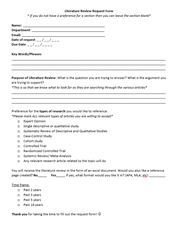
Product: Literature Review Form: I created a literature review form to be completed by the researcher who was requesting the literature review. The form included input from other interns, and was reviewed by other CRG members.The final draft will be uploaded to the CRG intranet for future researchers to use.
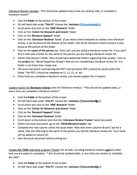
Product: Intern Folder L-Drive Template: Noticed that a lot of the interns were having trouble navigating the L-Drive, which is where the trackers, literature reviews, and other files are stored. Thus, I created a ‘how-to guide’ for interns to navigate the L-Drive organization. Sample of it is below:
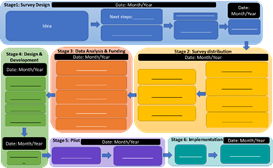
Product: Logic Model Templates: Created various logic model templates for future interns to use on their projects. Example below:
HeaRDHH - Healthcare Resources for Deaf and Hard of Hearing. This project aims to assess how to most effectively create an online American Sign Language (ASL) healthcare education intervention that also aims to improve communication between patients & providers. The intervention in mind is a website centered around healthcare within the deaf community that has access to educational videos & medical intake forms
Task: Summarize Team Assessment Evaluations: Organized & recorded results of the CRG team assessment

Task: Research Nurse Specialist (RNS) Stimulation Project: Worked on a team researching hospital adverse events, serious adverse events, and informed consent.
Task: Audit and Compliance Excel Sheet: Involved checking to ensure that patients in clinical trials had the correct information recorded, such as their insurance, identification numbers, and what trial they were in.
Product: Flyer and other promotional materials: Worked with other interns to create promotional materials. One example is the attempt to create a flyer to advertise the Lunch and Learn Events at CRG. Also created draft of pocket card rings for participants in research studies.
Task: Internship fair: Participated in transportation of materials, preparation of booth, and future recruitment of interns at the 2020 Spring Internship Fair for the Department of Public Health at East Carolina University.
The purpose of this study was to assess feasibility of stocking epinephrine injectors within restaurants to guide recommendations for future programs, interventions, and food safety policy. SPSS was used to analyze data.
Results of this study indicate that restaurant managers (n=30) generally had concerns about individuals having allergic reactions and would be willing to pay for a reasonably priced epinephrine injector, preferably one with audio instructions. Surveyed individuals with food allergies (n=25) expressed concern surrounding having an allergen in their food, and increased comfort eating when there is an epinephrine injector present.
Results will be used to submit an issue to the Conference for Food Protection, the body which utilizes a formal process to amend the FDA Model Food Code, and to predict the impact of developing and applying an intervention to increase the number of restaurants that stock epinephrine injectors.