Home

FCS 353 Apparel and Human Behavior
Jongeun Kim, Ph. D
Associate Professor
[December 10, 2015]
California State University, Northridge
Project Summary: A clear and simple statement of your project which includes the project name, a description of the work, what impact do you hope to have and what problems do you hope to solve.
MERLOT MERLOT is a collection of free and open online teaching, learning and faculty development services contributed and used by an international education community. The MERLOT collection of open resources spans across a wide variety of disciplines and education levels. What sets MERLOT apart is a combination of peer reviews, member comments, learning exercises and other valuable information and metadata associated with the materials.
The proposed project will redesign FCS 353 APPAREL AND HUMAN BEHAVIOR from a face-to-face lecture class to an online/hybrid course. FCS 353 is a major required course for the FCS Apparel Design and Merchandising option and is offered every semester.
eLearning Project Background |
FCS 353SLO_table
FCS 353 SLO application table
The goal of the redesign project is to create an FCS 353 course Moodle site to teach students with technology that gives them more opportunity to become engaged learners in new, effective, and efficient manners. My theme key words for the project are ACTIVE LEARNING and STUDENTS’ COURSE OWNERSHIP.
- Students' Course Accessibility
- Students' Active Learning
- Students' Course Ownership
Based on previous proven research, students enrolled in a student-centered online course will exhibit learning outcomes that are equal to or higher than students who are taught onsite in a teacher-centered learning environment. Expectations for this online course include the following.
- Availability: Virtual lectures (via videotaping) will allow students to revisit lectures when needed. This 24/7 availability will improve student-learning outcomes. One of the challenges of online learning is the inability to be physically present with the student; however, embracing Kolb’s theory allows the student to “own” his/her knowledge by processing the knowledge completely, yet uniquely, to the student’s own learning style, which can be improved by revisiting virtual lectures.
- Active learning: Student-centered learning for the millennial generation. Enrolling in online classes is second nature for the current college student who is a millennial. By its nature, educational technology is student-centered because it is specifically created to cater to the students’ learning styles. The face-to-face classroom can be a passive learning style for some introverted students. Many millennial traits are known as more active in a virtual space.
- Students’ course ownership: it will allow more student course ownership than the face-to-face design. This ownership can be accomplished by encouraging each student to develop his/her own page (course glossary), posting ideas and reflections, and agreeing/disagreeing with others’ postings (discussion forums). A face-to-face class may have several discussion sessions, but only a limited number of students have been found to participate in the discussions in class.
Project Learning Outcomes
FCS 353 SLO COURSE LEARNING OBJECTIVES/ OUTCOMES:
Students will be able
1. to demonstrate knowledge of consumer and culture theories and concepts.
2. to demonstrate knowledge of culture and human behavior applications in context of apparel.
3. to analyze the comparison between culture and consumer (human) behavior including apparel selection.
4. to explain how culture adoption issues are connected to human behavior (especially apparel selection), economic, and social equity (class).
5. to identify and analyze contemporary issues in culture in terms of consumption; apparel trends in different culture and their relationships to social, psychological, political, and economic factors.
Among these 5 SLO, I am targeting the three course objectives to enhance students learning outcome.
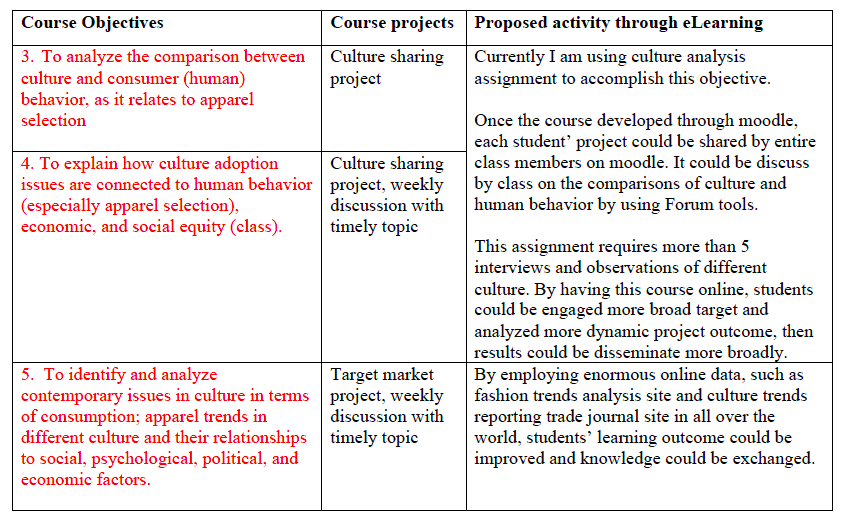
FCS 353 course is required course for ADM major and electives for FCS department students which would be count toward major electives. Course should be taken during junior year but because this course is a bottle neck course, most of the students are seniors (4th year of college) or super seniors (5th year, final semester to graduate, graduating senior).
Online course as student-centered learning for millennial generation. Educational technology is student-centered because it is specifically created to cater to students’ learning styles. Students enrolled in a student-centered online course will exhibit equal to or higher learning outcomes than students who are taught onsite in a teacher-centered learning environment (Ester, 2014; Mann & Henneberry, 2014). However, educators will continue to be challenged to seek the best way to present information to the online student. Educators can best meet this challenge by improving the communication environment with students for constant feedback and suggestions.
Describe the central technology tools you utilized to create your eLearning Project and how you used them.
- Moodle book for Syllabus: Develop syllabus using Moodle book by using built-in table of contents, navigation buttons and tabs, and sectioning to increase convenience.
- Moodle book for course syllabus: Use of these tools will improve organization of the syllabus and increase accessibility for students. These factors will increase students’ interest in the course.
- PowToon for course introduction: Create Powtoon for course introduction and welcome video.
- PowToon video and instructor’s introduction video that explain the course contents, projects, and learning outcomes will increase students’ interest in the course and intention of involvement.
- Forumes: Forums will create individual discussion assignments.
- By using Moodle forums, Increase the accessibility to 24/7, anywhere in the world to allow engaged discussion. Forums will allow students to post ideas, hold discussions, and/or share reflections on reading assignments or visual documentaries. The current face-to-face class has several discussion sessions, but only a limited number of students have participated. With an online discussion taking place through a forum, each student will be required to post at least one opinion on the discussion topic. A typical characteristic of millennial generation students is that anything wired feels comfortable and that discussion through a forum is more acceptable. Therefore, use of a forum will encourage students’ participation.
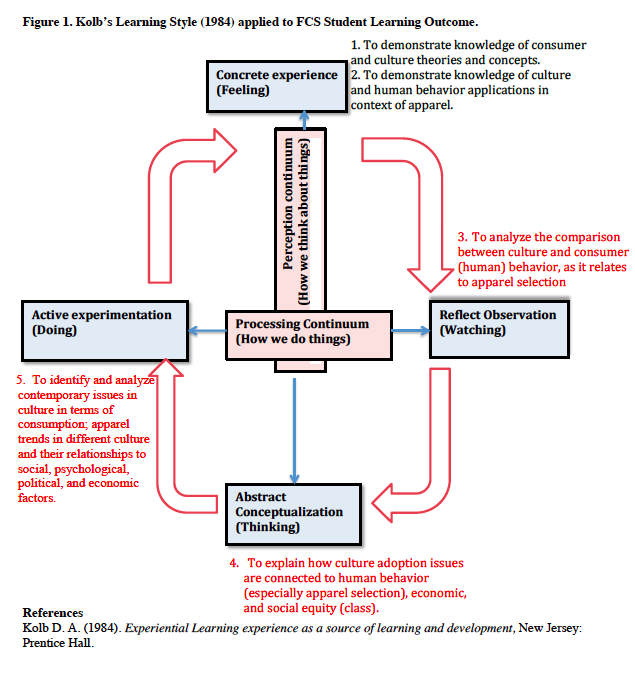
Instructional Strategies Learning centered pedagogy was employed to engage enrolled students as active participants in learning and co-constructors of knowledge. The new moodle (fully online/hybrid course) shifted the focus from the teachers to the enrolled students and the process of learning. This was achieved by creating online course structure: Moodle with five specific strategies: tools (3 Forums, Zoom, event objectives and carefully designing activities to meet these objectives. Kolb’s learning style theory (1984) has been accepted in developing the conceptual framework of new online course through moodle. Kolb’s theory argues that learning takes place though a four-stage cycle: concrete experience, reflective observation, abstract conceptualization, and active experimentation. The goal of this project was to create the concrete experience and allow time for reflective observation that allows for analysis and conclusions and abstract conceptualization, in which a new idea may arise. The enrolled students would then be equipped to actively experiment with new information as they start learn new knowledge that FCS 353 online course will offer.
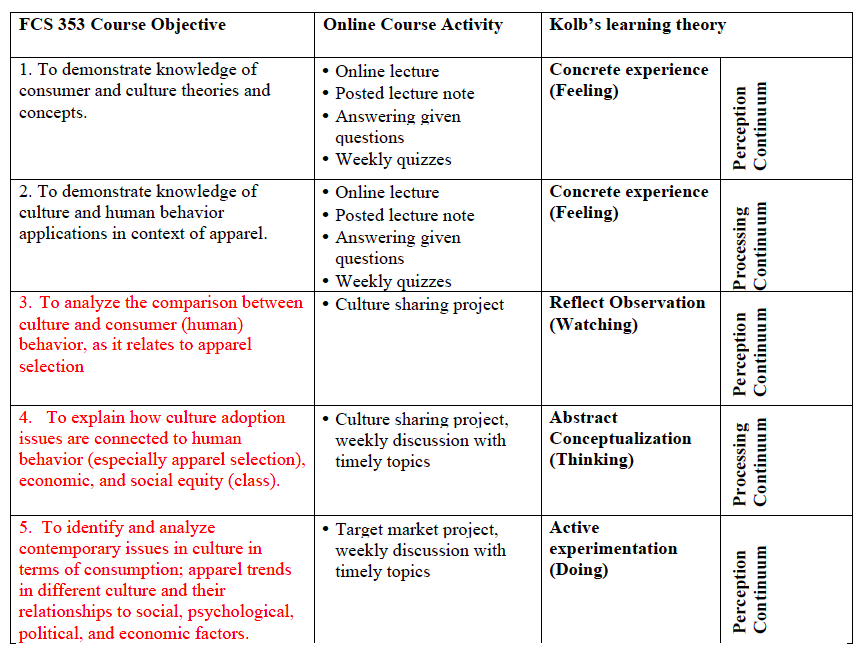
Kolbs learning theory table
kolbs learning theory was employed to explain FCS 353 moodle course
 Biography
Jongeun Kim, Ph.D., is an Associate Professor of Apparel Design and Merchandising at California State University, Northridge. She received her B.S. in Sociology from Ewha Women’s University in Seoul, Korea and earned a second B.S. and her M.A. both in Apparel Design and Merchandising from Kon-Kuk University in Seoul, Korea. She received her Ph.D in Human Environmental Sciences from Oklahoma State University in Stillwater. Kim has been teaching in higher education for over 15 years and has taught more than 14 courses including apparel design (illustration, flat pattern, Draping and CAD), apparel analysis, fashion studio, consumer behavior, sustainability in Family and Consumer Sciences, Creative expression in Family and Consumer Behavior, Apparel for special needs (functional clothing), apparel and textiles in the global economy and Apparel construction for beginner and advanced. Also Dr. Kim has developed and taught a course of Fashion Theory, analyzing the culture and psychology aspect of fashion. Dr. Kim has been a jury for international fashion design competition such as Art of Fashion and presented her own design work in many design conferences such as ITAA and AAFCS. Kim’s research focuses on consumer behavior, e-commerce marketing, community service-learning pedagogy, sustainability and eco and green fashion. Kim has presented her work at national and international conferences and published numerous research in journals and conference proceedings and organized workshops and seminars sponsored by professional associations such as ITAA (International Textile and Apparel Association), AAFCS (American Association of Family and Consumer Sciences), HIC (Hawaiian International Conference in Social Sciences) and AERA (American Educational Research Association).
eLearning Project Results |
This is an introduction and welcome post of Powtoon.
eLearnig team members.
All the help I got from eLearning team was my inspiration. As an instructor and all the tools we learned from team members were my motivation and encouragement. I got engaged more in the course. I have taught this course 7 years. I think this is the time I am engaged the most both of content and assessments. It is because of eLearning project itself, eLearning team member (lead by Hilary and dream team), and other participating instructors.
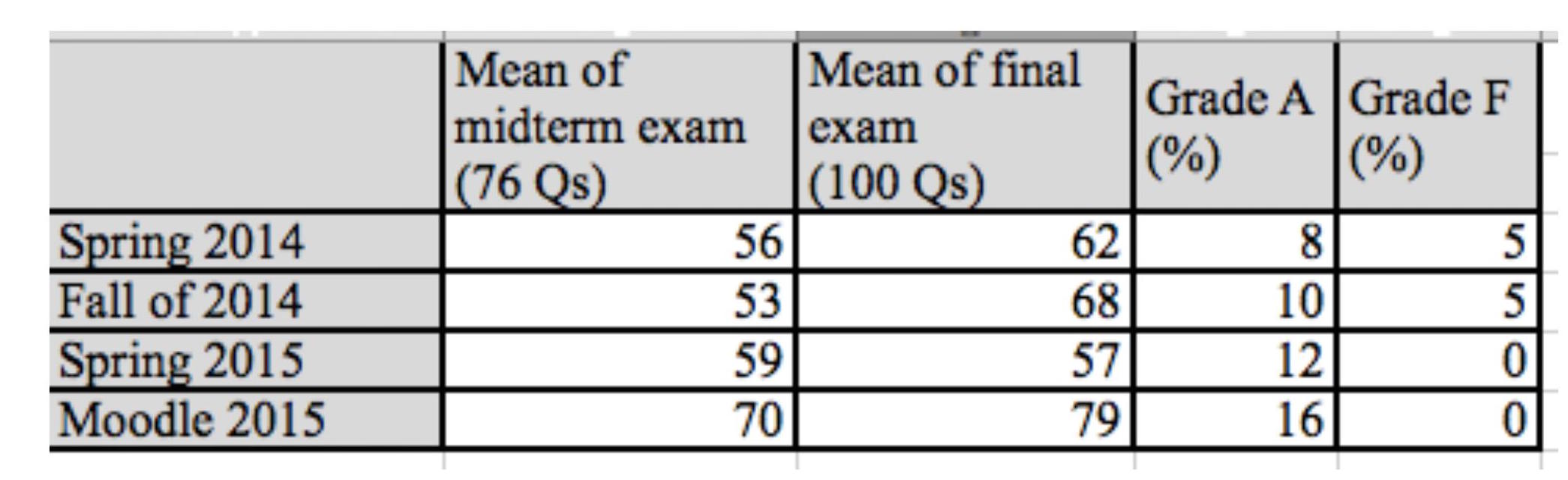
 Evidence of Impact and Findings
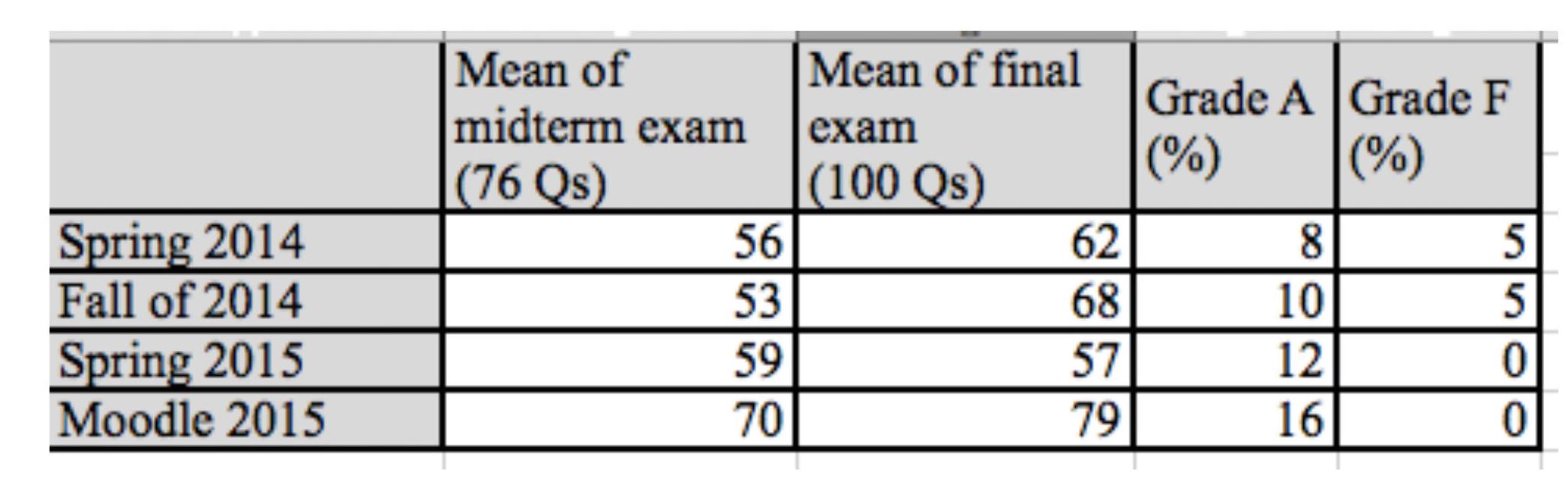
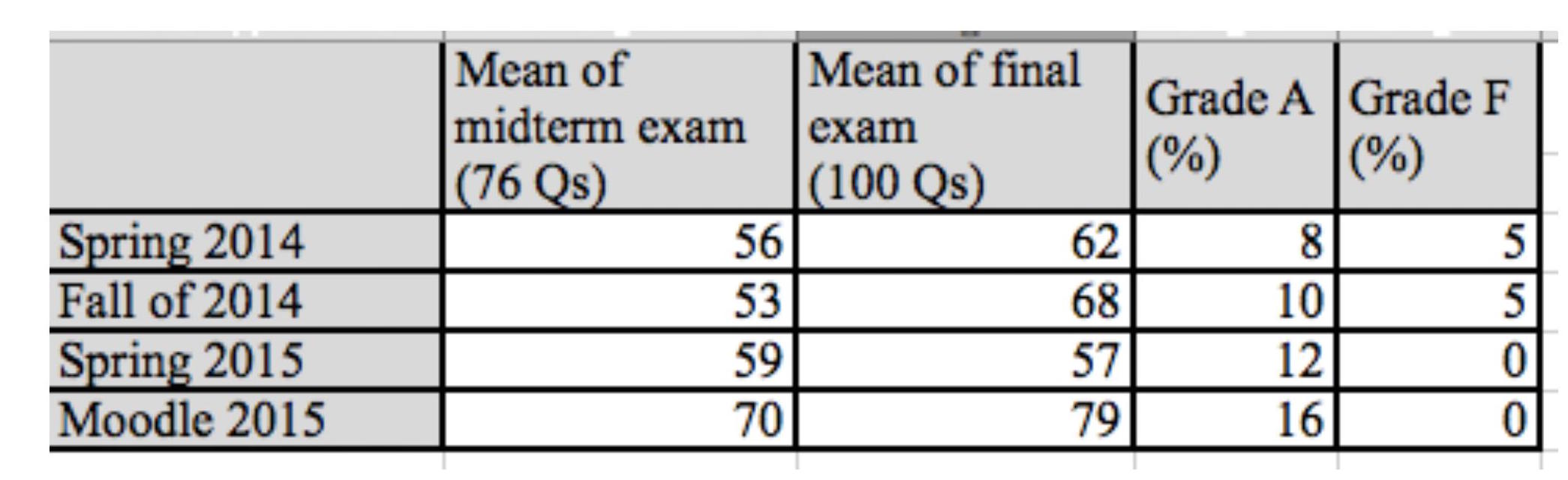
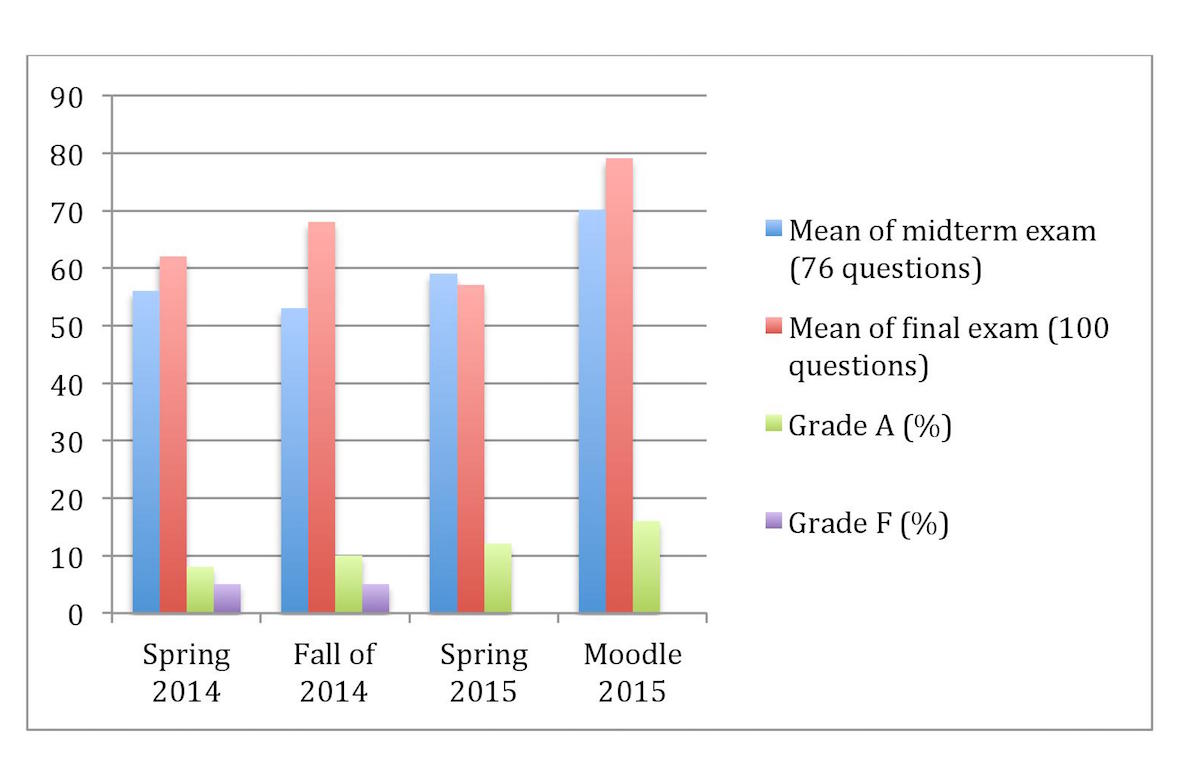
First of all, enrolled students understand course contents better than before (traditional course setting) and test results turned out better as well.
I think it is becuase of studnets' ownership of the course.The millennials are known as wired generation at the same time they are known as control-prefered generation. Students were able to control the course information, discussion, and learning time and space as they want.
Second, students learning outcome was outstanding. Not only increasing test results but also students' topic (theme) discussions were more in-depth and more engaging with course contents. Those discussions were applied with course lecture contents and theories learned in class.
Successes
What went really well?
- Moodle book for syllabus. Students were well engaged with the course since they can find course contents, project discription, grading points and etc. well and easy. The course FCS 353 has intensive lecture and discussion as well as two comprehensive projects. Often times I recognized that students were having a hard time to figure out the sub contents of the projects. However after using moodle book for syllabus, never heard " I am confused" from student any more.
- Syllabus quiz results.
- Zoom for virture office hour. Instructor and students were able to communicate easily and freely by using virtual office hour, Zoom.
- Number of students contacted to instructor via zoom vs. number of students visited (walked in) office hour.
- Theme discussion happedn by using forums. When having a discussion in class, often times discussions were lead by and finished by less than 10 students (total class enrollment is 20-35). It could be becuase of course ownership and/or personality. However in moodle course every 35 students participated in discussion by using Moodle.
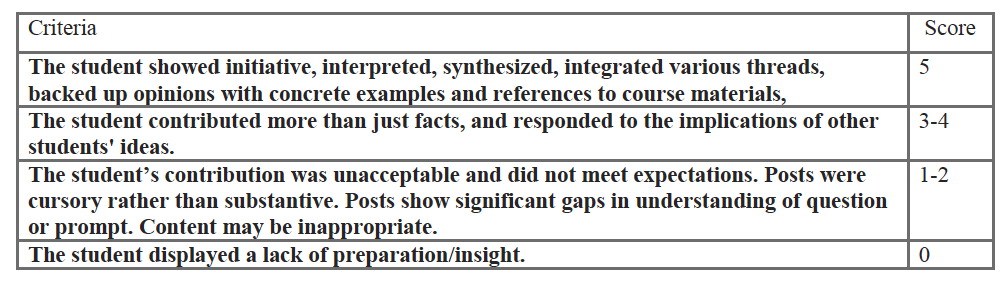
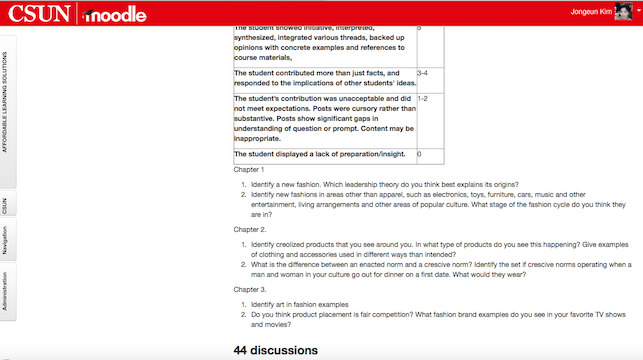
- Students number of postings (see below image attached) , grading rubric (see the attachment below), screen shot of forum discussions. Enrolled students were 20 but each discussion posting was 44, 37 and
- Following is the grading rubric used for one of weekly discussion of Moodle course. Participation in the discussion boards is required. I may not respond to all threaded discussions but I do read the posts, and moderate the discussions if necessary. Discussions will have deadlines, and late posts will not be accepted. All your posts will be read and evaluated with special attention to several areas:
- • Frequency of posting • Appropriate length • Temporal placement (i.e., do your posts all come in the last 20 minutes before the deadline of the discussion, or is there evidence of sustained engagement over time?) • Relevance to topic • Evidence of thought/reflection • Evidence of critical thinking and original idea Collegiality – adherence to the norms of courtesy appropriate in academic (but informal) discussionI will be using the following rubric to assess your performance in our online discussions.
- • Frequency of posting • Appropriate length • Temporal placement (i.e., do your posts all come in the last 20 minutes before the deadline of the discussion, or is there evidence of sustained engagement over time?) • Relevance to topic • Evidence of thought/reflection • Evidence of critical thinking and original idea Collegiality – adherence to the norms of courtesy appropriate in academic (but informal) discussionI will be using the following rubric to assess your performance in our online discussions.
What support/ideas would you offer other faculty who would like to replicate what you have done?
- Be patient and continue on working.
- Finish project before the idea too old.
- Keep on updating after create course pages.
Describe your future revisions, updates or new project ideas.
- Continue on update every semester with contemporary social issue.
- Redesign department's required core course (FCS 170 Creative expression in Family Consumer Sciences), heavy bottle neck course. With this course, I am planning to use more Social Networking site to increase student interests.
- Desseminate the ourcome with other department faculty to impove course contents.