Home

Quality Assurance ePortfolio
Academic Year 2017-2018
California State University, Chico
Proposal Summary: The Quality Assurance Program at Chico State works closely with the office of Faculty Development and the Teaching and Learning Program to develop a high-quality Faculty Learning Community based on the implementation of the QLT instrument towards course redesign. Chiara Ferrari, the QA Faculty Lead for Chico State, is a certified QLT reviewer and has shaped the campus QA program based on the established success of other FLCs funded by the Office of Faculty Development (FDEV). The support from FDEV in 2017-2018 counted towards approximately one-third of the total funding invested in the campus QA program. Chiara Ferrari has designed a series of presentations for the FLC that follow the different areas of the QLT instrument and encourage various campus experts and previous QLT participants to present their work and knowledge on innovative pedagogy. These presentations include, among other aspects, discussions about accessibility and universal design, student engagement and interaction, assessment, interactive use of technology, and diversity of instructional materials.
Campus Need for Quality Assurance |
QA Program Overview
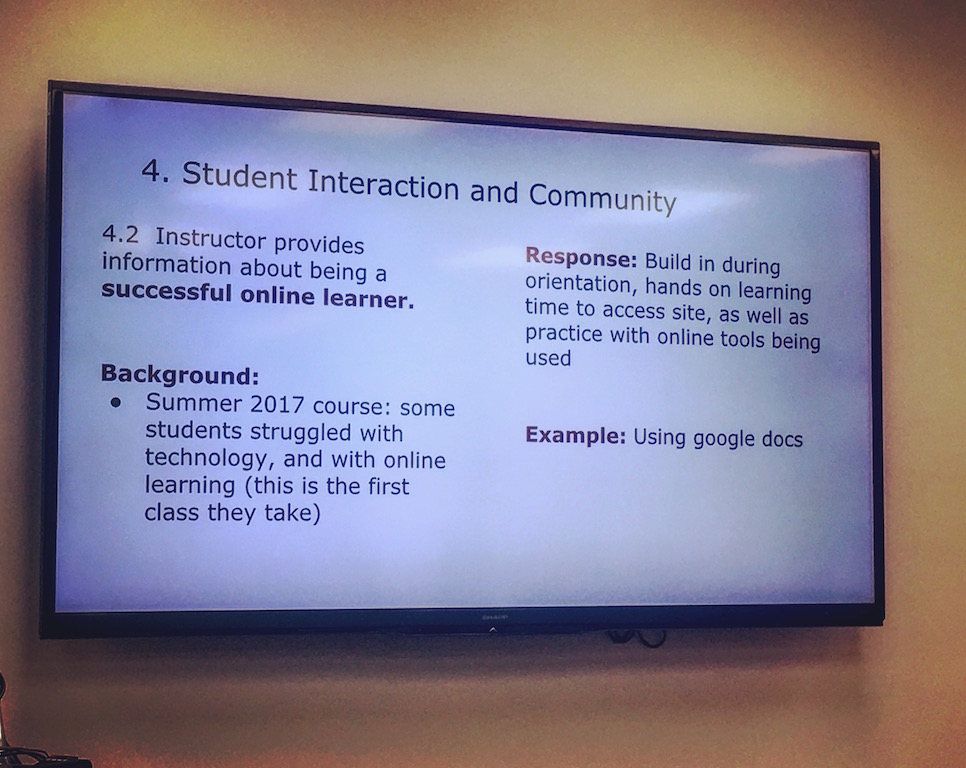
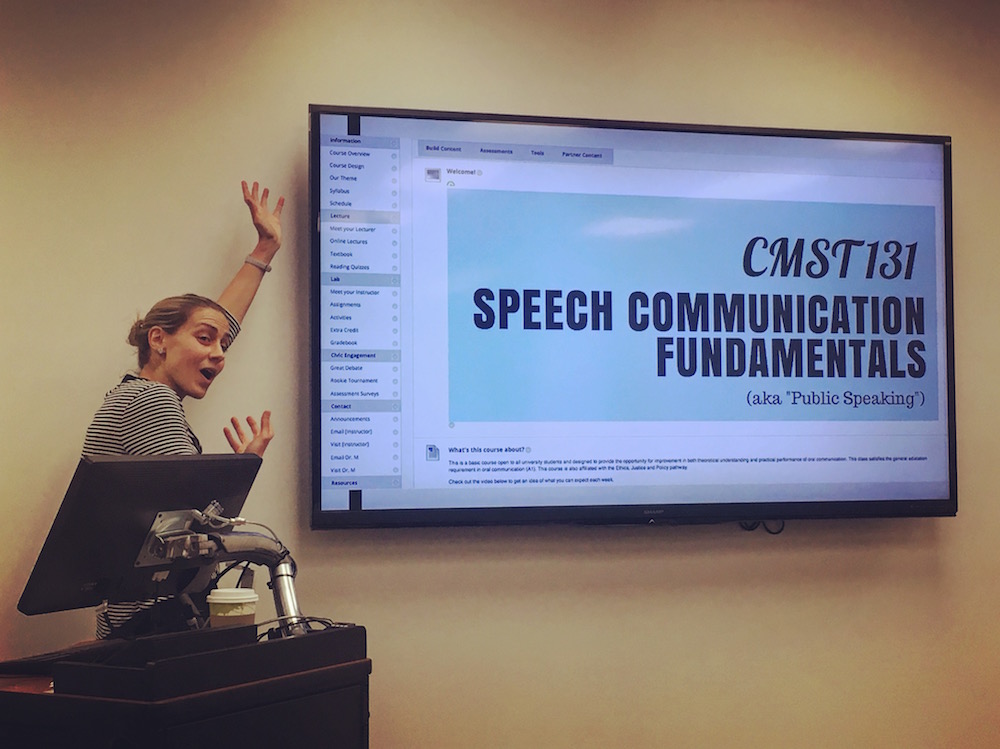
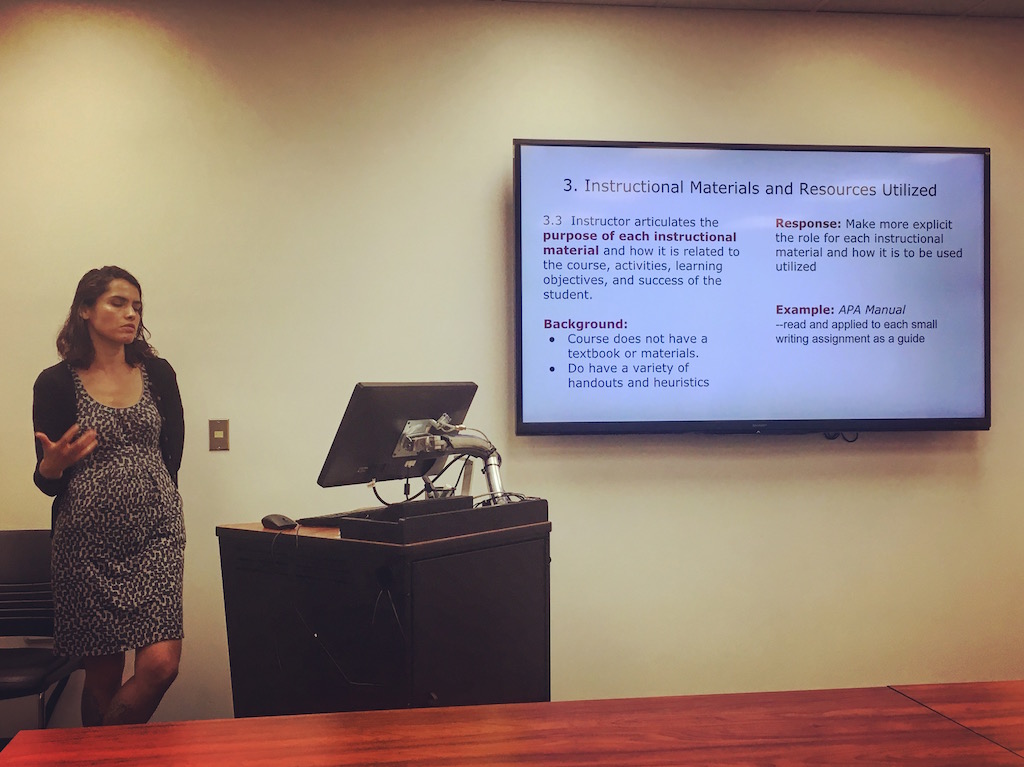
- The FLC was organized around the major broad areas of the QOLT instrument. As part of the FLC, faculty discussed SLO writing and tools for assessment and alignment in the first couple of meetings. One of the FLC meetings is fully dedicated to accessibility and universal design. Other meetings include: student engagement and interaction, student feedback and self-assessment, diversity of instructional material, accessibility, copyright, and innovative use of technology. You can find the full FLC schedule here.
- A total of 10 faculty members went through the QA FLC in 2017-2018. Faculty came from all kinds of disciplines and colleges, including: Social Work, History, Nursing, Communication Studies, Mathematics, Theater, Art History, English, and Journalism.
- The courses redesigned include both lower and upper division, core courses and electives, GE courses and major-specific courses, introductory and capstone classes, and graduate and undergraduate courses.
- Approximately 800 students in 10 courses (and multiple sections of those courses) were impacted by the QLT FLC in 2017-2018.
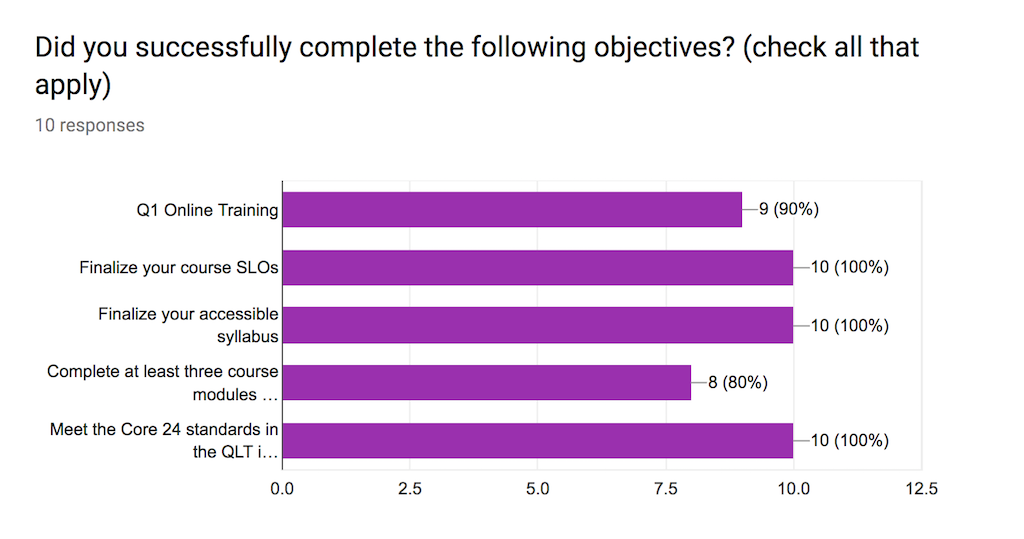
- Each faculty member received a stipend of $1200 upon the completion of the minimum objectives established in the Memorandum of Understanding each faculty signed: successfully complete the Q1 training, write measurable student learning outcomes, finalize a fully accessible syllabus, complete at least three modules in the course redesign, and meet the Core24 standards in the QLT instrument. Funding was distributed as follows: $200 upon successful completion of the Q1 training; $500 for attending the FLC in the fall, completing course SLOs, and an accessible syllabus; $500 for showing progress towards the course redesign (at least three modules should be completed), meet individually with the ITCs and the QLT Lead, and present the Core 24 standards in Spring 2019.
Campus Need for Quality Assurance
- Continued visibility of the QA/QLT program on campus, especially considering that now QLT is the only program that allows for a full course redesign. Increasing its visibility can also allow the possibility to request additional funding, possibly tapping onto the Deans’ budgets, and asking for specific course redesign recommendations, based on their College needs. This seems to be a common practice among other CSU campuses. One way to help QLT receive visibility on campus is to include a presentation about the outcomes of the FLC at the CSU, Chico's Student Success Summit (January 2019).
- Pedagogy and Curriculum: one key aspect of the 2017-2018 cohort was the opportunity to broaden discussions about pedagogy at large and to look at curriculum design beyond single courses, to include wider departmental and co-teaching perspectives (it was the case for courses in Math Education and History that were redesigned for the online program in Liberal Studies, a course in Social Work that is part of an online graduate program, and the collaboration between Journalism and Communication Studies faculty working towards an online course in blogging and activism).
- Policy for Online Education: Revising the policy for distance education brings about issues of definition and quality assurance for online, flipped, blended, and hybrid courses. The QA Lead is involved in these conversations and will have a chance to shape the language that defines distance education and its quality at CSU, Chico.
Proposal Goals Based on Need
On the basis of this year’s successful implementation of the yearlong FLC format, the Faculty Lead is proposing three major goals for 2018-2019:
1. Maintain the amount of commitment and accountability required to faculty participating in the FLC to a full year. This choice allows for a more in-depth exposure to the QLT instrument and the possibility to truly prepare faculty for local and formal CSU reviews. It also allows faculty to take the Q1 course before the FLC starts, and therefore approach the FLC with a clearer understanding of the QLT instrument. For this reason, the QA Lead is budgeting for ten $1,200-stipends, disbursed once clear goals are achieved and deliverables are completed:
- $200 upon successful completion of the Q1 training;
- $500 for attending the FLC meetings in Fall 2018 and completing clear and measurable SLOs and an accessible syllabus;
- $400 for meeting individually with the QA Lead and with the assigned ITC and present how the course redesign meets the Core 24 standards (Spring 2019)
- $100 for uploading evidence of successful course redesign to the QuARRY Repository2. Following the suggestion of a faculty member in this year’s cohort, the QA Lead plans to provide a preliminary review of courses (pre-redesign), to show each faculty member specific areas of the QLT instrument that might be more challenging for them, and in doing so, help the faculty better plan for their course redesign.
3. On the basis of faculty feedback, the faculty lead plans to increase the time for hands-on activities during the FLC meetings. This means increasing the number of resources made available to faculty before the meetings and allow for faculty to implement various tools while being able to receive immediate feedback from the faculty lead and the ITCs.
Quality Assurance Lead(s)
- Chiara Ferrari, QA Faculty Lead
- James Aird, Instructional Technology Consultant (TLP QA contact)
Supporting Campus Partners
- Josh Trout, Director of Faculty Development
- Laura Sederberg, Manager of Technology and Learning Program
- Claudine Franquet, Instructional Technology Consultant (TLP)
- Christine Sharrio, Instructional Technology Consultant (TLP)
- Marjorie Shepard, Instructional Technology Consultant (TLP)
- David Rowe, Manager Distributed Learning Technologies (DLT)
The Faculty Lead works in tandem with ITC James Aird and the rest of the TLP staff to plan the FLC meetings, organize presentations for faculty, and provide one-on-one mentorship in the course redesign process. Please see below for links to additional campus resources.
TLP - Technology and Learning Program
EOI - Exemplary Online Instruction
Background on Quality Assurance Efforts
- The QA Lead has begun working with Distributed Learning Technologies Manager David Rowe and with Interim Director of Instructional Research Tom Rosenow to collect data and participate in the CSU Student Quality Assurance Impact Research Program (SQuAIR). The plan is to begin contacting faculty that have already gone through the local EOI review, recruit the current (2017-2018) cohort, and train the next (2018-2019) cohort to include a detailed assessment plan that can facilitate their participation in (SQuAIR).
- The QA Lead is working on a book chapter publication with former QLT Lead Ben Seipel and CSU Director of Quality Learning and Teaching Brett Christie.
Quality Assurance Project Results |
Successes
- The switch to a year-long Faculty Learning Community has allowed for more interaction and sharing of ideas among the faculty members, something that was greatly appreciated by the participants (please refer to the faculty testimonials video). The year-long format has also allowed for a more in-depth approach to course redesign and for all faculty to meet the Core 24 standards of the QLT instrument by the end of Spring 2019.
- The campus QA program has increasingly achieved a prominent role on campus for the resources and the close mentoring it offers for online course redesign. In addition to facilitating interaction among faculty, another benefit of the FLC model has been to push forward broader conversations about quality assurance and distance education, which have encouraged the campus to revise its online education policy. A subcommittee of the Academic Senate is working in collaboration with the University Technology Advisory Committee to revise and update the policy in Fall 2018.
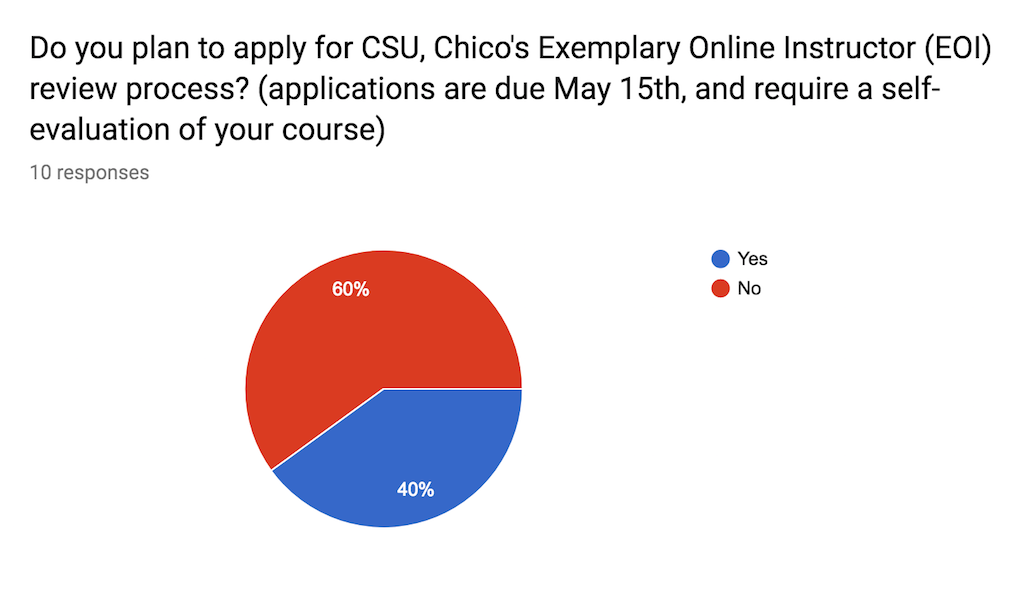
- The QA program continues to serve a variety of faculty in different career stages, including a significant number of lecturers. In 2017-2018 40% of the participants (4/10) have applied to the formal Excellence in Online Instruction (EOI) review.
Challenges
- One challenge involves trying to fit enough information in each FLC meeting while also giving faculty time to practice with new tools. Following faculty’s feedback, the QA Lead will try to increase the time for hands-on activities during the FLC meetings, while also clarifying that faculty are expected to meet with their assigned ITC outside of the FLC time.
- A continued challenge is to meet faculty’s needs when dealing with diverse technical skills. Individual meetings with both the ITCs and the QA Lead can help overcome these differences and satisfy specific needs.
- A minor challenge is finding meeting times for the FLC that work for all faculty. Informing faculty of the established schedule at the time of their application can help with accountability and attendance.
Ideas/Lessons Learned
- In 2017-2018 Chico State offered one year-long FLC, instead of two semester-long FLCs. This new format proved to be very successful, especially if compared to the semester-long FLCs offered in 2016-2017. Faculty had much more time to meet individually with the faculty lead and the ITCs and to develop a much stronger course redesign (able to meet the Core 24 standards).
- Based on last year’s feedback, the faculty lead encouraged instructional technology consultants to participate more regularly in the FLC meetings and organization. The increased involvement allowed to utilize the ITCs' expertise to present specific tools during the FLC meetings (use of rubrics, use of Kaltura videos) and create a stronger bond between them and the faculty members participating in the FLC.
- Encouraging faculty to complete the Q1 course before the FLC started also proved successful and allowed the faculty lead to be able to rely on a clear understanding of the QLT instrument once the cohort met in early Fall (as opposed to having to introduce key pedagogical elements of the QLT instrument at the beginning of the FLC without faculty having experienced it beforehand).
Tasks/Resources Completed (2016-2017)
Required minimum goals:
- Successfully complete the Q1 Online Training
- Finalize clear and measurable SLOs
- Finalize a fully accessible syllabus
- Complete at least three modules in the course redesign
- Meeting the Core 24
- Apply for EOI formal review
Participating Faculty/Team Feedback
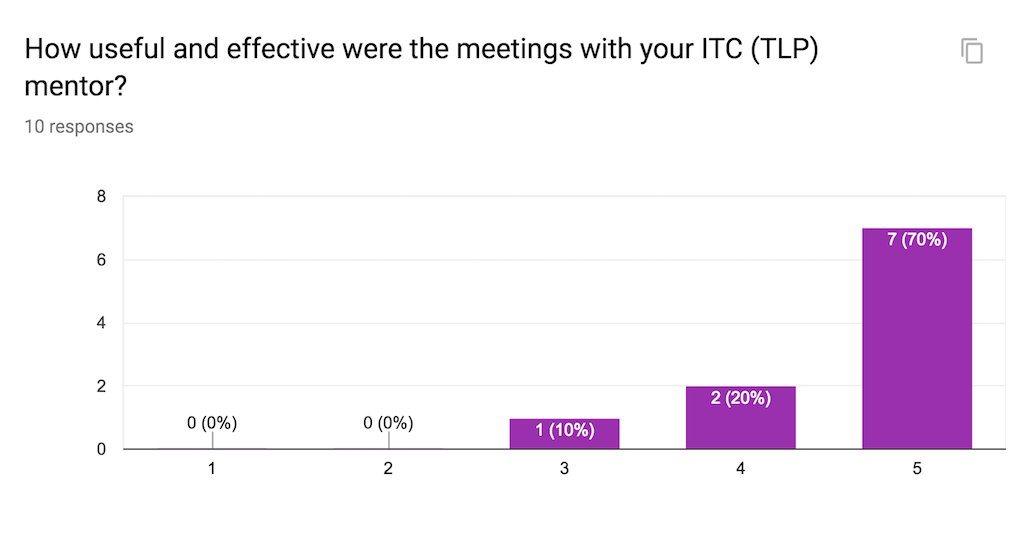
- Most faculty members have found that meeting with the ITCs was extremely beneficial towards their course redesign, as the chart below shows.
- Based on last year’s feedback, the QA Lead has also incorporated additional time for peer review and discussion, and faculty overwhelmingly found the interaction with other faculty to be the best part of the QLT FLC.
For additional feedback, please refer to the video testimonials posted in this eportfolio.
Next Steps for Quality Assurance for 2017-2018
Become part of the CSU Student Quality Assurance Impact Research (SQuAIR) project through monitoring assessment more closely and research about the benefits of Quality Assurance at Chico State. Towards this goal, additional deliverables of the FLC will include a thorough assessment plan and report. The CSU Chico’s dashboard can offer faculty-specific information on the achievement gaps in their courses and if willing, faculty can set specific goals towards bridging some of those gaps with the help of the QLT instrument.
The Faculty Lead will work with the director of Faculty Development, Josh Trout, and the Faculty Development Advisory Board to update and better organize the QLT website. The website is currently being migrated to a new accessible, mobile-friendly template. In August 2018, the faculty lead will finalize changes to the website working with CSU, Chico’s web services. The goal is to have the new website up-and-running by the time the FLC starts in early September, so it can serve as a source repository for the new cohort.