DEAIAB Resources
DEAIAB Resources
This page serves as a means of collecting and sharing resources I have come across which I find valuable in the work that I do in Diversity, Equity, Access, Inclusion, Accessibility and Belonging (DEAIAB). The creation of the list was inspired by an assignment in the Lifelong Learning MOOC where I was asked to look through the EmTechWIKI Resources. I decided to do a search focused on accessibility because I am involved with multiple projects currently that require images. I know that representation matters and can play a significant role in subconsciously countering stereotypes so I'm always looking for easier ways to find those images. I'm looking forward to expanding this page and using it as a means of collecting additional resources beyond images, as well as contributing applicable resources to the EMTechWIKI Resources.
In the last decade as my career moved more deliberately into the realm of informal science education (ISE), I was introduced into first, the idea of diversity in STEM and later, into other letters in the growing DEAAB acronym including justice issues in the last year few years. This has provided some of the greatest opportunities for me to continue my lifelong learning journey. These are often times topics that can be difficult to address, especially at a system-wide level and can result in difficult conversations and self reflection. Their increasing recognition in national conversations is important and I'm actively striving to learn even when what I'm learning makes me feel uncomfortable. The learning process involves not only reading and reflecting on the topics but taking action and reflecting on the results of my actions, the idea of praxis which is the central focus of the work of Paolo Freire and bell hooks, authors I have been reading lately.
13 Diverse and Free Stock Photo Sites - This page has a list of stock photos sites with a wide variety of specialties, including representation of plus-size people, POC (persons of color), gender diversity, melanated women, disability inclusion and LGBTQ+.
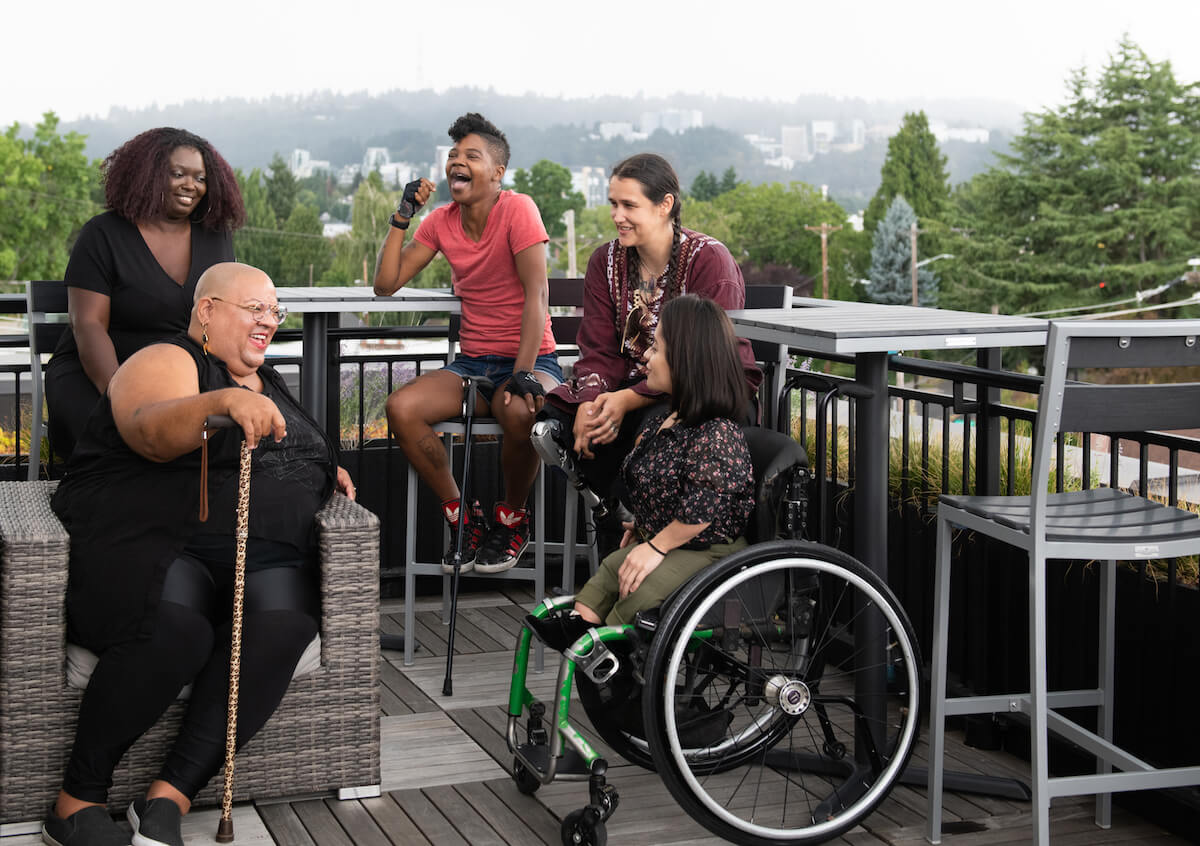 Photo credit: Disabled And Here
POC Stock - This site offers stock photos and illustrations of people of color and is a subscription-based service.
IF/Then Collection - This page has images, videos and other assets that aim to "authentically represent women in the fields of science, technology, engineering, and math (STEM). The content features careers as diverse as shark tagging, fashion design, and training Olympic athletes, and nudges public perceptions in a more realistic direction that illuminates the importance of STEM everywhere."
Stock Photo Sites for Inclusion - This article links to a number of free stock photo sites of people who are disabled (and in particular, collections that focus on racial diversity). It also lists sites that require payment.
Disrupt Aging Collection - This collection of diverse images of people 50 plus was created from a partnership between Getty Images and AARP. The goal was to redefine "what it means to get older."
Inclusive language helps others know that they belong somewhere. This great blog post by Margaret Middleton discusses how inclusive language can be used in museums to welcome families but the idea is worth considering in many realms of family serving programming including promotion, marketing, presentations and surveys. It includes a valuable chart with alternative suggestions for terms often used, such as replacing "parents" with "caregivers". Middleton has additional resources on their website including the chart.
The Center for Science Collaboration and Community Engagement has published a new resource called "Inclusive language to support community building in STEM." According to a blog post about how this document was created, "Our initial goal was to create a glossary of terms related to inclusive language, however we quickly realized that what would be more helpful were prompts and examples to help the reader understand why certain terms are used or the ways in which our shared language is evolving to be more inclusive. Useful definitions of all of these words already exist in other easy-to-access places."
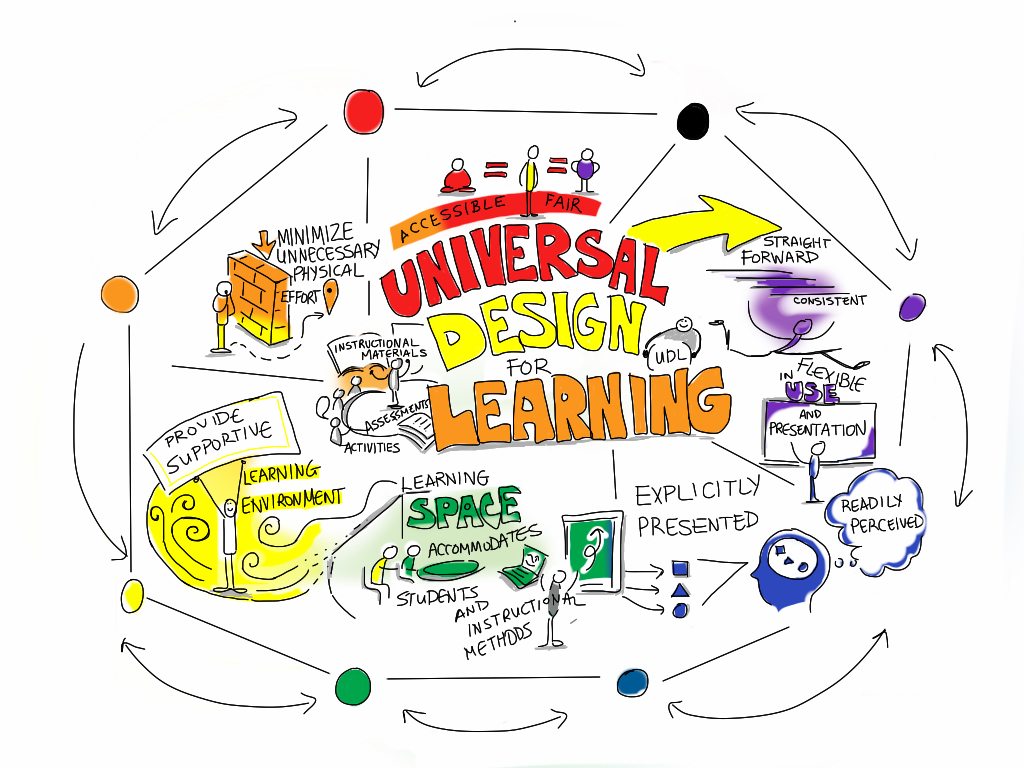 Image Source https://www.flickr.com/photos/gforsythe/8527950743
Universal Design for Learning from CAST - Universal Design for Learning (UDL) is a framework that can be used by anyone who is trying to create learning opportunities that support all learners, rather than needing to be modified for students with special needs. The organization which runs this site, CAST, has a mission "to transform education design and practice until learning has no limits." They are a "nonprofit education research and development organization that created the Universal Design for Learning framework and UDL Guidelines, now used the world over to make learning more inclusive." While the idea of UDL is best known in the K-12 educational setting, the concepts are applicable well beyond. Equity and accessibility are at the center of the UDL. It not only improves the experience of learners but thinking about UDL during the design process can save time and money on the part of the person facilitating the learning experience especially if they are facilitating it more than once. These ideas are even more important now as learning opportunities that were previously in person have moved into virtual settings.
Accessible Course Design - This site builds off of UDL ideas and includes a link to an Accessibility Checklist that can be helpful while designing a learning opportunity.
Alt Text for Social Media - This post provides information about why alt text should be used and how to use it on the popular social media platforms Facebook, Twitter, Instagram and LinkedIn.
Multiple types of resources are available to make sure visualizations are color-blind friendly. For those making maps, ColorBrewer2.0 can assist. Other useful tools include open-source software applications (such as SIM Daltonism for Mac and iOS), websites (such as color-blindness.com, hclwizard and Contrast Checker), and add-ons for browsers such as Let's Get Colorblind for Firefox which "Simulates information a color blind person receives and/or adds a daltonization filter."
Microsoft Suites has numerous tools that can be used to make sure items are accessible. Resource pages are available with instructions on how to use the accessibility checker in Word and PowerPoint.
One of the most useful resources I have found in my efforts to make my professional development workshops more accessible is the University of Washington's DO-IT (Disabilities, Opportunities, Internetworking, and Technology) Center. This site has a wide variety of resources.
Patrick Garvin is a former journalist and front-end developer who advocates for web accessibility. He put together a Twitter Thread full of links to valuable content for websites and social media and emphasizes the role that everyone plays in making digital spaces more accessible.
Learning for Justice, previously known as Teaching Tolerance, is an organization focused on social justice issues. They provide free resources for K-12 educators who "use our materials to supplement the curriculum, to inform their practices, and to create inclusive school communities where children and youth are respected, valued and welcome participants."
United State Indigenous Data Sovereignty Network, I have become increasingly involved with work that involves research and conversations about data ownership and sovereignty for indigenous people (in the U.S. and beyond) are critical. This site has information about the C.A.R.E Principles (Collective Benefit, Authority to Control, Responsibility and Ethics) which need to be appropriately combined with the F.A.I.R. Principles (Findable, Accessible, Interoperable and Reusable) when dealing with indigenous data. The University of Arizona's Native Nation's Institute is another good resource related to this topic.
How to be an Antiracist Supervisor: Start with Changing What You Call Yourself, an article written for Nonprofit Quarterly by Kim-Monique Johnson may start with a focus on term supervisor and history as a tool for oppression but it is chocked full of excellent quotes and thoughtful insight into how we look at leadership and job expectations in the post-pandemic world. The chart that the bottom of the article with suggested new language for job descriptions is extremely powerful.
Be an Antiracist Supervisor: Start with Changing What You Call Yourself
Be an Antiracist Supervisor: Start with Changing What You Call Yourself
5 Things That Matter in Planning for Effective DEIB Training - A short blog post with 5 thought provoking ideas for anyone planning a training (note, this blog uses the acronym DEIB which stands for Diversity, Equity, Inclusion and Belonging).
Gender Representation Toolkit - "The IF/THEN® Gender Representation Toolkit is a packet of materials designed to help your institution collect data on the representation of gender in the images and videos displayed in your facilities, on your websites, in program materials, signage, and more.
The primary goal of the IF/THEN® Gender Representation Toolkit is to help educators and administrators collect data on visual representation of gender across their learning environments and organizations. This data can then be used to inform changes at your organization."