Biology 362
Biology 362

Human A&P Part 2:
BIOL 362 (Mammalian Physiology)
Kristy Forsgren
Kathryn Dickson, Darryl Smith, Laney Whitlow
Course Name & Description: BIOL 362 (Mammalian Physiology). The fundamental mechanisms of mammalian and human physiology. Integration of cellular and organ system functions with emphasis on regulatory processes.
Project Abstract: BIOL 362 is an important element of our Biology major’s curriculum and is taken by the majority of Biology majors (~1500) at California State University, Fullerton (CSUF) and has an annual enrollment of 144-162 students. Most students enrolling in this course are interested in a health professional career; while they must master physiology, physiologically-based topics are challenging to our students and they struggle to think critically about physiology. The laboratory component of the course is designed to integrate hands-on data collection with course concepts, but students often spend more time with the logistics of the physiological equipment and mechanics of data collection and data analysis, and less on making links with course concepts and physiological principles. The restructure of the laboratory component of BIOL 362 is focused on developing a more interactive approach in which students can view videos or images rather than text-based instruction and quiz themselves prior to the class meeting, allowing better use of in-class time for learning physiological principles, hopefully leading to improved student success. In the lecture component of BIOL 362, case studies were added to develop students' ability to apply the material, to think critically, and to make links between lecture and laboratory components.
GE Credit: No.
Keywords/Tags: physiology
Instructional Delivery: In-class
Pedagogical Approaches: Virtual Labs (as pre-lab exercises), case studies
Class Size: 144-162 students/year
About the Course Redesign Stage 1
|
Background on the Redesign
Why Redesign Your Course?
- In the laboratory portion of the course, my goal with redesigning BIOL 362 was to utilize technology more effectively to engage students and better prepare them for the lab activity. I developed a series of interactive PreLab activities using SoftChalk© software to engage students before class and provide essential preparation for each laboratory session. In the lab, students performed physiological experiments using ADInstruments LabTutor software that integrates the experimental protocol with data collection in the format of a laboratory report, reducing set-up and data collection errors. Previously, the LabTutor interface was not used in this course, necessitating much more text-based instruction on how to use the physiological equipment in the laboratory manual. Additionally, I wanted to more closely integrate laboratory analytical skills with lecture-based information. To do this, I developed a series of jigsaw puzzle-style Case Studies using published case studies from the National Science Foundation National Center for Case Study Teaching in Science website (http://sciencecases.lib.buffalo.edu/cs/). In this manner, students worked in small groups of 2-3 to answer a common question; a total of 4-6 different, related questions were distributed to the class. After a given period of time, new groups were formed with one student per question in each group, each of whom was an “expert” on their specific question, and the new groups put all of the information together to answer a larger question or solve a problem. The last 10 minutes of the lecture period are spent discussing the physiological concept, and any questions were addressed.
- One of the issues I wanted to address in the redesign of BIOL 362 was the lack of preparedness by students in the laboratory. Students often came to class unaware of the day’s activities for lab and failed to recognize the importance of the lab. My goal was to create an atmosphere in which students became more actively engaged in the laboratory and came to class prepared to perform the assigned experiment. The PreLabs provided the background necessary for students to understand why they would be conducting the experiment. PreLabs also described the type of data that would be collected and analyzed. To follow up and further prepare students for class and develop their analytical skills, students were required to develop a hypothesis for the experiment and graph the data they expected to collect.
- A second concern that I had was that, in recent years, the course capacity has increased, preventing individualized attention in a large lecture-style class. The development of case studies in which students work together in small groups during the class allowed me to interact with students on a more one-on-one level to answer questions and address specific concerns about material covered in the class, particularly how to apply their physiological knowledge. Additionally, analytical skills students learned in the laboratory were put to use during case studies, creating a direct link between the lecture content and hands-on activities in the lab.
Course History/Background
- BIOL 362 is a major’s course with a lecture and laboratory component. The course was developed to be somewhat investigative, with lab with experiments that require advanced laboratory skills and data analysis. Previous National Science Foundation grants (the most recent in 1999-2002) had provided funding to introduce computer-based physiological measurement equipment and experiments to students, providing an investigative component to the course. In 2015, the Chancellor’s Office Redesign Grant gave us an opportunity to update some of that equipment, introduce ADInstruments LabTutor software, and redevelop the course, taking it to the next level while keeping SLOs and student learning in mind.
High Demand/Low Success Issues
- BIOL 362 is the largest laboratory-based physiology course offered at CSUF. The BIOL 362 laboratory classroom can accommodate 18 students per lab section, or 6 groups of 3, which is the maximum number per group for effective learning with the types of equipment and experiments we use. With four to five lab sections currently offered each semester, 72-90 students enroll in the course each semester at CSUF. pharmacy schools. Because the course challenges students to think in a more process-oriented and mechanistic way than they are accustomed to, incorporates data analysis each week, and integrates lecture and laboratory components, students find it to be challenging both intellectually and from a time management perspective.
- Approximately 30% of the students that attempt the course earn a non-passing grade (C- or lower), requiring them to repeat the course. Because BIOL 362 is a gateway to the health professions, not succeeding in the course creates roadblocks for many students, not only for degree attainment, but also for future career plans. Additionally, the high repeat rate and limited laboratory space results in significant waitlists and a bottleneck for students. As a result of increasing enrollment pressure, students often take BIOL 362 in their final year (or semester) when not passing the course delays graduation.
BIOL 362 Syllabus Before Redesign
Pre-Design Syllabus
About the Students and Instructor Stage 2
|
Student Characteristics
- The population of students who take BIOL 362 includes primarily Biology majors (89.5%) and other students interested in health professions careers (4.6% non-Biology majors majors, 5.9% post-baccalaureate). BIOL 362 meets the Department of Biological Science’s physiology requirement for graduation.
- BIOL 362 serves 144-162 students each year. Many students who enroll BIOL 362 take this course as a requirement for professional schools, including medical, physician’s assistant, dental, and pharmacy schools.
Advice I Gave my Students to be Successful
- At the beginning of the semester, I explain to students that learning physiologically-based topics is challenging and will require much time to master. I encourage critical thinking and problem solving as a method to learn physiological material. In the redesign, I incorporated in-class case studies to develop students’ ability to “solve” a physiological puzzle. The case studies utilize “real-life” human physiological data and thus appeal to students interested in health professions careers.
- I tell students that coming to class prepared, that is having read assigned materials for the day and completed assignments prior to class, is essential for success in BIOL 362. This is especially true for laboratory periods in which students need to gain an understanding of the day’s activities prior to beginning the experiment. The redesigned interactive online pre-lab activities better prepare students for the laboratory. I have also adopted Pearson’s Mastering A&P to develop “Test Your Knowledge” study modules for each chapter, which includes interactive Pearson’s Dynamic Study Modules and online quizzes, which facilitates student learning during lecture.
- In the past, I have also assigned an “extra credit” assignment for students to determine their learning style. Students commented that the assessment helped them to identify the best way to learn materials for BIOL 362 (and their other courses). In the redesign, I require students to bring their assignment, which now includes completing an online tutorial (developed using SoftChalk) and a half-page essay about how they plan to approach the class to office hours to discuss how to best study for the course given their learning style(s). To earn the extra credit, students must complete the assignment and discuss it with me during the first two weeks of class.
Impact of Student Learning Outcomes/Objectives (SLOs) on Course Redesign
- The goal of BIOL 362 is for students to gain a better understanding of the fundamental principles of mammalian (human) physiology and develop the ability to think and operate as a scientist. Examples of student learning goals for this course are listed below; additionally, each lecture and laboratory experiment has specific learning goals. The writing, reading, critical thinking, discussions, and laboratory-based work in this course are designed to help students develop these skills.
- Explain how each body system contributes to the organism.
- Identify the components of a homeostatic system, and apply homeostatic control systems to specific body systems.
- Relate the specializations of skeletal muscle cells with contractile function, apply principles of generating membrane potentials and action potentials to neuromuscular function, and describe the molecular basis of muscle contraction.
- Compare and contrast the three types of muscle cells (i.e., skeletal, smooth, cardiac) in terms of their structure, pathways for generating ATP, functional properties, and modes of activation, and relate how composition of different muscles in the body affects their functional properties.
- Describe the structures and function of physiological systems (e.g., respiratory, cardiovascular, reproductive).
- Integrate what is learned in the lecture to practical techniques and experimental design learned in the laboratory and to critically analyze case studies.
Alignment of SLOs With Course Redesign
- The course redesign directly aligns with the course’s SLOs by enhancing the student experience in lecture, in the laboratory, and at home while studying.
Assessments Used to Measure Students' Achievement of SLOs
- To directly assess student learning, I administer examinations that test comprehension, knowledge, analysis, and application using multiple-choice questions and short/essay questions. I also developed assessment rubrics for laboratory work. The case studies also test students’ ability to think critically and apply their knowledge to solve problems.
Student Study Skills Assignment
Sample Student Responses to Study Skills Extra Credit Assignment
Accessibility, Affordability, and Diversity
Accessibility
- All assignments and course-related activities were developed with all students in mind, and help students work effectively and use their time efficiently to succeed in the course. Assignments and activities are available online via TITANium (i.e., Moodle) so that students can work when their schedules allow and at their own pace. All online resources are ATI compatible. We work with the CSUF Office of Disability Support Services to accommodate student needs and abilities.
Affordability
- The course textbook is a special-priced bundle that contains the text and online resources (i.e., Pearson’s Mastering A&P). The CSUF bookstore also offers textbook rentals at a reduced cost to students. Laboratory manuals and PreLabs are self-published by the instructors, and available online to students at no cost.
Diversity
- All students, regardless of cultural, ethnic, gender, student learning style preferences, socioeconomic status, first generation students, etc., are encouraged to enroll in the course and provided resources/advice needed to succeed.
About The Instructor
Kristy L. Forsgren
- I am a fish reproductive physiologist and enjoy teaching physiology to undergraduate students. I am dedicated to my teaching, research, and service efforts at California State University, Fullerton. I am a first-generation college student, and earned my Bachelor’s and Master’s degrees at California State University, Long Beach. I earned my Ph.D. at the School of Aquatic and Fishery Sciences at the University of Washington in Seattle and completed a post-doc at University of California, Riverside.
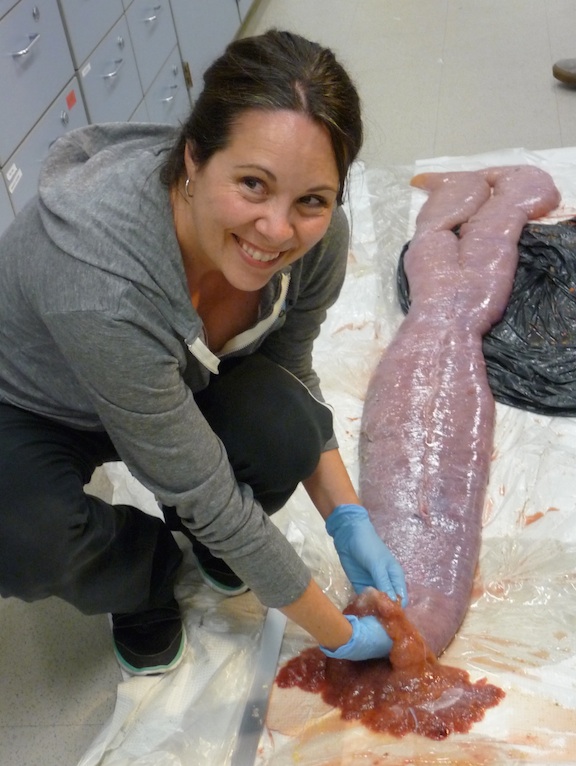
- I am photographed with an oarfish ovary that was nearly 8 feet long weighing almost 25 lbs!
Kristy Forsgren's C.V.
Kristy Forsgren's C.V.
Redesign Planning Stage 3
|
Implementing the Redesigned Course
Which Aspects of Your Course Have You Redesigned?
- Prior to the course redesign, I lectured on a given topic during the class period (75 minutes, two lectures/week). As part of the redesign, I have developed well-organized lectures that include specific learning objectives for each topic and provide in-class review activities to aid student learning. In-class activities break up the lecture period and allow me to engage the students one-on-one or in small groups. I also provide students with follow-up review questions to test their comprehension and ability to answer written questions.
- I also begin each lecture with a “Daily Query,” one or two questions to assess student comprehension of topics previously covered. I also use the queries to ask students if there is a topic they are not clear on or would like to review.
- I have organized the course into four learning modules which include closely related topics (e.g., nervous system, muscle physiology, cardiovascular physiology). After each module, the class completes a “Case Study.” Case studies promote critical thinking and application of physiological knowledge.
Adapted Technology
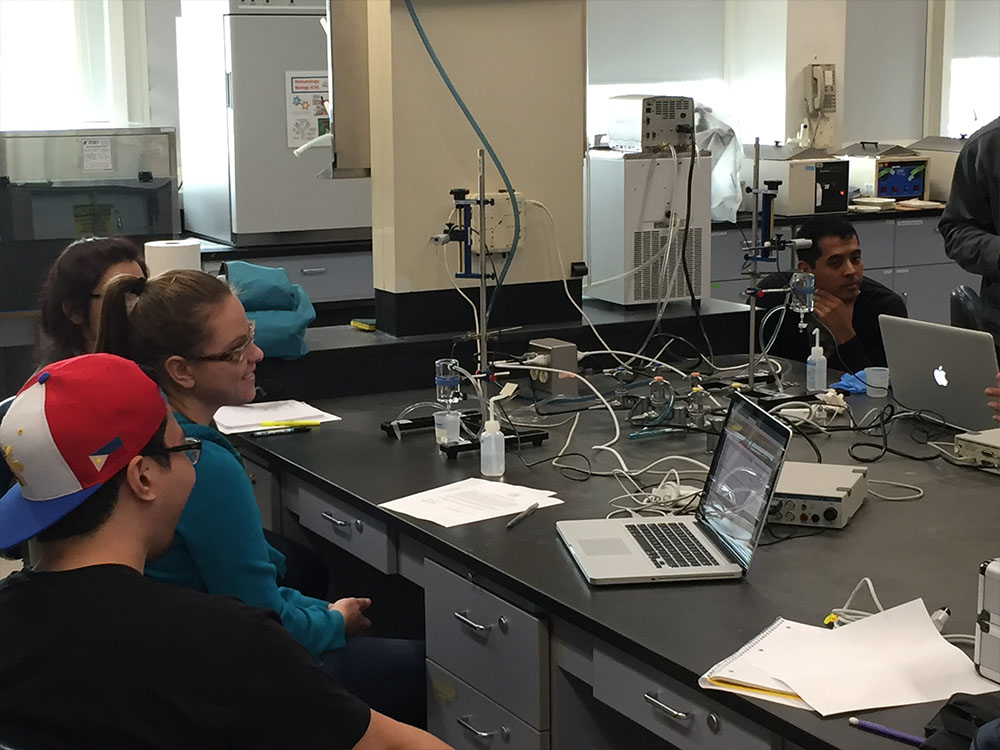
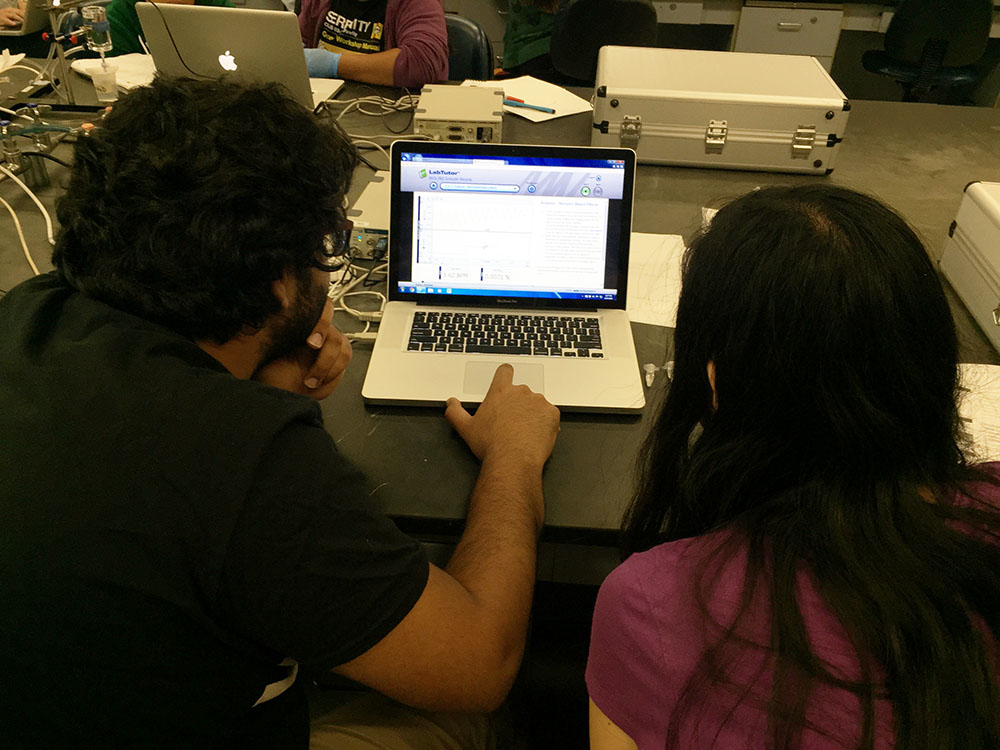
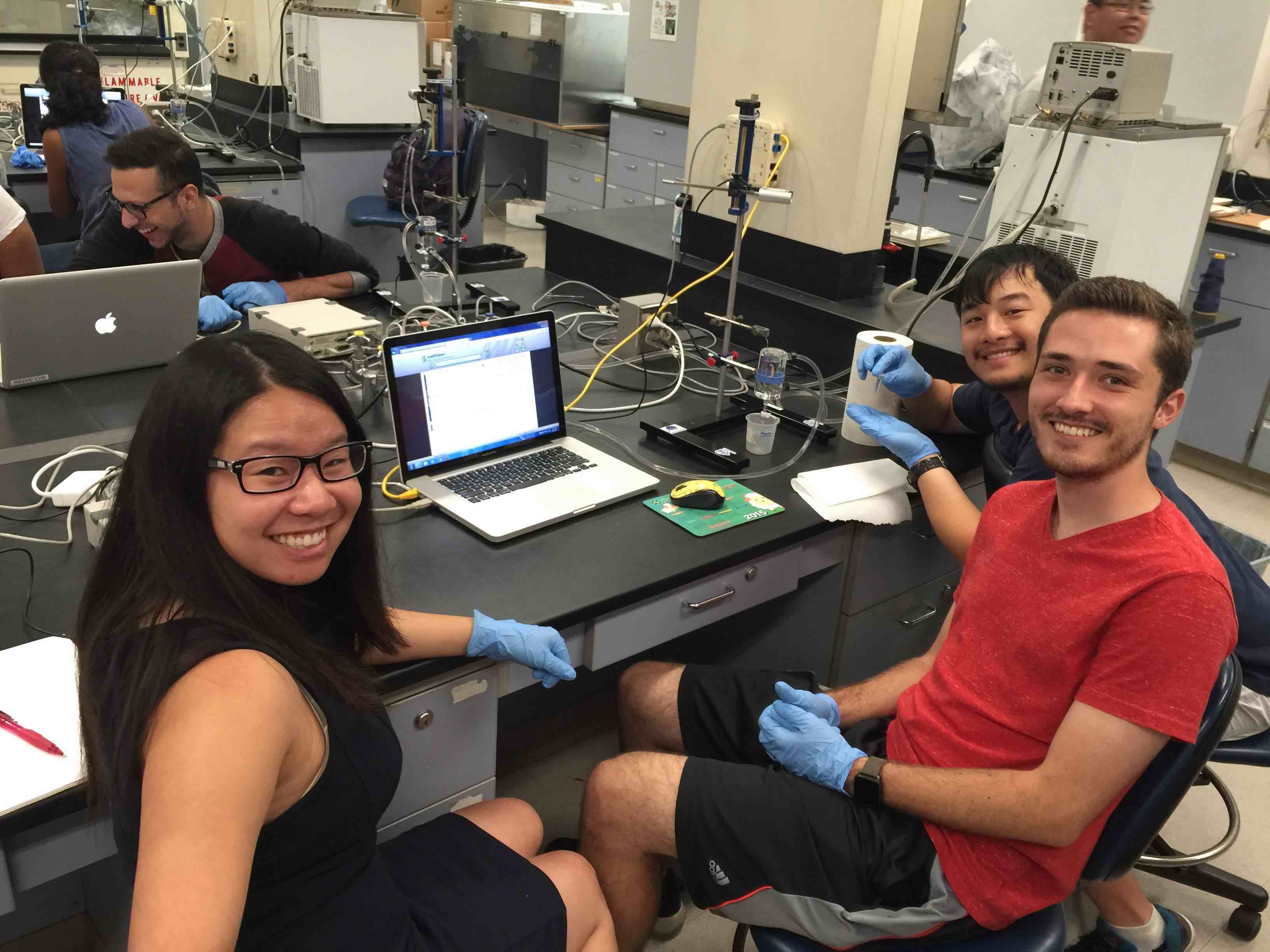
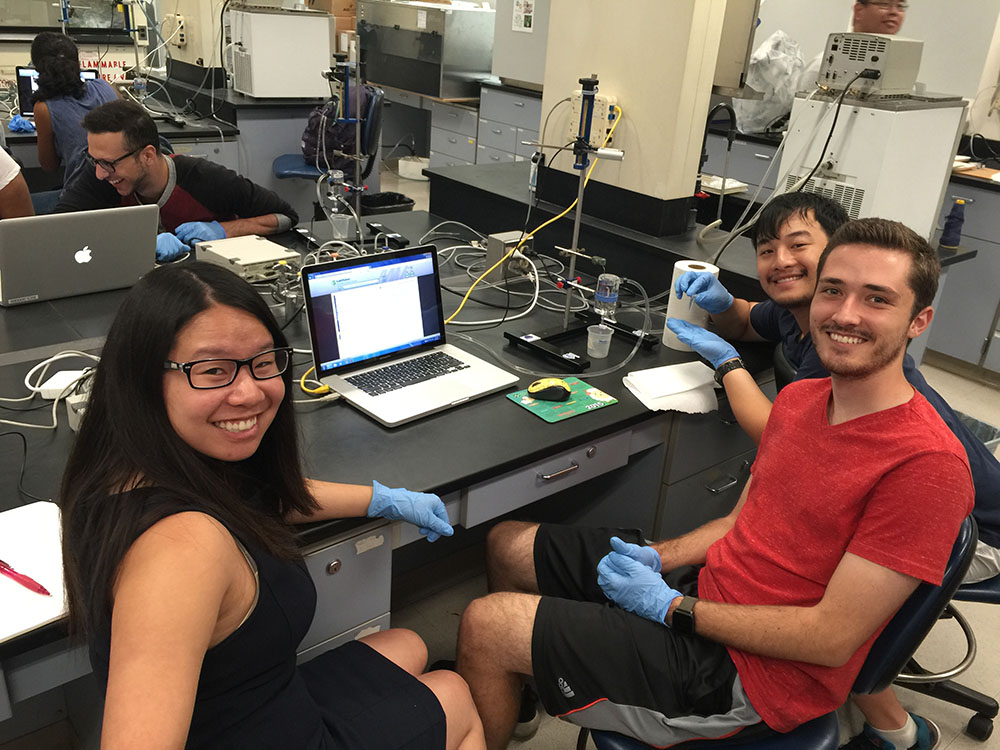
- New ADInstruments equipment was purchased for the laboratory including PowerLabs, multi-purpose data acquisition hardware, and LabTutor, a self-guided interactive software developed to engage students during laboratory experiments.
- SoftChalk software was used to create the study skills assessment and online PreLabs to introduce students to the laboratory experiment, since a protocol was no longer provided to students. Instead, students used LabTutor as a protocol while conducting the experiment.
Which Professional Development Activities Have You Participated in During Your Course Redesign?
- I participated in CSUF Faculty Development Center workshops including “Active Learning, Active Teaching,” and “Creating interactive web-based lessons with SoftChalk Lesson Builder.” Our SoftChalk lessons (PreLabs) were highlighted during the Teaching Titans Day 2015, to share our success with the campus community.
- ADInstruments representatives conducted a one-day training session to train all personnel involved in BIOL 362 on LabTutor software and equipment.
Which Additional Resources Were Needed for the Redesign?
- Additional (matching) funds were required for the purchase and support of the ADInstruments hardware and software; this was provided by the Department of Biological Science and the Provost’s office.
- Radnoti tissue organ baths were also purchased in order to have students conduct a lab examining the function of smooth muscle.
Syllabus After Redesign
Redesign Syllabus
Redesign Results Stage 4
|
Results & Findings
Course Redesign Impact on Teaching and Learning
- A critical aspect of the course redesign was preparing students for complex experiments in the laboratory that utilized information they were learning in lecture without overwhelming or discouraging them.
- Online PreLab exercises (SoftChalk software) were created for each experiment to introduce students to the laboratory activity and provide them an opportunity to formulate hypotheses and envision the data they would collect.
- Previously, students were given a text-based protocol to be used to conduct the laboratory experiment. The lab was revamped to utilize more image-based instructions (LabTutor) in which the equipment was interfaced with interactive software to guide students through complex physiological experiments and simultaneously collect data, eliminating the need for cumbersome protocols.
- As a result of the course redesign, students come to lab with a better understanding of the day’s activities. Additionally, students develop hypotheses for the experiment and graph the data they predicted they would collect. In this manner, students are better prepared to conduct complex physiological experiments. Students involved in the course after the redesign were better prepared and more interested in the data they were collecting. Students also mastered learning outcomes that aligned with the lecture content by being able to integrate lecture and laboratory content during case study days.
Assessment Findings
- To directly assess student learning, I administered examinations that test comprehension, knowledge, analysis, and application using multiple-choice questions and short/essay questions.
- To promote self-assessment of learning, I created surveys that provide students an opportunity to reflect and identify what worked best for them (with respect to learning material) and how they might change/alter their study habits to improve knowledge comprehension.
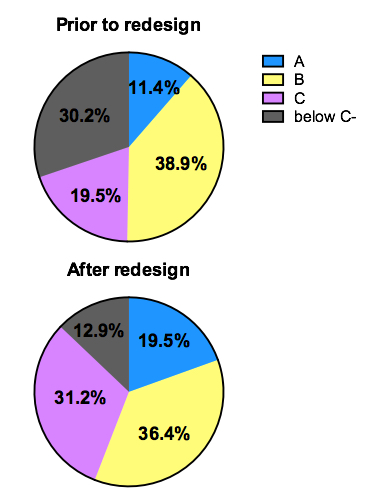
- Prior to the redesign of BIOL 362 (Fall 2012 Spring 2013), the average student GPA in the course was 2.36 with 30.2% of students earning non-passing grades (C- and below). After redesigning the course (Spring 2015 partial redesign, Fall 2015 fully redesigned), the average student GPA increased to 2.71 with a reduction in the percentage of non-passing students to 12.9%. The redesign was successful in targeting non-passing students (below C-), as evidenced by an increased number of students passing the class with a C (from 19.5% prior to redesign to 31.2% after redesign), as well as more earning an A or B.
Student Feedback
- Students appreciated working on updated equipment and felt that the online PreLabs better prepared them for the laboratory. The LabTutor software (ADInstruments) combines student instructions and data collection. Students commented that they liked the convenience and felt it helped them understand the data they were collecting.
- “It was helpful that the lab and lecture had similar objectives and goals. This kept me focused and allowed me to see connections between the two.”
- “The case studies challenged me into applying what I had previously learned in order to solve a medical-based problem. I learned how to read an ECG!”
- “Dr. Forsgren loves physiology and encourages students to keep trying and maintain a positive attitude. This really helped me succeed in a challenging course.”
Challenges My Students Encountered
- Students were enthusiastic about the new equipment (e.g., PowerLab, Radnoti organ baths) purchased for the course, but at times were still challenged by the complexity of the physiological equipment and data collection and analysis. However, the virtual PreLabs and consistency in laboratory techniques from lab to lab allowed students to master the technology during the course of the semester. As a result, students better understood the meaning of physiological data they collected and the connections to the course concepts.
PreLab for Neuromuscular Physiology Laboratory
Online PreLab developed using SoftChalk software.
LabTutor for Smooth Muscle Physiology Laboratory
Interactive in-class laboratory interfacing computer software (LabTutor) and data collection.
Lessons Learned & Tips
Teaching Tips
Redesigning a course that involves significantly modifying the lecture and laboratory content takes considerable time! I thought I would be able to redevelop the course in one semester, but instead it took three semesters to complete the redesign and get all the “bugs” worked out. I would recommend planning your redesign in stages, implementing one stage at a time (one stage/semester).
Course Redesign Obstacles
- The major obstacle in redesigning BIOL 362 was time. It took considerable time and effort to restructure the course with student learning in mind.
- Ordering and receiving new laboratory equipment also took longer than expected. In addition, we needed to organize ADInstruments training during the summer when all instructors and support staff could attend training on the new equipment.
- We did not anticipate how extensive the laboratory manual rewriting would be. In fact, ten online PreLabs were created and nine LabTutor experiments had to be modified to ensure the SLOs were met in the laboratory experience.
Strategies I Used to Increase Engagement
- To aid students in learning complex physiological material, I incorporated a Study Skills tutorial, and offered students 5 points extra credit for spending at least 15 minutes on the tutorial and writing a half-page assessment of their plan for succeeding in the course. Requiring students to come to office hours to discuss the results of their learning style assessment increased one-on-one discussions with students. It allowed me to provide individualized advice to students with different learning styles.
- The incorporation of case studies during lecture greatly increased student engagement. Students worked in small groups (2-3) on case studies. They were given a homework assignment with background about the case study, so when class began all students were on the same page. This allowed me to devote the entire class period (75 minutes) to interact with each group several times in solving the physiological puzzle. At the end of class, students shared their conclusions with the class, which encouraged camaraderie and reinforced course concepts.
- Daily Queries were given at the beginning of each lecture; students were given the first 5 minutes of class to answer the query. I arrived to class 5-10 minutes before class began to post the day’s query. This encouraged students to arrive at class early and provided an opportunity for me to interact with students before class began; often I answered student questions on material and had an opportunity to get to know the students on a more personal level.
Daily Queries
Sample Daily Queries for BIOL 362.
Instructor Reflection
Through the course redesign of BIOL 362, I have learned a great deal about student learning and how to actively engage students during class and in a laboratory setting. The ePortfolio has provided me with an opportunity to reflect on the work involved to redevelop a lecture-lab course. There have been many facets of the redesign including keeping SLOs and student engagement a top priority, while at the same time developing activities that will enhance the learning experience. I have developed course materials that engage students, facilitate student learning, and promote student self-assessment, while creating a welcoming and enjoyable environment. I have discovered that providing structured lectures and learning objectives allows students to focus their study efforts.
I have received positive feedback on the course redesign from students, and although there have been some growing pains student learning has improved. I will continue to respond to student feedback and promote student comprehension of physiology.
Given the amount of time and effort dedicated to redeveloping BIOL 362, I am committed to sharing what I have learned with the university community. I presented on the use of SoftChalk for developing PreLabs at CSUF’s Teaching Titans Day. Based on the success of BIOL 362, we are sharing our approaches on course redesign with the faculty involved in redesigning BIOL 191BL, an integrated anatomy and physiology course aimed at preparing students for nursing and other allied health professions. Although BIOL 191BL is taught at a different level than BIOL 362, we expect that many of our successes can be successfully adapted for BIOL 191BL.