
Wildlife Crime
Wildlife Crime
Variety of OERs (Open Education Resources)
CSU Instructor Open Textbook Adoption Portrait
Abstract: These open resources are being utilized in a Wildlife Crime course for undergraduate students by Nerea Marteache, Ph.D. at California State University San Bernardino. The open educational resources include journal articles that are available and free through the University’s library and media resources that can be easily updated. The main motivation to adopt an open textbook was to save students money and also being able to customize course contents. Most students access the open resources from our LMS.
About the Resources
OERs
Description:
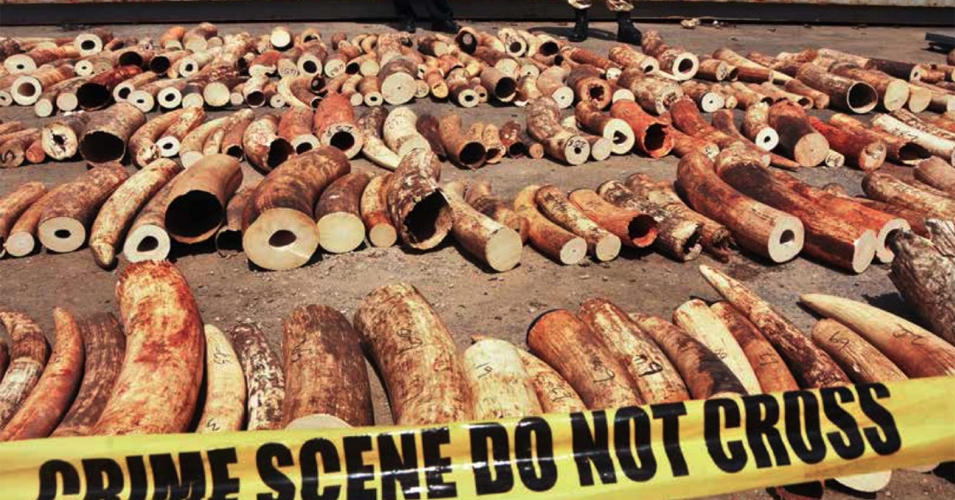
Instead of a textbook, I decided to select a number of journal articles and media reports on the topic of Wildlife Crime. Some of the advantages of this approach are:
- Journal articles are available and free through the University’s library
- Media reports are publicly available online (also free)
- I can touch on a variety of issues and cover a wide number of different species
- It is easy to keep my materials updated, as I can add/delete a couple of articles every time I teach the course as I see fit
Topics
- Week 1: What is Wildlife Crime
- Week 2: Wildlife Crime and Organized Crime
- Week 3: Wild Fauna I
- Week 4: Wild Fauna II
- Week 5: Illegal Fishing
- Week 6: Wild Flora
- Week 7: Criminology and Wildlife Crime
- Week 8: Conservation Responses I
- Week 9: Conversation Responses II
- Week 10: Enforcement
Formats:
These resources are available to students through our LMS. They are all in PDF format and students can read them online or download them. Each of the articles is available below
Cost savings:
Since this is a new course, I don't have a previously used textbook. However, if I were to select a textbook it would be Wildlife Crime: From Theory to Practice, edited by William Moreto. This book retails for $104.50 on Amazon. Since I will teach this class to 25 students annually, the total potential savings for students is $2,612.50.
Week 1 Readings - What is Wildlife Crime?
Five articles
Week 2 Readings - Wildlife Crime and Organized Crime
3 articles
Week 3 Readings - Wild Fauna I
5 articles
Week 4 Readings - Wild Fauna II
4 articles
Week 5 Readings - Illegal Fishing
3 articles
Week 6 Readings - Wild Flora
6 articles
Week 7 Readings - Criminology and Wildlife Crime
2 articles
Week 8 Readings - Conservation Responses I
4 articles and 4 supplemental materials
Week 9 Readings - Conservation Responses II
4 articles
Week 10 Readings - Enforcement
3 articles
About the Course

CJUS 590: Special Topics — Wildlife Crime
Description: INTERPOL defines wildlife crime as “taking, trading, exploiting or possessing of the world’s wild flora and fauna in contravention of national and international laws”. Wildlife crime, therefore, refers to buying, selling, or distributing wild animals (or their parts) and/or plants that are protected by law. Crimes against wildlife are widespread, numerous and varied, and include, among others, illegal trade, trapping and snaring, poaching, injuring and killing. This course will provide an overview of the crimes committed against wildlife, with a special emphasis on the illegal trade of animals. Other issues covered in this class include the global trends in wildlife trade, international laws governing this trade, and the global impact the trade has in terms of the survival of the species and its long-term negative effects on ecosystems.
This is an elective course for Criminal Justice.
Prerequisites: None
GE credit: 3
Institutional Learning Outcomes
In this course:
- Students will learn how to identify, explain, and apply multiple approaches to problem-solving and knowledge production from within and across disciplines and fields to intellectual, ethical, social, and practical issues.
- Students will develop and use new approaches to thinking and problem-solving.
Department Learning Outcomes
In this course:
- Students will understand and expound on the causes of crime and the crime rates in our society.
- Students will learn about policy development and implementation, in particular, those related to crime prevention.
Course Outcomes
At the completion of this course, students will be able to:
- Identify and explain a variety of types of wildlife crimes.
- Analyze the causes and correlates of wildlife crime.
- Describe the impact of criminal justice policy on wildlife crime.
- Identify the aspects of wildlife trade regulation.
- Design and evaluate ways to prevent wildlife crime.
Curricular changes:
Since the sources of information are multiple and varied, I give them an open book quiz every week to make sure that they read all the readings, and they also have to come up with one discussion question based on that week’s reading.
Teaching and learning impacts:
Collaborate more with other faculty: No
Use wider range of teaching materials: Yes
Student learning improved: Yes
Student Retention improved: Yes
Any unexpected results: No
Instead of a textbook, I use journal articles and media reports (even a TED talk!)
Students like having shorter articles on different topics. They reported being more interested and liking this way of learning.
Although articles assigned on the same week cover multiple species, they all address the same underlying issue. Through repetition, student retention improves.
Sample syllabus and assignment:
Syllabus
This is the syllabus I used for Winter 2018.
Assignment
These are the guidelines for the final paper for the course.
Textbook Adoption
OER Adoption Process
My main motivation in adopting these OERs is to save students money. I also wanted to be able to customize the course contents and keep my materials up-to-date.
In order to obtain these OERs, I conducted a literature review on the issue of Wildlife Crime. After creating my syllabus, I selected appropriate materials for each week.
This system worked quite well. If anything, students complained about the amount of text they had to read (30 to 40 pages every week). However, this is always the case in all the courses I teach, so I do not think this is due to the materials assigned.
Student access:
All of the materials are posted on the course Blackboard site. Students also have all the references on the syllabus, so they could also go find them on the library'website or online.
Student feedback or participation:
Students had a positive reaction to the materials. I surveyed my students to ask if they thought the readings assigned were relevant to the course. Here you have a couple of quotes:
- The readings assigned helped enhanced the content of the course. Some of the articles were longer than others but just as important.
- Yes, I feel like the readings do relate to what the class is supposed to be about. I personally think the readings are a little long and if you do have the long readings maybe make us read fewer articles.
- Some assigned readings were very boring but for the most part very interesting.
- I believed that all the readings assigned were relevant to the course and kept us engaged.
- I think that the assigned readings are relevant to content of the course. The first articles pretty much introduced us to the topic and the remaining one gave us multiple examples of different species and plants that were in danger. I also like that we don’t have a textbook. I feel like reading articles and taking quizzes is more fun than reading a textbook and taking quizzes on those. I feel like articles are better, not only because they’re inexpensive, but also because they are just more interesting to read. Not going to lie, the longer articles were harder to get through than the shorter ones. I liked how quickly the shorter articles got straight to the point as opposed to the longer ones that I feel constantly repeated themselves and sometimes made me lose interest.

I am a Criminal Justice professor at the California State University San Bernardino. I teach the following courses:
- CJUS 311 — Research Methods in Criminal Justice
- CJUS 312 — Statistics in Criminal Justice
- CJUS 470 — Environmental Crime Prevention
- CJUS 575 — Internship in Criminal Justice
- CJUS 590 - Wildlife Crime
- CJUS 595 — Independent Study
- CJUS 608 — Crime, Criminals, and Victims
Imparting knowledge, while at the same time motivating our students is one of the most challenging and rewarding aspects of my job at this University. I am always trying to improve the quality of my teaching, and one of my objectives is to integrate High-Impact Practice into my courses. In my experience, the best teaching involves concrete, hands-on examples, so in my classes, I always use real-life cases and often refer to results from my own research. For example, with the goal of teaching practical knowledge and skills, the main assignment in the course CJUS 470 (Environmental Crime Prevention) consists of an analysis and assessment of opportunities to commit theft at the students’ place of employment. The students are then asked to come up with strategies to prevent that crime from happening and to discuss their pros and cons. At the end of the course, they are offered the opportunity to work on the data generated by the class by enrolling in an independent study, during which they participate in the analysis of the opportunity structure of employee theft. This is a different and innovative approach that promotes the exposure of undergraduate students to research and gives them the chance to engage in a project they are already familiar with, and interested in. In a Hispanic-serving institution with 80% first-generation college students, I believe that it is critical to provide them with opportunities to contribute to the creation of knowledge through scientific research.
My research interests include:
- Environmental Criminology and Crime Analysis
- Situational Crime Prevention, Problem-oriented Policing, and Crime Prevention through Environmental Design (C.P.T.E.D.)
- White collar/Occupational Crime
- Wildlife Crime
- Crime and disorder in mass transit systems