Food & Nutrition Learning Goals | Description of Accomplishments That Met Goals |
- Evaluate the role of nutrition in optimizing health throughout the lifecycle and respond to harmful nutrition practices.
| - Analyzed the nutritional intake of a 16-year-old male and made recommendations to address health issues while helping him achieve his goals.
- Interviewed a 19-year-old, Division 1 soccer player. Analyzed her diet and created a new eating plan based on the nutritional demands of her sport.
|
- Demonstrate knowledge of nutrition as it applies to food service, dietetics, and wellness.
| Understands how nutrition promotes health and prevents disease. Can analyze evidence-based studies to learn about supplements and various types of diets. Uses the Nutrition Care Manual and other reputable resources to design plans of care for patients in case studies.
|
- Demonstrate the knowledge and ability to apply management principles to nutrition and food service.
| - Completed assignments pertaining to budget, income statements, benchmarking, payroll, and conflict resolution. Learned from people in the community about overseeing the National School Lunch Program, Human Resources Strategy, and Quality Management.
|
- Present and evaluate food and nutrition education programs to a variety of audiences.
| - Presented the Benefits of Fiber at SWIRCA
- Presented Evidence-Based Analysis Project topic, "Are Probiotics an Effective IBS Treatment" at SWIAND.
- Discussed Evidence-Based Analysis Project results with a tabletop display at the 28th Annual Research Evidence-Based Practice and Performance Improvement in Healthcare Conference.
- Created flyers for ECHO Clinic on the use of whole foods for heart health.
|
- Assess the role that behavior, economics, and dietary supplements have on planning and eating healthy diets.
| - Researched the impact poor social determinants of health have on minorities and their health status. Researched nutritional etiology and the programs that exist to help those in need.
- Counseled a client to reduce his supplement intake.
|
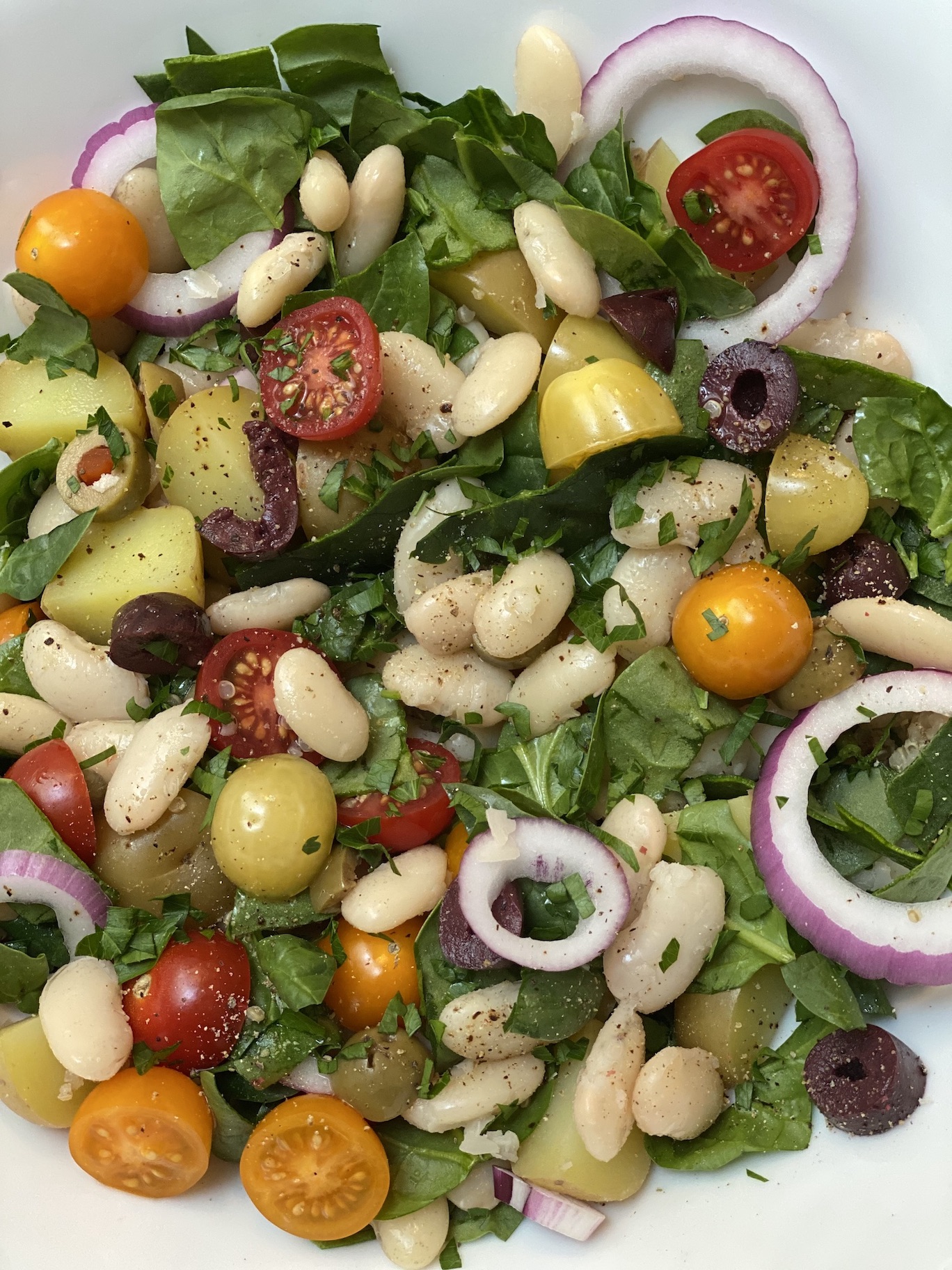
- Demonstrate basic food preparation and presentation skills.
| |
- Apply food science knowledge.
| - Designed and performed a self-directed lab project assessing the density and viscosity of foams created with varying ratios of egg whites and aquafaba.
|
- Demonstrate problem-solving skills in food service, dietetics, and wellness.
| - Uses the Nutrition Care Process to assess case studies.
- Analyzed an adult female's supplemental intake.
- Provided a client with nutritional counseling by addressing his needs and helping him overcome barriers.
|
- Demonstrate how to locate, interpret, evaluate, and use professional literature to make ethical, evidence-based decisions.
| - Created a debate presentation about Transforming Food Systems and wrote a research paper analyzing the Politics and Culture of Fast Food. Both projects involved researching scientific, political, cultural, ethical, legal, religious, economic, and historical perspectives. They required researching government/non-government and professional and private organizations' policies to design ethically based solutions to problems.
|
| KRDN 1.3 Apply critical thinking skills. | - Applied critical thinking skills during meal production to creatively work around obstacles.
- Researched, designed, and implemented a self-directed food science project.
- Leadership's debate and research paper.
- Using the Nutrition Care Process to Assess, Diagnose, Intervene, and Monitor/Evaluate patients in Medical Nutrition Therapy case studies.
- Provided nutrition counseling to a client.
- Assessed a client's supplementation usage.
- Research project on Heart Disease in Native Americans.
|
|
| KRDN 2.1 Students must be able to demonstrate effective and professional oral and written communication and documentation. | |
| KRDN 2.2 Describe the governance of nutrition and dietetics practice, such as the Scope of Nutrition and Dietetics Practice for the Registered Dietitian Nutritionist and the Code of Ethics for the Profession of Nutrition and Dietetics. | - Scope of Practice and Code of Ethics were covered in classes such as Introduction to Dietetics, Medical Nutrition Therapy, and more.
- Learned about how to handle sensitive medical situations in Ethics of Healthcare in a Pluralistic Society and The Healthcare Delivery System.
- ServSafe, OSHA, and HIPAA training and certifications.
|
| KRDN 2.5 Identify and describe the work of interprofessional teams and the roles of others with whom the registered dietitian nutritionist collaborates in the delivery of food and nutrition services. | - Worked with Respiratory Therapy in a case study, nursing students for carb counting and infant formula, and Radiology Technology for nasogastric tube placement. Worked with social workers, occupational therapy, and IU faculty to discuss resources available to break the cycle of addiction.
- Worked with public health students to ensure we met food safety standards while we prepared and served our cultural meal. They assessed our recipes and HACCP plans and made checklists to monitor our performance similar to a health inspection.
- Worked different rotations (i.e., Retail, Production, Bakery) to gain exposure to the protocol we may encounter as RDNs.
|
| KRDN 2.6 Demonstrate an understanding of cultural competence/sensitivity. | - Researching India and the beliefs, customs, and traditions of its inhabitants brings awareness to what makes us all inherently unique and interesting. It was an opportunity to celebrate diversity. Learning different dietary practices can help future RDNs understand how to help clients with eating plans and habits.
- Learned to be culturally sensitive through Counseling, Community Nutrition (i.e., SWIRCA, Tri-State Food Bank, ECHO Clinic), Leadership's weekly presentations, Medical Nutrition Therapy, and more.
|
| KRD 3.2 Students must be able to develop an educational strategy for a target population. | - Heart Disease in Native Americans Research Paper
- Benefits of Fiber for SWIRCA
- Eating plan for athlete.
- Designed nutrition therapy interventions for Counseling client.
|
| KRDN 3.6 Develop nutritionally sound meals, menus, and meal plans that promote health and disease management and meet client’s/patient’s needs | - The development of the Indian cultural meal was based on incorporating all the food groups and using unadulterated ingredients prepared in a way to promote good health and to meet our customers' needs.
- Created meals to accommodate athlete's off-season, in-season, and preparatory phases of training/competition.
- Taught a client how to meal plan, prep, and achieve balance, structure, and variety in his eating pattern.
|
| KRDN 4.1 Apply management theories to the development of programs or services. | - Applied foodservice management concepts to establish the theme and decor for the Cultural Meal, invitations, menu pricing, creation of production schedules, and food and labor analyses. These projects helped us understand the many moving parts involved in running a restaurant.
- Production schedules and task assignments kept people informed of their responsibilities and duties to ensure the success of the meal.
- Tried to understand the strengths and weaknesses of teammates to capitalize on the skills they could provide. We had creative people in our group who designed invitations, menu boards, and decorated for the meal. Others were good at production and organization. We worked as a team knowing what each person could bring.
|
| KRDN 4.2 Evaluate a budget/financial management plan and interpret financial data. | - Evaluated budget and financial data for cultural meal.
|
| KRDN 4.4 Apply the principles of human resource management to different situations. | - The cultural meal taught us how to prepare and manage our time to produce and serve a meal on time.
- Saw how people were managed by task during each Sodexo rotation.
- Used HR-related skills in team projects to capitalize on each person's strengths.
|
| KRDN 4.5 Apply safety and sanitation principles related to food, personnel, and consumers. | - ServSafe training and certification, as well as devising and following a HACCP plan, ensured our team produced a meal that was safe for our guests to enjoy. Witnessed sanitation protocol by working with each Sodexo rotation.
|
| KRDN 4.6 Explain the processes involved in delivering quality food and nutrition services. | - Every component of the cultural meal was designed to ensure we would deliver quality food and nutrition services to our customers. Saw the attention to detail required when working with dietary restrictions.
|
| KRDN 4.7 Evaluate data to be used in decision-making for continuous quality improvement. | - The customer satisfaction survey results were helpful to know how to improve the delivery of our product.
- Created an evaluation tool for a grant proposal in Community Nutrition.
|
| KRDN 5.5 Promote team involvement and recognize the skills of each member. | - The nature of each cultural meal assignment was designed to foster teamwork. We learned what each person was good at, and we tried to use that for the benefit and success of our meal.
|