Non-Parametric Analyses
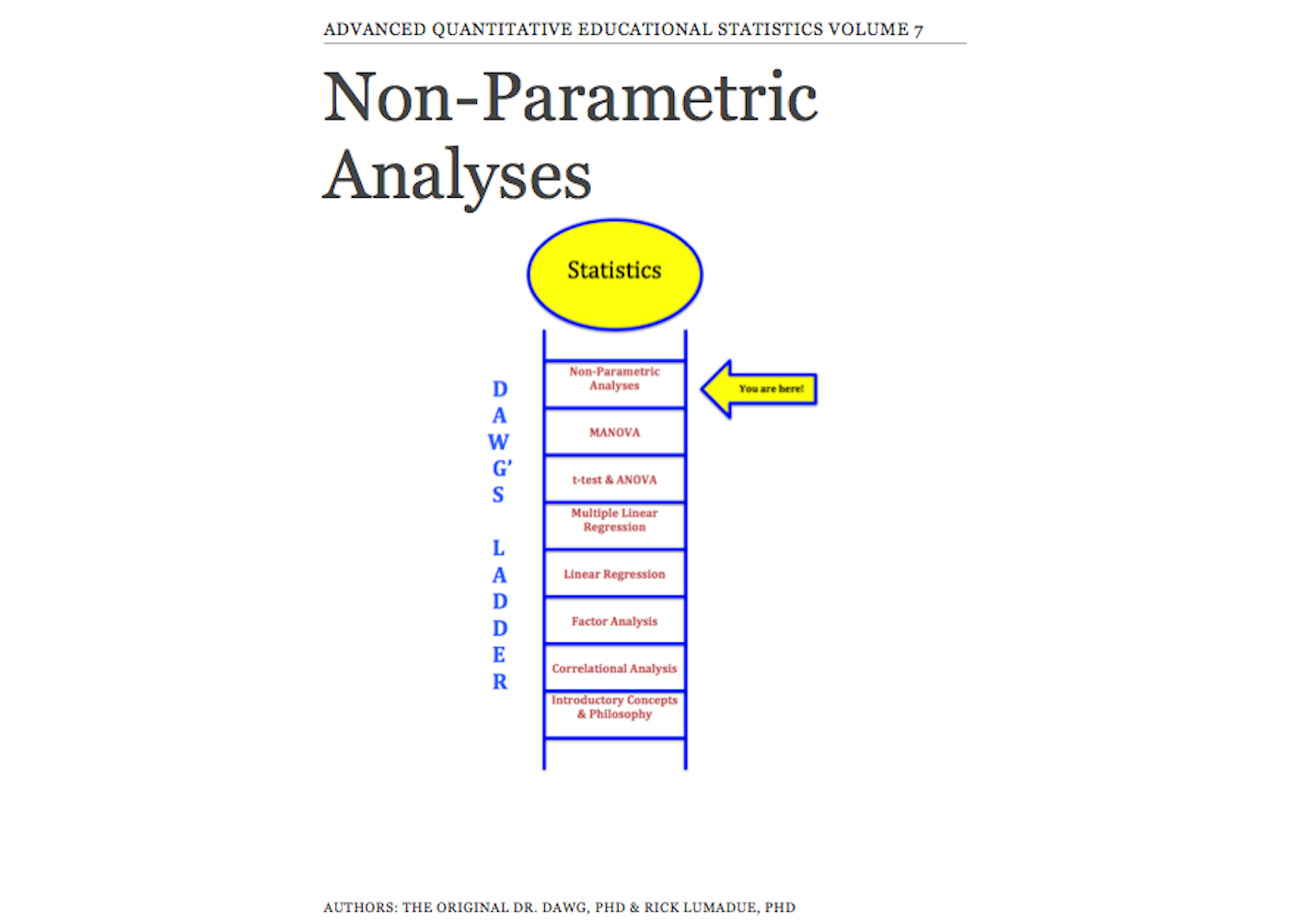
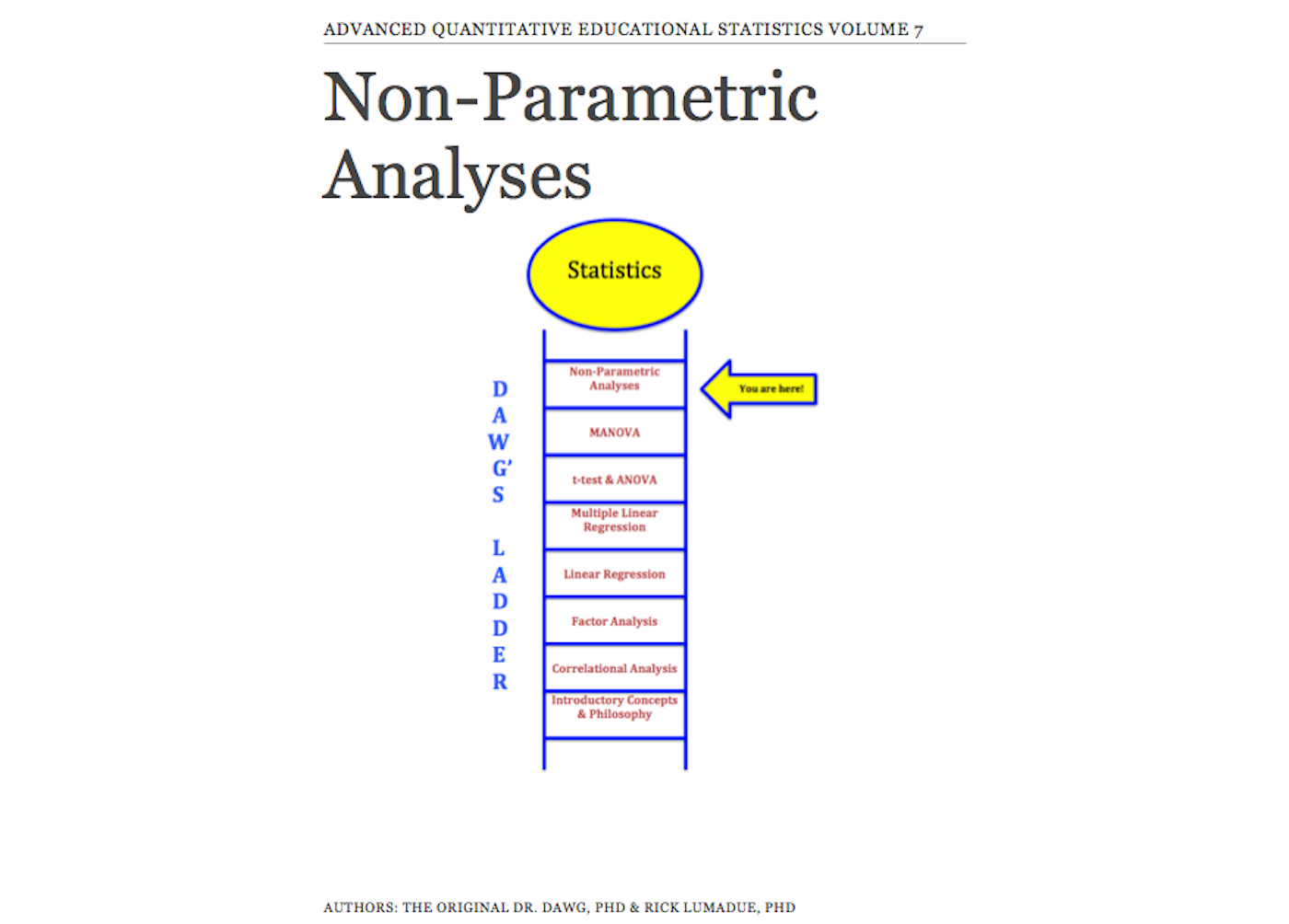
Non-Parametric Analyses is the seventh volume in a series of Advanced Educational Statistics. A straightforward, clear teaching style for learning educational statistics is presented in this volume. A narrative, along with videos, output data sets and sample data sets are included. As with previous volumes in the series, the video presentations are the focal point and will be especially helpful for guiding the learner through the process of conducting statistical analyses using SPSS and interpreting SPSS output data.
What exactly is non-parametric design? The answer rests in one of the major assumptions of parametric design: normality. Parametric refers to methodologies that require normality. Non-parametric refers to methodologies that do not require normality. If you haven’t yet viewed the introductory video, please do so now. The ability to conduct research on non-normally distributed data sets is powerful. Many, many data sets do not meet the normality standard. Nonparametric designs come in very handy when dealing with them. Examining the Skewness of Data Sets Before launching a non-parametric study, the researcher should first ascertain the distribution of the data set. If the data set is normally distributed, parametric methodology is to be preferred. Recall that the data set can be approximately normally distributed. How much is approximately? That is up to the researcher and is determined by the problem. The video provides more explanation.
The first issue is that of comparing one variable across two groups. For our purposes, we will examine the Mann-Whitney U test as a means of comparing two nonnormally distributed data sets. The Mann- Whitney U test will allow us to examine ordinal data as well. This is important since Likert data are often considered to be ordinal. In fact, most statisticians view Likert data as ordinal. Non-parametric methodologies arose as findings were challenged when researchers had ignored the fact that the data sets were not normally distributed. For this reason, the non-parametric designs are often said to mimic the parametric designs. Further information is presented in the video below.
Just as the ANOVA was required to compare one variable across two or more groups, non-parametric design often requires a similar process. One of the most common test for comparing one variable across multiple groupings is the Kruskal- Wallis.
Concluding Remarks: The journey has been a good one. Was it worth the trouble? In the movie, Jeremiah Johnson, the old mountain man is asked if his journey into the Rocky Mountains was worth the trouble. His answer was, "What trouble?" I hope you feel the same. My goal was to make this the best online class that you have taken. Perhaps I succeeded. Perhaps I did not. At least I tried. Have a good journey as you pursue your academic goals.