2022-2023 — Northridge — ePortfolio
2022-2023 — Northridge — ePortfolio
Proposal Summary: At CSUN, we strive to help faculty with creative and data-informed choices to improve the student learning experience. In support of instructors looking to enhance their courses with technology and pedagogical tools, we successfully conducted the eLearning Institutes in the past academic year. In the eLearning Institute, faculty engage in a scaffolded, reflective and collaborative process to improve the design and delivery of a course using the CSU exemplary practices framework to promote effective pedagogical and technological solutions. We served 58 faculty members in our two eLearning Institute cohorts, helping them conduct a Quality Learning and Teaching (QLT) self-review and participate in an internal peer review/mentoring for their courses. We also finished a pilot course review in collaboration with the CSUN Marketing Department.
Campus Goals for Online Course Services
We established two primary goals for our campus:
The first goal was to continue to promote QLT as the campus best practices framework by reaching more unserved faculty and new faculty across all departments and disciplines. We achieved this goal by offering various professional development programming as well as creating and updating resources for faculty such as:
eLearning Programs
A webpage dedicated to QLT with CO updates
Updating the QLT workbook to the newest version
The second goal was to encourage more faculty peer-to-peer discussions of online best practices and equity-minded teaching through our faculty mentors.The campus funds efforts for all the following activities:
One-on-one mentoring and informal peer review
Train-the-trainer sessions
All of these activities closely aligned with broader campus priorities including the values of Faculty Development. Quality assurance is an integral part of the Faculty Development mission to adopt technology-enriched best practices for the development of our programming and our partnerships across campus.
Faculty Development QLT Team
The QA Faculty Lead is joined by the Office of Faculty Development team, all of which are involved in training and are critical in support of the peer-to-peer professional development and the successful adoption of quality assurance methods to a growing number of online/hybrid courses and eLearning projects:
- Susana Marcelo, Quality Assurance Lead, 2022-2023, Instructional Designer
- Hillary Kaplowitz, Senior Instructional Designer, eLearning Institute
- Sue Magdziarz, Instructional Designer
- Janett Silvers, Quality Assurance Lead, 2021-2022, and course review consult for spring 2023
- Whitney Scott, Director of Faculty Development, who is involved in all stages of the quality assurance implementation with the QA lead.
We partner closely and collaborate with multiple units/offices across campus to design high-quality professional development to support faculty in learning both the pedagogy and technical skills for teaching online. These partnerships include: IT’s Academic Technology unit, Universal Design Center, The University Library, The Learning Resource Center, Institutional Research, Student Affairs, Faculty Affairs, and our Student Success Office.
Student Online Quality Assurance Impact Research
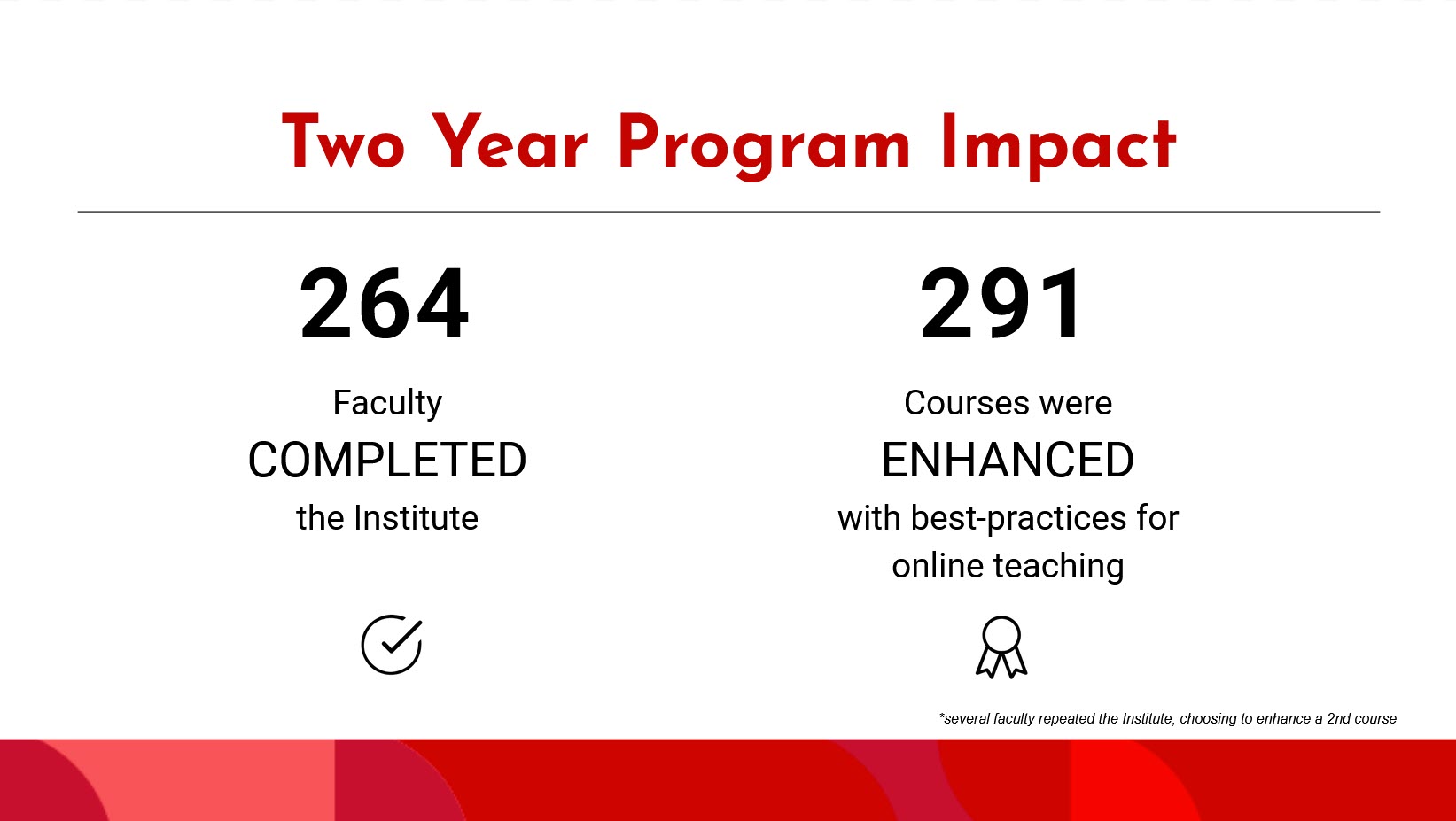
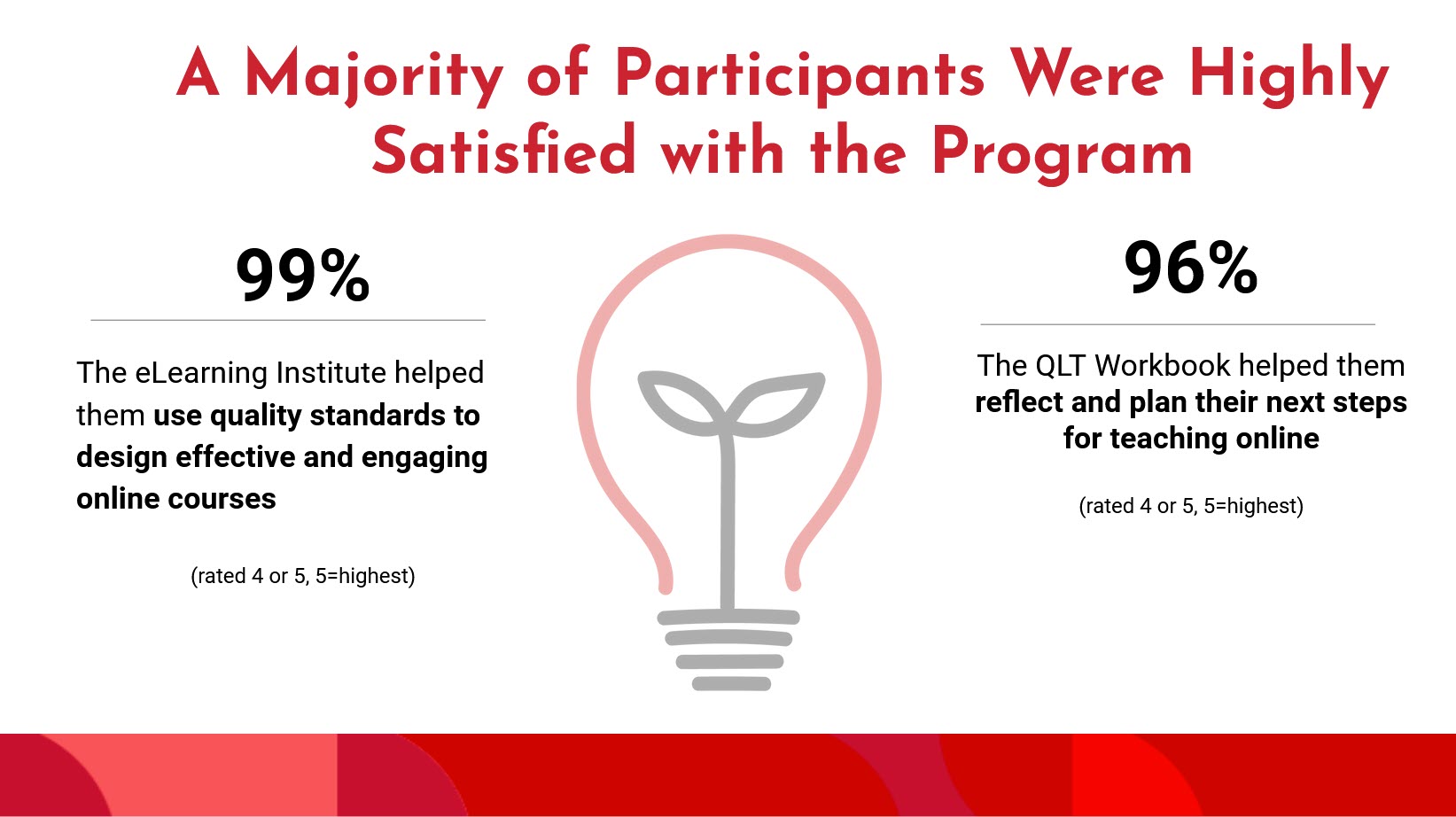
Our eLearning Institute allows faculty to engage in a scaffolded, reflective, and collaborative process to improve the design and delivery of a course using the CSU exemplary practices framework to promote effective pedagogical and technological solutions. The eLearning Institute impact report showcases the results from 2020 to 2022, where faculty enrolled in the program engage in wanting to go beyond just the basics of teaching with technology and move forward using quality standards to design effective, engaging, and efficient eLearning courses. Within the last two years, 264 faculty completed the institute and 294 courses were enhanced with best practices for online teaching.
The complete report is available on our eLearning Institute page.
Development of Campus Online Course Services Resources
- Faculty Development's QLT page is the QLT hub used for dissemination of the rubric and hosting the dates of the CO QLT trainings.
- Faculty Development's programming page keeps being updated with the most current programs that faculty can sign up at CSUN.
- eLearning Institute page explains how the program uses the QLT rubric for self-review and peer review of a course.
- Teaching Toolkit is a self-paced resource that feature
QLT Accessibility/UDL Efforts
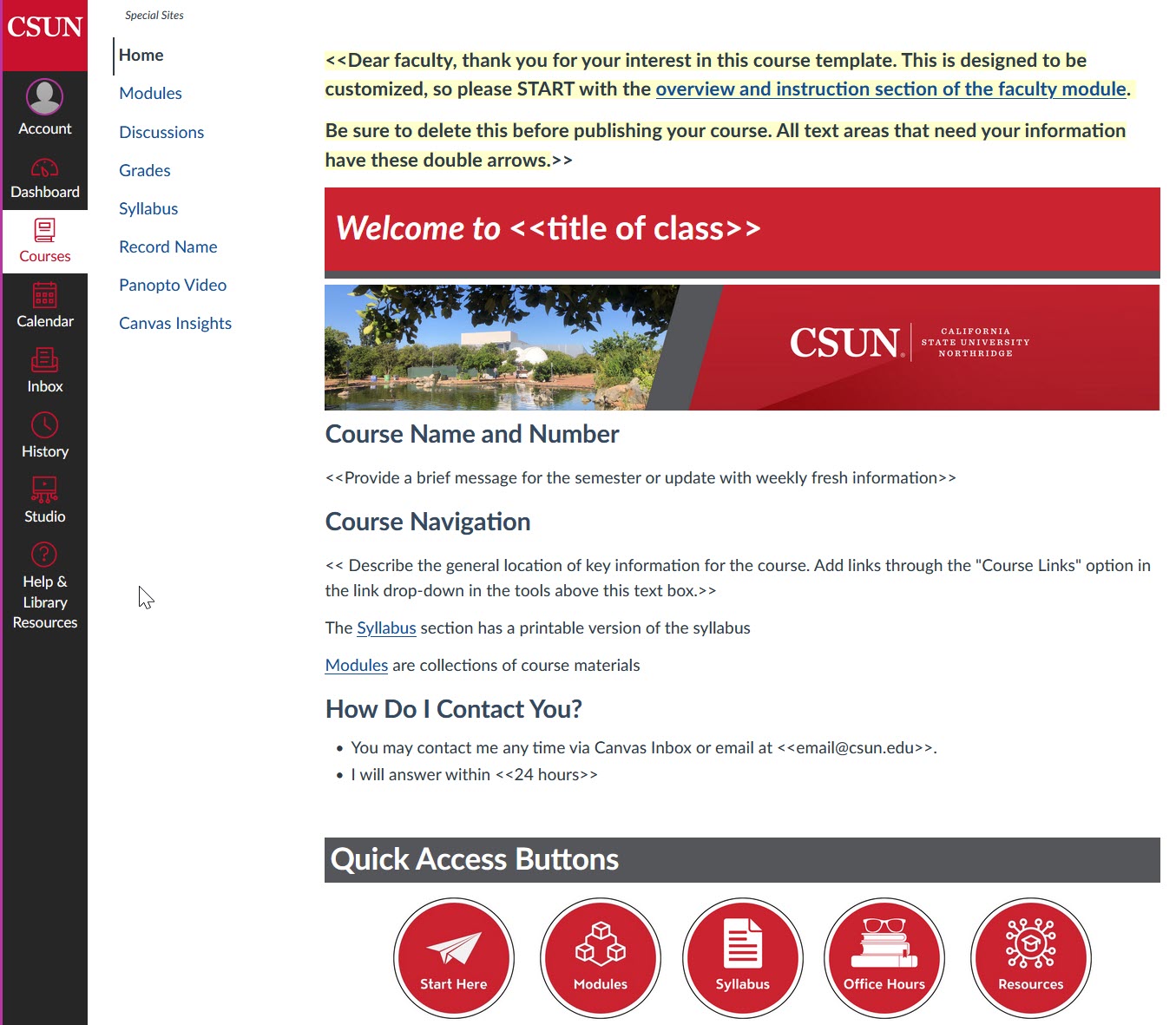
For this academic year, the Faculty Technology Center in collaboration with Faculty Development and Faculty Fellows, created a CSUN Canvas Template with QLT best practices.
The Canvas template was designed with 100% accessiblity rating and Universal Design for Learning principles that support student learning and user-friendly course design.
Course Peer Review and Course Certifications
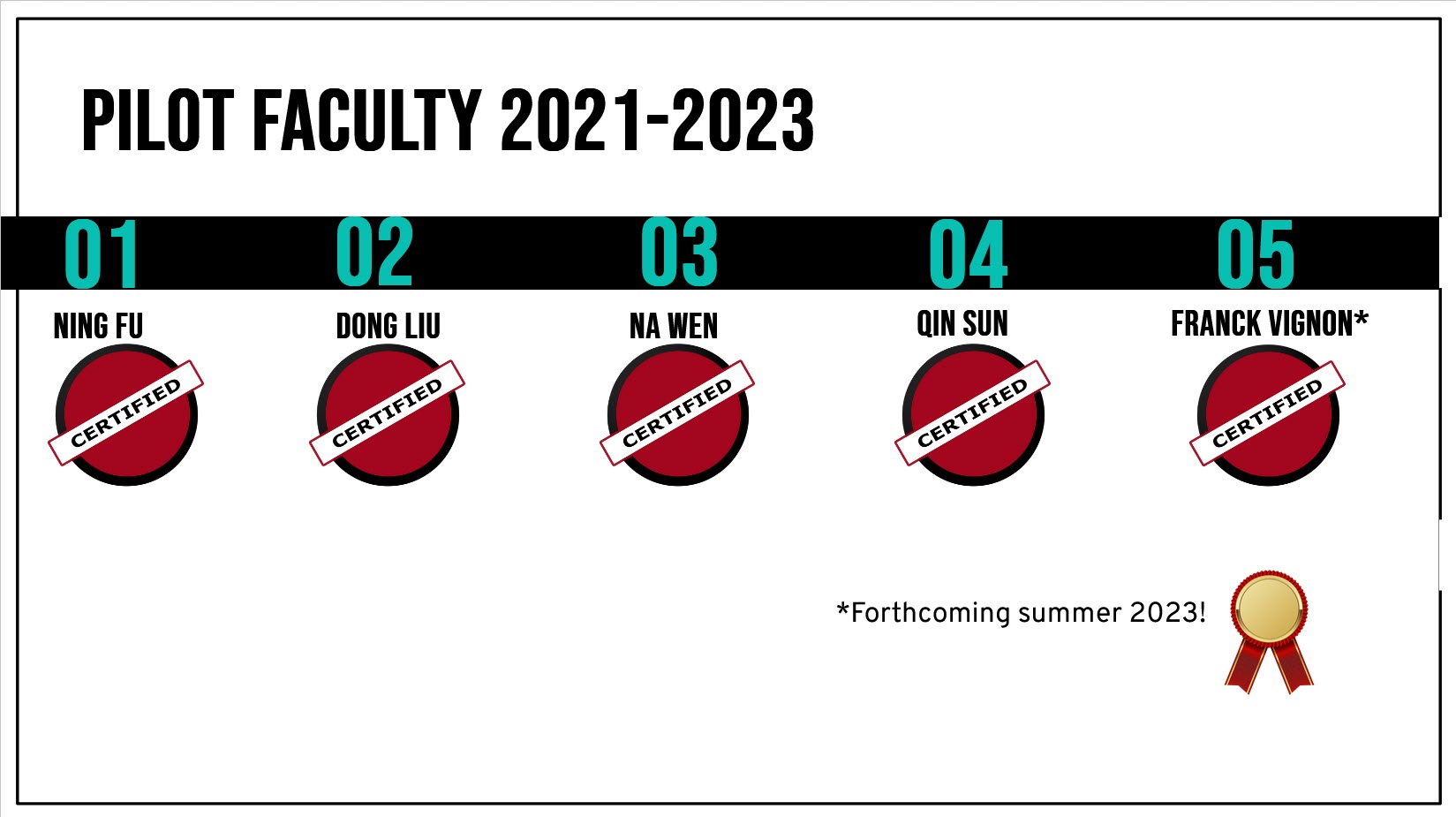
In 2021, our office brought QLT course certification for the first time at CSUN. We piloted course certification with five courses in collaboration with the CSUN Marketing Department. By spring 2023, we finished the last course of the pilot program. Our experience allowed us to best support colleges interested in QLT course certification. Review the complete report: QLT Certification Report for OCS Portfolio.
OCS QLT Training Completions
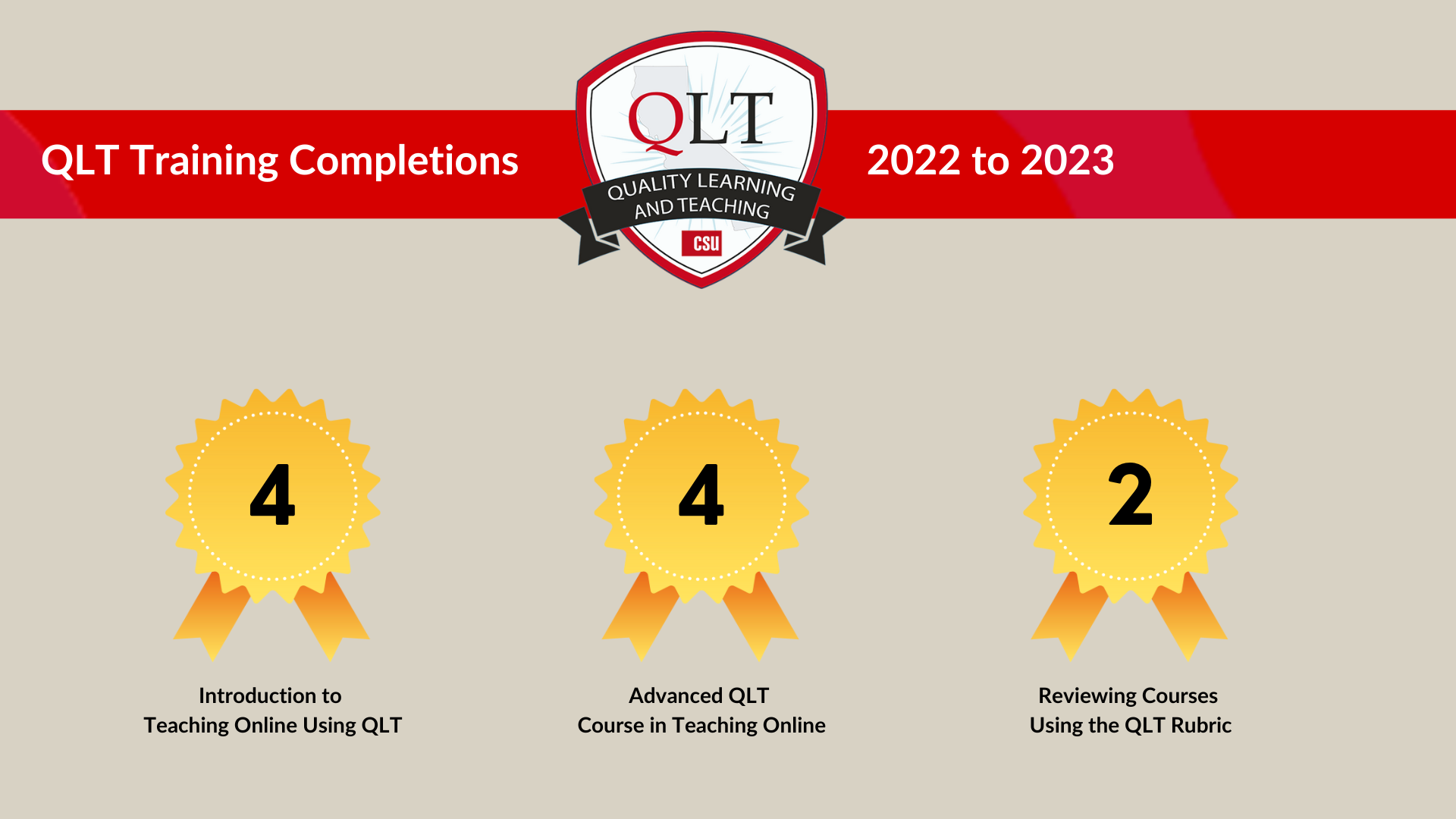
eLearning Institute Completions 2020 - 2022
Efforts for Graduation Initiative and the Campus Success Plan
Part of our efforts with OCS includes supporting our campus student success plan, which includes the Road Map to the Future along with the CSU-wide Graduation Initiative (GI) 2025 to improve student, faculty, and staff experiences, foster belonging, and achieve equity.
Facilitate Holistic Student Success is one of the six strategic directions in the Road Map to the Future. Our OCS project proposal will support the eLearning Institute, one of the many programs that Faculty Development engages in to expand equity-minded professional development for faculty.
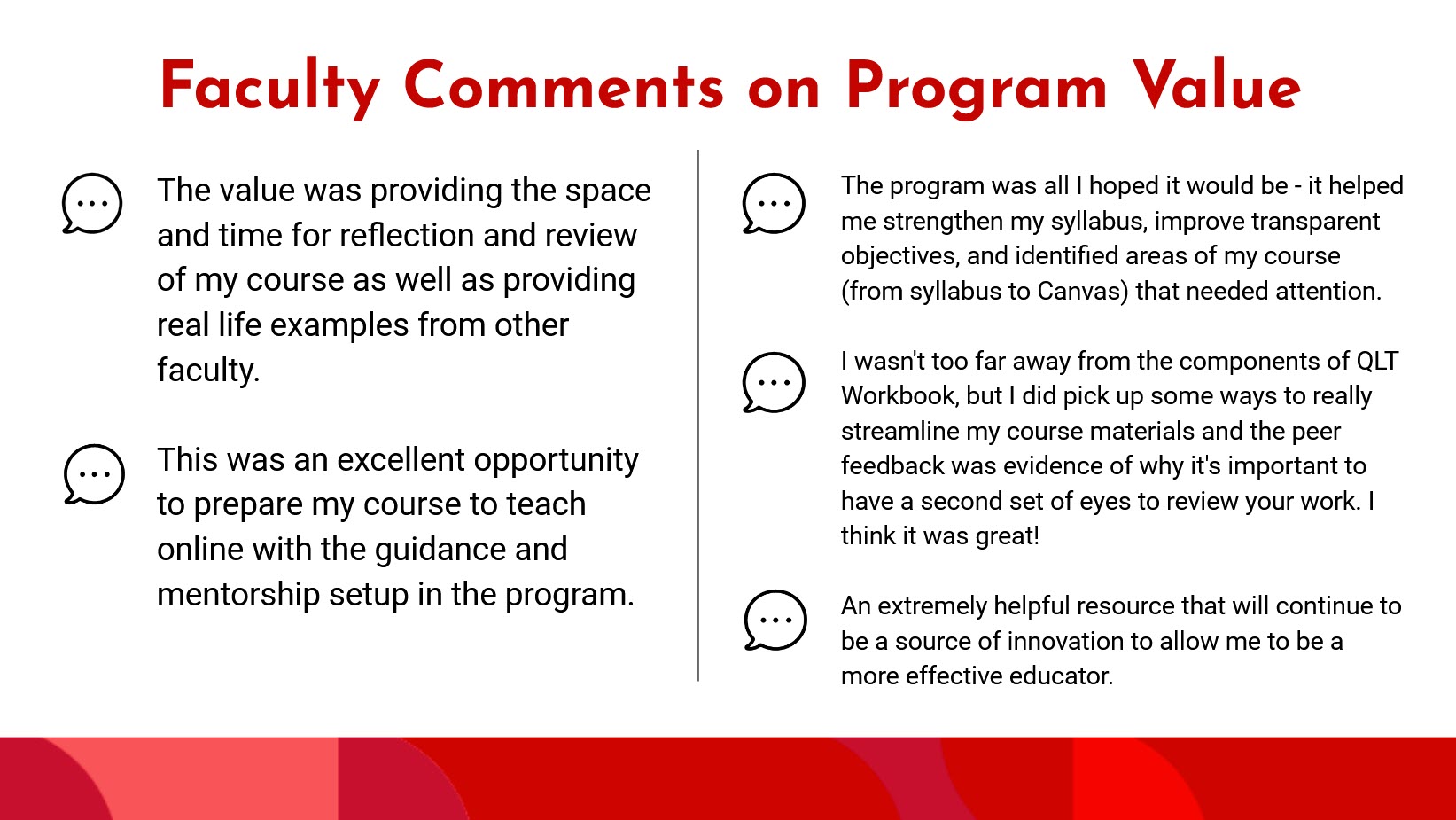
As part of the eLearning Institute, faculty use the updated QLT Framework to engage in quality course design for next semester’s online or hybrid course. Through that process, they reflect on equity-minded practices in their course and have conversations about equity with a faculty mentor in their peer review session. Throughout this process, faculty can develop culturally responsive and equity-minded teaching that can help improve teaching and learning outcomes for students.
In fact, faculty who completed our programming to learn how to teach online also gained confidence in the importance of considering equity in a more meaningful way in their course design.
Summary of Previous OCS Accomplishments
2022-2023: We continue to support online education through our programming.This year we updated our programs to reflect the updates in QLT 3.0, which involved an extensive redesign of our materials. We also drew from our materials to assist in contributions to QuARRy from our experienced faculty. In addition, we collaborated with CSUN Academic Technology on a new project to develop a Canvas template for our campus, which was designed with QLT best practices. Lastly, we completed the final course review for our course review pilot program.
2020-2021: As we pivoted virtual instruction due to the COVID-19 emergency, we got as many faculty members as possible to go through our eLearning Institute with the allocated funds. That required a complete redesign of the eLearning Institute format incorportating a QLT self-review and peer review components. We created a QLT workbook and offered train the trainer sessions to prepare the selected eLearning alumni to be QLT peer reviewers. Later in 2021, CSUN also started piloting QLT course certification with a small group of faculty.
2014- 2019: Over the years, CSUN has made significant efforts to disseminate the QLT rubric among faculty and campus leaders. Some of the previous accomplishments include: integrating QLT in the face-to-face eLearning programs, such as the Institutes and the Online Teaching and Learning series; creating and maintaining a QLT webpage; holding a 2-day retreat for department chairs; presenting at the Association for Educational Communication and Technology (AECT) Conference, and hosting peer review trainings and other types of QLT workshops on campus.
Next Steps for OCS Efforts
- Step 1: Continue with QLT training and implementation by offering various professional development programming as well as creating and updating resources for faculty such as:
- eLearning Programs (e.g. Get Up to Speed with Online Teaching, summer and winter eLearning Institute);
- Step 2: Maintain a webpage dedicated to QLT with updates about the CO's programs in the Faculty Development website;
- Step 4: Keep recruiting and training eLearning Institute alumni for one-on-one mentoring and peer review of the courses of the faculty selected to participate in the summer and winter eLearning Institute cohorts.