Sacramento State Online Course Services
Sacramento State Online Course Services
The Online Course Services at Sacramento State is supported through the Center for Teaching and Learning (CTL) and in partnership with Information Resources & Technology (IRT). The CTL provides professional development in the form of faculty learning community programs, the Summer Teaching Institute, the Summer Course Compression Grant program (in collaboration with the College of Continuing Education), New Faculty Orientation, and minigrant programs that fund pedagogy enhancement, learning analytics, assessment, and technology projects. Quality Matters™ (QM™) essential standards such as Accessibility and Alignment are intentionally integrated into each of these programs.
Program Goals:
- Increase the number of faculty who have completed QM training and increase number of courses that have undergone internal and formal QM reviews from a diverse range of departments and colleges throughout the university.
- Institutionalize processes and infrastructure for the development, redesign, review, and Quality Matters certification of online and hybrid courses.
- Gather data on student perspectives to assess and measure the impact of Quality Matters faculty training and course certification on student success.
We emphasize student success as the focus in our online course services and quality assurance efforts.

Course Reviews: Our Internal and formal course review processes provide mentorship and support for course certifications. We highlighted QM standards such as alignment and accessibility in our FLCs to increase awareness about essential components and promote successful reviews. Professional development funding was awarded to faculty who had met standards for internal and formal reviews. Since Fall 2019, we have increased the number of certified courses from 2 to 23 with 2 more in process in summer 2023. We anticipate continued growth in this area as we have created a pipeline through our FLC that focused on preparing faculty for course reviews.
QM Certified Courses:
| COURSE | FACULTY |
| COMS 106: Digital Media Creation | Dr. Diego Bonilla |
| NURS 170: Foundations in Evidence-Based Nursing Practice |
Dr. Michelle Dang |
| NURS 173: Theoretical Foundations for Leadership and Management |
Dr. Tara Sharpp |
| SWRK 126: Theories of Criminal Behavior (6-week version) |
Dr. Santos Torres, Jr. |
| SWRK 126: Theories of Criminal Behavior (15-week version) | Dr. Santos Torres, Jr. |
| SWRK 102: Crosscultural Theory and Practice: Issues of Race, Gender and Class (6-week version) |
Dr. Santos Torres, Jr. |
| SWRK 102: Crosscultural Theory and Practice: Issues of Race, Gender and Class (15-week version) |
Dr. Santos Torres, Jr. |
| FASH 30: Fashion and Human Environment |
Dr. Dong Shen |
| NURS 171: Transitional Concepts: The Baccalaureate Nurse |
Dr. Bronwyn Fields |
| NURS 178: Culminating Project | Dr. Christie Smart |
| NURS 165: Hospice and Palliative Nursing Care (6-week version) | Dr. Tara Sharpp |
| NURS 165: Hospice and Palliative Nursing Care (15-week version) |
Dr. Tara Sharpp |
| NURS 160: Human Sexuality (6-week version) | Dr. Michelle Dang |
| PSYC 4: Navigating Psychology: The Majors and Careers | Dr. Sharon Furtak |
| SWRK 150: Social Welfare in America (6-week version) | Dr. Santos Torres, Jr. |
| SWRK 150: Social Welfare in America (15-week version) |
Dr. Santos Torres, Jr. |
| SWRK 202: Social Work and Diverse Populations | Dr. Santos Torres, Jr. |
| SWRK 250: Social Welfare Policy and Services (6-week version) | Dr. Santos Torres, Jr. |
| SWRK 250: Social Welfare Policy and Services (15-week version) |
Dr. Santos Torres, Jr. |
| ENGR 124: Thermodynamics |
Dr. Farshid Zabihian |
| NUFD 113: Nutrition and Metabolism |
Prof. Shara Sheldon |
| NURS 160: Human Sexuality (15-week version) | Dr. Michelle Dang |
| SOC 120: Ethic and Race Relations | Dr. Debra Welkley |
QM & QLT Training: While many faculty completed QM and QLT workshops in previous years, we continued to offer training to new faculty, and 24 completed training in 2022-23:
|
COURSE
|
COMPLETION NUMBER
|
|
APPLYING THE QUALITY MATTERS RUBRIC
|
7
|
|
IMPROVING YOUR ONLINE COURSE
|
5
|
|
PEER REVIEWER COURSE
|
1
|
|
DESIGNING YOUR ONLINE COURSE
|
1
|
|
INTRODUCTION TO TEACHING ONLINE QLT
|
9
|
|
ADVANCED QLT
|
1
|
Institutional Processes: FLCs & Internal Reviews
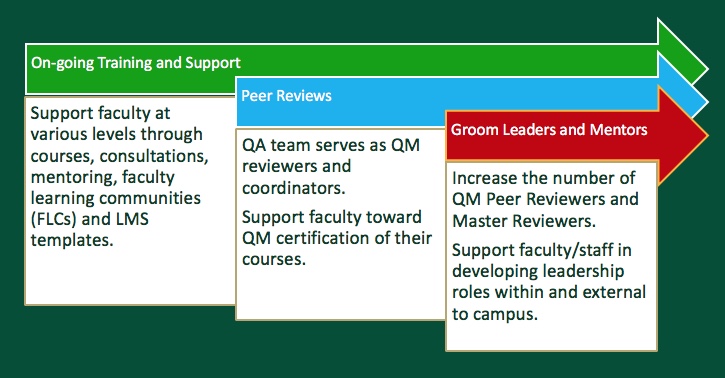
We use a 3-tier approach to meet the needs of faculty at various levels of readiness and have increased the number of institutional experts for online teaching and courses undergoing internal and formal reviews. We continue to market our services and support through campus announcements, word-of-mouth, webpages, professional development workshops and FLCs, and our relationships with colleagues throughout campus.
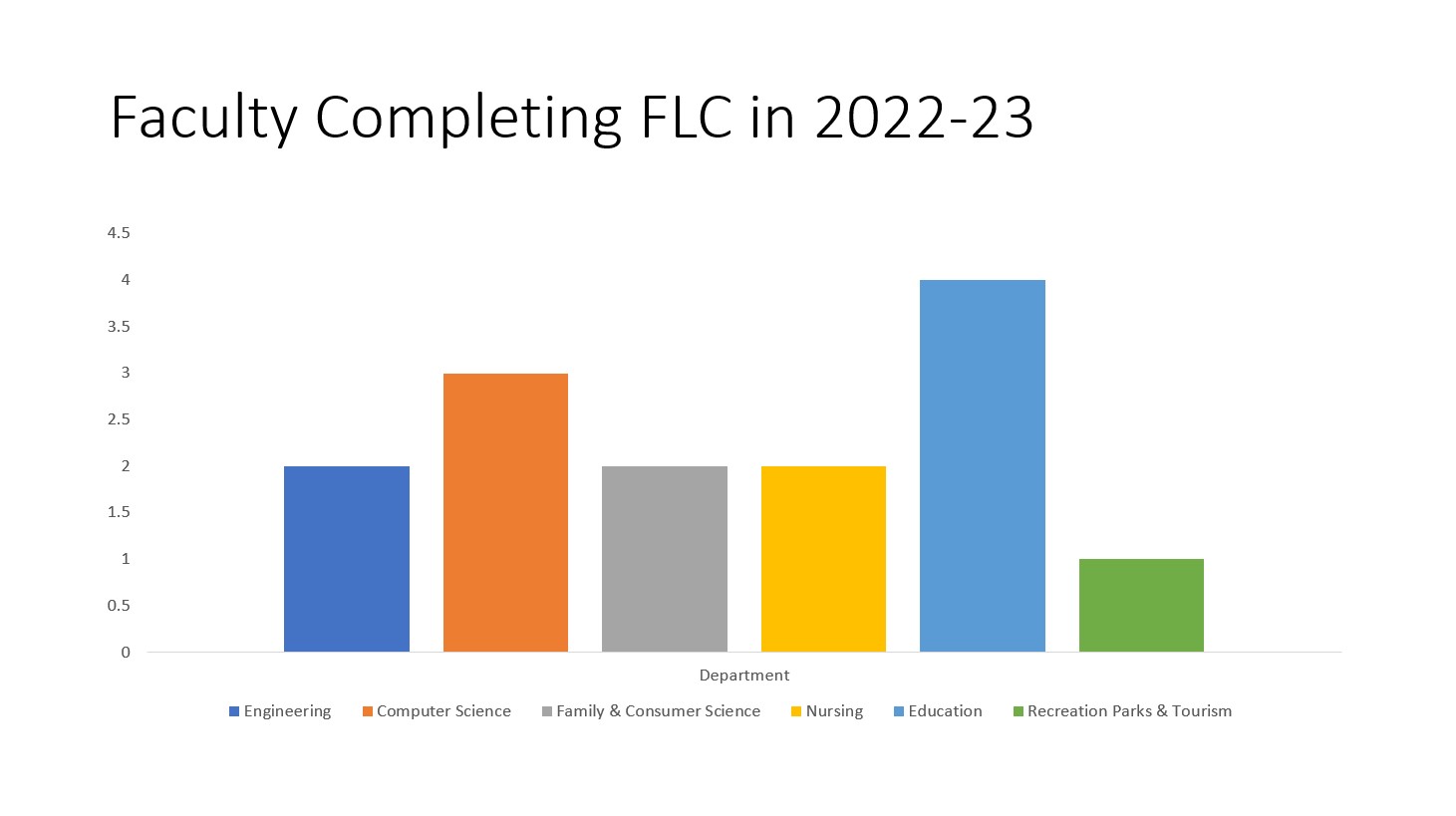
In addition to the QM and QLT workshops offered by the Chancellor's Office, we offered Faculty Learning Communities that prepared faculty to undergo QM review to certify courses. These FLCs were facilitated by Sac State's QM Coordinators. Through these FLCs, faculty made changes to their courses based on QM principles to ensure student success.
|
FACULTY LEARNING COMMUNITY (FLC)
|
COMPLETION NUMBER
|
|
Fall 2022: Preparing Course for Review
(focus on QM standards 1, 7, & 8)
|
9
|
|
Spring 2023: Preparing Course for Review
(focus on QM standards 2 - 6)
|
9
|
Sample Faculty Feedback Regarding Helpful Areas of FLCs:
- "The provided examples are very useful. Seeing how experienced colleagues do it is a great way to learn what's expected."
- "All areas were helpful. Course map, course alignment, developing assignments and the rubrics to go with them."
- "The ease of taking this workshop was amazing. I learned to create measurable learning objectives."
- "Very useful materials that allow for small but impactful changes immediately (even if you are not yet doing internal review)."
Experts at Sac State:
Increased Number of Certified Peer Reviewers and Facilitators: In addition to the 10 faculty from a variety of disciplines who completed the QM Peer Reviewer Course the previous year, a new instructional designer became a peer reviewer this year. These faculty and staff are currently completing the 7th edition rubric update course so they and can serve on internal and/or formal reviews. These faculty can also serve as subject matter experts.
Role of the OCS team in the university: In the 22-23 year, the OCS team demonstrated their value to the university by serving as experts and consultants in various ways for pressing University issues related to online education.
- An OCS co-lead worked with OCS members and led several university-wide discussions on the use of ChatGPT
- An OCS co-lead revised a Syllabus template with a team of OCS members and Information Technology staff to be distributed to all university faculty.
- Members of the OCS team provided feedback on policies reviewed by the Faculty Senate such as the e-Learning policy and syllabus policy.
- All members of the OCS team helped with the training and development of the Summer Online Grant program, in where faculty transitioned face-to-face courses to fully online courses following online best practices.
These actions have demonstrated the value of having online education experts to University leadership and will impact faculty beyond those who teach fully online courses.
SQuAIR
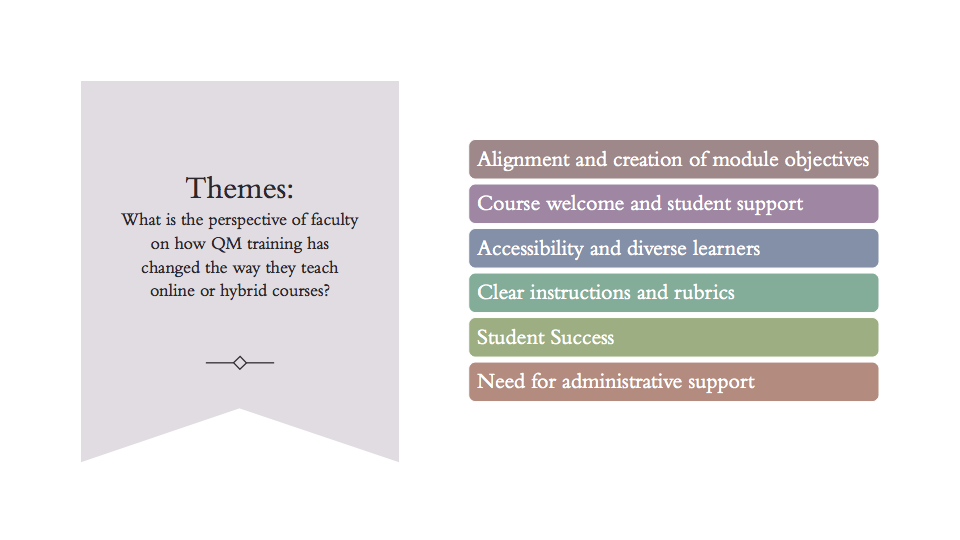
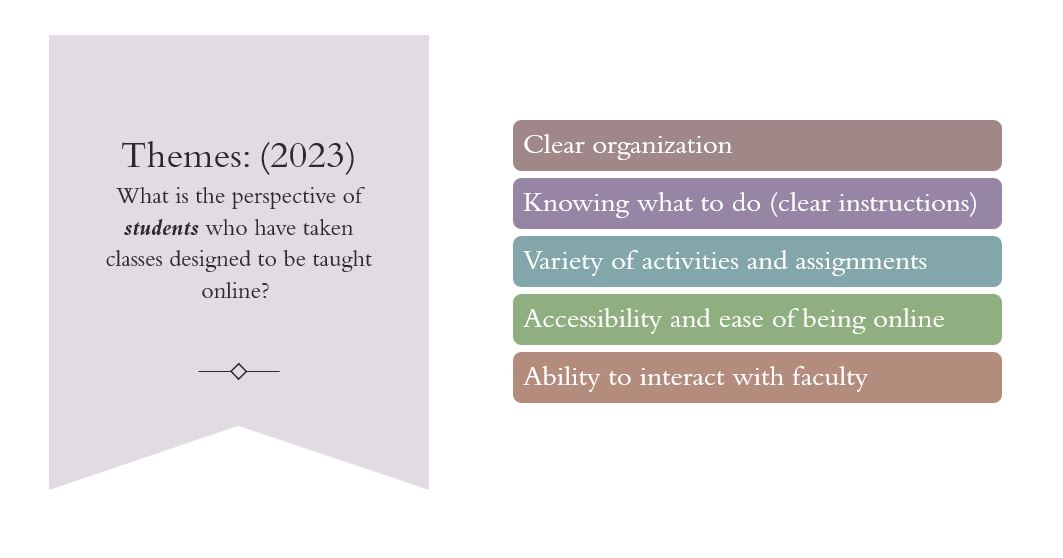
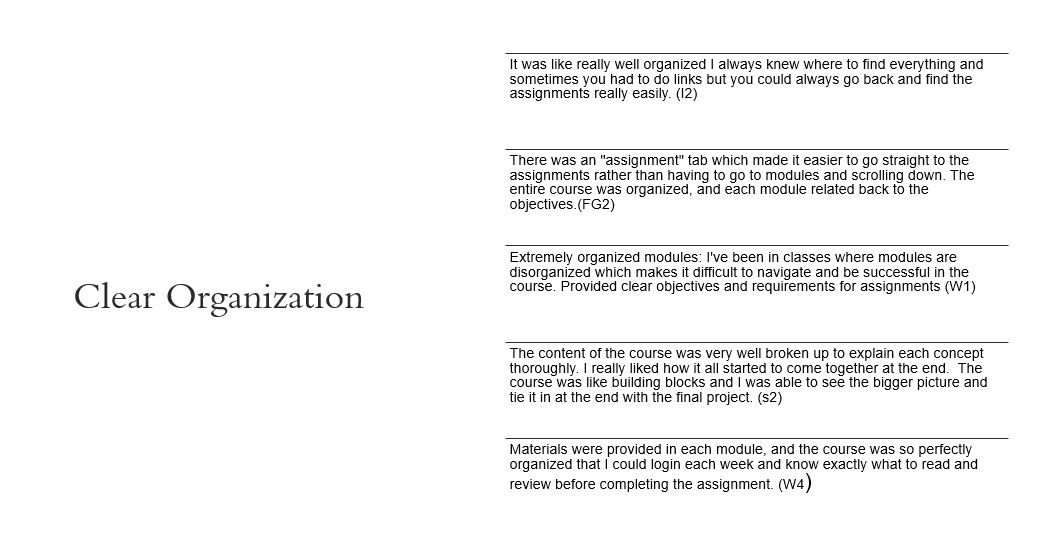
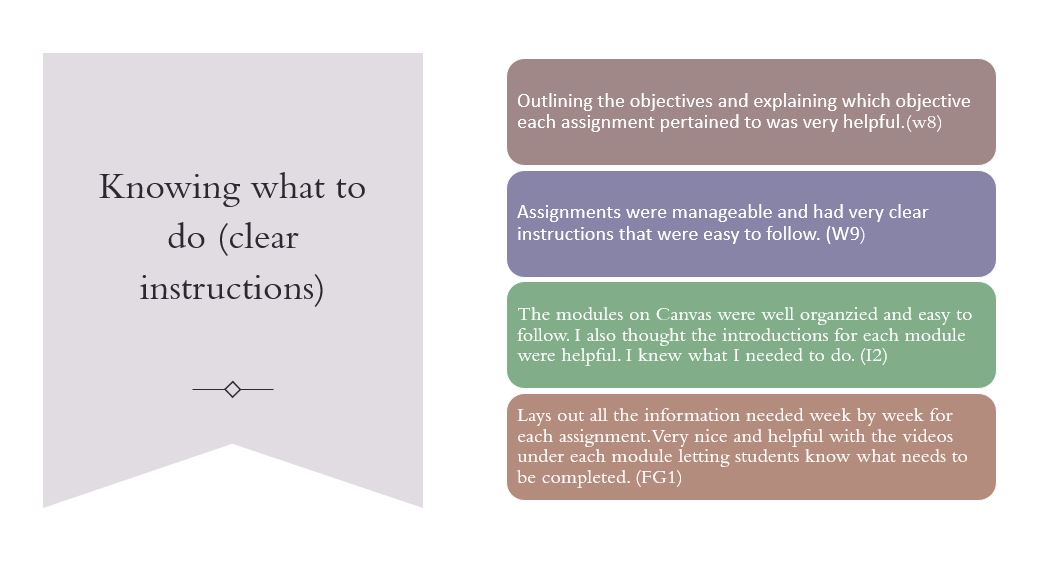
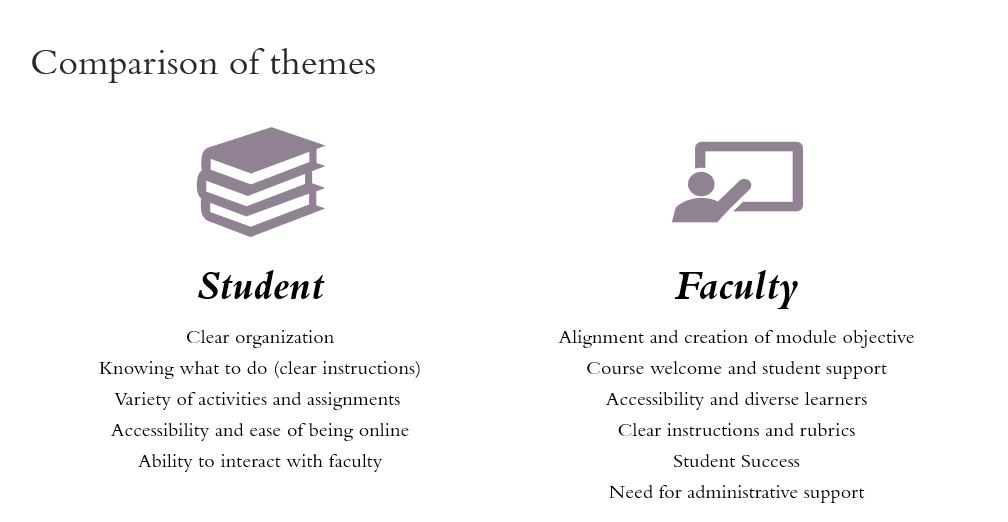
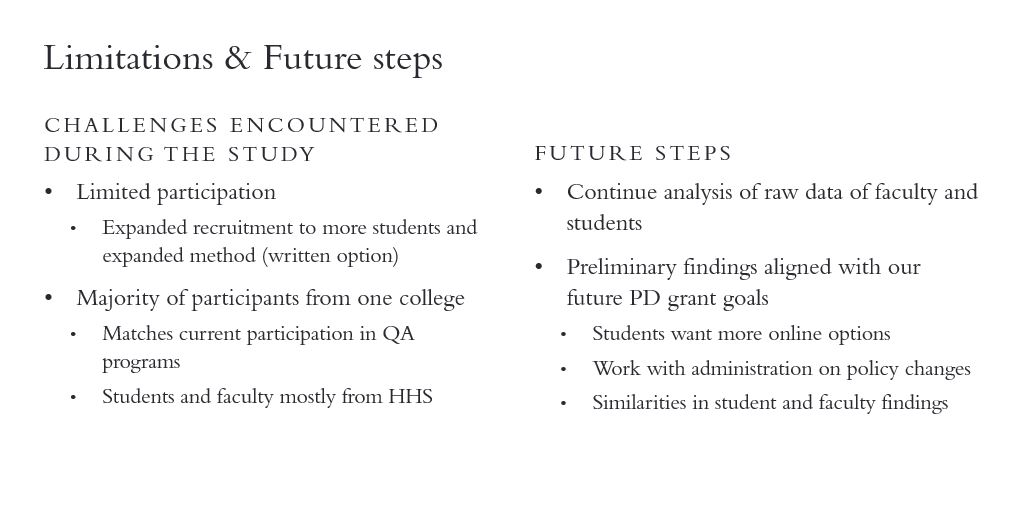
In Spring 2023, we completed a two-year qualitative study about faculty and student perspectives on courses that have been changed through QM training. The study received IRB approval. We completed the faculty perspectives in 2023 and the student perspectives in 2023 and analyzed data together for shared themes.
Research Purpose: The purpose of this study, “Student and faculty perspectives regarding the impact of Quality Matters training,” is to gain understanding of student and faculty experiences after faculty received training from QM on online teaching.
Methods:
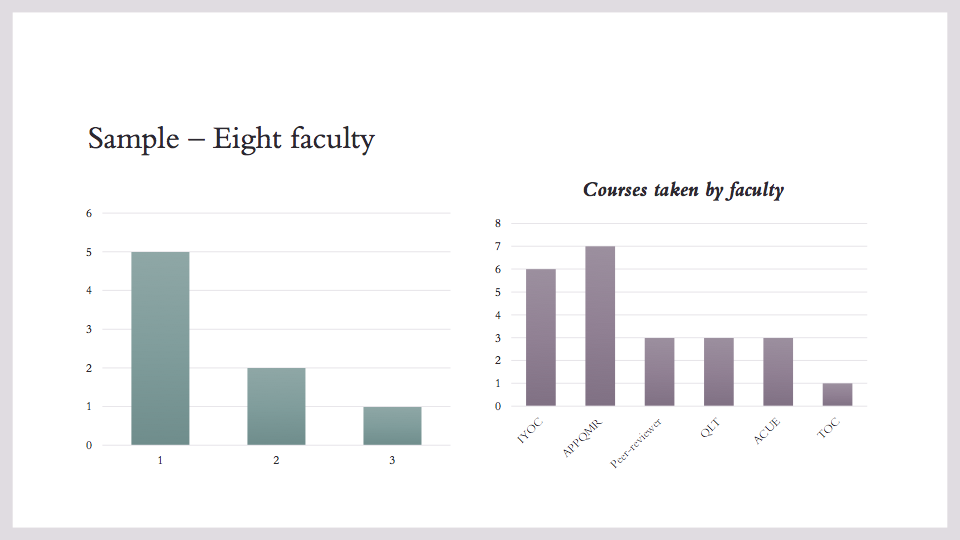
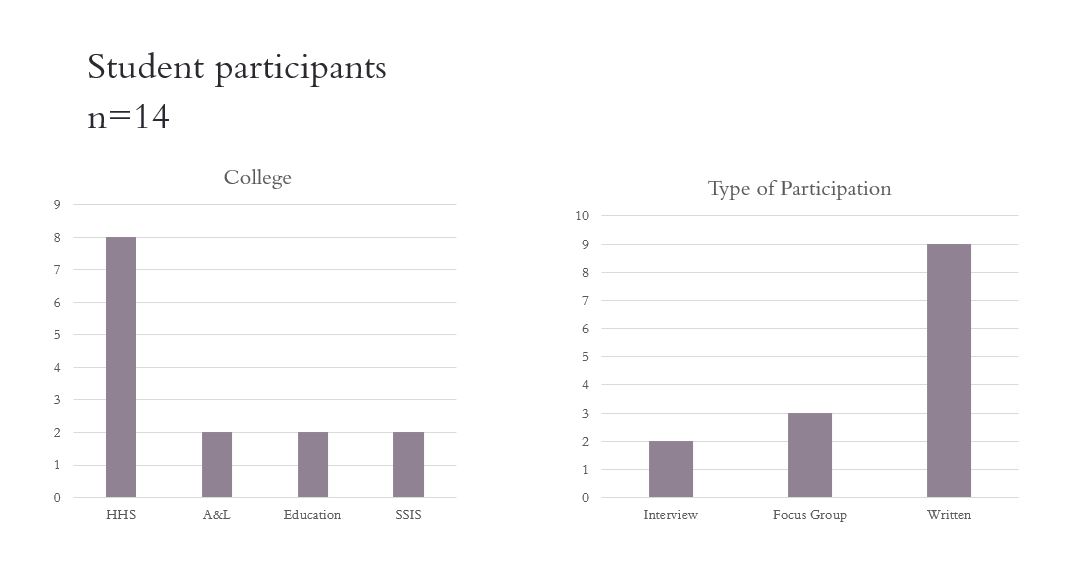
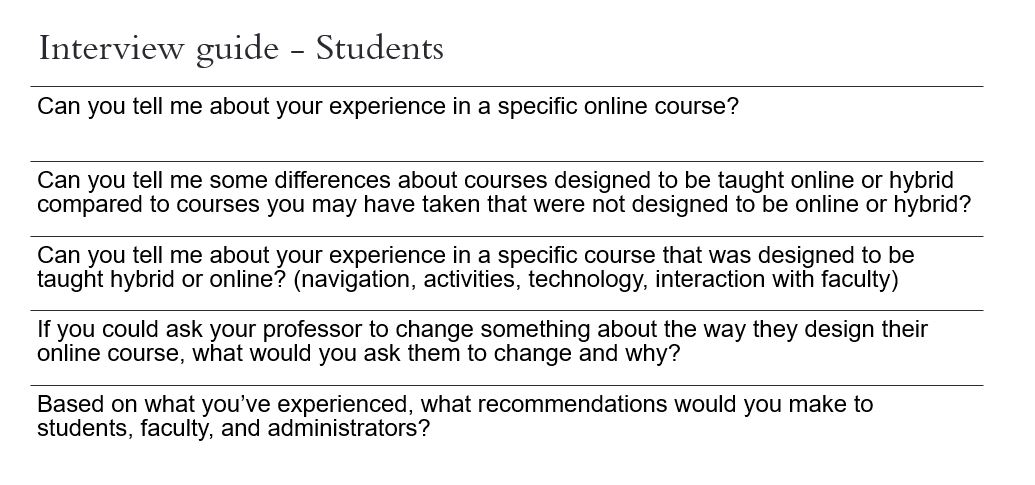
- Conducted interviews and focus groups with open-ended questions. N = 22, 8 faculty and 14 students
- Recruited faculty who participated in trainings for online teaching (QM, QLT, ACUE) via email and snowball sampling and students from those courses.
- Data collection and analysis occurred simultaneously
- Responses were transcribed verbatim.
- Analysis consisted of reading and re-reading transcripts for in-vivo and open codes, developed into themes.

Results:
 |
California Community Colleges Online Teaching Conference, June 21 - June 25, 2023, Long Beach
First Impressions: Assessing & Rewriting Syllabi for Inclusivity
Authors: Tara Sharpp, Kelsey Macias, & Crystal Velazquez
Presenters: Kelsey Macias & Crystal Velazquez
Abstract: College students have diverse skills, abilities, and cultural or social backgrounds. The language presented to students in a syllabus at the start of a course may cause some students to feel disenfranchised or that they do not belong. An inclusive syllabus is a way to establish a first impression that you acknowledge the diversity of students’ backgrounds, needs, and abilities and that you are committed to creating an inclusive classroom that fosters a sense of belonging for all. At Sacramento State, two departments (the Center for Teaching and Learning and the College of Continuing Education) collaborated to support faculty in developing inclusive syllabi for summer online courses and through faculty learning communities. We are currently in the process of redesigning an inclusive syllabus template for all faculty as well. In this demonstration program, we will provide participants with the tools to assess a syllabus for inclusive language and to rewrite a syllabus using best practices. We will provide research-based best practices of incorporating inclusivity by reviewing examples of both inclusive and non-inclusive language. We will also review common policy language through an inclusive lens and explain how a rewritten syllabus can influence classroom culture. Participants will then use a checklist with specific elements to ensure syllabi comply with their institution’s policy requirements, are in accessible format, and contain inclusive language throughout. Participants will then be asked to practice rewriting identified non-inclusive language to be more inclusive. This demonstration will empower faculty members to make changes to their own syllabi and suggest a way to bring this powerful perspective back to their own teams for future consideration.
Session Outcomes:
Participants will identify the characteristics of an inclusive syllabus.
Participants will apply best practices by rewriting syllabi that help create a sense of belonging.
OCS Leadership & Team
Dr. Michelle Dang, faculty co-lead and mentor
Dr. Tara Sharpp, faculty co-lead and mentor
Dr. Corinne Rowland, mentor and accessibility & instructional technology consultant
Dr. Debra Welkley, faculty mentor
Deborah George, mentor and instructional designer
Kelsey Macias, mentor and instructional designer
Crystal Velazquez, mentor and instructional designer
CTL Leadership
 Dr. Lynn Tashiro, Director