Qualitative Analysis & Field Research
Qualitative Analysis & Field Research
Purpose: to help other instructors teaching the same course
Common Course ID: SOC 3010
CSU Instructor Open Textbook Adoption Portrait
Abstract: This book is being utilized in a sociology course for undergraduate students by Jamie O’Quinn at California State University, San Bernardino. The book assigned provides an example of a qualitative interview study. The main motivation to adopt this book was 1) to provide students with a final research product so that they could understand the research process from start to finish, and 2) replace the textbook that was previously assigned for the course, which was more expensive. Most students access the book through purchasing their own physical or digital copy, but others use the library reserve copy.
SOC 3010: Qualitative Analysis & Field Research
Brief Description of course highlights: This course is an introduction to qualitative research methods– a process of research inquiry that seeks in-depth and contextualized understandings of social phenomena through the collection and analysis of non-numerical data. In this class, we will learn which kinds of questions can be answered by qualitative research methods and what tools sociologists use to answer them. This class may be different than other classes you have taken in that we will primarily be learning by doing. In addition to learning about different types of qualitative methods and contemporary perspectives on and debates about qualitative methods, students will actually collect and analyze qualitative data throughout the course of the semester.
Student population: This course is restricted to upper-division Sociology majors and is one of the required courses in the major.
Learning or student outcomes:
• Understand the role of empirical research in building sociological knowledge.
• Analyze and evaluate qualitative research with a critical eye toward its methods, analysis, and scholarly contributions.
• Describe the ethical implications of qualitative research and how researchers can minimize harm to participants.
• Develop research questions that can be answered by qualitative methods.
• Collect/produce and code ethnographic and interview data.
• RefiMyne skills in active reading, collaboration, critical thinking, and verbal and written expression to prepare for future careers and/or graduate studies.
Syllabus and/or Sample assignment from the course
SOC 3010(03) syllabus.docx
Textbook or OER Title:
Brown & Gay in LA: The Lives of Immigrant Sons
Brief Description: “Growing up in the shadow of Hollywood, the gay sons of immigrants featured in Brown and Gay in LA could not have felt further removed from a world where queerness was accepted and celebrated. Instead, the men profiled here maneuver through family and friendship circles where masculinity dominates, gay sexuality is unspoken, and heterosexuality is strictly enforced. For these men, the path to sexual freedom often involves chasing the dreams while resisting the expectations of their immigrant parents—and finding community in each other.
Ocampo also details his own story of reconciling his queer Filipino American identity and those of men like him. He shows what it was like for these young men to grow up gay in an immigrant family, to be the one gay person in their school and ethnic community, and to be a person of color in predominantly White gay spaces. Brown and Gay in LA is an homage to second-generation gay men and their radical redefinition of what it means to be gay, to be a man, to be a person of color, and, ultimately, what it means to be an American.”
Please provide a link to the resource
https://nyupress.org/9781479824250/brown-and-gay-in-la/
Authors: Anthony Christian Ocampo
Student access: Most student access the book through purchasing their own physical or digital copy, but others use the library reserve copy.
Supplemental resources: All supplemental readings are posted on Canvas as PDFs and do not cost students money to access.
Provide the cost savings from that of a traditional textbook. Adopting this book and making the previously used textbook optional saves students $34.
Brown & Gay in LA: $28 (new)
Successful Qualitative Research: $62 (new)
License: Copyrighted
Provide an explanation or what motivated you to use this textbook or OER/Low Cost option. I wanted to save students money and provide them with an example of a qualitative monograph.
How did you find and select the open textbook for this course? Consulted with peers/colleagues.
Sharing Best Practices: Consult with your librarian on how to get additional copies of materials through the library, as well as ebooks!
Describe any challenges you experienced, and lessons learned. Students expressed some confusion having one required book and one optional book, but that was easily resolved with a discussion on the first day of class.
Instructor Name: Jamie O'Quinn
Assistant Professor of Sociology at CSU, San Bernardino. I teach 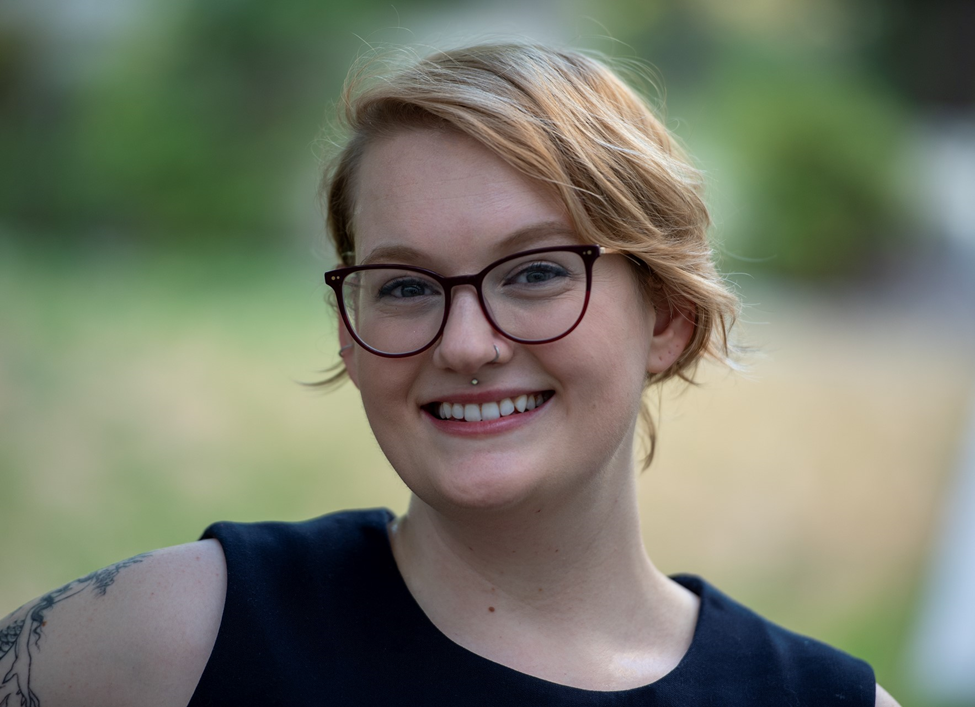 Please provide a link to your university page https://www.csusb.edu/profile/jamie.oquinn
Please describe the courses you teach.
Qualitative Analysis & Field Research, Sexualities & Society, Critical Thinking about Social Issues, Social inequality,.
Describe your teaching philosophy and any research interests related to your discipline or teaching. My teaching philosophy is guided by three key principles: applicability, accessibility, and adaptability. First, I approach the classroom as a space for students to apply the course material to make sense of their lived experiences and local histories, using sociological theory as a tool to understand our lives and the world around us. To facilitate students’ application of sociological theories to the contemporary social world, I use examples from pop culture or timely social problems, foster class discussion, have students engage in critical reflection through free-writing in class, and assign independent research assignments.
Second, I work to make my course accessible to all students. To make my classroom an inclusive learning space for all students, I work to convey information through as many different modes as possible. I draw on lectures, class discussion, readings, documentaries, visual imagery, and interactive classroom activities to deliver course content. I also diversify assignment types, having students use oral (e.g., class presentations), visual (e.g., concept-mapping), and written methods (e.g., research papers, blog posts, and free-write assignments) to convey information. By doing so, I work to accommodate students’ different learning styles and their diverse ways of absorbing and conveying information. I also have students complete an assignment at the beginning of the semester to indicate the learning styles and practices that have worked for them in the past and describing ways that I can organize the class to meet their particular learning needs. In this sense, my commitment to accessibility is facilitated by my ability to remain adaptable to student needs.
The COVID-19 pandemic has provided a lesson in adaptability for professors and students alike, and as such, I consider it imperative to adapt my courses to unexpected student needs. In doing so, I aim to make my courses collaborative, with students taking ownership over the design of the course. To do so, I elicit feedback from students at the beginning and end of every class, as well as anonymously one third and two thirds of the way through the semester. Upon receiving feedback, I change plans accordingly. For example, in Fall 2022 in Qualitative Analysis & Field Research, I elicited feedback at the beginning of class to ask how students were feeling about the course material. Upon learning that students were feeling stressed and overwhelmed with an upcoming assignment, I decided to scrap the lesson plan that I had prepared for that day and instead had students spend the class time working on their assignments, providing them with feedback and one-on-one support. My commitment to adaptability is rooted in empathy for my students and a recognition of them as human beings first. I also spend part of our first two class meetings constructing our “norms of intellectual engagement,” or the set of community guidelines for how to relate to one another in the class. Each class’s set of norms is different, and I encourage students to think of these norms as a living document that we revise throughout the semester as student needs and classroom dynamics change.