
Introduction to Digital Logic Design EE 301
Introduction to Digital Logic Design EE 301
Purpose: to help other instructors teaching the same course
Common Course ID: Introduction to Digital Logic Design EE 301
CSU Instructor Open Textbook Adoption Portrait
Abstract: This open textbook is being utilized in an introduction to digital logic course for undergraduate or graduate students by Dr. Justin Morris at California State University San Marcos. The open textbook provides chapters on topics such as Truth Tables, Two-Level Logic, K-maps, Combinational Logic Design, Sequential Logic Design, and Finite-State-Machines. The main motivation to adopt an open textbook was to enable more students to effectively take the course by reducing cost. This is important for the demographic of most of our students. Most students access the open textbook through CSUSM Library Reserves.
Introduction to Digital Logic Design EE 301
Brief Description of course highlights: Introduction to digital computer hardware design including gates, flip-flops, registers, and memory to perform logical and arithmetic operations on numeric and other data represented in binary form. The laboratory uses digital logic integrated circuitry and hardware description language (HDL) to make digital systems using digital components and FPGA’s for combinational and sequential networks, and simple digital systems. Cross-listed: EE 301 and PHYS 301 are cross-listed. Students may not receive credit for both.
Student population: Majors: Computer Science, Computer Science and Information Systems, Software Engineering, Electrical Engineering. Prerequisites: (EE 100 and CS 111) or (CS 231 and either PHYS 202 or PHYS 206), with a C (2.0) or better.
Learning or student outcomes:
By the end of this course, you should be able to:
- Design combinational logic hardware to perform logical, arithmetic, and functional operations on binary data using basic logic gates, such as AND, OR, NAND, NOR, X-OR, X-NOR, and INVERTER.
- Design sequential logic hardware to generate sequential control signals using higher-level logic gates, such as Flip-Flops and Shift Registers.
- Design a digital system composed of both combinational and sequential logic hardware to process logical functions sequentially.
- Build and test the designs on an FPGA.
- Design and build a simple digital system for any new workload.
Key challenges faced and how resolved: Students asking for extensions on readings claiming they did not know there was one due.
- Reading and due dates are listed
- End of lecture slides
- Canvas Assignments
Syllabus and/or Sample assignment from the course or the adoption [optional]: Please contact me and I can add you to previous Canvas sections where you can see all the reading quizzes I have made.
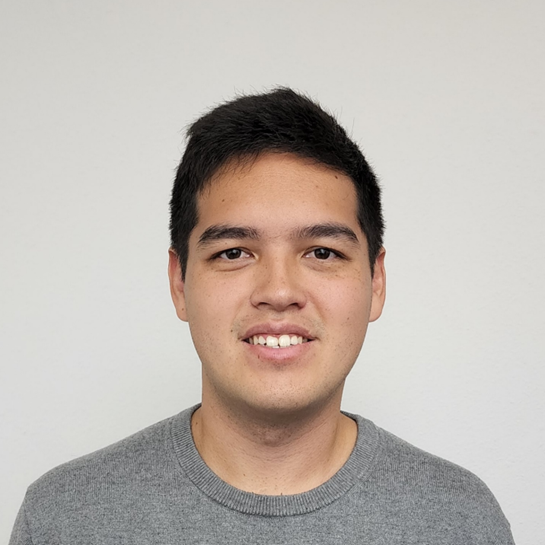
Justin Morris
I am an Assistant Professor of Computer Engineering at California State University San Marcos. I teach CS 331, CE 100, CE 310 and EE 301
 Please provide a link to your university page
https://www.csusm.edu/profiles/index.html?u=jmorris
Please describe the courses you teach
CS 331: Introduction to Computer Architecture
CE 100: Introduction to Computer Engineering
CE 310: Advanced Computer Engineering
EE 301: Introduction to Digital Logic Design
Describe your teaching philosophy and any research interests related to your discipline or teaching. I employ the following methodologies:
- Peer instruction
- Active Learning
- Learning Goals
- Flipped Classroom
OER/Low Cost Adoption Process
Provide an explanation or what motivated you to use this textbook or OER/Low Cost option. Mostly to save the students money. It takes more effort on my part to make assignments that emulate an interactive textbook. However, I can improve this overtime and save students money by no longer using the prior paid class textbook.
How did you find and select the open textbook for this course? I found this book by looking at the library reserves and finding the textbook or textbooks that covered most of the topics I cover in the class.
Sharing Best Practices: Have most of the assignments you want to use this resource for finished before the semester. If you try to make them as you go, it will take up too much of your time.
Describe any challenges you experienced, and lessons learned. Mostly students asking for extensions on readings.
Digital Electronics 1-3
Brief Description:
“Digital electronics 1: Combinational Logic Circuits
“Digital Electronics 2: Sequential and Arithmetic Logic Circuits”
“Digital Electronics 3: Finite-state Machines”
by Tertulien Ndjountche
Publisher: ISTE
ISBNs: 1119318645, 1119329779, 1119371082
Digital Electronics 1 covers topics related to the analysis and design of digital circuits, including combinational logic and logic gates.
https://csu-csusm.primo.exlibrisgroup.com/permalink/01CALS_USM/f06ejt/alma991069701806602901
Digital Electronics 2 covers the principles of sequential and arithmetic logic circuits, including: latch and flip-flop; binary counters; shift registers; arithmetic and logic circuits; digital integrated circuit technology; semiconductor memory; programmable logic circuits.
https://csu-csusm.primo.exlibrisgroup.com/permalink/01CALS_USM/f06ejt/alma991069701623702901
Digital Electronics 3 covers the topics related to finite state machines, including synchronous finite state machines, algorithmic state machines, and asynchronous finite state machines. https://csu-csusm.primo.exlibrisgroup.com/permalink/01CALS_USM/f06ejt/alma99258068107001671
All three books also provide exercises students can complete after each chapter. This series of books covers most of the topics covered in the class.
Author: Tertulien Ndjountche
Student access: Unlimited user ebooks available through CSUSM Library Reserves. This can be added as a tab directly into canvas.
Provide the cost savings from that of a traditional textbook. ~$450
License: The book is copyrighted