Chapter 1 Section 4: Nutritional Balance and Diets
Chapter 1 Section 4: Nutritional Balance and Diets
Section 4
Nutritional Balance and Diets
Learning Objectives |
|
The term diet has been used for centuries and is associated not just with what type of foods a person or culture regularly consumes, but also the type of lifestyle they engage in. When you break down the elements that compose the nutrition aspect of diets, it comes down to the macronutrients of them, or more simply stated, their nutritional balance. In general, most adults would say that they do eat a fairly well-balanced diet. According to the Food and Drug Association (FDA) (2023) though:
“Most people in the U.S. do not eat enough fruits, vegetables, dairy, whole grains and healthy oils, and consume too much saturated fat, sodium and added sugars. Healthy eating is influenced by a variety of factors including access to healthy, safe, and affordable foods as well as consumers’ knowledge, preferences, and culture” (para. 3).
This finding correlates to how the western diet associated with the United States “nutrition” contributes to the ever-growing epidemic of diet-related chronic diseases such as cardiovascular disease, diabetes and obesity (FDA, 2023). Poor nutrition has most commonly been associated with:
“Playing a key role in chronic but preventable diseases, which are leading causes of death and disability in the U.S. Racial and ethnic minority groups, those with lower socioeconomic status and those living in rural areas disproportionately experience these diet-related chronic diseases” (FDA, 2023, para. 4).
Health Balanced Nutrition
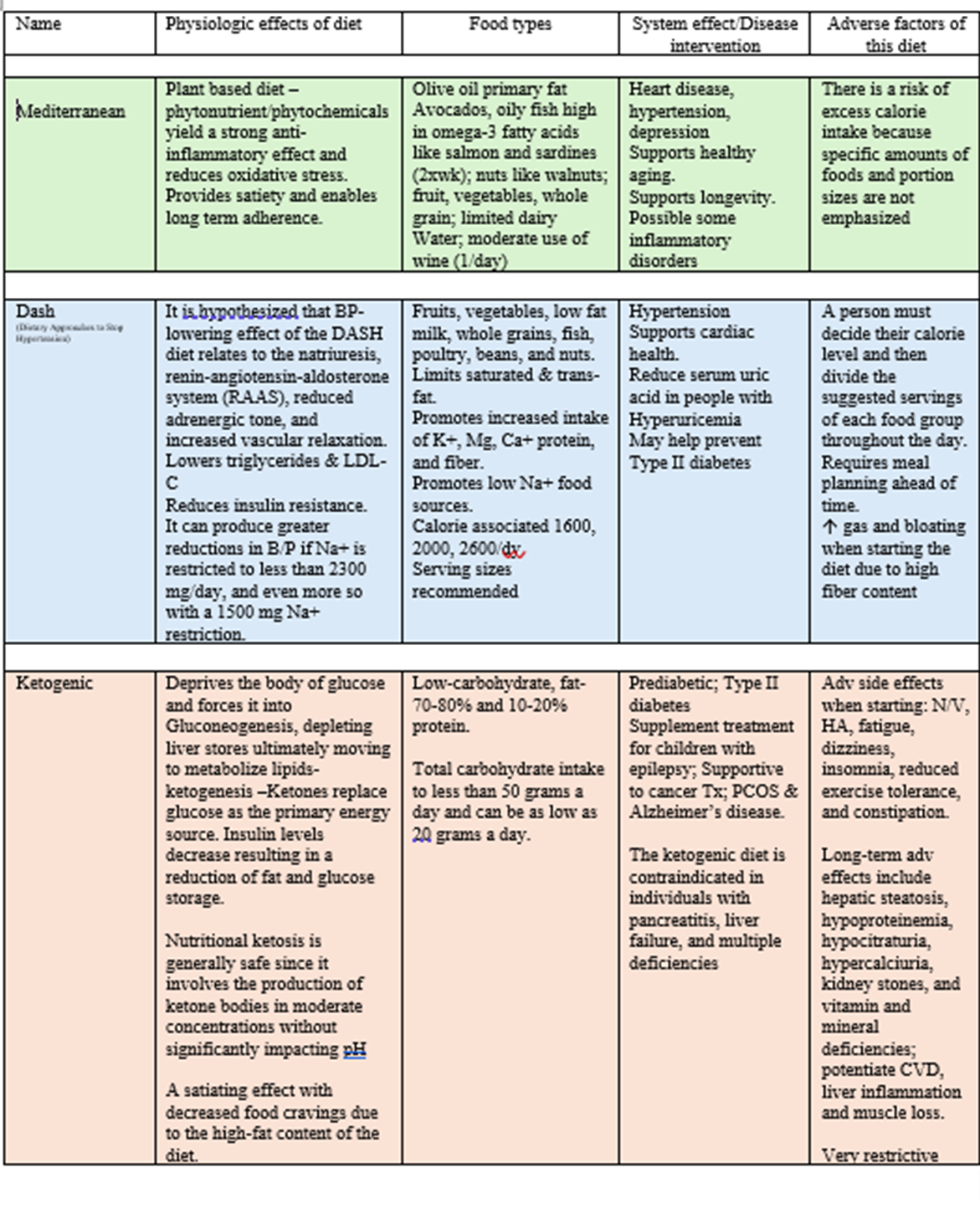
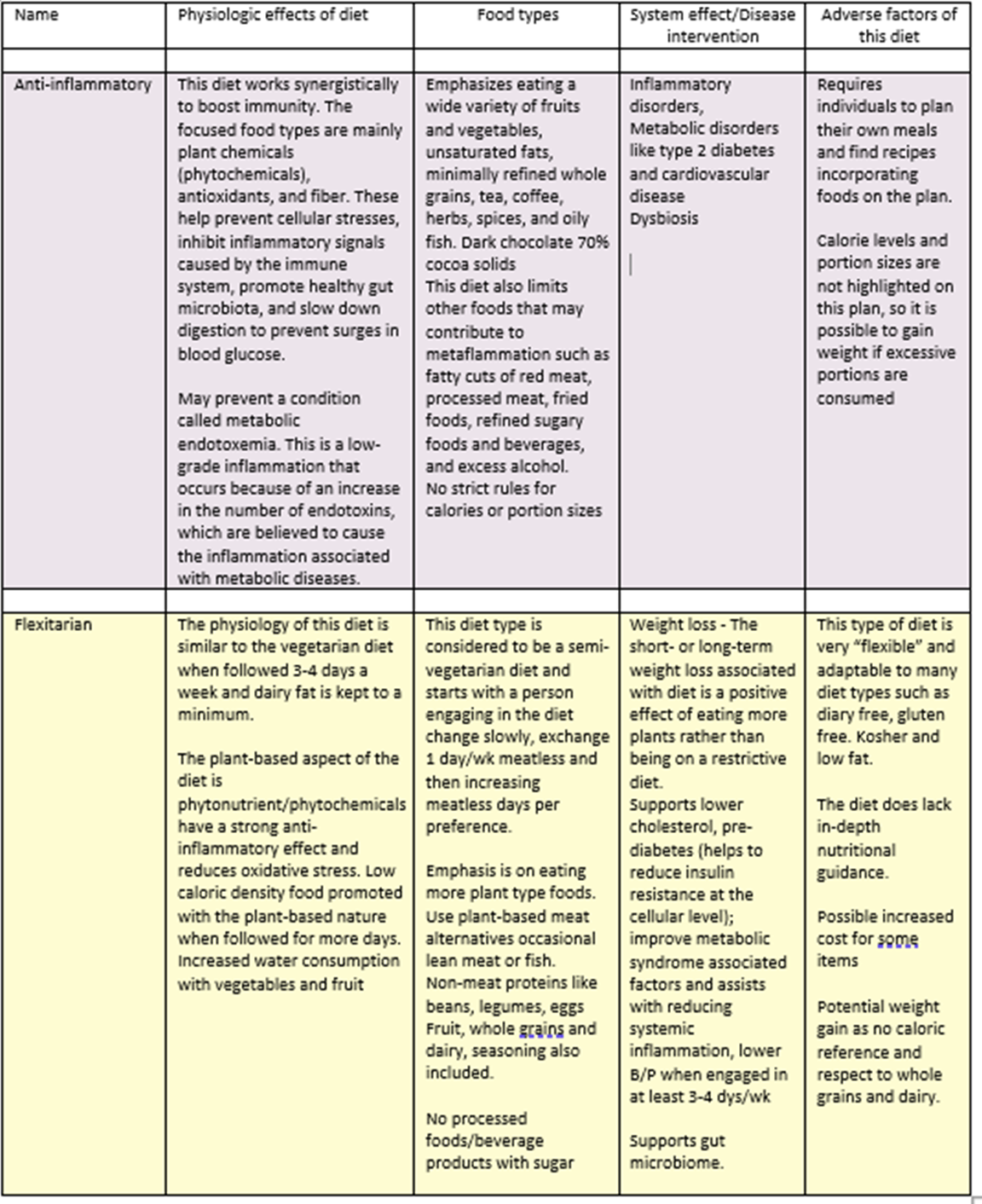
A healthy nutritional balance (typically of the macronutrients) is needed across all ages and ethnicities, keeping in mind that nutritional requirements will vary over a person's lifespan and health needs. Different diet types (Table 6) manipulate the macronutrients depending on the focused intended outcome of following a specific diet type.
The Dietary Guidelines for Americans, 2026:
“Encourages individuals to focus on healthy eating patterns from birth through older adulthood by making changes in their food and beverage choices to help achieve and maintain a healthy weight, promote health, and prevent disease. The core elements of a healthy dietary pattern are remarkably consistent across the lifespan and across health outcomes” (USDA, 2023, para. 2).
The Guidelines speak to four key elements to “Make Every Bite Count:”
Follow a healthy dietary pattern at every life stage.
Customize and enjoy nutrient-dense food and beverage choices to reflect personal preferences, cultural traditions, and budgetary considerations.
Focus on meeting food group needs with nutrient-dense foods and beverages and stay within calorie limits.
Increase hydration with non-sugar beverages; avoid chemical sweetener's.
Limit foods and beverages higher in added sugars, saturated fat, sodium, processed and ultra processed foods and limit alcoholic beverages (USDA, 2026)
MyPlate assessment tool. The tool factors in a person's goals as they relate to health and nutrition, barriers they encounter, knowledge base related to balancing of macronutrients (based on my plate recommendations), and current consumption of the food groups associated with my plate. At the completion of the assessment the program asks the responder what they would like to learn more about, food preparation, how to shop, eating on budget etc. The program then asks if the responder would like to learn more about sodium, sugar and saturated fats. At the conclusion of the assessment the responder is given a printable document with ways to improve their diet. Technology with food tracking plays an important role nutrition change with the program providing free online app resources that the person can download.
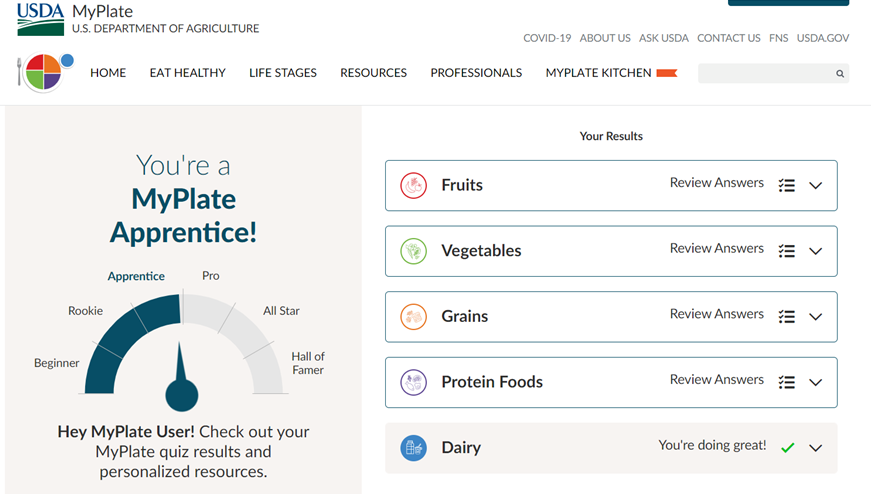
https://www.myplate.gov/my/quizzes
Strategies promoting a health balance
An individual's lifestyle choices interplay into determining a healthy from a unhealthy nutritional balance. Remember that children and adolescents learn and mirror the nutritional behaviors from their home environments, peer groups and social media exposures. A free and easy tool to use and recommend to an adult patient is the “MyPlate” website which provides English as well as Spanish instruction. General education of how to develop a “health balance” is both visually provided as well as written guidance. The website also has information about how to obtain the MyPlate app, connect to Alexia and utilize the program to help construct cost friendly healthy meals.
Key nutritional change strategy recommendations form The Dietary Guidelines for Americans:
Make half your plate fruits and vegetables: focus on whole fruits and vary your veggies
Grains should be whole grains and processed or ultra processed.
Vary your protein routine and increase to 1.2 - 1.6 g/kg/dy.
Move to or full fat dairy (or lactose-free dairy or fortified soy versions).
Take a look at your current eating routine. Pick one or two ways that you can switch to choices today that are rich in nutrition.
A healthy eating routine can help boost your health today and, in the years to come. Think about how your food choices come together over the course of your day or week to help you create a healthy eating routine.
It’s important to eat a variety of fruits, vegetables, grains, protein foods, and dairy and fortified soy alternatives. Choose options for meals, beverages, and snacks that have limited added sugars, saturated fat, processing and sodium.
Make and strive to achieve one healthy eating goal at a time.
Learn how to portion size for meals
There are several unhealthy lifestyle factors that interplay to or promote inflammatory disease development. These include “lack of exercise, high stress, and calorie-rich diets can trigger chronic low levels of inflammation throughout the entire body, termed metaflammation; the western diet is a metainflammatory diet” (Harvard School of Public Health, 2021, para. 6). The western diet also is known to be calorie-dense, and composed of high glycemic type foods, potentially causing blood sugar surges, insulin resistance, and ultimately excess weight gain.
Table 6
Diet Recommendations and Rationale