
Mechanics and Science of Materials - ENGR 330
Mechanics and Science of Materials - ENGR 330
Purpose: to help other instructors teaching the same course
Common Course ID: ENGR330
CSU Instructor Open Textbook Adoption Portrait
Abstract: This open textbook is being utilized in an engineering course for undergraduate or graduate students by Joshua Steimel at Cal Poly Humboldt. The open textbook providesThis text serves to provide a brief overview of some of the myriad of topics available for study in the field of Materials Science. This is by no means a comprehensive compilation of Materials Science and Engineering topics but is instead meant as an introduction to the topic for entry-level undergraduates who want to pursue a career studying materials.. The main motivation to adopt an open textbook was to improve equity to course contents. Most student access the open textbook in an online modality or via video links.
Mechanics and Science of Materials ENGR 330
Brief Description of course highlights: Physical properties of materials. Analyze stresses and deformations involving elastic behavior of materials. Tension, compression, torsion, and flexure. Combined stresses, static indeterminacy. Beams of two materials. Engineering design applications. Engineering majors are strongly encouraged to complete this course before taking 400-level ENGR courses.
https://catalog.humboldt.edu/preview_course_nopop.php?catoid=10&coid=56308
Student population: Engineering students: ERE, ME, ESE
Learning or student outcomes:
- Distinguish between material classifications
- Explain atomic bonding and how it relates to crystal structures
- Analyze the structure-property relationship
- Apply structure and defect concepts to distinguish between elastic and plastic deformation
- Predict the kinetic and diffusive behavior of materials by making justified assumptions to reduce problem to simple form
- Evaluate the invariant points on phase diagrams and construct a phase diagram from scratch
- Explain some of the basic differences in properties and performance of metals, polymers, ceramics, and composites
- Understand electrical, optical, and magnetic properties
- Apply electrochemistry principles to prevent or reduce corrosion
- Utilize experimental skills and techniques to evaluate and measure material properties
- Create lab reports, technical memos, executive summaries, journal articles, and posters from lab exercises.
Key challenges faced and how resolved: This course requires several recommended or required texts that can cost up to $500 per student now students
Syllabus and/or Sample assignment from the course or the adoption [optional]: Found in the embedded videos in the online textbook
https://eng.libretexts.org/Courses/California_State_Polytechnic_University_Humboldt/Mechanics_and_Science_of_Materials
Textbook or OER/Low cost Title: Mechanics and the Science of Materials
Brief Description: The OER textbook is provided as a free to access and download resource on Libretexts and includes links to recorded lectures on the topics with example problems provided.
Please provide a link to the resource
https://eng.libretexts.org/Courses/California_State_Polytechnic_University_Humboldt/Mechanics_and_Science_of_Materials
Authors: Dr. Joshua Paul Steimel
Student access: Students can access via the Libretext link.
Supplemental resources: Each chapter has a YouTube link that has hundreds of my own recorded lectures and example problems, https://www.youtube.com/channel/UCr-ixUI1PFd63OFId2j-wrg
Provide the cost savings from that of a traditional textbook. Approximately $500
License: Openly licensed.
OER/Low Cost Adoption Process
Provide an explanation or what motivated you to use this textbook or OER/Low Cost option. This course is unique and combines several distinct aspects of materials science and mechanical engineering and can require up to $500 in different textbooks so to save student costs I created a textbook that combines this different discipline concepts into one text.
How did you find and select the open textbook for this course? I created the text myself
Sharing Best Practices: Talk to different professors who have created OER and to Cal Poly Humboldt librarians for different resources and way to create OER documents.
Describe any challenges you experienced, and lessons learned. Learned a lot of different tools and need for document to be accessible.
Instructor Name - Joshua Steimel
I am an Assistant Professor in the School of Engineering at Cal Poly Humboldt. 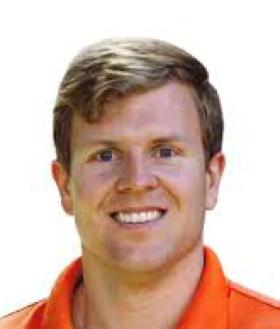
Please provide a link to your university page.
https://engineering.humboldt.edu/people/joshua-steimel-phd
Please describe the courses you teach.
I teach materials science and mechanical engineering courses, including ENGR 330 and ENGR 322.
Describe your teaching philosophy and any research interests related to your discipline or teaching.
My teaching philosophy focuses on creating equity in the classroom and utilizing a variety of OER resources and pre-recorded videos to create a hand-son learning environment. I am interested in creating bioassay platforms and biomechanical studies.