COMD 5520.01 – Voice Disorders
COMD 5520.01 – Voice Disorders
Purpose: to help other instructors teaching the same course
Common Course ID: COMD 5520.01 – Voice Disorders
CSU Instructor Open Textbook Adoption Portrait
Abstract: This free access textbook is being utilized in a Communication Disorders course for graduate students by M. Eugenia Castro at California State University, Los Angeles. The free access textbook provides education materials specifically in the subspecialty area of voice disorders. The main motivation to adopt an open textbook was participation in the SCORE program supported by the Cal State LA library which triggered my curiosity and expanded my knowledge into how access to materials and research can limit or undermine student’s learning experience if it becomes unaffordable to the student community. Most student access the free textbook via online access key with the university library resources. I provide a direct link via a reading list on my online CANVAS site for the course for easy access to the materials.
Course: COMD 5520.01 – Voice Disorders
Brief Description of course highlights: This is a graduate level online course (with synchronous virtual meetings) for students in Communication Disorders and Sciences. This course includes content of anatomy and physiology of non-pathological voice function as well as the theoretical evidence-based knowledge required for individualized assessment and treatment for individuals with voice disorders. In addition, the study of patient-centered practice and multicultural implications for assessment and treatment are presented.
https://ecatalog.calstatela.edu/content.php?catoid=73&catoid=73&navoid=9795&filter%5Bitem_type%5D=3&filter%5Bonly_active%5D=1&filter%5B3%5D=1&filter%5Bcpage%5D=10#acalog_template_course_filter
Student population: Graduate students in the communication disorders major
Learning or student outcomes:
- Describe anatomy and physiology of the vocal mechanism.
- Describe respiration, phonation, resonance and articulation as related to modulation of voice.
- Describe neurophysiology of respiration, phonation, and resonance.
- Identify measurable variables as related to modulation of voice (e.g., acoustic, aerodynamic, perceptual).
- Describe life span changes including pediatric development of the vocal mechanism and aging influences on respiration, phonation, resonance, and articulation.
- Identify etiologies and describe characteristics of vocal pathologies (e.g., benign, malignant, and neuropathologic) including incidence and prevalence.
- Identify structural, neuropathologic, functional/behavioral, and idiopathic laryngeal pathologies.
- Identify high-risk populations (e.g., those in specific occupations such as teachers, singers, actors, lawyers, persons with hearing loss) and their specialized evaluation and treatment needs.
- Outline a complete evaluation protocol and identify clinically appropriate assessment tools. Include history, acoustic and aerodynamic measures, perceptual ratings and imaging.
- Describe and understand the uses of instrumentation related to voice assessment
- Identify techniques for assessing the psychosocial impact of voice disorders across the life span (e.g., validated questionnaires).
- Identify techniques for prevention of voice disorders and promotion of vocal wellness (e.g., vocal health, avoiding phonotrauma) in varied clinical, educational, and corporate settings.
- Identify evidence-based treatment approaches and outcomes to voice disorders: behavioral, medical (including pharmacological), surgical, and combination strategies.
- Describe appropriate management procedures including recommendations and referrals.
- Describe appropriate treatment techniques for the treatment of a variety of disorders of voice. Developing measurable and achievable goals that meet the individually established vocal needs of the person with a voice disorder
- Describe the role of the SLP pre and post-surgical counseling and the rehabilitation of communication following Laryngeal cancer intervention and alaryngeal communication
- Describe multicultural issues relating to voice production/disorders and recognize the needs of specific and culturally diverse populations.
Key challenges faced and how resolved: There was not an open resource textbook I could find that was appropriate for this class. Therefore, I explored with the university library option to provide free access to students to the e-book via library resources.
Provide an explanation or what motivated you to use this textbook or OER/Low Cost option. Save students money and easy access to educational materials.
How did you find and select the open textbook for this course? I already knew this textbook and I consulted librarians which was the best way to offer online access to all students
Describe any challenges you experienced, and lessons learned. There was not an open resource textbook I could find that was appropriate for this class. Therefore, I explored with the university library option to provide free access to students to the e-book via library resources.
Textbook or OER/Low cost Title: Voice Disorders (2022) 4th Ed. Plural Publishing
Brief Description: From the Publisher: “With Voice Disorders, Fourth Edition, authors Christine Sapienza, PhD and Bari Hoffman, PhD have created a comprehensive package for learning. The authors uniquely blend voice science with voice treatments ranging from traditional interventions to recent advances in cellular therapies, muscle strength training, and treatments for special populations. The text has been extensively updated with clinical evidence-based information and comes with a robust online companion website including a study workbook, videos, audio files, and case studies.
This fourth edition offers a comprehensive combined study of the respiratory, laryngeal, and neurological subsystems for voice. Therapy approaches are categorized in terms of type, such as physiologic, combined modality, and hygienic. The new edition expands the approaches to voice therapy, and better defines clinical decision making with information about humanistic communication strategies, adherence, and the multitude of variables that influence patient outcomes.”
It is offered in print and e-book options and comes with companion website resources with videos, audio and pictures as well as exams questions examples for students.
Please provide a link to the resource
https://ebookcentral.proquest.com/lib/csla/detail.action?docID=6427375&pq-origsite=primo Institutional ID and password will be required since is the e-book is provided to students for free by using the Cal State Univ library resources.
Authors: Sapienza, Christine and Hoffman-Ruddy
Student access: Most student access the free access textbook via online access key with the university library resources. I provide a direct link via a reading list on my online CANVAS site for the course for easy access to the materials.
Supplemental resources: The exam copy of the book comes with online faculty resources for lectures such as exams and questions examples as well as quizzes and slides per chapter.
Provide the cost savings from that of a traditional textbook. $150
License: material is copyrighted
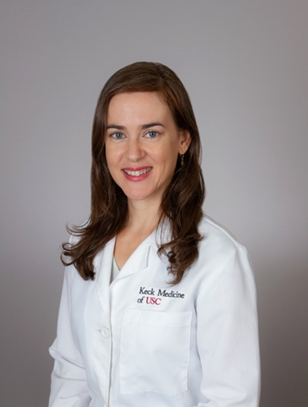
Instructor Name: M. Eugenia Castro, M.S., CCC-SLP
I am a Lecturer at the Department of Communication Disorders, California State University, Los Angeles.
Please describe the courses you teach. I teach the graduate level voice disorders class and the undergraduate level anatomy and physiology of speech class.
COMD 5520 - This is a graduate level online course (with synchronous virtual meetings) for students in Communication Disorders and Sciences. The course includes content of anatomy and physiology of non-pathological voice function as well as the theoretical evidence-based knowledge required for individualized assessment and treatment for individuals with voice disorders. In addition, study of patient-centered practice and multicultural implications for assessment and treatment are presented.
COMD 4620 - Anatomy and physiology of body structures employed in speech production with emphasis on respiration, phonation, resonance, and articulation. The course provides students with a broad understanding of the anatomy and physiology of speech production. Knowing and understanding the anatomical structures involved in the speech process and their action mechanisms, support the evaluation and intervention process of clients (children and adults) with speech disorders. The main focus of the course is on normal processes of the speech production system; however, clinical implications of the material will be briefly discussed.
Describe your teaching philosophy and any research interests related to your discipline or teaching. M. Eugenia Castro is a Speech-Language Pathologist at the USC Voice Center at the USC Caruso Department of Otolaryngology – Head and Neck Surgery as well as a lecturer at California State University Los Angeles. She received her master’s degree in Communication Disorders and Sciences and her Bachelor of Arts in music from California State University, Northridge and completed a fellowship specializing in voice and upper airway disorders at the USC Voice Center. Additionally, she has a degree in voice performance from Escuela de Música Contemporánea - Berklee International Network in Argentina and has worked as a professional singer and singing teacher. Her clinical and research interests include voice disorders in professional and non-professional voice users, and she specializes in the care of the professional and performing voice. She is passionate about discovering a healthy and efficient voice that aligns with identity and promoting culturally responsive voice care. She was born and raised in Buenos Aires, Argentina and is a bilingual provider (Spanish and English).