Social Work 456: Field Experience Seminar Humboldt Social Work Knowledge Commons
Social Work 456: Field Experience Seminar Humboldt Social Work Knowledge Commons
Purpose: to help other instructors teaching the same course
Course: Humboldt Social Work Knowledge
Common Course ID: Social Work 456: Field Experience Seminar
Abstract: The Humboldt Social Work Knowledge Commons project began in spring 2023 as an open pedagogy assignment created by students enrolled in a Social Work 456: Field Experience Seminar course taught by Dr. Debbie Gonzalez at Cal Poly Humboldt University. Amanda Dinscore, College of Professional Studies Librarian, worked with Dr. Gonzalez and her class throughout the semester to empower students with the skills they need to engage in research-informed practice after graduation. Because access to scholarly journals typically ends when students graduate, it was important to inform students about the challenges they would face in accessing research as well as the structural issues involved with subscription-based access to scholarly information. As a result of the class, students became more aware of these issues and learned about tools to overcome them, as well as efforts to make more scholarly information open access.
Students applied what they learned in the class by finding and contributing one open access scholarly journal article and one freely available resource that was created by, or supportive of, the communities they serve and which they felt would be beneficial to practitioners. They were then asked to annotate these sources by describing their potential value and provide a representative image and stable URL where the resource could be accessed. The Humboldt Social Work Knowledge Commons is now freely available online and all contributions are clearly attributed to the students. It will continue to evolve and change as future classes edit and add to the site, serving as a resource of freely accessible content, curated by social work students, that can be used after they graduate. This open pedagogy assignment enables students to proactively address some of the barriers to research-informed practice they will face upon graduation by creating a curated repository of resources, unrestricted by paywalls or dependent on their affiliation with a university, that can inform their future work and the work of their colleagues.
Social Work 456: Field Experience Seminar
Brief Description of course highlights: Social Work 456: Field Experience Seminar. Catalog description: Integrate theory and practice. Learn community resources, monitor progress in the agency. Process experiences on practical, conceptual, and ethical levels.
Student population: Upper division social work majors
Learning or student outcomes: A series of three workshops, co-taught by the librarian and social work faculty member, were conducted at monthly intervals with students enrolled in one section of Social Work 456: Field Experience Seminar during both the spring 2023 and spring 2024 semesters. The first workshop focused on introducing students to scholarly publishing, information privilege, and open access. The second looked at discrimination and lack of representation in scholarly publishing, the concept of authority, and the benefits of using non-scholarly sources to inform practice. The third and final workshop focused on the open pedagogy assignment, which included the creation of the Humboldt Social Work Knowledge Commons. The learning outcomes for the first workshop were for students to:
- Reflect on the challenges of engaging in research-informed practice and practice-informed research after graduation
- Understand what information privilege is and how it impacts social work practice.
- Understand efforts to address information privilege through open access.
- Apply what was learned to locate open access research related to students’ field experience or professional interests.
The second workshop focused on expanding ideas of what is considered valid knowledge and encouraged students to discover authentic voices in the form of oral histories and podcasts, videos of cultural traditions, and other sources that are directly related to the communities they serve, as addressed in the following learning outcomes:
- Understand how information privilege is embedded in scholarly publishing, recognize its structural issues, and acknowledge the ways in which these issues may hinder diverse ideas and perspectives.
- Consider the idea that “authority is constructed and contextual” and challenge the preeminence of scholarly articles as the best source of knowledge in all circumstances.
- Apply what was learned to identify missing voices and information sources and locate non-scholarly information sources related to students’ field experience or professional interests.
With what they’d learned in the first two workshops in mind, students were able to put what they learned into practice during the third workshop by creating the Humboldt Social Work Knowledge Commons, a website where students uploaded the annotations for the sources they’d found. This included discussing what platform should be used, creating an organizational structure, and adding the annotations they’d written as well as an image and stable link for the resources they found. The Humboldt Social Work Knowledge Commons is now freely available at
https://sites.google.com/humboldt.edu/humboldt-social-work-knowledge and all contributions are clearly attributed to the students. It will continue to evolve and change as future classes edit and add to the site, serving as a resource of freely accessible content, curated by social work students, which can be used after graduation. This assignment enabled students to proactively address some of the barriers to research-informed practice they will face upon graduation by creating a repository of resources, unrestricted by paywalls or dependent on their affiliation with a university, that can inform their future work
and the work of their colleagues.
Key challenges faced and how resolved: One of the challenges we encountered in the initial offering of this workshop series was students’ challenges with determining which articles were open access. Because the workshops were being offered on campus, students automatically had access to more content when they used the campus wi-fi network. We determined a work-around for this class, which included the librarian reviewing and approving each article that was posted to ensure that it was OA. In the second iteration of the workshop series, we were much more clear about how to determine what was and was not open access and students had a much easier time making this determination themselves.
Textbook or OER/Low cost Title: Humboldt Social Work Knowledge Commons
Brief Description: The Humboldt Social Work Knowledge Commons is a repository of freely accessible and open access content, curated by upper-division social work students as part of an open pedagogy activity. This activity is the culmination of a workshop series that focuses on information privilege, scholarly publishing, open access, and concepts of authority. The content is hosted on Google Sites for ease of editing by students and project leaders and is freely accessible on the open web. The content on the site is organized by categories that were decided upon based on the students’ internship placements and areas of interest.
Please provide a link to the resource: https://sites.google.com/humboldt.edu/humboldt-social-work-knowledge
Authors: Amanda Dinscore and Dr. Debbie Gonzalez
Student access: Students are able to access materials via the website, linked above.
Provide the cost savings from that of a traditional textbook. This project did not replace a traditional textbook, so it is difficult to make that determination.
License: More information about this project can be found in this presentation and in this pre-print article.
The site is openly licensed and can be distributed, remixed, adapted, and built upon in any medium or format for noncommercial purposes only and as long as attribution is given to the creators.
OER/Low Cost Adoption Process
Provide an explanation or what motivated you to use this textbook or OER/Low Cost option. Our motivation for creating this workshop series and website activity was for graduating social work majors to learn how their access to content would change and to empower them with strategies and skills to engage in research-informed practice after graduation.
How did you find and select the open textbook for this course? Since this is not a traditional textbook, we created this project ourselves by collaborating across departments.
Sharing Best Practices: We recommend engaging in discussions with librarians and considering solutions that bridge departmental divides. Collaboration and openness to learning from one another was key to our efforts.
Describe any challenges you experienced, and lessons learned. The biggest challenge is in keeping the website up to date. We want it to continue to grow and expand, but it requires ongoing maintenance and updating to ensure content is formatted consistently and updated on a regular basis. There may be a point in the future where we want to move the content to a different platform that is easier to manage.
Instructors Names:
Amanda Dinscore, MS. MLIS
Associate Librarian, Cal Poly Humboldt University Library
https://libguides.humboldt.edu/prf.php?account_id=329508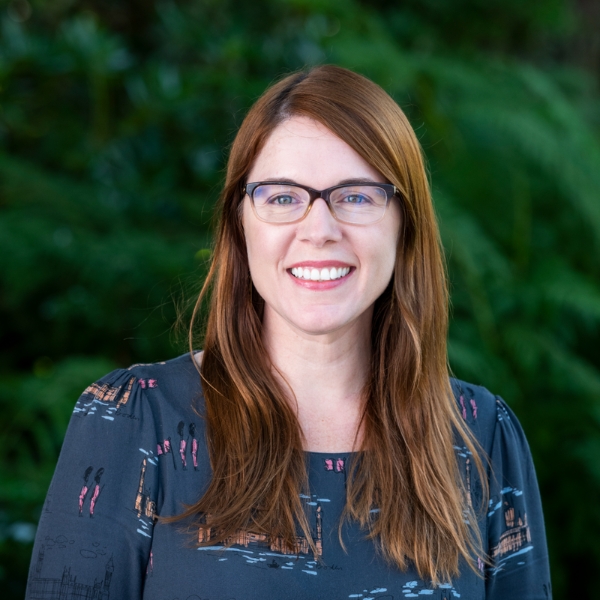
Teaching Philosophy:
My approach to librarianship, which includes teaching, is focused on connection. This includes connecting people and ideas by modeling and inspiring curiosity and guiding students toward becoming more information literate citizens and critical consumers and creators of information. It also includes considering the historical, economic, and political issues that shape access to information and to question, and resist, practices that perpetuate information privilege.
Courses Taught:
1..EDUC 645: Academic Writing in Education
2. Course-integrated information literacy workshops
Research Interests: Critical information literacy, open access, instructional design, plagiarism, user-centered design, and the relationship between research and writing
Dr. Debbie Gonzalez, DSW, MSW
Assistant Professor, Cal Poly Humboldt Department of Social Work
https://socialwork.humboldt.edu/people/debbie-gonzalez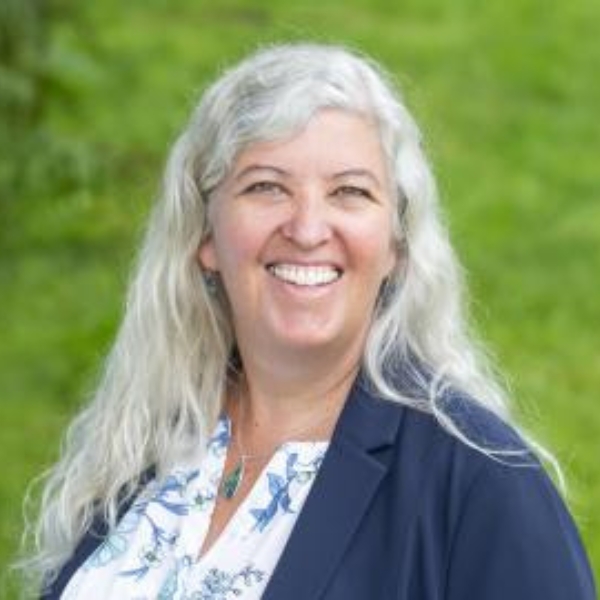
Teaching Philosophy:
Dr. Gonzalez’ instructional vision is to provide a place where students can explore, support, and discover their own motivations for their educational journey. As an instructor, she creates a space for compassionate, challenging, and rigorous inquiry. For students to be ethical practitioners, she provides learning opportunities for all students to understand the elements of advocacy - to remind them to see themselves as part of a community by remembering the humanity in their own practice, their responsibility to each other in the classroom, and their ability to make a difference. Dr. Gonzalez strives to demonstrate with a quiet demeanor how to be a fierce advocate, and show students how to not only see hope but believe in it, even when it's difficult to see.
Courses Taught:
- SW 104 Introduction to Social Work and Social Welfare Institutions
- SW 330 Social Work Policy
- SW 350 Human Behavior and the Social Environment I
- SW 351 Human Behavior and the Social Environment II
- SW 355 Social Agency Experience
- SW 356 Social work Field Preparation
- SW 442 Advanced Social Work Methods
- SW 455 Social Work Field Experience
- SW 456 Field Experience Seminar
- SW 459 Child Welfare Training Seminar
- SW 511 Distant Learning Community Seminar
- SW 543 Generalist Social Work Macro Practice
- SW 530 Social Policy & Services
- SW 559 Child Welfare Training Seminar
- SW 640 Child and Family Social Welfare
- SW 659 Advanced Child Welfare Training Seminar
Research Interests:
Creating virtual simulations to be used in the classroom, utilizing trauma-informed pedagogy to increase engagement, and expanding Cal Poly’s social work students’ connections and access to international social work students in the global north
More information about this project can be found in this presentation and in the article, Addressing Barriers to Research-Informed Practice: A Library and Social Work Collaboration to Empower Future Practitioners, published in Communications in Information Literacy.