Blues Poetry
A blues poem typically takes on themes such as struggle and despair. It often (but not necessarily) follows a form, in which a statement is made in the first line, a variation is given in the second line, and an ironic alternative is declared in the third line.
From Wayne Winborne's Album Liner Notes for Basie Swings the Blues: The Count Basie Orchestra, 2023:
Because the blues are foundational to Black and therefore American music, artists and listeners have bent, shaped, molded, and altered the form to fit their times and their communal needs. As has been said, there are blues and then there are the blues. Whether one is talking about harmonic progression or a profound feeling or love or grief or joy or sadness, the blues have been a very wide river with many tributaries winding and snaking their way through the last century, giving life and meaning to our times. As always, they help us understand ourselves and one another, and perhaps even show us how to love ourselves and others. The blues are truly a part of being human and this record reminds us how good that can be.
As with many aspects of African American life, culture and history, the exact origin of the blues is difficult to pinpoint exactly, but its earliest references date back to the 1890s and early 1900s. It grew out of the experiences, expressions, and musical gestures of rural Black communities, especially work songs and field hollers, minstrel show music, ragtime, and church music. However, it is now known that on January 12, 1912, sheet music for a tune called simply "The Blues" was registered for copyright at the Library of Congress in Washington, D.C.
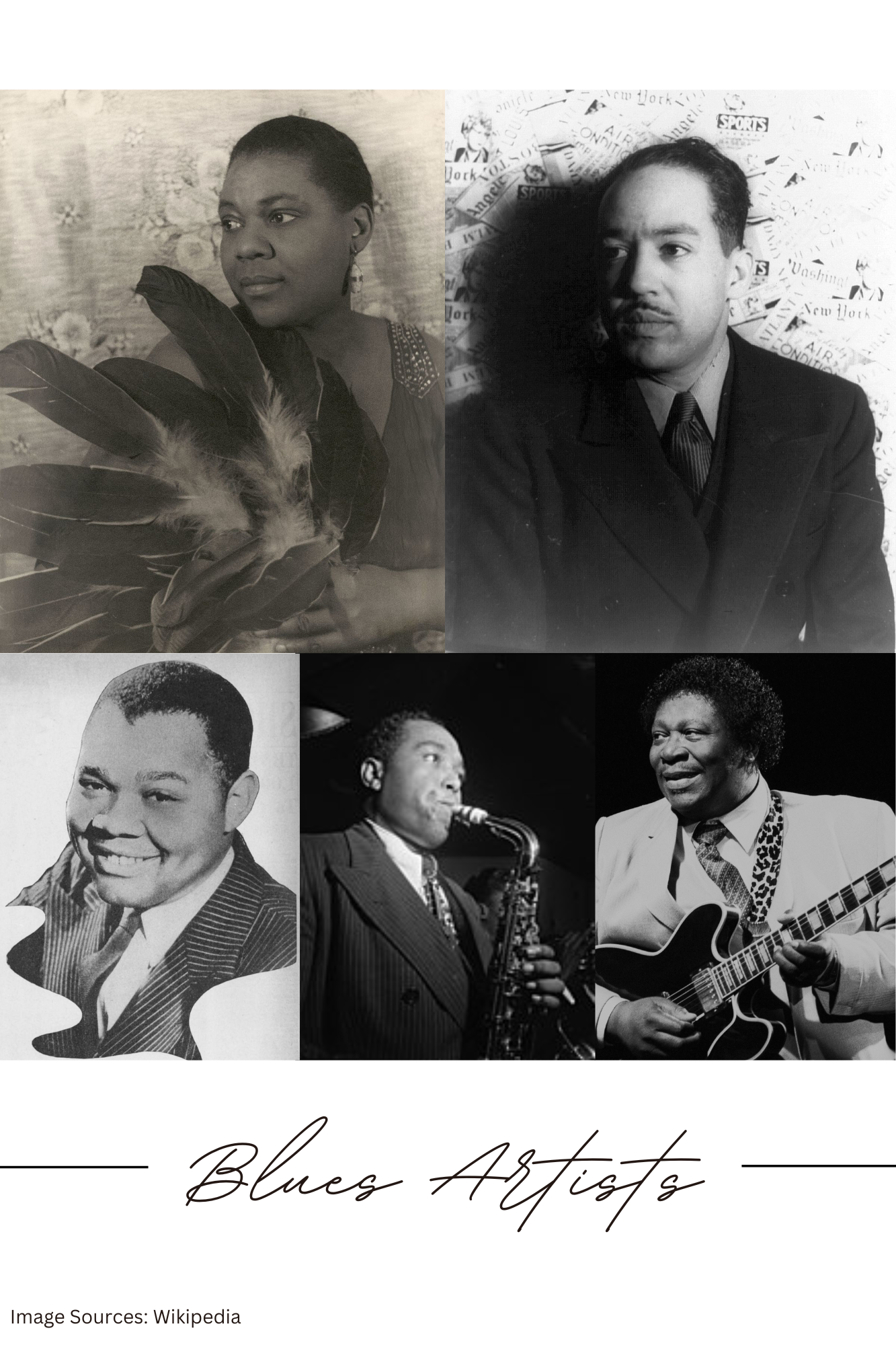
Bessie Smith (1894-1937) - Bessie Smith was a blues singer. She was one of the most popular and influential blues singers of the 1920s and 30s. Known as the "Empress of the Blues," Smith's powerful voice and emotive delivery made her a towering figure in early blues music. She recorded numerous songs that became classics, including "Downhearted Blues," "Nobody Knows You When You're Down and Out," and "St. Louis Blues."
Langston Hughes (1901-1967) - Langston Hughes was a highly influential American poety, social activist, novelist, playwright, and columnist. He was a central figure of the Harlem Renaissance. His poetry often addressed the experiences of African Americans, capturing the struggles, joys, and aspirations of black life in America.
Jay McShann (1916-2006) - Jay McShann was an American jazz pianist and bandleader, primarily known for his contributions to the Kansas City jazz scene. Born in 1916, McShann gained prominence during the swing era and became one of the leading figures in the development of the Kansas City style of jazz.
Charlie Parker (1920-1955) - Charlie Parker, also known as "Bird," was one of the most influential and innovative jazz musicians in history, particularly known for his virtuosic saxophone playing and his role in the development of bebop. Born in 1920 in Kansas City, Kansas, Parker rose to prominence in the 1940s, becoming a central figure in the jazz scene.
B.B. King (1925-2015) - B.B. King, born Riley B. King, was one of the most influential blues musicians of the 20th century. King was renowned for his soulful voice and expressive guitar playing, often characterized by his use of vibrato and string bending. Throughout his long and illustrious career, B.B. King released numerous hit songs, including classics like "The Thrill Is Gone," "Every Day I Have the Blues," and "Lucille." He was not only a masterful performer but also a prolific recording artist, releasing over 40 studio albums and winning multiple Grammy Awards over the years.
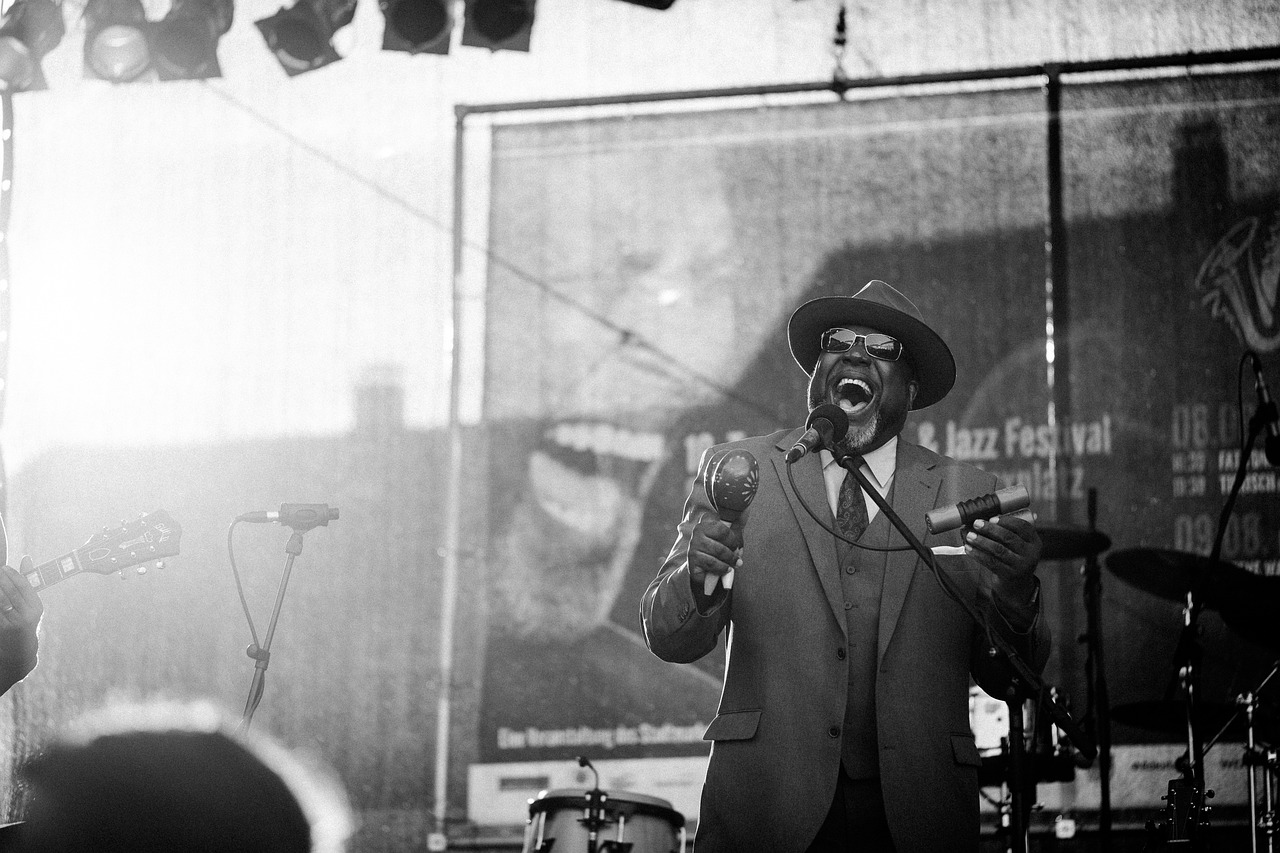
(Source: Sepp from Pixabay)
Listen to Jay McShann perform "Going to Kansas City" (here)
Check out Jay McShann's performance of "Going to Kansas City" on YouTube.
I'm going to Kansas City, Kansas City here I come
I'm going to Kansas City, Kansas City here I come
They got some crazy lil' women there
And I'm gonna get me one.
I'm gonna be standing on the corner Of Twelfth Street and Vine
I'm gonna be standing on the corner Of Twelfth Street and Vine
With my Kansas City baby
And a bottle of Kansas City wine
Well I might take a train
I might take a plane, but if I have to walk
I'm going just the same
I'm going to Kansas City, Kansas City here I come
They got some crazy lil' women there
And I'm gonna find me one.
Oh but you know yeah
Now if I stay with that woman, I know I'm gonna die
Gotta find a brand new baby
That's the reason why
I'm going to Kansas City, Kansas City here I come
They got some crazy lil' women there and I'm gonna get me one.
They got some crazy lil' women there and I'm gonna get me one.
RHYMED
I woke up this morning, coffee on my mind.
I woke up this morning, coffee on my mind.
Nothing left of sleep, nothing of the kind.
I woke up this morning, coffee on my mind.
I woke up this morning, coffee on my mind.
Last night's adventures, a discarded lemon rind.
I woke up this morning, coffee on my mind.
I woke up this morning, coffee on my mind.
My pajama tops on the sofa, my shorts in a bind.
NEAR RHYMED
I was standing at the crossroads, guitar in hand.
I was standing at the crossroads, guitar in hand.
No longer lonely, I strummed, I sang.
UNRHYMED (First Stanza written by Issa)
For the mosquito, too, the night is long.
For the mosquito, too, the night is long.
Long and lonely.
For the mosquito, too, the night is long.
For the mosquito, too, the night is long.
Blue and purple and pitch pitch black.
For the mosquito, too, the night is long.
For the mosquito too, the night is long.
And the humans gather round the fire, swat
Kevin Rabas is the former Poet Laureate of Kansas (2017-2019) and teaches at Emporia State University, where he leads the poetry and playwriting tracks. He has sixteen books, including Lisa's Flying Electric Piano, a Kansas Notable Book and Nelson Poetry Book Award winner. Kevin is also the director of the Emporia State University Donald Reichardt Center for Publishing and Literary Arts.