Folk Ballad
A song that is traditionally sung by common people as part of their culture, history, and sometimes religion. It is also referred to as "Traditional Ballad."
While the exact origins of Folk Ballad are unknown, they are believed to have started in the Middle Ages and continued throughout the Renaissance. The first recognizable ballad is from England in the 13th-century, however, ballads have also been recognized in Scandinavian, German, and Welsh cultures as early as the 19th-century. Traditional Folk Ballads were told orally, and for that reason, many were not recorded. They were handed down by story telling, for generations.
Modern interpretations of the ballad can be seen in music and some poetry today, but these are not folk ballads, because they usually have known authors. Folk ballads, while they still exist, are being replaced with literary ballads.
- Simple Language: They were typically crafted for individuals who either had little or no education. Language needs to be easy to understand without needing to look up what a word means.
- Stories: They typically include narrative. It's about a story, not the emotions of the speaker.
- Stanzas: Each stanza is a quatrain (four lines). Normally with an ABCB rhyme scheme, in which the second and fourth lines must have an end rhyme.
- Meter: Often written in Common Meter, which is alternating lines of iambic tetrameter (4 iambic feet per line) and iambic trimeter (3 iambic feet per line). A peotic foot (plural: feet) is a combination of a stressed and unstressed syllable. An iamb is a combination of one unstressed syllable, followed by a stressed syllable. Four iambic feet in one line and three iambic feet in the following line develop Common Metter. However, Common Metter is not a requirement of this form, but a consistent meter throughout the poem is.
- Repetition: Since it is a song it typically has a refrain or incremental repetition.
- Dialogue: Usually contains multiple characters, which are introduced in the dialogue. Dialogue for different characters was traditionally performed like a duet or play, different voices were used for each different part. Unfortunately, this means written transcriptions of folk ballads have little or no dialogue change indication.
- Third-Person Objective Narration: Folk ballads, often sung, were performed by a narrator. Narrators typically speak or sing in the third person, unless they're assuming the role of the character. They will also not influence the ballad with their own emotions or reactions, it will be performed as they learned it.
- Other common characteristics: Sudden beginnings and endings, few superfluous details or descriptors, often tragic, use of supernatural elements.
Far Over the Misty Mountains Cold
Listen to "Far Over the Misty Mountains Cold," performed by Geoff Castellucci, 2021, on YouTube.
AABA rhyme scheme
Far over the misty mountains cold
To dungeons deep and caverns old
We must away ere break of day
To find our long-forgotten gold
The pines were roaring on the height
The winds were moaning in the night
The fire was red, it flaming spread
The trees like torches blazed with light
Unmet Deadlines (By Emporia State student, Hannah Lingard)
The glow of her computer screen
lights up her sleeping face.
A librarian asks her to leave;
they have to close the place.
She awaks from her slumber, eyes
bleary, her mouth is drooling.
She sits up with a start,
asks "Who am I fooling?"
This paper is due at midnight,
I've written half a page.
I better go home and rest or
I'll have a fit of rage.
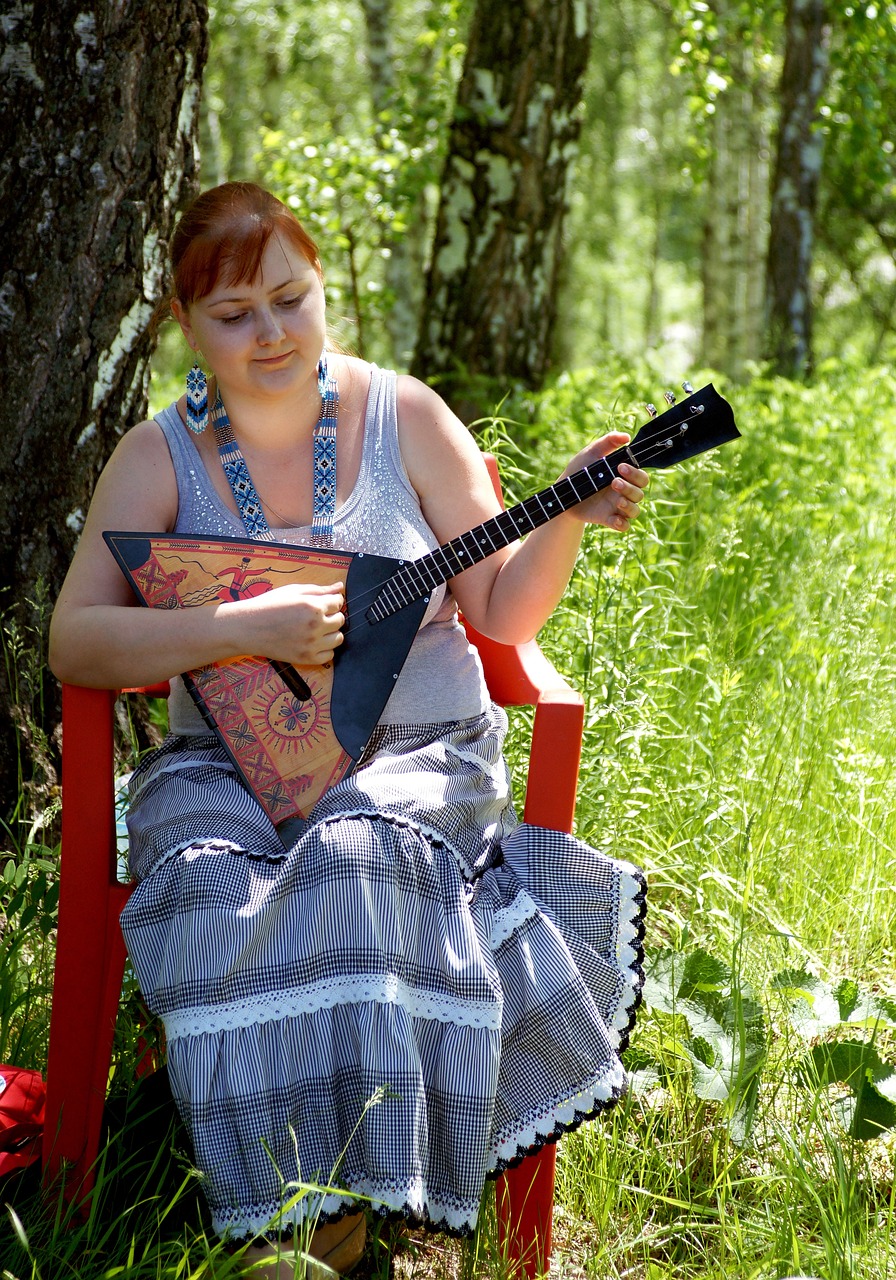
(Image by Анатолий Стафичук from Pixabay)
A literary ballad and folk ballad are very similar but have only one key distinct different: authorship. While the author of a folk ballad is unknown and is the work of many poets retelling the story for generations, a literary ballad has a known author and is perserved to the singular version this author created, due to the preservation of soft and hard copies.
WHY YOU SHOULD WRITE OR READ FOLK POETRY:
- Read folk ballads to gain and understanding of history, religion, or culture of a group and understand how rhyme and meter affect moods, especially tragic ones.
- Write folk poetry to compose anonymously, focus on the sound of a composition rather than visual structure, and set the lyrics to song.
WHY YOU SHOULD WRITE OR READ LITERARY BALLAD POETRY:
- Write a literary ballad to tell a story, discuss a topic with universal appearl, use colloquialisms, use an organized structure, compose lyrics that can be put to song, and contrast a chipper rhythm with a tragic story.
- Read literary ballads to enjoy a poetic story, understand the cultural values of a place or time period, and understand how music can contrast or compliment a story.