Music Literature for Children, MUSIC 343
Music Literature for Children, MUSIC 343
Purpose: to help other instructors teaching the same course
Common Course ID: Music Literature for Children, MUSIC 343
CSU Instructor Open Textbook Adoption Portrait
Abstract: This open textbook is being utilized in a Liberal Studies course for undergraduate students by Dr. Jennifer Gee at San Diego State University. The open textbook provides a variety of pedagogical strategies and resources for integrating music into elementary classrooms. The main motivation to adopt an open textbook was a lack of affordable texts. Most students access the open textbook in Canvas.
Course Title and Number
Brief Description of course highlights: Analytical study of music suitable for children of all ages. Background information, musical structure and functions of this music in the lives of children. Catalog link
Student population: The majors in this course are Liberal Studies - Elementary Education or Music - Music Education. The prerequisite for this course is either MUSIC 102: Music for Elementary Classroom Teachers or MUSIC 205B: Comprehensive Musicianship.
Learning or student outcomes:
- Preservice teachers will be able to demonstrate and apply music in a K-8 classroom setting, in accordance with the National Music Standards, as described by the National Association for Music Education (NAfME). These standards include creating, performing, responding, and connecting. Preservice teachers will be able to demonstrate these standards by means of the following student learning outcomes:
- Preservice teachers will generate musical ideas (i.e. rhythms, melodies, and simple accompaniment patterns) within related tonalities (i.e. major and minor) and meters (Creating: MU:Cr1.1.4b).
- Preservice teachers will perform music, alone and with others, with expression, accuracy, and appropriate interpretation (Performing: MU:Pr6.1.5a).
- Preservice teachers will evaluate musical works and performances, applying established criteria, and explain appropriateness to the context, citing evidence from elements of music (Responding: MU:Re9.1.5a).
- Preservice teachers will demonstrate understanding of relationships between music and the other arts, other disciplines, varied contexts, and daily life (Connecting: MU: Cn11.0.5).
- Preservice teachers will be able to identify and practice utilizing the components of music (e.g., melody, rhythm, harmony, and form) in lessons (e.g., math, language arts, science, social studies) that can be used in every classroom.
- Preservice teachers will be able to create elementary classroom lessons focused on music including objectives, culturally relevant learning experiences, and appropriate assessment measures.
- Preservice teachers will be able to compare, discuss various effective proactive classroom management skills and apply them to culturally relevant learning experiences in the elementary classroom and music classroom.
- Preservice teachers will be able to demonstrate enactive, iconic, and symbolic pedagogical strategies, through a music-integrated elementary classroom peer teaching session, with a focus on either language arts, science, history-social science, or math.
- Preservice teachers will be able to demonstrate the cumulative skills noted above by planning and executing appropriate elementary music/integrated arts lessons and developing objective assessment measures.
- Preservice teachers will be able to compose a dance presentation utilizing the California Content Standards for Dance which highlights the five elements of dance.
- Preservice teachers will be able to apply music integration to an elementary lesson focused on world music appropriate for implementation in a future classroom.
Syllabus and/or Sample assignment from the course or the adoption:
Link to the syllabus and calendar for this course
Key challenges faced and how resolved: The key challenges for this course include teaching future elementary classroom teachers how to infuse music into their elementary classrooms, when it is likely that they have not experienced an elementary general music class or teaching experience prior to this course. To resolve this, we are a very active class in which students are asked to teach a dance, elementary general music lesson, elementary integrated music lesson, and a world music lesson.
Textbook or OER/Low cost Title: Music and the Child
Brief Description: This is taken from “About the Book”: Children are inherently musical. They respond to music and learn through music. Music expresses children’s identity and heritage, teaches them to belong to a culture, and develop their cognitive well-being and inner self worth. As professional instructors, childcare workers, or students looking forward to a career working with children, we should con-tinuously search for ways to tap into children’s natural reservoir of enthusiasm for singing,moving and experimenting with instruments. But how, you might ask? What music is appropriate for the children I’m working with? How can music help inspire a well-rounded child? How do I reach and teach children musically? Most importantly perhaps, how can I Incorporate music into a curriculum that marginalizes the arts?
This book explores a holistic, artistic, and integrated approach to understanding the developmental connections between music and children. This book guides professionals to work through music, harnessing the processes that underlie music learning, and outlining developmentally appropriate methods to understand the role of music in children’s lives through play, games, creativity, and movement. Additionally, the book explores ways of applying music-making to benefit the whole child, i.e., socially, emotionally, physically, cognitively, and linguistically.
Link to Resource:
https://milnepublishing.geneseo.edu/music-and-the-child/
Authors: Natalie Sarrazin, Ph.D.
Student access: Students access this book through our learning management system - Canvas and/or RedShelf eReader.
Supplemental resources: List resources including online homework systems, interactive study guides for students, and faculty-only resources such as solutions and slides that are available.
Provide the cost savings from that of a traditional textbook. The other texts that exist that could be used for this course cost anywhere from $88-109-148, which is very expensive.
License: Creative Commons Attribution-Non Commercial.
OER/Low Cost Adoption Process
Provide an explanation or what motivated you to use this textbook or OER/Low Cost option. Using this OER textbook saves students a significant amount of money, and it’s also very easily accessible through our learning management system of Canvas. This text is also relevant and appropriate for this class and supports the student learning outcomes.
How did you find and select the open textbook for this course? Another faculty member recommended this open textbook.
Sharing Best Practices: Though it may seem outside of one’s comfort zone, OER is much more expansive than I initially thought.
Describe any key challenges you experienced, how they were resolved and lessons learned. I have not experienced any challenges utilizing this OER.
Instructor Name: Dr. Jennifer Gee
I am a Music Education professor at San Diego State University. I teach MUSIC 343: Music Literature for Children and Practicum II: Elementary Music Education.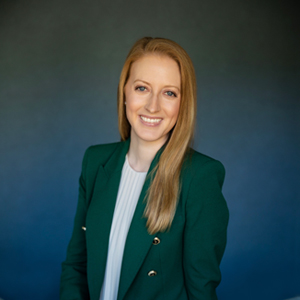 Please provide a link to your university page.
https://music.sdsu.edu/people/gee-jennifer
Please describe the courses you teach.
MUSIC 343: Music Literature for Children - This course is designed to equip future elementary classroom and music teachers with many possibilities of musical activities, standards, assessments, and resources appropriate for elementary-aged children, regardless of musical background. To enhance conceptual learning for elementary students, preservice teachers will learn about music appreciation, foundational elements of music, arts philosophy, California Music Content standards, creative movement and dance, singing, classroom instrument performance, listening, world music, integrated and cross-curricular music lessons, and classroom management.
MUSIC 246B: Practicum II: Elementary General Music Education - This class is the second in a four semester music education series for the undergraduate Music Education major (Bachelor of Music - Music Education; SIMS code 665306). The SDSU Music Education degree is an approved undergraduate waiver program for students seeking to go into a California Single Subject Teaching Credential program for a career in teaching, particularly in a public or private school system. The Practicum program includes training in all aspects of music. This program provides instruction on a wide assortment of instruments, methodologies, and pedagogical approaches.
This course is designed to equip future elementary and/or secondary general music teachers with many possibilities of musical activities, standards, assessments, and resources appropriate for children in grades TK-8. To enhance conceptual learning for elementary students, preservice teachers will learn about music appreciation, foundational elements of music, arts philosophy, California Music Content standards, creative movement and dance, singing, classroom instrument performance, listening, Orff-Schulwerk Approach, Kodály Method, Dalcroze Method, eclectic method, world music, and preventive classroom management and reactive discipline.
Describe your teaching philosophy and any research interests related to your discipline or teaching. I see my role as that of a constructivist music teacher-scholar who actively engages learners in the process of meaning and construction. My goals are to equip and support preservice (teachers in training) and practicing music educators with positive and inclusive behavioral and classroom management strategies, while also advocating for music integration in general elementary classrooms. Over my 14-year career in music education, my unwavering focus has been on establishing a person-first approach, valuing each individual's unique attributes and fostering an environment where all students can flourish. To achieve this, I am dedicated to implementing relevant, practical, and research-based pedagogical strategies, ensuring that our students are well prepared for their future careers.
My research agenda focuses on learner-centered approaches to classroom management in K-12 music settings, which include restorative justice, social-emotional learning, and culturally responsive practices. Additionally, I have created tools to explore elementary teachers' perspectives on integrating music in general classrooms. Furthermore, it is crucial that my constructivist teaching approach (emphasizing active knowledge construction by learners), informs both my quantitative and qualitative research endeavors and collaborative projects. By setting this model for our students, I contribute to the advancement of the music education profession as a whole. My aim is to share these discoveries with practicing teachers and fellow researchers.