
EE210 Circuit Analysis I
EE210 Circuit Analysis I
Purpose: to help other instructors teaching the same course
Common Course ID: Circuit Analysis I - EE 210
CSU Instructor Open Textbook Adoption Portrait
Abstract: This open textbook is being utilized in a Electrical and Computer Engineering course for undergraduate by Ying Khai Teh at San Diego State University. The open textbook provides a comprehensive textbook available for download, numerous circuit demo, video lectures for download, instructor resources include lecture slides, and solved exercise problems. The main motivation to adopt an open textbook was cost as students can save on buying textbook. Most student access the open textbook in PDF format.
Course Title and Number: EE210 Circuit Analysis I
Brief Description of course highlights: Circuit analysis by reduction methods, Thevenin and Norton's equivalence, mesh current and nodal voltage analysis. Transient analysis of first-order circuits and use of phasors for steady-state sinusoidal analysis. Operational amplifier models, impedance, power. Computer software tools for circuit analysis
Student population: Electrical Engineering, Computer Engineering. Prerequisite: MATH 151 and PHYS 196 and PHYS 196L with a grade of C (2.0) or better in each course.
Learning or student outcomes:
1. Calculate basic parameters such as current, voltage and power of different components in a circuit
2. Analyze simple linear circuits using Ohm’s Law and Kirchhoff’s Laws
3. Employ advanced algorithms such as Nodal and Mesh Analyses to calculate currents and voltages of the components in a complex linear circuit
4. Utilize techniques such as Superposition, Source Transformation, Thevenin and Norton Equivalent operations to simplify and solve complex linear circuits
5. Analyze circuits containing resistors, capacitors, and inductors
6. Analyze basic circuit configurations containing ideal operational amplifiers
7. Employ computer-aided techniques to assist with circuit analysis.
Key challenges faced and how resolved: Simulation software Multisim used in the textbook requires student to use the software inside ECE laboratory only. Another free software LTSpice is adopted instead so that student can install it on their own devices.
Sample homework (week 1)
Please complete the following end-of-chapter problems in the textbook. Submit your answer in a single-file PDF.
1.1, 1.3,1.5,1.7,1.10,1.12,1.14,1.16,1.19
Textbook Title: Circuit Analysis and Design
Brief Description: The textbook provides fundamental circuit analysis textbook that is available for download for free. It also comes with a lot of learning resources such as online demo, tutorials.
Please provide a link to the resource https://cad.eecs.umich.edu
Authors: Fawwaz Ulaby (University of Michigan), Michel Maharbiz (University of California, Berkeley), Cynthia Furse (University of Utah)
Student access: Student can download the material directly from the University of Michigan website.
Supplemental resources: Resources such as Answers to concept questions, Exercise Solutions Demos, MyDAQ tutorials, Univ. of California Video Course and Univ. of Utah Video Course are available for students, and faculty-only resources such as solutions and slides that are available upon request
Provide the cost savings from that of a traditional textbook. Fundamentals of Electric Circuits by McGrawHill costs $59 for 180-day access.
License: Copyrighted
Provide an explanation or what motivated you to use this textbook or OER/Low Cost option. Save students money, and the textbook quality is comparable to other higher cost options.
How did you find and select the open textbook for this course? Recommended by IEEE peers.
Sharing Best Practices: Find an open available textbook with well supported ecosystems for instructor such as homework solution, lecture slides.
Describe any key challenges you experienced, how they were resolved and lessons learned. . For example: Software recommended is not user friendly and limits the student usage in lab only. If students wish to use it on their own computer, they will have to pay out of pocket. I have used another freely available software in the teaching instead so that students can simulate the circuits anytime anywhere.
Instructor: Ying Khai Teh
I am an Electrical and Computer Engineering professor at San Diego State University ttps://electrical.sdsu.edu 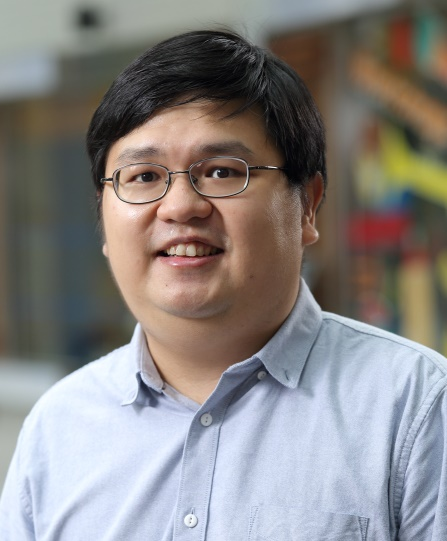
Please provide a link to your university page. Please describe the courses you teach. I teach primarily circuit classes for students majoring in Electrical Engineering and Computer Engineering, i.e. EE210 Circuit Analysis I (Sophomore), to EE330 Fundamentals of Engineering Electronics (Junior) and COMPE572 VLSI Circuit Design (Senior, Graduate).
Describe your teaching philosophy and any research interests related to your discipline or teaching. I believe that it is important to teach my students how they can engineer practical solutions based on abstract principles and limited economic resources. Learning how to trade-off different design parameters to achieve different design objectives is one of the most important skills that you will learn in my class. Class materials are always related to the context of actual industrial application so that students can correlate the classroom theory to the industrial practice. Helping students to visualize class materials with simple daily life analogies and earn hands-on laboratory design and test experience are the two essential elements in my courses. I also encourage students to work in diverse teams and communicate their work using professionally written reports and concise oral presentation for smaller, graduate level classes.
Please provide a link to your university page. https://teh.sdsu.edu