
CJUS 5508 – Preventing Crime in Transportation Systems
CJUS 5508 – Preventing Crime in Transportation Systems
Purpose: to help other instructors teaching the same course
Common Course ID: CJUS 5508 – Preventing Crime in Transportation Systems
CSU Instructor OER Adoption Portrait
Abstract: This textbook is being utilized in a criminal justice course for undergraduate by Dr. Nerea Marteache at California State University, San Bernardino. The textbook offers a straightforward and pragmatic handbook for managing prevalent crime and disorder issues encountered in public transportation. The main motivation to adopt this textbook was to provide an excellent hands-on guide to researching and preventing transportation crime that all students could access and afford. Students can access the textbook for free through the CSUSB’s John M. Pfau Library website.
Course Title and Number: CJUS 5508 – Preventing Crime in Transportation Systems
Brief Description of course highlights: Transportation systems are critical to the movement of people and goods. This course will address safety and security challenges of transit settings, as well as ways to prevent crime in those environments. https://catalog.csusb.edu/colleges-schools-departments/social-behavioral-sciences/criminal-justice/criminal-justice-ba/
Student population: This is an upper-division course, and all students were juniors or seniors. It is open to graduate students as well, although in Fall 2023 no graduate students were registered. There are no prerequisites for this course. This is an elective course for students majoring in the B.A. of Criminal Justice and the B.Sc. in Intelligence in Crime Analysis (concentrations in Cyber Security and Geographic Information Systems). It is required for the students in the concentration of Homeland Security of the B.Sc. in Intelligence and Crime Analysis.
Learning or student outcomes: At the completion of this course, students will:
1. Identify and explain a variety of types of crimes in transportation systems.
2. Analyze the causes and correlates of transport-related crime and fear of crime in the transportation setting.
3. Critically analyze ordinary (i.e. theft) and extraordinary (i.e. terrorism) types of crime and identify the transportation components that may be controlled to help prevent these crimes.
4. Describe the specific challenges related to the prevention of crime in transportation systems (i.e. multiple jurisdictions involved).
5. Design and evaluate interventions to prevent transport crime.
Key challenges faced and how resolved: The main challenge of using this textbook is that, while it is an excellent resource to examine ordinary crime typologies in the context of public transportation, it fails to address other topics such as transportation (vehicles) as the crime target or facilitator, or more serious issues like terrorist attacks on transportation systems. I address this limitation by assigning all chapters of the textbook during the first half of the course, and then assigning journal articles on the other topics during the second half of the course. The journal articles are also accessible for free through CSUSB’s John M. Pfau Library.
Syllabus and/or Sample assignment from the course or the adoption [optional]: CJUS 5508_Crime Prevention Transportation_Fall 2023_Marteache.pdf
Textbook or OER/Low cost Title: Secure and tranquil travel: Preventing crime and disorder on public transport
Brief Description: The initial sections of the book offer an accessible and streamlined overview of essential concepts, including crime, disorder, fear of crime, techniques for reducing opportunities, and the SARA model—a widely employed action-research framework in crime analysis. This is presented using clear language, supplemented with helpful diagrams and illustrations. All topic-specific chapters focusing on crime and disorder issues guide readers in applying the SARA model to analyze each problem. They provide ample information to grasp the issue and contextualize it within real-life scenarios, along with numerous suggestions for implementing the 25 techniques of situational crime prevention. Furthermore, real-life case studies, photographs, and comprehensive summary tables in each chapter serve to enhance understanding.
Please provide a link to the resource https://csu-sb.primo.exlibrisgroup.com/permalink/01CALS_USB/6rdjcv/alma991011125348802916 (to access through the library). https://www.routledge.com/Secure-and-Tranquil-Travel/Smith-Cornish/p/book/9780954560744 (publisher’s website)
Authors: Smith, M.J., & Cornish, D.B. (Eds.)
Student access: This book is available as an e-book, for free, at CSUSB’s John M. Pfau Library’s website. The library owns this title.
Provide the cost savings from that of a traditional textbook. This book’s retail price is $99.95 as listed on the publisher’s website, but by accessing through the library’s services, there is no cost to the students.
License: The material is copyrighted.
OER/Low Cost Adoption Process
Provide an explanation or what motivated you to use this textbook or OER/Low Cost option. I had used this textbook in a previous edition of the course but found that the price was too steep, and I was searching for an alternative. However, there are not many textbooks that present the materials in such a straightforward manner with a focus on prevention, so I was considering building the course using mostly journal articles. It was at that point when I became aware that the library had purchased this title, and that it had made it available to the students, for free, as an e-book. This is the reason why I decided to adopt it again.
How did you find and select the open textbook for this course? When I first designed the course, I reached out to other faculty members throughout the country who teach similar courses. Two main texts were recommended, this one, and a more advanced, edited volume, on safety and security in transit environments. I opted for the one I am presenting here because it had more of a textbook structure (as opposed to an edited volume), and it had a lower price, which worked better for me given the characteristics of my course and student population.
Sharing Best Practices: The one thing I would recommend to other faculty is to check whether their preferred resources are available through their library and, if they are not, to contact their librarians to see whether purchasing the resources and making them available to students for free could be an option for the library.
Describe any key challenges you experienced, how they were resolved and lessons learned. I have not experienced any challenges with the adoption of this material. Students had access to it from day one, without any hiccups.
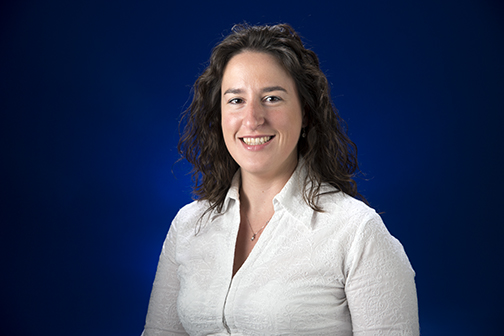
Instructor Name: Dr. Nerea Marteache
I am a Criminal Justice Professor at California State University San Bernardino.
 Please provide a link to your university page.
https://www.csusb.edu/profile/nmarte
Please describe the courses you teach.
I teach CJUS 3311 – Research Methods in Criminal Justice; CJUS 3312 – Statistics in Criminal Justice; CJUS 3470 – Crime Prevention; CJUS 5506 – Wildlife Crime; CJUS 5508 – Preventing Crime in Transportation Systems; and CJUS 6608 (graduate) – Crimes, Criminals, and Victims.
Describe your teaching philosophy and any research interests related to your discipline or teaching.
Being a practice-oriented individual impacts the type of work I do and how I do it: I favor the exploration of real-life problems and the search for realistic solutions, and I like to offer my students the opportunity to try new things and participate in hands-on projects.
My field within Criminal Justice is Crime Prevention, which lends itself easily to collaborations with external organizations, as it involves applied research and problem-solving. This course was designed as a Service-Learning Course, in which students work with community partners to address their crime-related concerns and suggest possible interventions. In the Fall 2023 edition, students in this course partnered with two local bus companies to examine the crime problems they are dealing with and suggest prevention strategies.
This topic is related to my own research interests, as the study and prevention of crimes in transportation systems is one of my fields of specialization.