ANT 102 – Ancient Civilizations
ANT 102 – Ancient Civilizations
Purpose: to help other instructors teaching the same course
Common Course ID: ANT 102
CSU Instructor Open Textbook Adoption Portrait
Abstract: This open textbook is being utilized in an Anthropology course for undergraduate students by Ambyr Hardy at CSU Dominguez Hills. The open textbook provides students with comprehensive information about the “nuts and bolts” of archaeological theory and practice, which I also supplement with other resources from reliable online sources and scholarly journal articles in our campus library. The main motivation to adopt an open textbook was because I believe that higher education should be simple and accessible for all students. Most students access the open textbook and other free sources in Canvas, our LMS, via weekly modules.
Course Title: ANT 102 – Ancient Civilizations
Brief Description of course highlights: ANT 102. Ancient Civilizations. (3 Units). Examination of origins and development of world civilizations. Using evidence from the archaeological record, the written record, the arts, literature, and the sciences, human cultural achievements are examined from the earliest beginnings to the sixteenth century.
Student population: CSUDH is a diverse institution with about 69% Latinx students, and more evenly distributed range of other ethnicities, and is attended by more underserved students than other CSUs and UCs. ANT 102 tends to reflect the general campus demographics and is attended by more first and second-year students from a range of majors since the course meets GE requirements. I typically only have a few Anthro majors in the course. Most incoming students have no knowledge of anthropology – some have not even heard of it until signing up for the class.
Learning or student outcomes: Coursework will relate to real-life experiences and have practical applications regardless of a student’s major. By the end of this course, students will be able to:
- Understand what anthropology is and why it’s relevant.
- Identify and discuss unique characteristics of human culture.
- Describe different societies in scientific terms and locate key cultural groups on a world map.
- Analyze, synthesize, and evaluate information in both academic and “real world” settings.
- Apply a holistic worldview and cultural relativism to the different people and cultures we encounter.
Key challenges faced and how resolved: Students' ability to find, read, evaluate, and discuss scholarly readings is variable at the beginning, but through weekly reading discussions, their ability to think critically, and to learn processes of analysis (ex: breaking articles down into key points) and synthesis (ex: make connections between the assigned readings and other weekly or section content) improves dramatically with feedback and practice. This also seems to build student confidence in their ability to understand new content and to conduct research, as they learn to use the library resources, annotate readings, and work together to present information in segment and regional projects.
Syllabus and/or Sample assignment from the course or the adoption:
ANT 102 Syllabus S 24 REV 01.24.pdf
ANT 102 Syllabus Infographic S24.pdf
sample assignment ANT 102.docx
Course Title: Digging into Archaeology: A Brief OER Introduction to Archaeology with Activities. LibreTexts, 2023.
Brief Description: I primarily use the textbook as a resource to provide the underlying archaeological context for lessons on ancient civilizations. The book layout is conducive to being used in “chunks” and I use selected chapters (out of order) that supplement other weekly content, which includes lectures, other readings, and videos. In addition to an accessible reading style and shorter chapters, the book makes key concepts simple. Additionally, the text includes key chapter objectives, vocabulary, guiding questions, and activities (some of which I have used to develop my own coursework).
Resource link: Resource hosted by ASCCC-OERI: https://asccc-oeri.org/wp-content/uploads/2020/06/OERI-Archaeology_Final_4_29.pdf
Authors: Amanda Wolcott Paskey, and AnnMarie Beasley Cisneros.
Student access: I provide links in our weekly modules when chapters are assigned; The book is available in our library online and also available online at: https://asccc-oeri.org/wp-content/uploads/2020/06/OERI-Archaeology_Final_4_29.pdf
Supplemental resources: Because I see myself as a “curator” of the educational experience, I use a variety of resources (all free). In addition to textbook reading, I think it is important for students to find and evaluate other media sources, including online sources and scholarly journal articles. Each week includes lectures (I post recordings and slide pdfs), a selection of readings from sites like Sapiens.com (an online anthropology journal), online museums, and scholarly journals found in our library, and also videos from Khan Academy and other online sources. Students participate in weekly reading discussions and work to teach each other the selected materials.
Provide the cost savings from that of a traditional textbook. I have not used an archaeology textbook with a cost, so I don’t have a good comparison, though I recall when I was in school (decades ago) texts often ranged between $50-$150.
License: © 2020 Amanda Wolcott Paskey and AnnMarie Beasley Cisneros,
CC BY-NC. Licensed under a Creative Commons Attribution-Noncommercial 4.0 International License. https://creativecommons.org/licenses
OER/Low Cost Adoption Process
Provide an explanation or what motivated you to use this textbook or OER/Low Cost option. In addition to saving students money – which is important in a time where education debt is the highest in history – I find that open access resources tend to be understandable for students because the author share a desire to make education more accessible. They also tend to be up-to-date and include other options, like links to other resources (study guides, online resources, etc).
How did you find and select the open textbook for this course? Many of the resources used in the course are also used by others who teach this class; However, the textbook I found through “googling” and comparing what was available widely online with what is available in our library. I selected this particular book because it offered the archaeology content I was looking for in a simple and relatable way.
Sharing Best Practices:I wish I knew about the Cool4Ed website before now! Having an online source to see what others are using could have saved me time in searching for my own course materials. I also really value the community of faculty I share teaching with, and rely upon others – and share with others – for resources, course materials, and ideas.
Describe any key challenges you experienced, how they were resolved and lessons learned. One possible drawback to having free course materials, as some argue, is that without a cost, students may be less committed to the course. However, in my experience, students who are committed will finish, and those who are not won’t, and in either case I am happy to save students money, which is a primary hindrance to education for many.
Instructor Name Ambyr Hardy
I am faculty in Anthropology at CSUDH.
https://www.csudh.edu/anthropology/faculty 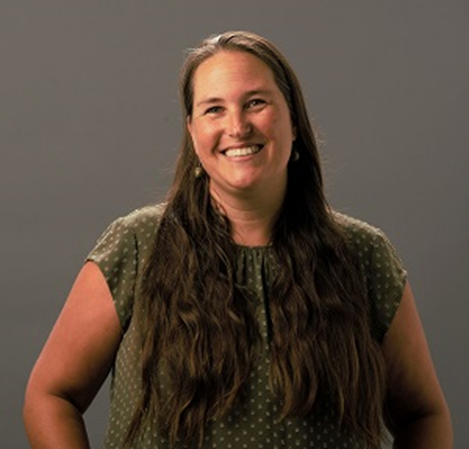
Please describe the courses you teach. In all of my courses I take a biocultural approach, providing evidence for the ways that our biology, culture, and the natural environment are always interacting. Humans use culture to address the opportunities and challenges presented by their biology and culture, in order to adapt and evolve over time, which presents us with the beautiful and fascinating diversity we see in the world today.
I expect all my students to value diversity, learn to access and interpret a range of resources, from mass media to scholarly work, and to be able to apply what they learn in our courses – especially holism and cultural relativism - to their “real-life” experiences.
- ANT 100 – Intro to Cultural Anthro
- Introduction to principles of anthropology, ethnographic methods, and introducing students to the interconnected aspects of culture that humans share, but are reflected in diverse ways
- ANT 101 – Intro to Biological Anthro
- Understanding scientific theory and evolutionary principles and applying these to human evolution and development.
- ANT 102 – Ancient Civilizations
- Using an archaeological lens to understand the evidence for past peoples everywhere in the world.
- ANT 336 – Culture, Environment, and Globalization
- This course applies the biocultural lens to understanding the relationships of people to the natural environment in a global age.
- ANT 337 – Ethnography & Film
- This course explores culture and ethnography through film, highlighting the ways that film contrasts and/or supplements texts about humanity and culture.
- ANT 455/555 – People, Culture, and the Environment
- A deeper exploration into the ways humans are part of the natural world, and how their beliefs and behaviors shape the world.
Describe your teaching philosophy and any research interests related to your discipline or teaching. As an applied cultural anthropologist, I love to explore the diverse and beautiful ways humans adapt to their physical and cultural environments. I believe that collaboration is our species’ key to success, and I love working with people to solve problems using my “ethnographic toolkit.”
I am committed to positive social change and believe a more equitable future is rooted in understanding the roots of structural inequality and implementing organizational and structural justice. I am here to help students succeed! Because I believe all humans are learners, and my job is to teach content and skills and to assess student learning as they grow. Weekly course content builds (I use scaffolded assignments) and I guide students through learning processes. I practice “UNgrading.” This form of assessment focuses on learning as a process, instead of the commodification of points. Students complete formative coursework – smaller assignments that build up to larger summative works – cumulative projects that reflect learning and growth over time. Students must complete coursework by demonstrating mastery of learning objectives, and grading is based on complete/ incomplete status. If students receive an incomplete, they also receive feedback (via rubric, comments, etc.) about how to complete the work, and are given time to revise and resubmit work.