
English 108 and 109, First Year Composition Stretch
English 108 and 109, First Year Composition Stretch
Purpose: to help other instructors teaching the same course
Common Course ID: English 108 and 109, First Year Composition Stretch
CSU Instructor Open Textbook Adoption Portrait
Abstract: This open textbook is being utilized in a first-year composition course for undergraduate or graduate students by Melissa Williams at CSU Dominguez Hills. The open textbook provides accessible, easy-to-read articles about key rhetorical concepts. The main motivation to adopt an open textbook was to save students money, especially in their first year. Most student access the open textbook on the book’s web page.
Course Title and Number: English 108 and 109, First Year Composition Stretch
Brief Description of course highlights: College-level reading and writing taken over two terms (108/109) that incorporates additional instruction and support to develop rhetorical knowledge and critical thinking and engage students in writing processes, research, and observation of conventions.
Student population: This class is a 100-level course for first year students
Learning or student outcomes:
- to define and apply key rhetorical concepts through analyzing and composing a variety of texts in several genres and modes (print, visual, digital, oral, multimodal);
- to demonstrate rhetorical awareness and flexibility by discussing how other writers adapt language for audience, situation, and purpose and by consciously adapting their own writing to a variety of situations and contexts that call for purposeful shifts in voice, tone, style, design, medium, structure, and conventions;
- to compose persuasive arguments that articulate a clear, thoughtful position, deploy support and evidence appropriate to audience, situation, and purpose, and consider counterclaims and multiple points of view;
- to demonstrate awareness of writing as a recursive, social process by reading, writing, and collaborating to discover and deepen ideas, reflecting on their rhetorical choices, and revising those choices in response to feedback from readers;
- to identify how and why conventions vary by genre, discipline, and occasion and use resources to effectively employ appropriate formatting, style, citation, and grammar conventions;
- to demonstrate awareness of proper citation conventions and their relation to concepts of intellectual property and authorial responsibility;
- to practice and demonstrate the ability to use relevant rhetorical and discursive conventions in order to communicate with academic and professional audiences.
Instructor Name: Melissa Williams
I am an English professor at the CSU Dominguez Hills. I teach first year composition.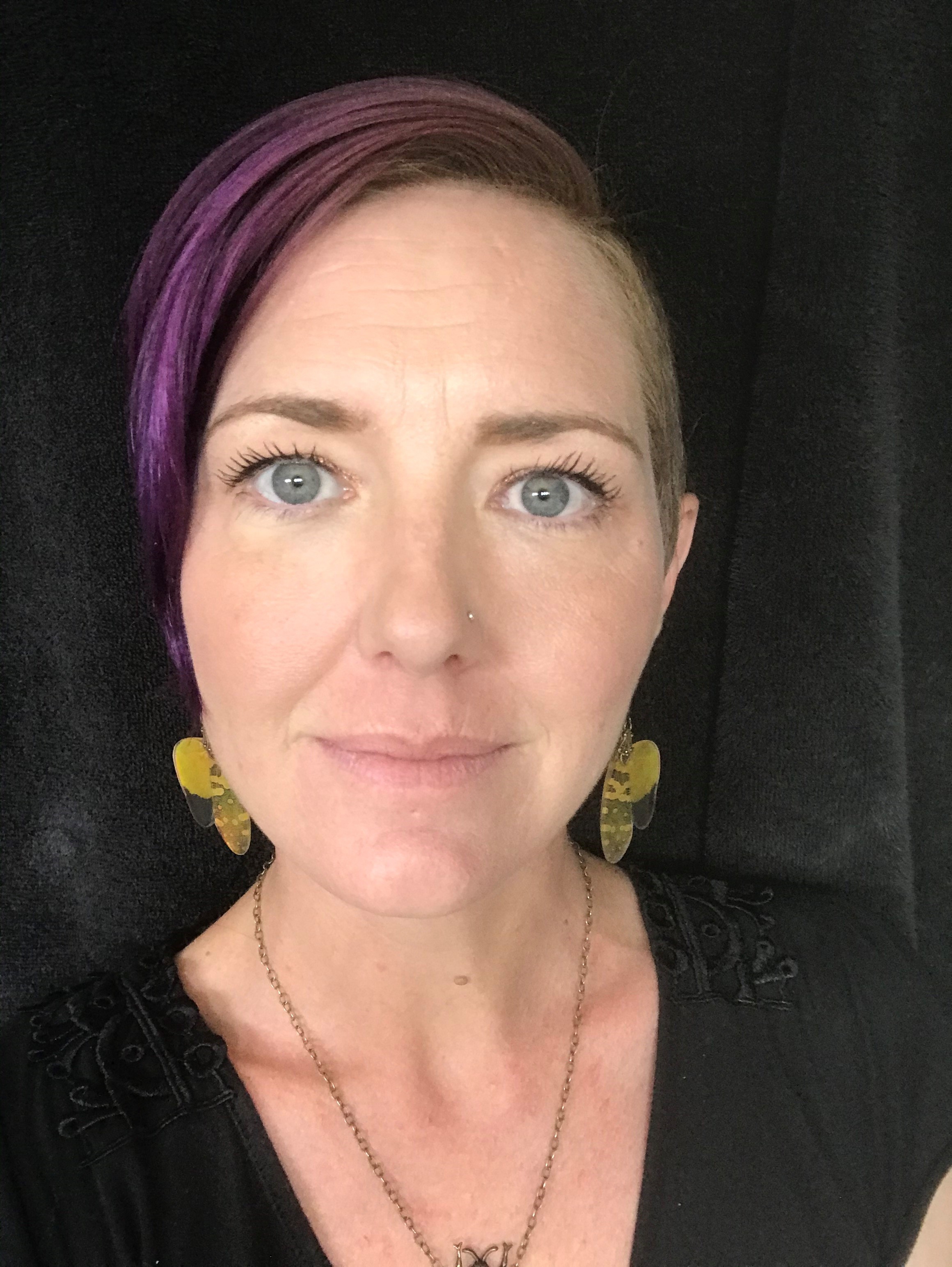
Please describe the courses you teach.
I teach English 108 and English 109 which are First Year Composition courses.
Describe your teaching philosophy and any research interests related to your discipline or teaching.
Students of Freshman Composition are often new to university life, and thus need acculturation to the college environment as much as they need instruction in composition. As an instructor, I strive to be approachable, supportive, and empathetic to the unique struggles of a diverse student population. My courses focus on acculturation and adjustment to college as much as they focus on writing. My research interests include linguistic diversity and collaboration and engagement in the classroom. Recently I have been engaging in Writing Center studies, and thinking about the intersection between the Center and the classroom.
Textbook or OER/Low cost Title: Open English @ SLCC
Brief Description: Open English @ SLCC was written collaboratively by the faculty at Salt Lake City College specifically for the first-year composition classroom. The textbook’s website is aesthetically pleasing and easy to navigate. The diction and structure of the articles are accessible and appealing for first-year students since the text was written specifically for them. The chapters are relatively brief
Writing Spaces is a collection of essays and articles about rhetoric and composition. The diction and structure of these articles is not as accessible for first-year students, but the topics covered are more comprehensive. I typically do not use this text until later in the course when the students have a better understanding of some of the foundational concepts for the course.
Please provide a link to the resource
https://pressbooks.pub/openenglishatslcc/
https://writingspaces.org/
Authors: Writing Spaces: There are 5 volumes. Authors vary by volume. Open English: SLCC Composition Instructors
Student access: Both texts have websites. I also create Word document versions that are posted to Canavs for annotation.
Provide the cost savings from that of a traditional textbook. The cost savings at $47 for a comparable traditional English textbook.
License:
- Open English @ SLCC Copyright © 2016 by SLCC English Department is licensed under a Creative Commons Attribution-NonCommercial 4.0 International License, except where noted.
- Writing Spaces includes multiple volumes, but their website has the following information:
- “Licensing and Copyright: Authors will retain full copyright to their work. Because Writing Spaces is an open access textbook project, authors must agree to publish their work under a Creative Commons Attribution-NonCommercial-ShareAlike license. Authors also grant Writing Spaces non-exclusive rights to prepare and publish a print edition through Parlor Press. The printed edition will include the Creative Commons license and a PDF version of it will be available for download.”
- So for instance, Volume 1 has this on their copyright page: “© 2010 by Parlor Press. Individual essays © 2010 by the respective authors. Unless otherwise stated, these works are licensed under the Creative Commons Attribution-Noncommercial-No Derivative Works 3.0 United States License and are subject to the Writing Spaces Terms of Use.”
Provide an explanation or what motivated you to use this textbook or OER/Low Cost option. Many students struggle to adjust to college in their first year, so I believe in removing as many structural barriers for my students as possible. I do not see any purpose in requiring a costly textbook when so many exceptional resources are available for free.
How did you find and select the open textbook for this course?Writing Spaces is well known among English faculty. I first encountered it during a professional development session. I cannot remember how I found Open English. I think it might have been linked on the WAC Clearinghouse or a similar OER repository.
Sharing Best Practices: The sustainability of open education relies on sharing with others. Please give suggestions for faculty who are just getting started with OER or Low Cost options. List anything you wish that you had known earlier.
Make sure you provide the text in as many formats as possible to accommodate all kinds of readers.
Key challenges faced and how resolved: First year students are intimidated and reluctant to read things that seem “too hard”. The chapters in SLCC Open English are short, easy to read and comprehend, and visually appealing to read on the text’s web page.