ASAM 101/Introduction to Ethnic Studies
ASAM 101/Introduction to Ethnic Studies
Purpose: to help other instructors teaching the same course
Common Course ID: ASAM 101/Introduction Ethnic Studies
CSU Instructor Open Textbook Adoption Portrait
Abstract: This open textbook is being utilized in a Asian American Studies course for undergraduate students by Davorn Sisavath at California State University Fullerton. The open textbook provides introductory concepts for ethnic studies, with zero cost course materials to support specific concepts. The main motivation to adopt an open textbook was reduce course costs and find more Asian American history resources. Most student access the open textbook in online and library resources through Canvas.
ASAM 101/Introduction Ethnic Studies
Brief Description of course highlights: : Perspectives through which people of color have come to see themselves in terms of their own heroes, cultures and contributions to the societies in which they live and the world in general. (AFAM 101, ASAM 101, and CHIC 101 are the same course)
Student Population: Include majors, typical incoming knowledge (i.e. prerequisites).
- This is a GE Area F requirement course. Approximately 30-35 students enrolled each semester, and 50% are first-time freshmen. Majors varied including but not limited to biological science, psychology, pre-business, computer science, public health, kinesiology.
- There are no prerequisites to the course because students come in and are introduced to ethnic studies topics, concepts, and approaches.
Learning or student outcomes: Since this course is a GE Area F requirement, the SLOs are the same for all AREA F courses.
- SLO 1s. Identify, define, and interpret core concepts such as race, racism, racialization, ethnicity, equity, ethno-centrism, eurocentrism, white supremacy, self-determination, liberation, decolonization, sovereignty, anti-racism, migration, labor systems, settler colonialism, imperialism, citizenship, and immigration in any one or more of the following disciplines: African American Studies, Asian American Studies, Chicanx/a/o and Latinx/a/o Studies, and Native American Studies. Addresses CSU GE Area F core competency 1.
- SLO 2s. Apply theory, creative expression, and/or knowledge to describe the histories, cultures, lived-experiences, and struggles within and/or across African American, Asian American, Chicanx/a/o and Latinx/a/o, and/or Native Ameri-can communities from one or more of the following: African American Studies, Asian American Studies, Chicanx/a/o and Latinx/a/o Studies, and Native American Studies. Addresses CSU GE Area F core competency 2.
- SLO 3s. Describe and critically analyze the intersection of race with forms of difference affected by systems and hierarchies of oppression, for example:
- structural racism
- capitalism, genocide
- sexism, heterosexism
- ableism
- political and cultural representation in African American, Asian American, Chicanx/a/o and Latinx/a/o, and/or Native American communities.
Key challenges faced and how resolved: Some key challenges were trying to incorporate as many textbooks or OER to the syllabus. This work requires at least a solid two years. It is only in Fall 2024 that I will be able to revise my Canvas Page and student learning outcomes for each unit and modules. I continue to revise the syllabus to illustrate how the open textbook provided is useful in the course.
Introduction Ethnic Studies
Brief Description: Class utilizes a combination of OER materials, library materials, and free online resources to cover various course areas and learning objectives.
Our Lives: An Ethnic Studies Primer by Vera Guerrero Kennedy and Rowena Bermio. The book addresses the five student learning outcomes and core competencies for Ethnic Studies graduation requirement approved by the California State University Council on Ethnic Studies (GE Area F)
https://pressbooks.pub/ourlives/
Defining Race by Erika Gutierrez, Janét Hund, Shaheen Johnson, Carlos Ramos, Lisette Rodriguez, & Joy Tsuhako (Developed for a sociology course, but the overview is brief with helpful examples and knowledge checks throughout)
Flashpoints for Asian American Studies, eds. Cathy Schlund-Vials and Viet Thanh Nguyen (available as library e-book unlimited access)
YouTube vidoes on Settler Colonialism and the Founding of the United States by Roxanne Dunbar-Ortiz. This is a video of a presentation given as part of ASU's Distinguished Visiting Writers Series. Explains the topic clearly with examples for an audience of college students
Student access: Student access: How and where do students access materials? For example: course management system, external server or OER repository such as MERLOT or OpenStax CNX, printed text from bookstore or online printing services or mobile device.
Supplemental resources: Some sources used in the course are: All homework are discussion posts or reflections with prompts created to avoid AI generated texts. In terms of interactive, I currently do not use any except for students to view videos on YouTube or listen to podcasts.
Provide the cost savings from that of a traditional textbook. The materials provided in the course cost students $0 dollars to enroll. All sources are either available online journal articles, library ebook-unlimited access, multiple users, or 3 users, and Kanopy. Previous resources used cost about $25.
License: Library materials are copyrighted, but have licenses that allowed for them to be accessed by an unlimited number of users at a time. Our Lives: An Ethnic Studies Primer is under a CC BY-NC 4.0 License.
OER/Low Cost Adoption Process
Provide an explanation or what motivated you to use this textbook or OER/Low Cost option. As a first-generation college student and faculty, I know the costs of education can be a burden. Therefore, it was important to provide course materials at no cost. Students should not be prohibited from learning because of high price textbooks and this makes sure Area F courses are accessible and affordable for everyone. This also allows me to select more quality readings and materials and not limited to 2-3 textbooks.
How did you find and select the open textbook for this course? Some of the textbooks and sources were from teaching previous courses, talking with colleagues, and suggestions from students. However, Michaela Keating’s suggestions were helpful and aligned with my course. I intend to review and include these suggestions in Fall 2024.
Sharing Best Practices: The sustainability of open education relies on sharing with others. Please give suggestions for faculty who are just getting started with OER or Low Cost options. List anything you wish that you had known earlier.
There are so many sources one can access; I suggest meeting early with your OER librarian. If it wasn’t for this fellowship, I don’t think I would come across Keating suggestions.
Describe any key challenges you experienced, how they were resolved and lessons learned. The challenge was trying to make the changes within a year, while doing service work was overwhelming. I plan to make slow changes and incorporate 1 or 2 sources per semester and see if it works.
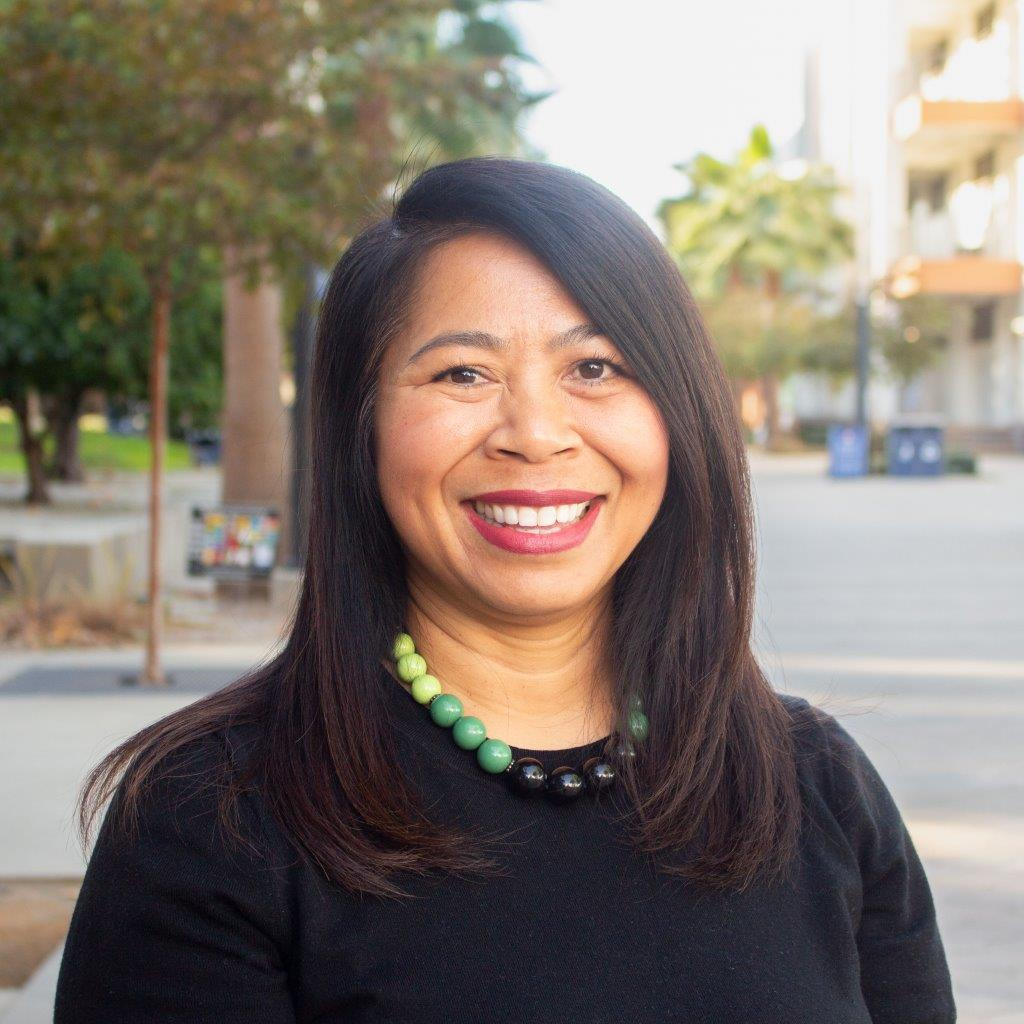
Instructor Name: Davorn Sisavath
I am an Asian American Studies Assistant professor at California State University, Fullerton. I teach ASAM 101 and ASAM 300. provide your title and your institution.
Please provide a link to your university page.
https://hss.fullerton.edu/asian-american/faculty/full_time/davorn-sisavath.aspx
Please describe the courses you teach. ASAM 101: Perspectives through which people of color have come to see themselves in terms of their own heroes, cultures and contributions to the societies in which they live and the world in general.
ASAM 300: Interdisciplinary exploration of the experiences of several Asian American groups. Addresses questions of cultural assimilation and cultural persistence, family and gender roles, and literary and popular culture representations.
Describe your teaching philosophy and any research interests related to your discipline or teaching.
- Courses
- ASAM 101: Introduction to Ethnic Studies
- ASAM 300: Introduction to Asian American Studies
- Teaching philosophy/pedagogy
- As a teacher-scholar, I believe effective teaching is central to the learning process and education must be an interactive process through which we learn about the world and imagine changes for the better. In this spirit, I embrace the concept of the classroom as an environment that incites curiosity, inquiry, critical and creative thinking, and inclusivity. The following goals guide my teaching philosophy in the classroom: 1) teaching must be socially responsible and committed to the community within and beyond the university, and 2) teaching requires a commitment to students and student learning.