Mechanical Engineering EGME 401/EGEC 401
Mechanical Engineering EGME 401/EGEC 401
Purpose: to help other instructors teaching the same course
Common Course ID: EGME 401/EGEC 401
CSU Instructor Open Textbook Adoption Portrait
Abstract: This open textbook is being utilized in an Mechanical Engineering/Electrical Engineering course for undergraduate students by Rakesh Mahto at California State University Fullerton. The zero-cost textbook provides a comprehensive overview of the course material and provides case studies for real-world examples.The main motivation to adopt an open textbook was to reduce costs and encourage students to shift to using resources for analysis that are more in-line with the profession. Most student access the zero-cost course materials in Canvas.
Course Title and Number: EGME 401/EGEC 401
Brief Description of course highlights: Development, evaluation and presentation of design alternatives for engineering systems and projects using principles of engineering economy and cost benefit analysis. Engineering profession, professional ethics and related topics.
Student population: Include majors, typical incoming knowledge (i.e. prerequisites). The students enrolled in the class are mainly from the mechanical and electrical engineering departments. Sometimes, students from civil engineering and computer science take these courses. Prerequisites: MATH 150A; Engineering or Computer Science major; junior or senior standing.
Learning or student outcomes:
• To provide a practice-oriented curriculum that prepares students to apply theory to real-world problems.
• To develop the skills pertinent to the design process, including the students’ ability to formulate problems, to think reactively, to communicate effectively, to synthesize information, and to work collaboratively.
Student Outcomes
• An ability to function effectively on a team whose members together provide leadership, create a collaborative and inclusive environment, establish goals, plan tasks, and meet objectives (ABET SO (5))
• An ability to recognize ethical and professional responsibilities in engineering situations and make informed judgments, which must consider the impact of engineering solutions in global, economic, environmental, and societal contexts (ABET SO (4))
Key challenges faced and how resolved: In alignment with ABET’s student outcomes requirements, my syllabus for the EGEC 441 course will feature two distinct textbooks. The first will address the core subject matter of the course, while the second will focus specifically on engineering ethics. It’s essential to ensure that my students receive a well-rounded education encompassing technical proficiency and ethical considerations relevant to their future professional practices.
I am pleased to share that through my participation in the Open Fullerton Fellowship, I have discovered an invaluable resource for our ethics component—an open-access book dedicated to engineering ethics. This discovery enables me to provide my students with comprehensive and accessible material on this crucial topic, enriching their learning experience and understanding of the ethical dimensions of their field.
Syllabus and/or Sample assignment from the course or the adoption: I am pleased to share that through my participation in the Open Fullerton Fellowship, I have discovered an invaluable resource for our ethics component—an open-access book dedicated to engineering ethics. This discovery enables me to provide my students with comprehensive and accessible material on this crucial topic, enriching their learning experience and understanding of the ethical dimensions of their field.
Ethical Engineering: A Practical Guide with Case Studies by Eugene Schlossberger, Milton, UNITED KINGDOM: Taylor & Francis Group, 2023. Accessed: Jan. 24, 2024. [Online]. Available: http://ebookcentral.proquest.com/lib/fullerton/detail.action?docID=7192898
Textbook or OER/Low cost Title: Ethical Engineering: A Practical Guide with Case Studies by Eugene Schlossberger, Milton
Brief Description: “Ethical Engineering: A Practical Guide with Case Studies” is a comprehensive textbook aimed at providing engineers with practical guidance on ethical decision-making in their professional lives. It includes a decision-making procedure, an ethics toolkit for identifying solutions, and analyses of specific issues like safety, sustainability, and AI. The book features 85 case studies for real-world scenarios, covering a wide range of topics. Published by Taylor & Francis Group, it is part of the “What Every Engineer Should Know Series” and emphasizes the importance of moral values in engineering.
Student access: The students have access to the book through ProQuest Ebook Central.
https://ebookcentral.proquest.com/lib/fullerton/detail.action?docID=7192898
Provide the cost savings from that of a traditional textbook.
Purchasing a new textbook traditionally could have cost students $106.55 on Amazon, while a used copy might be around $20, also on Amazon.
License: Library materials are copyrighted, but have licenses that allowed for them to be accessed by an unlimited number of users at a time.
OER/Low Cost Adoption Process
Provide an explanation or what motivated you to use this textbook or OER/Low Cost option. Choosing “Ethical Engineering: A Practical Guide with Case Studies” was motivated by its comprehensive coverage of cases relevant to my class. I believe that requiring students to purchase a book solely to explore a single case for their project would be unfair. This textbook offers a broad spectrum of real-world scenarios, ensuring students have access to diverse examples pertinent to their studies without the additional financial burden of purchasing multiple resources.
How did you find and select the open textbook for this course? Ms. Michaela Keating discovered the book “Ethical Engineering: A Practical Guide with Case Studies” and shared the link with me, guiding the selection of this open textbook for our course.
Sharing Best Practices: The sustainability of open education relies on sharing with others. Please give suggestions for faculty who are just getting started with OER or Low Cost options. List anything you wish that you had known earlier.
Describe any key challenges you experienced, how they were resolved and lessons learned. Knowing about this program was an enlightening experience for me; I only wish I had discovered it sooner. Thanks to this program and Ms. Keating’s guidance, I submitted a proposal to write a book for this class. I plan to make the book and its resources open source, ensuring students can utilize them throughout their personal and professional lives.
Instructor Name: Rakesh Mahto
I am an Electrical & Computer Engineering associate professor at California State University, Fullerton. I teach EGEC 180, EGEC 401, EGEC 441. 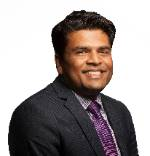
Please provide a link to your university page.
https://www.fullerton.edu/ecs/ece/
Please describe the courses you teach.
EGEC 180- Digtal Logic and Computer Structures: Binary number system and arithmetic, computer codes, Boolean algebra, logic gates, K-map minimization, sequential circuits, memory devices, state diagram and table, computer architecture, memory, Arithmetic Logic Unit and control unit.
EGEC 401- Engineering Economics and Professionalism: Development, evaluation and presentation of design alternatives for engineering systems and projects using principles of engineering economy and cost benefit analysis. Engineering profession, professional ethics and related topics.
EGEC 441- Advanced Electronics for Computer Engineers: High-speed CMOS, biCMOS, CPLDs, FPGAs, A/D, D/A, transducers and optics; integration of these devices into complete systems.
Describe your teaching philosophy and any research interests related to your discipline or teaching. Amidst the myriad challenges posed by the pandemic, my foremost priority was fostering a nurturing and supportive learning environment, acknowledging the profound stress that students inevitably faced. Throughout my short tenure at CSUF, I have witnessed students reach unparalleled heights when provided with the requisite support and guidance. It’s truly remarkable to witness their potential unfold before my eyes. That’s why I actively encourage students to participate in class discussions and feel empowered to ask questions. Moreover, during office hours, I make myself available to provide insights on future career paths or graduate studies. I believe empowering students to seek guidance and share their concerns is fundamental to their academic journey.
Reflecting on my time as an educator, I recognize moments when I might have unintentionally missed signs of a student’s struggles. This realization has strengthened my resolve to better understand and meet the individual needs of each student. It underscores the necessity of creating a solid foundation for their success and well-being, especially in these uncertain times. This period of introspection spurred a collaborative endeavor to develop machine learning based predictive tools to identify students who may be at risk of academic challenges. This initiative underscores the imperative of proactive support and intervention to ensure that every student has the opportunity to excel academically and flourish personally.
Furthermore, I observed a heightened environmental consciousness among Californians, which is evident in their transition to electric vehicles (EVs) and the widespread adoption of renewable energy sources such as solar panels. In alignment with this ethos, my research focuses on enhancing the efficiency of solar panels. I aim to develop smart solar panels capable of adapting to their surroundings, thereby optimizing power generation potential.
Additionally, I am delving into the realm of power-efficient chips. Recent developments, such as the passage of the CHIP Act by the federal government, affirm the importance of this research endeavor. Due to the passing of the CHIP Act, I anticipate a surge in demand for trained human resources in this area of chip design and fabrication. Therefore, I am more motivated than ever to expand my research efforts and provide training opportunities for students in this area of semiconductors.