Probation, Parole & Community Corrections
Probation, Parole & Community Corrections
Purpose: to help other instructors teaching the same course
Course ID: CRJU 421: Probation, Parole & Community Corrections
CSU Instructor Open Textbook Adoption Portrait
Abstract: These OER/low-cost materials are being utilized in a criminology and criminal justice course for undergraduate or graduate students by Dr. Connie Ireland at California State University, Long Beach. The low-cost textbook provides essential concepts in Probation, Parole & Community Corrections, supplemented by current readings. The main motivations to adopt OER/low cost materials were to reduce economic barriers for students enrolled in the course, and to connect students to current literature, with a balanced offering of author voices. Most student access the OER/low-cost materials in online format
CRJU 421: Probation, Parole & Community Corrections
Brief Description of course highlights: Focus is on probation, parole and other intermediate sanctions and community treatment options. Each is examined from both punishment and treatment model perspectives. The pre-sentence investigation (PSI) will be analyzed. Supervision of offender in community and revocation will be discussed. Field trips may be required. See course catalog information at: http://catalog.csulb.edu/preview_course_nopop.php?catoid=10&coid=92789
Student population: This class is an elective, typically for Criminology and Criminal Justice majors only, with upper division standing. Prerequisites for the course are a grade of “C” or better in The Criminal Justice System in Society (CRJU 101), Research, Writing and Reasoning for Criminology and Criminal Justice (CRJU 300) (or as previously offered prior to Fall 2023, CRJU 110), and Corrections: Theory, Policy & Practice (CRJU 303).
Learning or student outcomes: Upon successful completion of the course, the student will be able to:
A. Explain the various types of alternatives to incarceration.
B. Explain various alternatives by assessing cost-effectiveness, recidivism rates, rehabilitation, and success of reintegration.
C. Explain the historical development of alternatives to incarceration in the United States.
D. Discuss the terminology and jargon associated with probation, parole, and other community-based correctional programs.
E. Evaluate the continuum of intermediate sanctions and how each differs in intensity and severity.
F. Evaluate the major arguments for and against community-based sanctions and treatment.
G. Discuss the multiple community-based sanctions and explain why jail and prison is not appropriate for a significant number of persons who violate the law.
H. Explain the purposes of the presentence investigation (PSI) and through a written assignment acquire the skills necessary to write a PSI.
I. Explain the revocation process and major case law governing probation and parole violations.
J. Discuss careers in probation and parole, including the rewards and hazards associated with each.
K. Evaluate the needs of special offenders like the mentally ill, substance abusers, and women offenders.
L. Compare and contrast the differences between community-based programs for adults and juveniles.
Key challenges faced and how resolved: Two key challenges include: finding a no cost textbook and finding materials that meet accessibility standards. Significant time was spent searching for no-cost textbooks, and secondarily, finding ancillary materials that met accessibility and OER criteria.
Textbook or OER/Low cost Title: Medina, J. C., & Eidson, J. L. (2024). Perspectives on Community-Based Corrections. Oxford University Press. (ISBN: 978-0197607336)
Brief Description: Book provides comprehensive overview of probation, parole and community-based corrections. Includes concepts, pedagogical approach, problem sets, and overall structure including publisher platform features.
Please provide a link to the resource: https://www.amazon.com/Perspectives-Community-Based-Corrections-Justin-Medina/dp/0197607330/ref=pd_ybh_a_d_sccl_1/139-8879720-9433702?pd_rd_w=tWDmg&content-id=amzn1.sym.67f8cf21-ade4-4299-b433-69e404eeecf1&pf_rd_p=67f8cf21-ade4-4299-b433-69e404eeecf1&pf_rd_r=ZHM340V2V9E0YP8PJSM6&pd_rd_wg=uLR38&pd_rd_r=b3beb5c9-b8b0-48c6-aa96-a2155d0808cd&pd_rd_i=0197607330&psc=1
Authors: Justin C. Medina and Jillian L. Eidson
Student access: Students can access the book via Day One Access on Canvas, printed text from bookstore or online printing services, or purchase via Amazon (currently $38).
Supplemental resources: End-of-chapter pedagogy helps apply concepts using situational vignettes. Instructors have access to multimedia resources, including videos, podcasts, and lecture slides for each chapter.
Provide the cost savings from that of a traditional textbook. I previously used an older textbook, selected for comprehensive coverage, but the older edition helped minimize cost. But even this 5-year old text is more expensive ($66.39) than the book selected here ($38.72) Previous book: Alarid, L. F. (2019). Community-Based Corrections, 12th Ed. United States: Cengage.
License: This book is copyrighted, Oxford University Press (2024).
OER/Low Cost Adoption Process
Provide an explanation or what motivated you to use this textbook or OER/Low Cost option. The book greatly improves the learning material previously used in the course, and saves students money. It is very current (published in 2024); the previously used text was published in 2019 – selected in part because older texts are less expensive.
How did you find and select the open textbook for this course? I searched multiple databases to find an alternate text, including OER resources such as Merlot. I was unable to find any no-costs texts. However, a search of Amazon led me to a reduced price offering ($38) for this new edition, published by Oxford.
Sharing Best Practices: I suggest faculty (and students) search online for used/older editions. As of this writing (June 2024), this book is most expensive when purchased directly from the publisher ($89.95) but is available on Amazon at about half the price ($38.72).
Describe any key challenges you experienced, how they were resolved and lessons learned. It is difficult to find no-cost textbooks in Probation & Parole, probably because this field changes so often due to changes in the correctional population and criminal law. However, the essentials (history) remain the same. Thus, I will likely continue using this book for several years, supplementing with articles and ancillary resources as the book ages.
Instructor Name
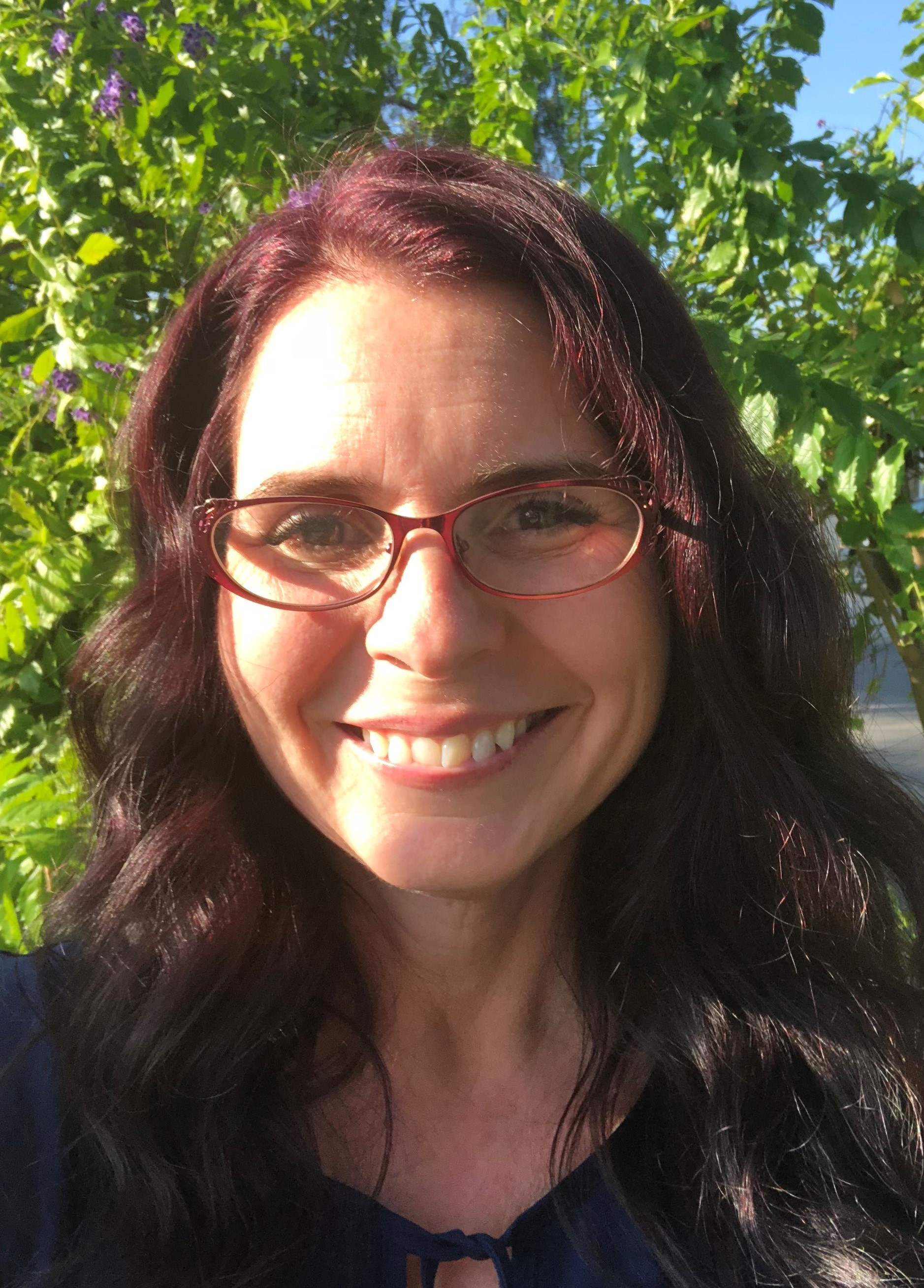
Dr. Connie Ireland
Professor, California State University, Long Beach.
Dr. Connie Ireland is a professor in the School of Criminology, Criminal Justice and Emergency Management at California State University, Long Beach. My university page can be accessed here: https://www.csulb.edu/college-of-health-human-services/criminology-criminal-justice-and-emergency-management/page/connie
Describe your teaching philosophy and research interests related to your discipline or teaching. Dr. Ireland’s teaching philosophy is: teaching without learning is just talking. Dr. Ireland’s research specialization focuses on prison and parole. Her primary interest is in the impact of sentencing laws and incarceration practices on recidivism rates in California. Her research explores components of corrections that lead to successful reentry, with particular focus on prison based educational, vocational, and rehabilitation programs; delivery of services by providers in the community; and engagement to support families and strengthen community ties. Dr. Ireland has a secondary interest in court evaluation research, particularly alternative sentencing, extra-legal factors in sentence variance, and specialized courts such as DUI court, Drug court, etc. Dr. Ireland employs both qualitative and quantitative methodologies to address these questions.
Please provide a link to your university page.
https://www.csulb.edu/college-of-health-human-services/criminology-criminal-justice-and-emergency-management/page/connie
Please describe the courses you teach. Regular courses taught, with brief descriptions, include the following:
CRJU 303 - Corrections: Theory, Policy and Practice Corrections - Modern Campus Catalog™ (csulb.edu) Historical and philosophical reactions to law violators. Overview of institutional and community corrections. Examination of differing penal institutions. Evaluation of rehabilitation as crime control strategy. Alternatives to incarceration will be explored as criminal sanctions. Field trips may be required.
CRJU 330 - Criminal Justice Ethics, Values, and Diversity - Modern Campus Catalog™ (csulb.edu) Identifies and explores ethics and values in the criminal justice system, paying special attention to issues of social inequality. Discusses remedial strategies and behavior relating to unethical behavior from an individual and group perspective.
CRJU 421 - Probation, Parole and Community Corrections - Modern Campus Catalog™ (csulb.edu) Focus is on probation, parole and other intermediate sanctions and community treatment options. Each is examined from both punishment and treatment model perspectives. The pre-sentence investigation (PSI) will be analyzed. Supervision of offender in community and revocation will be discussed. Field trips may be required.
CRJU 423 - Correctional Environments - Modern Campus Catalog™ (csulb.edu) An introduction to American penology through six all-day field trips to city, county, state, and federal correctional facilities. Includes observations of both juvenile and adult facilities; both all-male and all-female facilities; local, state, federal, and private facilities; and facilities for mentally ill, substance abusing, and other special populations.
CRJU 425 - Collateral Consequences of Incarceration - Modern Campus Catalog™ (csulb.edu) Explores secondary impacts of incarceration beyond the obvious and initial implications of sending an individual to jail or prison. Discussion in this course will include collateral sanctions for those who are incarcerated and coming home after serving a sentence. Secondary impacts will be explored for children and families left behind, as well as correctional staff and their families, and the community at large.
CRJU 426 - Social Justice in Action - Modern Campus Catalog™ (csulb.edu) Explores social justice, including broad conceptualizations of social justice; exploration of human rights, race, culture, poverty, privilege and identity in social justice; and impact of current world events (e.g. the global pandemic, civil unrest, etc.) through active engagement (in-person and/or virtual) with social justice organizations and services.