
KINE 3330 – Applied Behavior Management
KINE 3330 – Applied Behavior Management
Purpose: to help other instructors teaching the same course
Common Course ID: KINE 3330
CSU Instructor Open Textbook Adoption Portrait
Abstract: This OER materials and resources are being utilized in a Kinesiology course for undergraduate students by Professor Hosung So at California State University, San Bernardino. The open website provided by the Autism Distance Education Parent Training (ADEPT) at the University of California, Davis provides educational resources on developmental disabilities to the community and schools. To that end, ADEPT provides educational videos and online training modules related to the course. It is an original MIND Institute/CEDD 10-lesson interactive, self-paced, online learning module providing parents with tools and training to more effectively teach their child with autism and other related neurodevelopmental disabilities functional skills using applied behavior analysis (ABA) techniques.
KINE 3330 – Applied Behavior Management
Brief Description of course highlights: Applied behavior management and analysis strategies that have relevance and application to teaching physical education. Strategies to manage, motivate, and teach responsible behaviors in a variety of physical activity settings for individuals with and without disabilities. Emphasis is on single-subject applied research design. Formerly offered as KINE 333, students may not receive credit for both.
Lesson 1: The ABCs of Skills Teaching
Lesson 2: Understanding Reinforcement
Lesson 3: Using Reinforcement Effectively
Lesson 4: Planning and Preparation
Lesson 5: Creating a Task Analysis
Lesson 6: Prerequisite Skills
Lesson 7: Prompting and Chaining (Part 1)
Lesson 8: Prompting and Chaining (Part 2)
Lesson 9: Setting the Stage for Learning
Lesson 10: Dealing with Errors
Student population: Course required for the California Adapted Physical Education Specialist Credential...
Learning or student outcomes:
At the conclusion of the course, the student will be able to:
- Explain the importance of behavior management and its role in the application of physical activity programs with different populations (APEAA Standards: 5, 6, 7, 8, 9, 10, 11, & 12)
- Explain and apply basic applied behavior analysis principles and methods to actual instruction (APEAA Standards: 11 & 12).
- Change specific behavior(s) by designing a systematic behavioral plan that includes (a) selecting the behavior(s); (b) observing, charting, and analyzing the behavior; (c) planning the intervention; (d) evaluating program effectiveness; and (e) making necessary changes (APEAA Standards: 5, 6, 7, 8, 11, 12, & 13).
- Graph and document behavior change using at least one of the following types of recording systems and designs: event, duration, interval recordings, reversal, and/or changing criterion design (APEAA Standards: 5, 6, 8, 11, 12, & 13).
- Identify and implement appropriate preventative or proactive behavior management methods (i.e., orientation, rules, routines and procedures) to effectively maintain and promote appropriate behavior and when necessary to redirect or decrease inappropriate behavior (APEAA Standards: 4, 5, 6, 7, 10, 11, 12, & 13).
- Identify and implement effective applied behavior management models (i.e., Behavioral, Humanistic, and Sensory- neurological/Medical) and methods to maintain or increase (i.e., reinforcement, Premack principle) appropriate behaviors and methods to redirect (i.e., timeout, response cost) inappropriate behaviors (APEAA Standards: 4, 8, 10, 11, 12, & 13).
- Identify and implement models (i.e., Humanistic) and methods (i.e., Hellison’s Personal Social Responsibility) for teaching self-responsibility behaviors (APEAA Standards: 4, 8, 10, 11, 12, & 13).
- Identify and implement methods and models for maintaining and generalizing learned behaviors in other settings such as the community and home (APEAA Standards: 2, 3, 4, 5, 7, 8, 10, 11, 12, & 13).
- Identify and implement traditional and nontraditional applied behavior management methods and models (i.e., Behavioral, Humanistic, and Sensory-neurological approach) to change behavior including methods used with individuals with more severe disabilities (e.g., autism, serious emotional disturbance and severe disabilities) (APEAA Standards: 2, 3, 4, 5, 7, 8, 10, 11, 12, & 13).
- Describe a variety of ethical issues (e.g., administration of aversive stimuli, corporal punishment, Hughes Bill) associated with applied behavior analysis and follow proper professional guidelines and procedures to assure the rights of all individuals (APEAA Standards: 2, 3, 5, & 7).
- Practice an understanding, respect, and appreciation of human differences such as cultural diversity, gender differences, and individuals with disabilities in the development and maintenance of a behavior management plan (APEAA Standards: 2, 3, 5, & 7).
- Access and use various professional literature, journals, and internet sites pertaining to the field of applied behavior analysis in order to enhance instruction and be a life-long learner of behavior management (APEAA Standards: 3, 10, 11, 12, & 13).
OER/Low Cost Adoption Process
Provide an explanation or what motivated you to use this textbook or OER/Low Cost option. Students could access this site online free of charge, with no copyright or cost involved.
How did you find and select the open textbook for this course?
This resource and website was found through MERLOT website at
https://www.merlot.org/merlot/viewMaterial.htm?id=1377981
Sharing Best Practices:
The information, knowledge, and theories necessary for this class are thoroughly covered and easily accessible online at no cost, proving very helpful.
Key challenges faced and how resolved: Despite its long history, Applied Behavior Analysis (ABA) has not been widely available in the field of kinesiology. Moreover, finding the right textbooks and resources has been very challenging. By using this resource as a course textbook, students were able to gain a deeper understanding and application of ABA in physical education and adapted physical education to manage and change behaviors.
Textbook or OER/Low cost Title: ADEPT Training: Center for Excellence in Developmental Disabilities: Strategies for Teaching Functional Skills
Brief Description: The open website provided by the Autism Distance Education Parent Training (ADEPT) at the University of California, Davis provides educational resources on developmental disabilities to the community and schools. https://health.ucdavis.edu/mind-institute/centers/cedd/adept
Authors: The University Center for Excellence in Developmental Disabilities (CEDD) at the MIND Institute at the University of California, Davis
Student access: Students could access this site online free of charge, with no copyright or cost involved.
Supplemental resources: This site provides PowerPoints and videos with both English and Spanish captions.
Provide the cost savings from that of a traditional textbook.
Each student could save about $70 by using this resource and a total of $3,500 was saved from this course for 2023-2024.
License: Students could access this site online free of charge, with no copyright or cost involved.
Instructor Name: Hosung So
I am a Kinesiology professor at California State University, San Bernardino.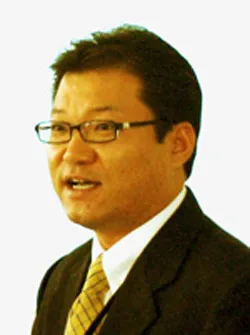
Please provide a link to your university page.
https://www.csusb.edu/profile/hosungso
Please describe the courses you teach.
KINE4730: Instructional Strategies in Physical Education
KINE4720: Curriculum Design in Physical Education
KINE3700: Measurement and Statistics in Kinesiology
KINE3520: Movement for Children/Elementary Physical Education
KINE3330: Applied Behavior Management (Applied Behavior Analysis: ABA)
KINE2620: Teaching/Coaching Principles for Combative/Fitness Activity
KINE2630: Teaching/Coaching Principles for Individual/Dual Sport
Describe your teaching philosophy and any research interests related to your discipline or teaching. My research has focused on (a) physical activity and self-esteem, (2) psycho-social aspects of physical activity, and (3) physical education teacher education (K-12).