Materials and Methods for K-12 Classrooms
Materials and Methods for K-12 Classrooms
Purpose: to help other instructors teaching the same course
Common Course ID: ART 407
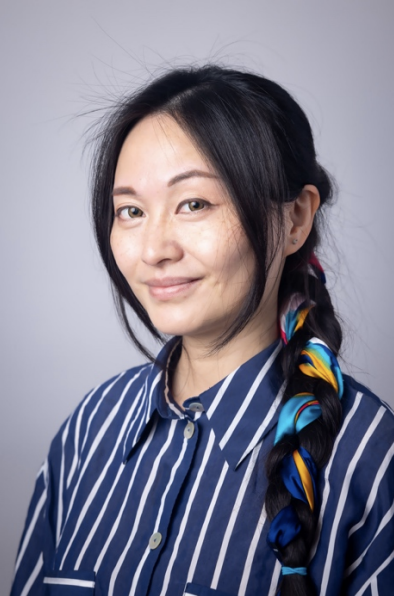
CSU Instructor Open Textbook Adoption Portrait
This open textbook is being utilized in a Contemporary Issues in Art Education course for undergraduate or graduate students by MJ Yang at California State University, Long Beach. The open textbook not only grants access to a high-quality, up-to-date introduction to contemporary artists but also offers a comprehensive array of instructor supplements, such as videos that can be used for course discussions and assessment materials. The main motivation to adopt an open textbook was its potential to reduce financial burdens on students, promote equitable access to educational resources, and facilitate the integration of customizable, up-to-date content about contemporary arts into the curriculum. Most student access the open textbook and videos through the university website by logging in to their school account.
Course Title and number: ART 407_Materials & Methods for K-12 Classrooms
This course offers a comprehensive synthesis of educational theory, studio practice, and contemporary topics in art education, all tailored to the context of teaching art and design within K-12 classrooms. Emphasis is placed on fostering creative thinking, exploring art processes, and promoting active learning. Students will gain hands-on experience in art creation, pedagogical implementation, and the crafting of effective lesson plans.
Student Population: This course caters to students aiming to major in Art Education and pursue a single subject credential in visual art. Completion of 12 units in Art Foundation is a prerequisite for enrollment. Learning or student outcomes:
• Students will become familiar with current research into creativity and explore ways to integrate associated processes into K12 classroom practice (SLO1).
• Students will translate traditional art media and forms into K-12 appropriate/available media sources (SLO2).
• Students will become familiar with art from various cultural and ethnic traditions across time and be able to implement cross-cultural influence in a studio-based lesson plan (SLO3).
• Students will reflect on their own creative process through reflective sketchbook entries (SLO4).
• Students will begin/continue to prepare their Professional Art Education portfolio (SLO5).
Key challenges faced and how resolved: Many art education and pedagogy textbooks used by university instructors come with restrictions, such as limited online access or restrictions on the number of chapters downloadable per person. Addressing these challenges involves several solutions. Firstly, adapting reading assignments into group tasks, where each student downloads and reads one assigned chapter, then shares their notes with the group. Secondly, supplementing textbooks with journal articles, offering more current information. Thirdly, integrating videos available on the library website, such as PBS documentaries, along with relevant official websites for more in-depth information
1. PBS documentaries via alexanderstreet.com Containing over 1,600 streaming videos, this comprehensive collection offers an extensive array of valuable video documentaries and series curated from PBS. Among these, PBS hosts an impressive selection of contemporary artist documentaries, including the renowned series Art 21, which serves as valuable material for class discussions and studio art projects alike.
https://video-alexanderstreetcom.csulb.idm.oclc.org/channel/pbs?q=art%20assignment&sort=relevance
2. Art21 website Art21 stands as the foremost platform for firsthand insights into the artists shaping our era, offering unparalleled opportunities for learning. With a mission to educate and broaden access to contemporary art through documentary films, resources, and public programs, Art21 seeks to enrich understanding and appreciation of today's art world. Rooted in a vision of fostering a more creative and inclusive society, Art21 aims to inspire through the profound expressions and perspectives of contemporary artists.
This website is a great resource for developing contemporary art curriculum. https://art21.org/
PBS documentaries via alexanderstreet.com https://video-alexanderstreetcom.csulb.idm.oclc.org/channel/pbs?q=art%20assignment&sort=relevance Art21 website https://art21.org/
Authors: The Public Broadcasting Service Student access: How and where do students access materials Students can access the materials via the course management system, university library website, and the official website. Supplemental resources: Canva, Perusall, Youtube, and Padlet.
Provide the cost savings from that of a traditional textbook. $ 70
My decision to utilize this textbook or OER/Low Cost resources originates from the aim of easing financial pressures on students while ensuring access to top-notch educational materials. Moreover, I seek to furnish more adaptable and tailored content that harmonizes with my teaching goals and students' requirements. Additionally, by embracing OERs, I actively contribute to fostering fair access to education and fostering a more inclusive learning atmosphere.
I consulted librarians and learned about the resources available on the library website, such as Streaming Media and Open Access & Affordable Learning Solutions.
Sharing Best Practices: For individuals new to exploring OERs or other materials offered by the University library, navigating the available resources can feel overwhelming because they might not know where to find the repositories. I strongly advise consulting with the designated librarians and discussing your course material requirements. Librarians can guide you to the appropriate webpages and repositories, saving you time in your search.
Describe any challenges you experienced, and lessons learned: I encountered two major challenges during this process. The primary challenge was the scarcity of art education pedagogy-related OERs. While there are numerous art-related OERs focusing on art history or visual studies, these resources, while useful for lesson development, do not directly align with the specific context and pedagogies of art education. Consequently, finding OERs to replace the textbooks used in my classes proved difficult. Additionally, navigating the university library website posed a minor challenge, as I initially struggled to locate resources such as the streaming media collection. However, after participating in the AL$ workshop, I learned how to access these resources more effectively. To overcome these challenges, I reached out to the librarian to explore additional resources available. Regarding the textbook issue, I substituted some journal articles as alternatives and adjusted class assignments to incorporate the OERs I discovered.
Instructor’s Name: MJ Yang
Please provide your title and your institution with a link to your university page. I am an assistant professor in Art Education at the California State University, Long Beach. I teach Materials & Methods for K-12 Classrooms and Contemporary Issues in Art Education.
Describe your teaching philosophy and courses you teach (or taught) and any research interests related to your discipline or teaching. My goals as an educator are to spark students' potential and empower their true selves and agencies, as well as to inspire them to become critical, responsible, creative, flexible, and empathetic individuals committed to diversity and inclusion. I believe the art classroom should be a space for exploration, risk-taking, and reflexivity. I encourage students to express ideas and thoughts while critically discussing the subject's multi-dimensional attributes and hidden ideologies. Additionally, I value students' uniqueness and support their efforts to apply their personal experiences to their curriculum topics and content. When developing curricula for methods courses, I guide students to delve into the philosophical, historical, sociological, and psychological aspects of their chosen subject to become critical thinkers and active meaning-makers. Furthermore, I help them envision an art curriculum as a blueprint in which they logically and systematically construct the curriculum scope and sequence and appropriately utilize assessment strategies. Most importantly, I emphasize and model the qualities of compassion, professionalism, open-mindedness, and integrity that an art teacher should possess.
My research focuses on LGBTQIA2S+ topics in Art Education. My current research endeavor aspires to delve into the multifaceted world of contemporary LGBTQIA2S+ (Lesbian, Gay, Bisexual, Transgender, Queer/Questioning, Intersex, Asexual, Two-Spirit) visual artists' innovative and thought-provoking creations, as well as their intricate depictions of diverse lived experiences. Our overarching goal is to illuminate the rich tapestry of LGBTQIA2S+ artistic expression and discern how these dynamic artworks can be harnessed as powerful educational tools within the context of teacher preparation programs. Through this exploration, we seek to foster a deeper understanding of these artists' contributions to both the arts and education, and to promote inclusivity, empathy, and social consciousness in the educational sphere.
Please provide a link to your university page. https://www.csulb.edu/school-of-art/faculty-and-staff
Please describe the courses you teach. ART 407: Materials & Methods for K-12 Classrooms This course aims to establish a foundational framework for leveraging the arts as an active conduit for learning. By providing both experiential and theoretical tools, it enables students to comprehend creativity and critical thinking within the realms of arts and education. The curriculum encompasses comprehensive discussions that delve into the historical, sociopolitical, and cultural dimensions of education, as they intersect with art and design educational programming. Topics covered include studio art creation, contemporary curriculum concerns (e.g., cultural responsiveness and interdisciplinary planning), instructional strategies, and curriculum implementation. The course encourages participants to explore how these facets contribute to an enriched educational experience, both for the educators themselves and for the students they instruct. This course strives to empower future educators with the knowledge, skills, and insights needed to foster a vibrant and dynamic art and design education within K-12 classrooms. Through a balanced integration of theory and practical art experience, learners will be equipped to guide their future students toward creative self-expression, critical thinking, and a deeper appreciation for the intersections of art, culture, and learning. Please attach a photo of you (or link to where it appears)