
EESL 5050: Graduate Writing in TESOL
EESL 5050: Graduate Writing in TESOL
Purpose: to help other instructors teaching the same course
Common Course ID: EESL 5050: Graduate Writing in TESOL
CSU Instructor Open Textbook Adoption Portrait
Abstract: This open textbook is being utilized in a TESOL course for graduate students by Tamara Roose, PhD, at California State University, San Bernardino. All students accessed the course materials for free online. The course materials included peer-reviewed journal articles and news articles made available through CSUSB’s John M. Pfau Library subscriptions. Citation and reference conventions, along with research skills and critical information literacy-related materials, were also made available through CSUSB’s John M. Pfau Library.
Graduate Writing in TESOL: EESL 5050
Brief Description of course highlights: This course is designed to help students acquire the skills to process and produce written academic texts at an advanced level, including the development of rhetorical and language skills to read critically, summarize information, and write and present research following the preferred conventions of the TESOL field. The general aim of the course is to equip students to write for different contexts, audiences, and purposes by carefully analyzing texts, identifying and integrating reliable content from outside sources, and refining their own writing process.
Course Catalog Description: Writing for academic purposes at the graduate level, for candidates in the Master of Arts in TESOL. Academic language, multiple academic genres, academic citation and reference conventions, avoiding plagiarism.
Student population: This course is offered to graduate students enrolled in the MA in TESOL program.
Learning or student outcomes: Upon successful completion of this course, students will be able to:
1. Demonstrate grammatical, lexical, and rhetorical control to communicate meaning to readers with clarity.
2. Recognize the rhetorical aspects of writing, including argument structure, organization, style, and register
3. Summarize and synthesize information from relevant sources
4. Demonstrate audience awareness when sharing analysis of academic texts
5. Identify field-specific (i.e., TESOL/ELT) scholarly sources to gain appropriate sources through appropriate investigative methods
6. Apply writing as a recursive process by engaging in the stages of the writing process, including formulating topics, drafting, giving and using feedback, revising for content, coherence, and cohesion, and editing for grammar and punctuation
7. Employ discipline-specific genre and documentation conventions in the discussion of research
8. Demonstrate strategies for avoiding plagiarism and accessing and using information ethically
Textbook or OER/Low cost Title: No Cost Writing Resources and No Cost Assigned Readings
Brief Description: Made available through CSUSB’s John M. Pfau Library subscriptions, the no-cost materials included peer-reviewed journal articles and news articles from culturally and linguistically diverse authors that look at language and culture identity. In addition, students were introduced to the field of TESOL through “Key Concepts in ELT” articles from the ELT Journal, a top-tier SSCI journal that disseminates research on English Language Teaching (ELT). Lastly, citation and reference conventions, along with research skills and critical information literacy-related materials, were also made available through CSUSB’s John M. Pfau Library.
Please provide a link to the resource
- “Key Concepts in ELT” (English Language Teaching) articles available online through the ELT Journal
- CSUSB Library APA Survival Kit: Citing Your Sources
Authors: Various
Student access: Students accessed all the above materials through the course’s Canvas Learning Management System, where I provided links to all external sites and uploaded all required readings.
Provide the cost savings from that of a traditional textbook.
- $0 Spring 2024; $44.99 Spring 2023
- The cost savings may seem minimal, but the course content has been greatly enhanced through these new cost-free materials in terms of integrating diverse topics and authors to increase student engagement and learning.
OER/Low Cost Adoption Process
Provide an explanation or what motivated you to use this textbook or OER/Low Cost option.
- Save students money
- Improve the relevance of learning materials to increase student engagement
How did you find and select the open textbook for this course?
- Evaluated peer-reviewed journals
- Evaluated CSUSB Library resources
- Consulted CSUSB librarians and arranged a librarian class visit
Sharing Best Practices: I recommend looking beyond the typical empirical articles for different features of well-established journals in the field. For example, I discovered the “Key Concepts of ELT” feature, which provided a great way to introduce students to a wide variety of central ideas in the field of English Language Teaching.
Describe any key challenges you experienced, how they were resolved and lessons learned.
- Selecting readings from a wide variety of authors from different language and culture backgrounds
- Creating reading-specific weekly reflection prompts to guide students to apply concepts to their current and future language learning and teaching contexts
Instructor Name: Tamara Roose
Assistant Professor. MA in TESOL Program.
Department of Teacher Education and Foundations
California State University, San Bernardino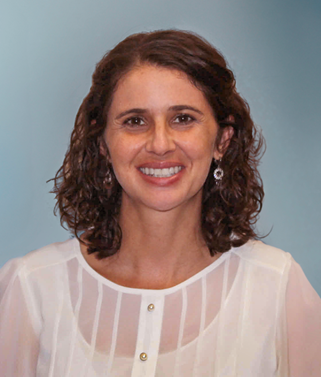
Please provide a link to your university page.
https://www.csusb.edu/tesol/faculty-staff
Please describe the courses you teach.
Graduate Writing in TESOL
Fieldwork in TESOL
Technology-Enhanced Language Learning
Literacy in TESOL
Describe your teaching philosophy and any research interests related to your discipline or teaching.
I believe students’ life experiences and knowledge from outside the classroom should be positioned as valuable assets they can draw upon as they develop new academic practices. I am passionate about equipping language educators to make their teaching relevant, meaningful, and effective for culturally and linguistically diverse learners. My research explores the intersection of language, culture, and education, focusing on second language reading and writing and the intercultural dimensions of English language teaching and learning.