Span 5420. Methods of Teaching Spanish
Span 5420. Methods of Teaching Spanish
Purpose: to help other instructors teaching the same course
Common Course ID: SPAN 5420-60
CSU Instructor Open Textbook Adoption Portrait
Abstract: This open textbook is being utilized in a Spanish course for graduate students by Teresa Fernández-Ulloa at California State University, Bakersfield. The open textbook provides practical experiences in the Spanish classroom (as a first and second language), with diverse contributions: teaching literature, cinema/television/art in the classroom, linguistic disciplines in the classroom, new technologies, socio-emotional learning, global competence, SDGs, interculturality, thinking routines…. The main motivation to adopt an open textbook was that students did not have to spend money, and it was a complement to other open resources focused on theory (this one focuses on practices). Most students access the open textbook in pdf through the publisher´s website or I include it in my Canvas course.
Spanish 5420. Methods of Teaching Spanish
Brief Description of course highlights: Advanced methods, techniques and skills necessary for teachers at the secondary and adult levels to promote culturally sensitive second-language instruction and development. Presentation of second-language development philosophy and theory will be covered, in addition to the use of emerging technology in language instruction. Students will develop and practice implementing teaching techniques. https://www.csub.edu/modlang/_files/SPAN_MA_Courses.pdf
Student population: Students with a degree in Spanish.
Learning or student outcomes: COURSE LEARNING OUTCOMES (ADDRESSING CONTENT AND SKILLS)
CO1. Students will be able to recognize and describe different elements and concepts related to language teaching. Assessment: questions, quizzes, summaries, and outlines.
CO2. Students will be able to demonstrate an understanding of highly sophisticated discourses (oral or written) in Spanish. (Comprehension). Assessment: questions.
CO3. Students will be able to summarize and explain their ideas related to a topic or text orally, fluently and with a high level of correctness. Assessment: In-class discussions.
CO4. Students will be able to respond in writing, fluently and with a high level of correctness, to questions derived from a text or question written in Spanish. Assessment: questions, discussion boards.
CO5. Students will be able to summarize and explain in writing oral and written texts with correctness. Assessment: summaries, outlines, questions. Those learning outcomes have to do with all the modules.
Module 1. Methodologies, varieties and variation, and myths about varieties and learning. (Students will be able to summarize and identify the main methodologies, myths, and varieties of and about Spanish).
Module 2. Creation and evaluation. Global Competence, SDGs and World-Readiness Standards. (Students will be able to identify the various types of activities created in foreign language classes, and the aspects of global competence, SDGs, and world-readiness standards, and how to incorporate them into the activities).
Module 3. Cognitive and emotional aspects in the teaching of languages. (Students will be able to identify them and discuss about their influence in the classroom).
Module 4. Linguistic disciplines in the classroom: Phonetics and Lexical activities. (Students will identify their characteristics and discuss and reflect on their importance in the classroom; they will also list the main difficulties English speakers experience).
Module 5. Improving strategies in the classroom: Interaction and Mediation.(Students will identify different activities and discuss and reflect on their importance in the classroom).
Key challenges faced and how resolved: I wanted the book to be accessible to many different people in many places, so I opted for a cheap publisher, but a good one (one from a university in Spain). Other options include just buying the ISBN and work with somebody who formats your document and create a pdf or a format for kindle (Word-2-Kindle, for example).
Instructor Name: Teresa Fernández-Ulloa
I am a Professor at the California State University, Bakersfield. I teach a course on Spanish language advanced skills every semester, plus courses on Language Teaching Methodologies, and Spanish Linguistics. 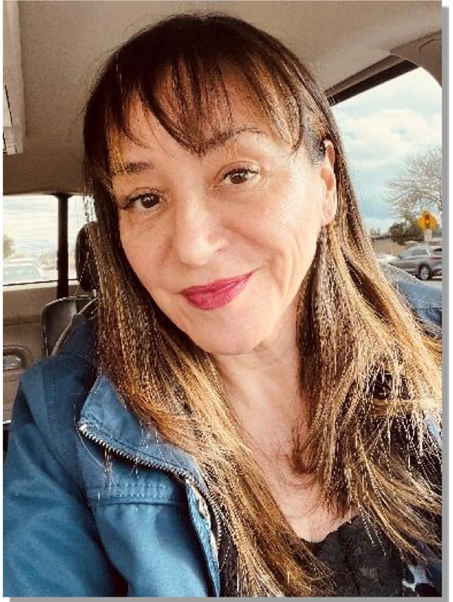
Please provide a link to your university page. https://www.csub.edu/modlang
Please describe the courses you teach
SPAN 3000 Advanced Language Skills (3) An intensive review of Spanish grammar and focus on oral and written language production. Coursework is designed to further develop fluency in the four areas of Spanish and to prepare students for more advanced language classes.
SPAN 3710 Topics in Literature (3) This is a theme course that focuses on specific topics in Spanish, Latin American, or U.S. Latino Literature. May be repeated with different course content. I teach “Spanish Baroque Theater” as 3710.
SPAN 4230 Dialectology (3) An examination of variant features within the Spanish language, their history, differences of form and meaning, interrelationships, distribution, and distinctions in spoken and literary forms.
SPAN 4300 Revolutionary Ideas in Latin America (3) An examination of the stimuli that prompted widespread revolution in Latin American societies and its effect on subsequent generations and movements.
SPAN 5420 Methods of Teaching Spanish Advanced methods, techniques and skills necessary for teachers at the secondary and adult levels to promote culturally sensitive second-language instruction and development. Presentation of second-language development philosophy and theory will be covered, in addition to the use of emerging technology in language instruction. Students will develop and practice implementing teaching techniques.
SPAN 6230 Dialectology An examination of variant features within the Spanish language, their history, differences of form and meaning, interrelationships, distribution, and distinctions in spoken and literary forms.
I also teach 4770 and 6770 courses (Special Topics) on Teaching methodologies: creation of materials for the Spanish class, Interculturality, Multimodality in the Classroom.
Describe your teaching philosophy and any research interests related to your discipline or teaching. My teaching philosophy for language, linguistics, and teaching methodologies revolves around creating an inclusive, dynamic, and culturally responsive learning environment that fosters critical thinking and active engagement. This philosophy is grounded in several core principles:
-Learner-Centered Approach (prioritizing the interests of learners, promoting their autonomy and active participation in their learning process.
-Incorporation of New Technologies (interactive tools, multimedia resources, and online platforms that support collaborative learning).
-Use of Cultural and Intercultural Materials (I aim to develop not only linguistic proficiency but also intercultural competence, enabling learners to navigate and understand different cultural contexts. I present materials that reflect a variety of cultural experiences, giving visibility to both dominant and subaltern voices, fostering empathy and critical awareness).
-Consideration of Subalternities and Inclusion (commitment to inclusion and the representation of subaltern voices in my curriculum, examining how marginalized identities, whether based on race, gender, class, or language, are constructed and represented in society and in linguistic discourses in Spanish. I try to create a learning space where all students feel valued and heard, actively promoting equity and challenging traditional hierarchies in language use and representation.
-Critical Pedagogy and Reflective Practice (I encourage learners to question power dynamics in language, including ideologies around standardization, language policies, and linguistic hierarchies. I foster a classroom environment where linguistic diversity is celebrated, and learners are encouraged to reflect on their own linguistic practices, biases, and identities).
-Multimodal and Multilingual Approaches. I embrace multimodal learning, recognizing that students learn best through a variety of inputs—auditory, visual, and kinesthetic. I use texts, videos, performances, and other media to engage learners in ways that transcend traditional linguistic boundaries. In addition, I encourage the use of multiple languages in the classroom, respecting and valuing bilingualism or multilingualism as an asset in the learning process.
-Global and Local Connections (I create bridges between the global and the local. I connect the language learning experience to global cultural trends and linguistic phenomena while also anchoring it in learners' local contexts, making language learning relevant to their lives. This balance helps learners navigate both their immediate cultural environments and the larger world.
I also include Service Learning (meaningful learning happens not only within the classroom but also through real-world engagement).
By fostering an inclusive, culturally aware, and technologically enhanced environment, I prepare learners to become thoughtful, interculturally competent, and critically aware individuals who understand the importance of language beyond its structural aspects.
OER/Low Cost Adoption Process
Provide an explanation or what motivated you to use this textbook or OER/Low Cost option. Save students money and include new practical experiences in teaching Spanish.
How did you find and select the open textbook for this course? I created the book, by inviting several experts to contribute with a chapter.
Describe any key challenges you experienced, how they were resolved and lessons learned. I had to pay the publisher, but it was not a lot. Maybe other instructors should buy a ISBN and just work with a cheaper model, such as Word-2-Kindle.
Textbook or OER/Low cost Title: Innovacion y nuevos enfogues en la ensenanzade la lengua la literature y la cultura hispanas. Experiencias practicas para llevar al aula.
Brief Description: The volume responds to the interest in practical experiences in the Spanish classroom (as a first and second language), with diverse contributions: teaching literature, cinema/television/art, linguistic disciplines, new technologies, socio-emotional learning, global competence, SDGs, interculturality, thinking routines…
It aims to review the inclusion of grammar in the classroom, cultural elements (stories, novels, television…), and interculturality (relationship established between cultures which promotes dialogue), taking into account new approaches and, as Miquel and Sans (2004: 2) point out, claiming “communicative competence, the student’s ability to interact in communication situations, [which] implies a new approach to the ‘cultural’”.
The content of the book is structured in independent chapters, the central theme of which is to propose practical activities to be taken to the Spanish class (language, culture, literature), as a first or second language, pointing out the different elements that the classes can integrate: grammar and classic linguistic competences from novel approaches, literature/media/cinema, global and intercultural competence. The activities correspond to specific educational contexts and are related to particular texts but are presented so they can be applied to any context or other material. An introductory chapter precedes the chapters.
Authors: Teresa Fernández-Ulloa (CSUB, USA) and Elia Saneleuterio (University of Valencia, Spain) are the editors. There are different chapters:
- Volteando el iceberg cultural, Laura Rubio
- Primavera 2020, el thriller juvenil para aprender español a través de situaciones de aprendizaje, María Pareja Olcina
- Salir de La casa de Bernarda Alba o cómo leer con perspectiva de género en 2º de Bachillerato, Oier Quincoces
- Cultura e interculturalidad en la creación de libros de texto para la enseñanza del español como lengua extranjera en las aulas universitarias canadienses: el experimento de Coincidencias I y Coincidencias II, Cristina Ruiz Serrano
- El subtitulado televisivo en la predicción meteorológica como actividad inclusiva en ELE, María José Rodríguez-Campillo y Antoni Brosa-Rodríguez
- Enseñanza de ELE a niños y niñas a través de la dramatización, Juan Redondo Justo
- Creación de una biblioteca digital a través de metodologías activas y TIC con futuros/as docentes de Educación Infantil, M.ª Almudena Cantero Sandoval
- Lectura para favorecer la igualdad: propuesta didáctica a través del cuento, Miguel Soler Gallo
- Machado y La lengua de las mariposas: un modelo de secuenciación didáctica en el aula de Lengua Española, Pilar Úcar
- Estrategias relacionadas con la adquisición de vocabulario y con la competencia lectora en un curso de aprendizaje de la lengua a través del contenido, Teresa Fernández-Ulloa
- Propuesta didáctica transversal de escape room para aprender español como lengua adicional en contexto educativo formal, Margarita Isabel Asensio-Pastor
Note: All the book chapters also have a recorded presentation or a poser –they will be available for my students (they will be uploaded in Canvas and Merlot).
https://www.youtube.com/watch?v=hGA3c6cz6YM
Student access:
--It will be available at publisher´s website: https://puv.uv.es
The University of Valencia has Roderic (Repository for digital objects for teaching, research and culture, https://uv-es.libguides.com/roderic/inici), and they say explicitly there that it is open access (https://uv-es.libguides.com/c.php?g=710027&p=5123028)
--Canvas course. It will be in the Canvas course (Spanish 5420)
--MERLOT webpage. https://www.merlot.org/merlot/viewCoursePortfolio.htm?id=1379323 (Right now I have the manuscript there--I will update it soon with the final version from the publisher and the link to their website).
Supplemental resources: Faculty resources (review questions and activities for students related to each chapter will be created during the Spring Semester, and available in Merlot).
Provide the cost savings from that of a traditional textbook.The resource listed in their showcase will be replacing. A total cost savings of $41.98
Aprendizaje de segundas lenguas (Spanish Edition) - Kindle Edition. $10.91 on Amazon
Teoría y Metodología para la enseñanza de ELE. Vol. IV: volumen IV. Literatura, cine y otras manifestaciones culturales. Paperback is $31.07 on Amazon.
I've attached the title page and contents page for the item - the faculty member let me know that it will be available sometime in December, so no current link exists yet. I let her know to forward that to me as soon as possible. Please let me know if you require any further information for ePortfolio creation process. e Faculty Resource.pdf -
License: The Creative Commons license for the material is CC BY NC ND.