ENGR 3110 Thermodynamics – Dr. Acharya’s Thermodynamics notes
ENGR 3110 Thermodynamics – Dr. Acharya’s Thermodynamics notes
Purpose: to help other instructors teaching the same course
Common Course ID: ENGR 3110 Thermodynamics
CSU Instructor Open Textbook Adoption Portrait
Abstract: This open textbook is being utilized in an engineering course for undergraduate students by Dr. Tat Acharya at California State University, Bakersfield. The open textbook provides theoretical notes and a database of conceptual and real-world problems of varying degree of complexity in the engineering course, Thermodynamics. The main motivation to adopt an open textbook was to provide students with affordable learning resources and to provide them with enough number of problems that they can practice. Most students access the open textbook in the face-to-face format.
ENGR 3110 Thermodynamics
Brief Description of course highlights: Study of the first law of thermodynamics, properties of pure substances, the second law of thermodynamics and concept of entropy, reversible and irreversible processes, availability (exergy), ideal vapor power cycles, ideal gas power cycles, and refrigeration and heat pump cycles. Following is a link to the engineering catalog: https://www.csub.edu/phen/_files/ENGR_Courses_2020-2023.pdf.
Student population: This course is typically taken by CSUB engineering majors. Occasionally CSUB electrical engineering majors also enroll into this course. Pre-requisites for this course are PHYS 2220 and CHEM 1000.
Learning or student outcomes: Following are the student learning outcomes:
1. An ability to identify, formulate, and solve complex engineering problems by applying principles of engineering, science, and mathematics.
2. An ability to apply engineering design to produce solutions that meet specified needs with consideration of public health, safety, and welfare, as well as global, cultural, social, environmental, and economic factors.
3. An ability to communicate effectively with a range of audiences.
4. An ability to recognize ethical and professional responsibilities in engineering situations and make informed judgments, which must consider the impact of engineering solutions in global, economic, environmental, and societal contexts.
5. An ability to function effectively on a team whose members together provide leadership, create a collaborative and inclusive environment, establish goals, plan tasks, and meet objectives.
6. An ability to develop and conduct appropriate experimentation, analyze and interpret data, and use engineering judgment to draw conclusions.
7. An ability to acquire and apply new knowledge as needed, using appropriate learning strategies.
Key challenges faced and how resolved: Based on my teaching experiences through the past several years, I have understood that students generally struggle with problem solving. Therefore, I have tried to create a database of problem sets with varying degrees of complexity. During my lectures, I usually begin with providing the background and a discussion of relevant theories/derivations and then I spend a lot of time solving the actual engineering problems in class. I have noticed that by solving an adequate number of problems in class, I am able to help my students gain confidence and build the necessary skill sets.
Textbook or OER/Low cost Title: Dr. Tat Acharya’s thermodynamics notes
Brief Description: The low-cost option that I created for my students are my class notes for the course, ENGR 3110 Thermodynamics. During the pandemic I video recorded myself while I was teaching thermodynamics and while solving many problems. I shared these lecture videos with my students. Post pandemic, I used similar class notes for face-to-face teaching such that the students did not have to buy a book. In addition, with my several years of industrial experiences, I also created some of my own problems that my students could benefit from. https://csub.box.com/s/bdtokpir6j991zniamoiqqg2k78mu7tv
Authors: Dr. Tathagata Acharya
Student access: I shared a link to the materials through Canvas during the pandemic. After the pandemic, the students would have access to my class notes during face-to-face teaching.
Supplemental resources: I would prepare my own homework assignments for the students, and I shared those with them on Canvas. In addition, I provided them with my own worked-out solutions to the problems, also on Canvas.
Provide the cost savings from that of a traditional textbook. I checked that the usual cost of the thermodynamics textbook is approximately $70. My class notes were available to the enrolled students without having to spend anything.
License: Currently I have not copyrighted my teaching materials. However, those resources may be copyrighted to CSUB.
OER/Low Cost Adoption Process
Provide an explanation or what motivated you to use this textbook or OER/Low Cost option. Primarily, I wanted to ensure that the course materials were affordable by my students, and they were not required to buy expensive textbooks. In addition, I thought that with my experiences in the field of thermodynamics, I could provide them with materials that might be more useful.
How did you find and select the open textbook for this course? Like I mentioned, I did not find and select an open textbook for this course. I created my own class notes with the goal of making the materials affordable and highly useful to my students.
Sharing Best Practices: I believe with a faculty member’s own expertise in a course that he/she teaches, they should be able to develop class notes that are useful to the students. I would like to emphasize that for the materials to be extremely useful to students, they should include a large database of problems with varying degrees of complexity.
Describe any key challenges you experienced, how they were resolved and lessons learned. I have not really faced a lot of challenges after introducing my own class notes, problems, and solutions to the problems that I can share with my students in class. These methodologies have been well received by my students.
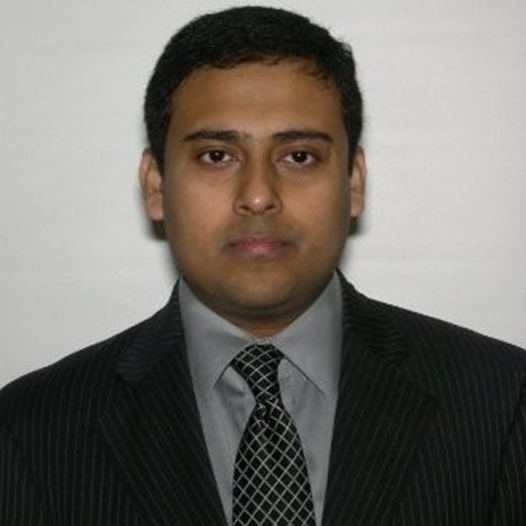
Instructor Name - Tat Acharya
I am an engineering Associate Professor at the [California State University, Bakersfield]. I teach ENGR 3110 Thermodynamics, ENGR 3120 Fluid Mechanics, and ENGR 2350 Engineering Graphics regularly.
Please provide a link to your university page.
https://www.csub.edu/phen/people/tacharya.shtml
Please describe the courses you teach: Usually I teach ENGR 3110 Thermodynamics, and ENGR 3120 Fluid Mechanics, which are courses within my area of expertise, thermal and fluid sciences. In addition, I also regularly teach ENGR 2350 Engineering Graphics and sometimes I teach ENGR 2110 Statics, ENGR 2120 Dynamics, and ENGR 2130 Mechanics of Materials. I have also taught senior year elective courses within my area of expertise.
Describe your teaching philosophy and any research interests related to your discipline or teaching. My teaching philosophy involves introducing the theoretical background, discussing the associated concepts, deriving mathematical equations from scratch such that students do not always have to depend on formulas that they may need to remember or bring on their formula sheet, and solving various problems in class. I believe these practices help strengthen my students’ confidence and help them build the skill sets required. I am also actively involved with performing mechanical engineering research in the areas of thermodynamics, fluid mechanics, and heat transfer, which are closely associated with the courses I teach. I have always involved students in my research and together we published several research articles.