Human Nutrition via platform CANVAS
Human Nutrition via platform CANVAS
Purpose: to help other instructors teaching the same course
Common Course ID: NTRS 2500 Human Nutrition
CSU Instructor Open Textbook Adoption Portrait
Abstract: This open textbook is being utilized in a Human Nutrition course for undergraduate students by Jasmine Tom, MS, RDN, at California State University, Los Angeles. The open textbook provides education in basic nutrition and metabolism, with a focus on macro- and micronutrients, nutrition across the lifespan, food insecurity, and information literacy. The main motivation for adopting an open textbook was to provide students with a zero-cost course option. Most students access the open textbook through the textbook’s website.
NTRS 2500 – Human Nutrition
Brief Description of course highlights: This course focuses on nutrition and its relation to health, behavior, growth, development, and aging. eCatalog link
Student population: This course is a lower-division GE course for all students from all majors. It is a required course for nutritional science and nursing student majors.
Learning or student outcomes: List student learning outcomes for the course.
1. Examine the crucial relationship between food, nutrients, and human health.
2. Differentiate the nutrients and their role in overall health.
3. Evaluate personal food choices and formulate a personal action plan.
4. Identify and evaluate scientific nutrition information.
5. Examine the connection between our environment and our health.
Key challenges faced and how resolved: The main challenge was finding an OER textbook that I felt was appropriate for a lower-division GE introductory nutrition course. I resolved this by discussing my concerns with my fellow faculty member and together, we were successfully able to find an OER that we both felt was excellent. Other than that, I haven’t experienced any challenges because the OER that I selected is so nicely organized, well-written, and provides excellent teaching resources.
Syllabus and/or Sample assignment from the course or the adoption: Syllabus for NTRS 2500 Human Nutrition.docx
Instructor Name - Jasmine Tom, MS, RDN
I am a Nutritional Science lecturer at the California State University, Los Angeles.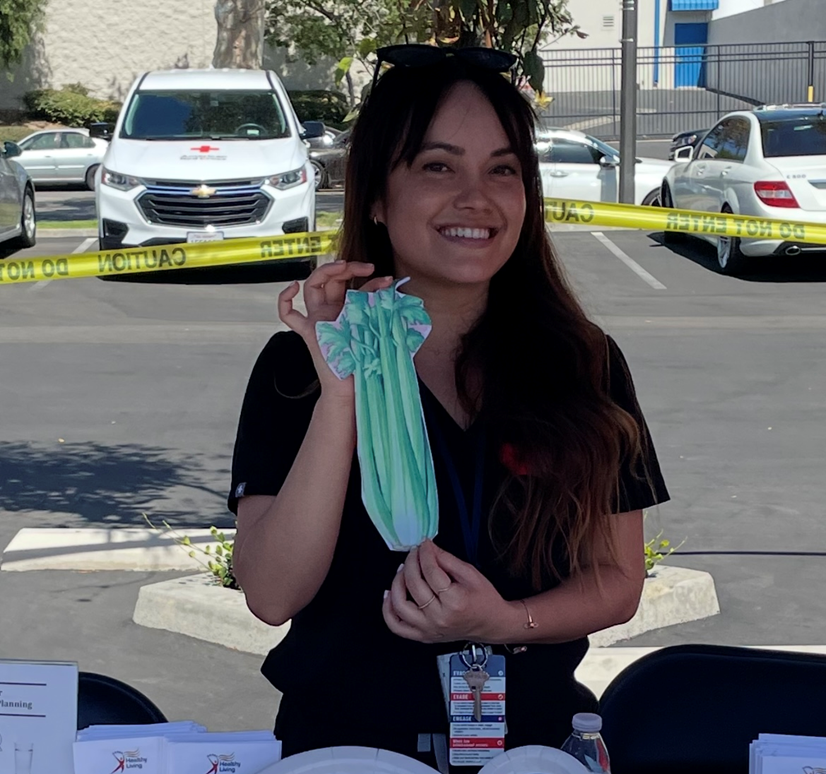
Please provide a link to your university page.
https://www.calstatela.edu
Please describe the courses you teach. The courses I teach are nutrition-focused and mostly geared toward students who want to pursue a career in dietetics and other health professions. I also teach upper and lower-division general nutrition elective courses for students who wish to expand their knowledge in the area of nutrition. I also teach the following courses:
-NTRS 4650 Medicinal Herbs and Nutrition
-NTRS 4195 Preparation for Dietetic Internship II
-NTRS 4176L Nutritional Assessment Lab
-NTRS 4110 Evaluation of Current Nutrition Topics
-NTRS 4100L Experimental Foods Lab
-NTRS 3510 Adult Nutrition
-NTRS 3120L Cultural Cuisine Lab
-NTRS 2500 Human Nutrition
Describe your teaching philosophy and any research interests related to your discipline or teaching. My teaching philosophy in my nutrition courses centers on fostering an engaging and relatable learning environment where students can connect the material to their own lives. I believe that understanding nutrition is not just about memorizing facts but about making informed choices that enhance personal well-being. By encouraging students to reflect on their own eating habits, cultural backgrounds, and health goals, I strive to make the content relevant and applicable. This approach not only deepens their understanding but also empowers them to take ownership of their health journeys. Through interactive discussions, hands-on activities, and real-life applications, I aim to inspire a lifelong appreciation for nutrition and its impact on overall quality of life.
OER/Low Cost Adoption Process
Please provide an explanation or what motivated you to use this textbook or OER/Low Cost. Many Cal State LA students are working students and are considered low-income, and thus, to help them save money while pursuing their higher education goals, I decided to use an OER textbook. Money should not be a factor in getting in the way of one’s educational goal.
How did you find and select the open textbook for this course? My fellow faculty member found and introduced me to the textbook.
Sharing Best Practices: Overall, I’ve noticed that students are performing better on assignments and seem more engaged. I think this is because ALL students have a book. In the past, some students would not purchase the required textbook due to personal financial constraints and, thus, would solely rely on PPT lecture slides and class notes to complete their assignments and studying purposes. Some of the best practices that I’ve incorporated into my course include, but are not limited to:
- Use varied teaching resources in addition to the OER such as articles, videos, and websites.
- Promote active learning by engaging students through interactive teaching methods such as discussions.
- Encourage critical thinking by posing questions that encourage them to consider the implications of nutritional choices on one’s health and well-being.
- Connect to current trends by keeping the curriculum relevant by discussing current trends and controversies.
- Highlight Cultural Diversity by acknowledging and exploring the diverse cultural perspectives on nutrition.
- Promote self-reflection by encouraging students to reflect on their own eating habits and health goals.
Textbook or OER/Low cost Title: Nutrition: Science and Everyday Application
Brief Description: The textbook is separated into eleven (11) chapters with a focus on designing a healthy diet, information literacy, digestion and metabolism, macronutrients, micronutrients, nutrition and physical activity, and nutrition across the lifespan.
Please provide a link to the resource - Nutrition: Science and Everyday Application - https://openoregon.pressbooks.pub/nutritionscience2e/
Authors: Alice Callahan, PhD; Heather Leonard, PhD, RDN; and Tamberly Powell, MS, RDN
Student access: Links are provided to the students in Canvas through the reading list and in the form of direct clickable links in their weekly modules.
Supplemental resources: The authors provide instructor materials such as test banks, PowerPoint slides, guided study notes, and suggestions for classroom activities and discussions.
Provide the cost savings from that of a traditional textbook. Typical books for this class cost around $120.
License: Creative Commons Attribution-Noncommercial