
Introduction to Chemistry (Chem 1000)
Introduction to Chemistry (Chem 1000)
Purpose: to help other instructors teaching the same course
Common Course ID: CHEM 1000
CSU Instructor Open Textbook Adoption Portrait
Abstract: This open textbook is being utilized in the Introduction to Chemistry (Chem 1000), course for undergraduate students by Enrique Contreras at the California State University, San Bernardino. The open textbook provides the knowledge required to learn the core concepts of chemistry and understand how those concepts apply to their lives and the world around them. Includes an introduction to important chemical principles, nomenclature, and molecular structure. Designed for those with little or no chemistry background desiring a broad overview of chemistry including liberal studies majors. The main motivation to adopt an open textbox was that I firmly believe that education should be accessible to everyone, and that financial constraints should not be a source of additional anxiety. For this reason, I teach all my courses using free resources and my own lecture notes, allowing students to focus on learning rather than worrying about economic inequality. Most students access the open textbook in digital form from its website.
Course Title and Number - Introduction to Chemistry (Chem 1000)
Brief Description of course highlights: Examination of chemistry and its value to contemporary society. Includes an introduction to important chemical principles, nomenclature, and molecular structure. Designed for those with little or no chemistry background desiring a broad overview of chemistry including liberal studies majors. Satisfies GE B1/5A.
Student Population: No prior background in chemistry is required. Students come from diverse academic backgrounds, including cybersecurity, data science, and economics.
Learning or student outcomes: By the end of this course, students will be able to:
- Explain the fundamental principles of atomic structure, including subatomic particles, electron configurations, and isotopes.
- Interpret and apply the periodic table to predict chemical properties, periodic trends (such as electronegativity, atomic radius, and ionization energy), and reactivity of elements.
- Analyze how periodic trends influence chemical behavior in environmental processes and real-world applications (e.g., water treatment, atmospheric chemistry, pollutant reactivity).
- Use chemical nomenclature and symbolic representations to describe elements, compounds, and reactions.
- Solve quantitative problems involving moles, stoichiometry, limiting reagents, and solution concentrations.
- Apply principles of chemical bonding (ionic, covalent, and metallic) to explain molecular structure and physical properties of substances.
- Evaluate chemical reactions and energy changes, including endothermic and exothermic processes and their significance in environmental and biological systems.
- Communicate scientific findings and chemical concepts clearly through written reports and oral explanations.
- Demonstrate critical thinking by applying chemical concepts to contemporary issues such as climate change, pollution, and sustainable materials.
Key challenges faced and how resolved:
Challenge 1: Many students entered the course with little or no background in chemistry and weak or inconsistent math skills, which made it difficult for them to engage confidently with the material.
Resolution: To address this, I begin each lecture with a brief review of the foundational concepts and mathematical tools necessary for that day's topic, using concise explanations from my own teaching notes. I also provide a quick recap of key points from the previous lecture to reinforce continuity. This approach ensures that all students are on the same page and better prepared to follow new material effectively.
Challenge 2: Many students come to class already tired or mentally exhausted, which makes it difficult to keep them engaged and focused during lectures.
Resolution: To address this, I incorporate short, topic-related TEDx videos into my lectures. These videos capture students' attention, provide real-world context, and help re-energize the class. This approach keeps students more engaged and motivated, especially during longer or more concept-heavy sessions.
Challenge 3: Students today are constantly exposed to AI tools, and many begin relying on them to complete quizzes and homework assignments instead of engaging with the material themselves.
Resolution: To address this, I include short lectures and discussions on how to use AI ethically and responsibly in an academic setting. I emphasize the importance of genuine understanding, the risks of over-reliance on AI, and the potential for hallucinated (inaccurate or fabricated) responses from language models. Rather than discouraging AI use entirely, I guide students on how to use it effectively—as a supplemental resource, like a "side professor"—while also teaching them how to critically evaluate AI-generated content for accuracy and coherence.
Textbook or OER/Low cost Title: Chemistry 2e
Please provide a link to the resource
https://openstax.org/details/books/chemistry-2e
Senior Contributing Authors
Paul Flowers, University of North Carolina at Pembroke
Klaus Theopold, University of Delaware
Richard Langley, Stephen F. Austin State University
William R. Robinson, PhD, Purdue University
Contributing Authors
Don Frantz, Wilfrid Laurier University
Paul Hooker, Westminster College
George Kaminski, Worcester Polytechnic Institute
Jennifer Look, Mercer University
Carol Martinez, Central New Mexico Community College
Andrew Eklund, Alfred University
Mark Blaser, Shasta College
Tom Sorensen, University of Wisconsin-Milwaukee
Allison Soult, University of Kentucky
Troy Milliken, Jackson State University
Vicki Moravec, Trine University
Jason Powell, Ferrum College
Emad El-Giar, University of Louisiana at Monroe
Simon Bott, University of Houston
Don Carpenetti, Craven Community College
Student access: The material can be downloaded from the link provided; a PDF copy is also posted in CANVAS for students who prefer the book in digital form.
Supplemental resources: https://openstax.org/books/chemistry-2e/pages/2-exercises At the end of each chapter, there is a list of exercises, and the answers to all odd-numbered problems are provided at the end of the book.
I uploaded all of my lecture slides to Canvas, giving students the opportunity to revisit the material at any time. Additionally, my lectures are recorded and made available on Canvas so students can review them as often as needed.
To support independent practice, I also post non-graded homework assignments on Canvas. These exercises are created by me and include answers to every question, allowing students to use them as supplemental resources for review and self-assessment.
Provide the cost savings from that of a traditional textbook. The traditional book used for this course (Hill's Chemistry for Changing Times, 15th edition) has a cost of 186.66 dollars (printed version). By using the Chem 2e each student is saving 186.66 dollars.
License: CC by OpenStax - Creative Commons Attribution License v4.0
OER/Low Cost Adoption Process
Provide an explanation or what motivated you to use this textbook or OER/Low Cost option. I firmly believe that education should be accessible to everyone, and that financial constraints should not be a source of additional anxiety. For this reason, I teach all of my courses using free resources and my own curated lecture notes, allowing students to focus on learning rather than worrying about economic inequality.
How did you find and select the open textbook for this course? I actively research and utilize openly available textbooks, including those from College Open Textbooks, OpenStax, and other Open Educational Resources (OER). I also seek out textbooks that have been released freely as a contribution to the chemistry community—such as John McMurry’s Organic Chemistry: Tenth Edition and Peter Atkins’s Concepts in Physical Chemistry.
Sharing Best Practices: While it may be tempting to adopt a commercial textbook from a traditional publisher, it is important to remember that many students already face significant life challenges. For faculty considering the adoption of OER, I highly recommend consulting with your institution’s librarians, who can provide guidance on locating and evaluating high-quality open resources.
Describe any challenges you experienced, and lessons learned. One of the challenges of using OER is that, unlike commercial textbooks, they often do not include pre-made problem sets or quizzes that can be easily uploaded to learning management systems like Canvas. However, this also presents an opportunity: instructors can create and customize materials that align more closely with their course objectives and students' needs. While it may require additional effort, the benefits to student access and equity make it a worthwhile endeavor.
Instructor Name - Enrique Contreras Bernabe
I am an assistant professor in the Chemistry and Biochemistry department at California State University, San Bernardino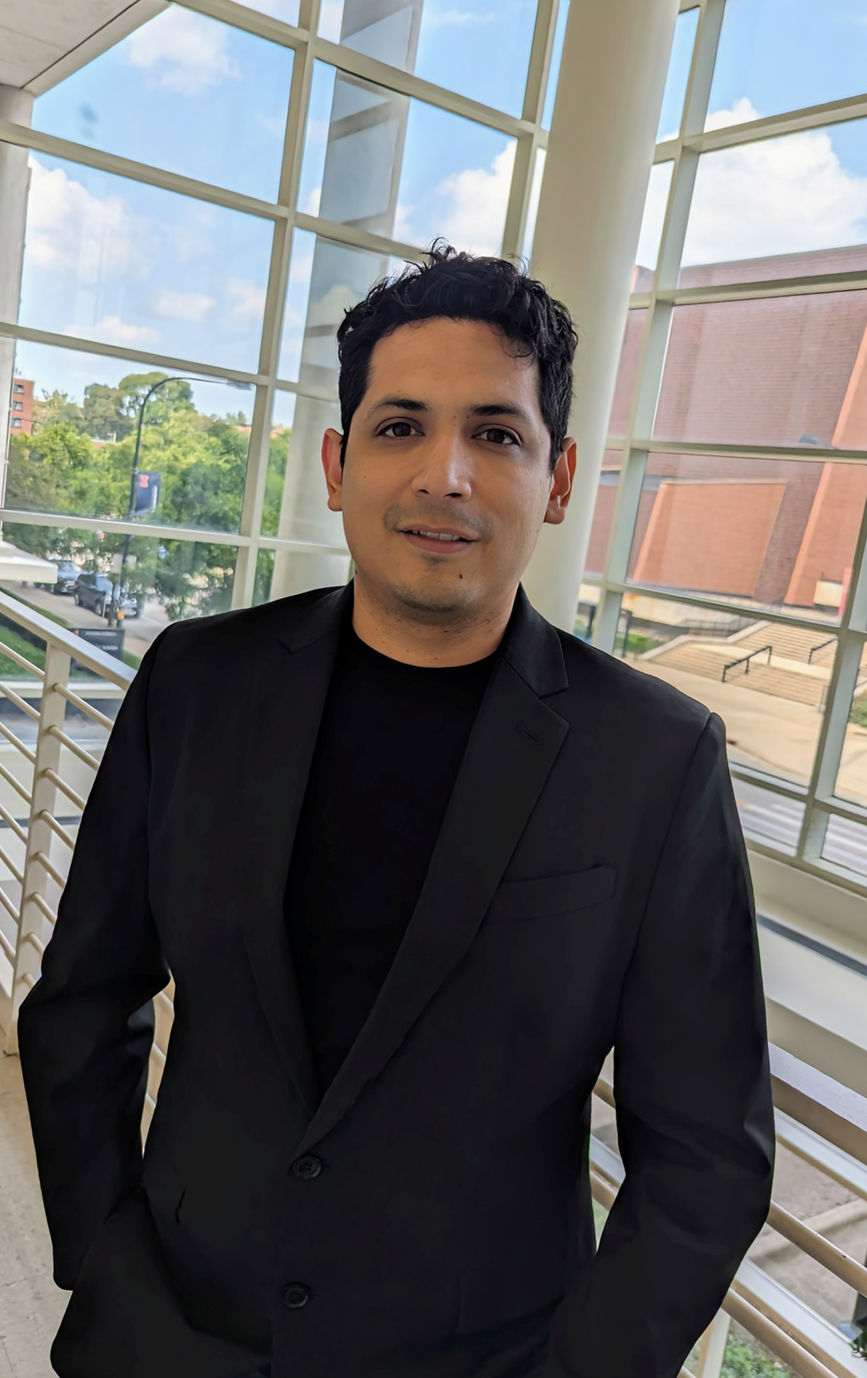
Please provide a link to your university page.
https://www.csusb.edu/profile/enrique.contreras
Please describe the courses you teach - I teach Introduction to chemistry (Chem1000), General Chemistry (Chem 2100), Materials - Advanced Instrumentation & Experimentation (MSCI 6500), Chemistry foundations of Material Sciences (Chem 4800), First Year Material Sciences Seminar (MSCI 6000).
Describe your teaching philosophy and any research interests related to your discipline or teaching. Teaching in the Classroom: My classroom teaching experience primarily uses a combination of conceptual talks that describe the big-picture ideas and student involvement through discussion and essays. My teaching approach draws from these experiences but varies depending on the nature of the course. For example, in chemistry courses with real-world applications, I prefer to begin with demonstrations that employ the Socratic method. Once the concept is clear, I transition to chalk-and-blackboard instruction. Students naturally engage more in classes that incorporate active learning methodologies. However, in chalk-and-blackboard courses, I often face the board to write equations, which can reduce student engagement. To address this, I regularly pause the lecture to ask questions about what I have just taught or to encourage students to ask their own questions. Interactive time becomes a core part of my flipped classroom structure, where students watch videos of the chalk-and-blackboard work outside of class.
To help students develop teamwork and problem-solving skills, I assign both group and individual problems. At the graduate level, I emphasize the power of basic concepts even more than I do at the undergraduate level. Graduate students’ maturity allows for higher expectations, and smaller class sizes enable more personal interaction. Nonetheless, students at any level may arrive without a strong grasp of fundamental principles. When a graduate student faces a question, fundamental concepts must be part of the answer. Even at this level, some students have not yet learned how to learn effectively. I also recognize the diverse backgrounds and varying levels of preparation that students bring to the classroom. To address this, I employ a variety of strategies to support a comprehensive understanding for all students. I begin each course with a diagnostic assessment to evaluate prior knowledge and identify areas that need reinforcement. To support varying levels of preparation, I offer pre-course materials—such as readings, videos, and tutorials—so students can review foundational concepts beforehand. I also hold regular office hours and extra help sessions, creating an environment where students feel comfortable seeking assistance tailored to their needs. This approach fosters an inclusive learning environment where every student has the opportunity to succeed.
Teaching in the Research Laboratory: In electrochemical courses, I often observe that while students understand the theory and can solve equations, they struggle when confronted with real experimental data. To address this, I use the Socratic method with students I mentor. I start with a series of key experiments and encourage students to think critically and explore possible explanations for the results. This method helps them develop strong analytical skills and understand the underlying concepts more intuitively.
Once students grasp the phenomena, I move to the chalkboard to analyze the equations that govern what they have observed. This progression from observation to theory promotes a deeper, more lasting understanding. This approach has proven so effective that graduate students in my current lab begin to rethink their research strategies and apply electrochemical methods with a much stronger conceptual foundation.