2024/25 — Leading Quality in Online Education: A Course Quality Assurance Program
2024/25 — Leading Quality in Online Education: A Course Quality Assurance Program
Proposal Summary: At San José State University, this Course Quality Assurance Program was designed to help department chairs who were interested in developing or expanding their online programs. The program introduced them to the Quality Matters (QM) framework, providing the tools and support necessary to review and enhance the quality of their online courses.
This asynchronous, module-based program introduced department chairs to the QM Rubric and explored how a well-designed course impacts student outcomes. Participants gained access to resources, examples of successful online course designs, and practical tools that can be shared with department faculty.
The program also included hands-on support from instructional designers and certified faculty mentors to help them complete a course review of one of your department’s online courses. We encouraged participants to engage with this process to help their department deliver high-quality, student-centered online learning experiences.
Program Components
- Introduction to the QM Rubric and its application to online course design.
- Equity Gap Analysis: Review of the department’s online courses to assess and address equity gaps.
- Course Review and Improvement: Department chairs work with instructional designers or certified peer reviewers to review and enhance one online course.
- Department Meeting Participation: Department chairs host an instructional designer or peer reviewer at a department meeting to discuss quality online course design and available resources.
- Optional: Participation in the APPQMR or IYOC workshops to deepen the department chair's understanding of QM standards (not required but recommended).
Program Expectations
As a department chair, you will:
- Participate in the Canvas course by completing the modules.
- Review your department’s Equity Gap information and reflect on the data with an eye toward improving online course accessibility and student success.
- Host a department meeting where an instructional designer will present on quality course design and available resources.
- Collaborate with an instructional designer or peer reviewer to review one of your department’s online courses and identify potential improvements.
- Meet with a QA Impact Researcher to discuss how well-designed courses impact student outcomes.
Campus Goal for Quality Assurance
The EOQA goals are in line with the CSU’s Graduation Initiative 2025 specifically addressing the measure of ensuring effective use of technology is part of every CSU student’s learning environment. Additionally, our approach follows guidelines proposed in SJSU’s Four Pillars of Student Success that promote the development of:
- richer and more readily accessible on-line supplemental study materials;
- more elaborate and interactive homework and self-check instructional materials;
- and more engaging in-class teaching strategies.
This proposal focused on developing a standard with which online and hybrid courses can use as a way to reflect upon their current course design and make the necessary revisions to reflect best practices. There are multiple needs of the campus to support Quality Assurance Efforts.
- 1: Develop materials and resources that faculty can access and use to guide course design.
- 2: Provide professional development opportunities to increase faculty awareness regarding quality assurance.
- 3: Build a group of faculty that can become experts in quality assurance and provide mentoring for new faculty.
Quality Assurance Lead(s)
- Jennifer Redd, Program Coordinator
- Yingjie Liu, Project Facilitator
- Sulekha Anand, Student Quality Assurance Impact Researcher
Campus Commitment Toward Sustainability of QA Efforts
- Developed multiple Canvas course templates based upon Quality Matters Principles
- Encourage quality assurance principles in instructional design consultations
Summary of Previous QA Accomplishments
This quality assurance program was the eleventh iteration on campus. The previous cohort participated during the 2023-24 academic year. A variety of quality assurance efforts continue to expand on campus.
- Effort 1: A faculty cohort completed one or two Quality Matters trainings: Applying the Quality Matters Rubric and Improving Your Online Course. A previous cohort completed the Peer Reviewer Course. Additional information about last year's effort can be found in the Quality Assurance ePortfolio.
- Effort 2: Increase awareness through outreach activities. This includes posting resources on the Center for Faculty Excellence and Teaching Innovation website and through participation in informational webinars. It also includes promoting workshops and encouraging attendance through newsletters and presentations at campus events.
- Effort 3: The rubric is provided as a resource for faculty. Also, it serves as a guide when instructional designers consult with faculty members on course design, specifically in the design of SJSU Online courses.
- Effort 4: Encourage faculty and staff that have completed Peer Reviewer Training to become a Quality Matters Peer Reviewer.
- Effort 5: A Canvas course template that adheres to Quality Matters Standards is available to all faculty.
Program Structure:
The course consists of several modules, each focusing on key aspects of course design, including the QM Rubric, equity and accessibility, and course reviews. Participants worked closely with instructional designers to review one of the department’s online courses and develop a plan for improvement.
Modules:
- Module 0 | Start Here - Things You Need to Know about the Course
- Module 1 | Foundations of Quality in Online Education
- Module 2 | Quality Matters and Online Course Design
- Module 3 | Ensuring Equity and Accessibility in Online Education
- Module 4 | Hands-On with Course Reviews
- Module 5 | Core Concepts of QM Course Design (Optional)
Participants continued through the course at their own pace, attended a webinar hosted by department chairs (Best Practices for Quality Online Course & Program Development), met with instructional designers, and engaged in reflective activities aimed at improving the department’s course quality.

Next Steps for QA Efforts
- Provide support in course design with an emphasis on Standard 8: Accessibility and Usability
- Expand the number of courses that are Quality Matters certified including SJSU Online courses
- Provide guidance to faculty interested in having their courses certified
- Encourage department chair and faculty participation in Quality Matters Trainings
Training Completions
The following table summarizes all of the SJSU faculty and staff Quality Assurance training completions that occurred during the 2024/25 academic year.
| Training | Number of Completions |
|---|---|
| Advanced QLT Course in Teaching Online | 5 |
| AI Tools for Teaching and Learning | 62 |
| Introduction to Teaching Online Using the QLT Instrument | 8 |
Student Quality Assurance Impact Research: Summary of 2024-2025 Survey of Chairs on Department Preparation for Online Teaching
Student Quality Assurance Impact Research: Summary of 2024-2025 Survey of Chairs on Department Preparation for Online Teaching
Twenty-four Department Chairs were invited to participate in the Course Quality Assurance Program, provided by the Center for Faculty Excellence and Teaching Innovation at San Jose State University (SJSU). Five chairs met with the Program Facilitator and six chairs participated in discussions, and are considered to have completed the program. Department chairs participated in a Zoom webinar on Best Practices for Quality Online Course and Program Development. Participants in the program completed a series of modules in Canvas and were asked to complete an 18-item survey in Qualtrics to gather information on department preparation for online teaching. The survey included questions on the following topics:
- Support of instructors: department, University, professional development
- Department guidelines, training, and support of online teaching
- Department methods for dissemination of information to faculty
The survey was completed by 8 chairs (33.33% response rate). There were 5 questions on instructor support for online teaching asking respondents to rate their agreement with a statement on a five-point scale from Strongly Disagree (1) to Strongly Agree (5) (Figure 1). Chairs agreed that instructors should be supported in delivering online education, but more so by the University (5.00 average) than the department (3.63). Chairs agreed that instructors should be provided with University guidelines on structure and teaching of online courses (3.87). Chairs strongly agreed that instructors should be made aware of professional development opportunities for online teaching (4.88). Chairs agreed that instructors should be required to complete at least one professional development course on online teaching (4.00).
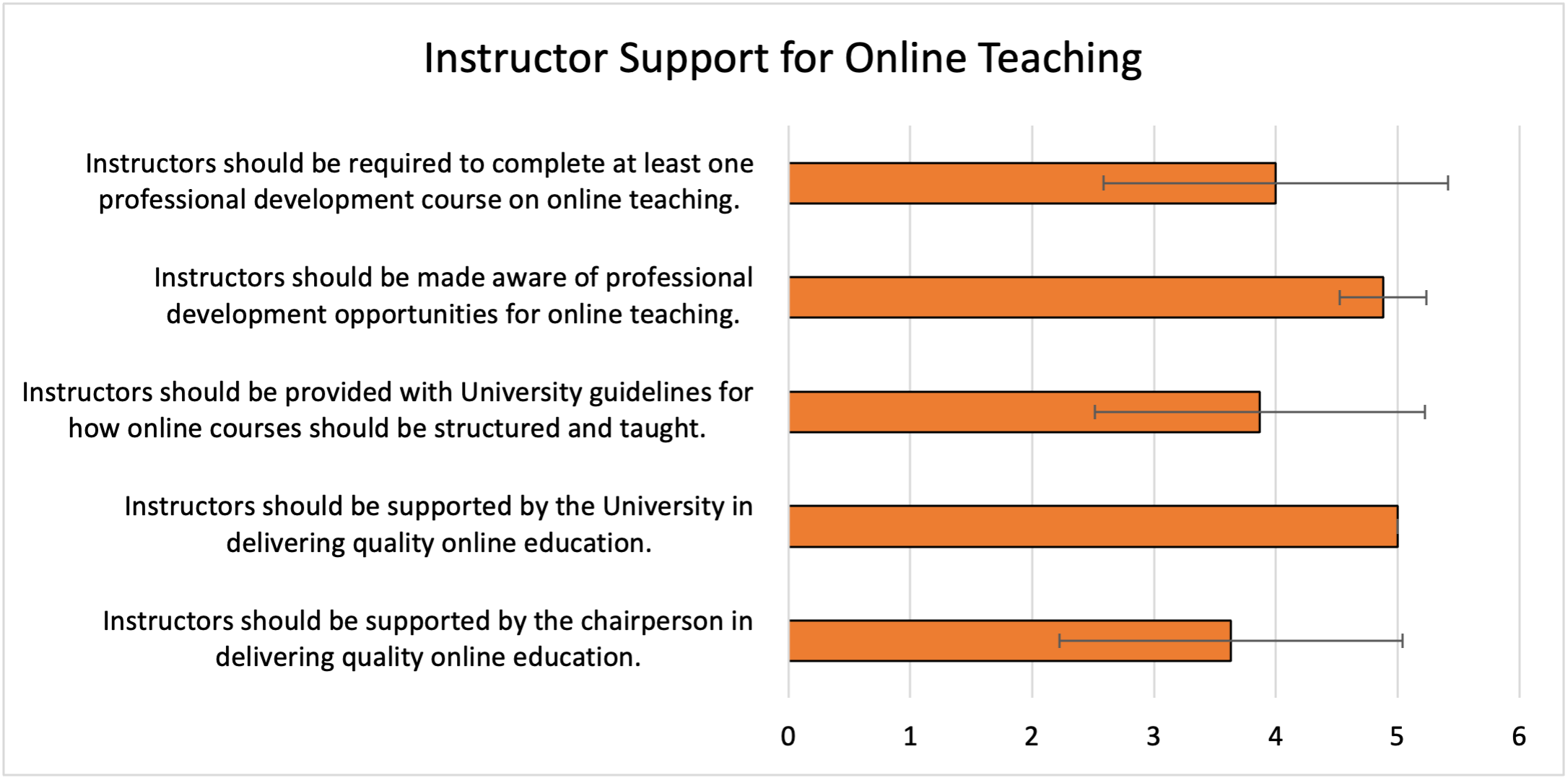 Figure 1. Mean responses to questions about support of instructors for online teaching. Error bars depict the standard deviation.
 There were several questions about department guidelines for online teaching, training requirements, and support of online teaching. Twenty-five percent of chairs reported that their departments have guidelines for online teaching, and 25% of departments require faculty to complete a professional development course or training to teach online. Chairs report requiring the Quality Matters course or the CSU introductory course which is shorter and more manageable. There was also a suggestion for a small stipend from the University to help encourage faculty to complete these courses.
The majority of departments (63%) have a repository of resources for instructors teaching the same course, such as a Canvas course or Google Drive.
When asked about strategies implemented to support faculty when teaching online, chairs reported informal sharing of information, encouraging faculty to attend trainings, one-on-one support, relying on CFD, only assigning successful online instructors to online classes, and the need for more help especially helping part-time faculty set up a good Canvas shell. One department provides extensive support – contact with the course lead, program director, school director, Canvas shell, syllabus template, access to an instructional designer, on-boarding, and recordings about teaching in their school.
Most departments (75%) frequently or occasionally encourage faculty to meet with an instructional designer to design their online courses (Figure 2).
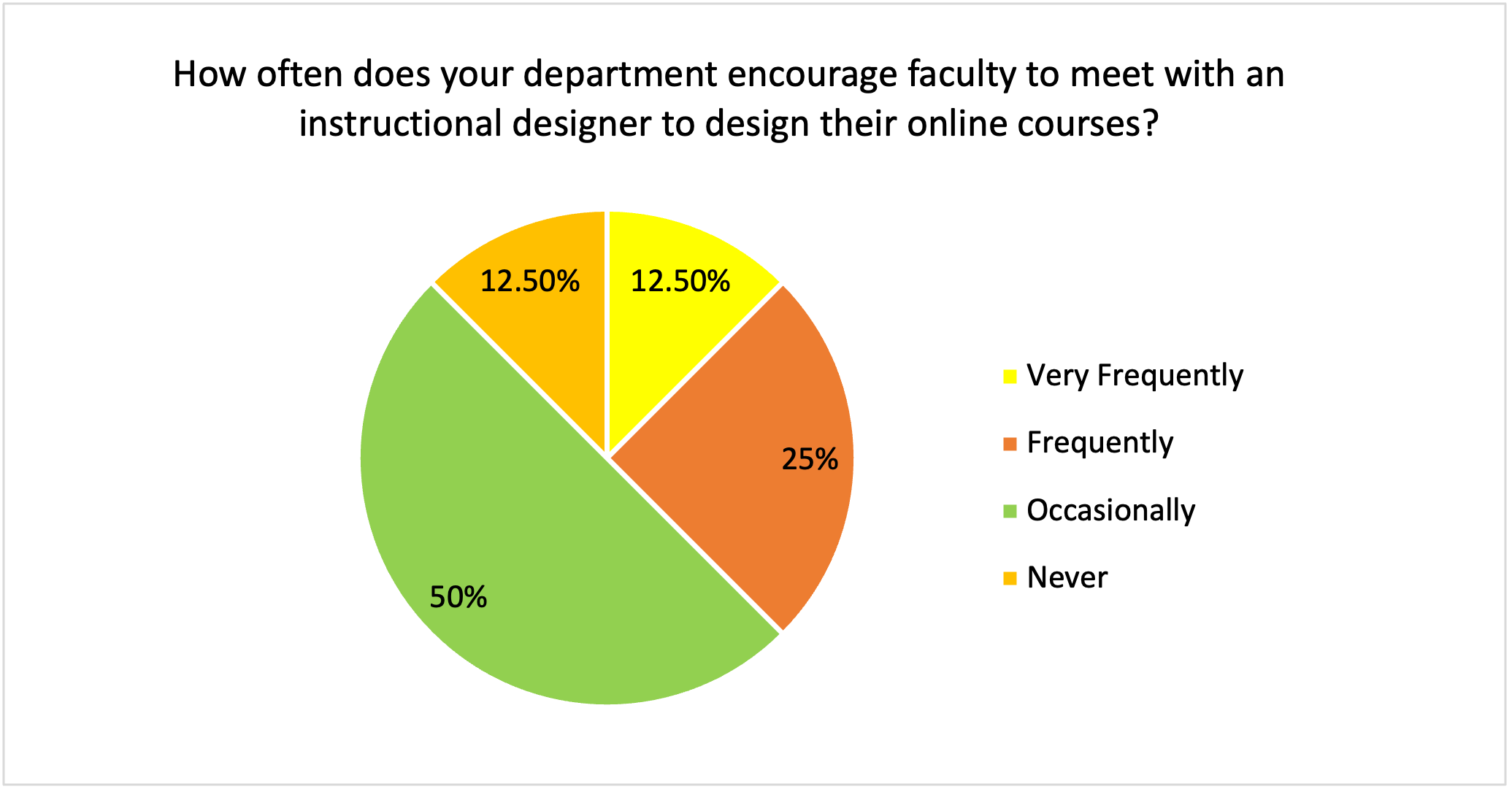 Figure 2. Frequency of encouraging faculty to meet with an instructional designer.
There were 6 rating questions on department guidelines, training, and support of online teaching (Figure 3). Chairs were neutral on average regarding providing instructors department guidelines on learning activities, structure, and how to teach online, but expressed stronger agreement on providing department guidelines for content and quality. There was even stronger agreement that faculty in the department should participate in constructing and maintaining guidelines.
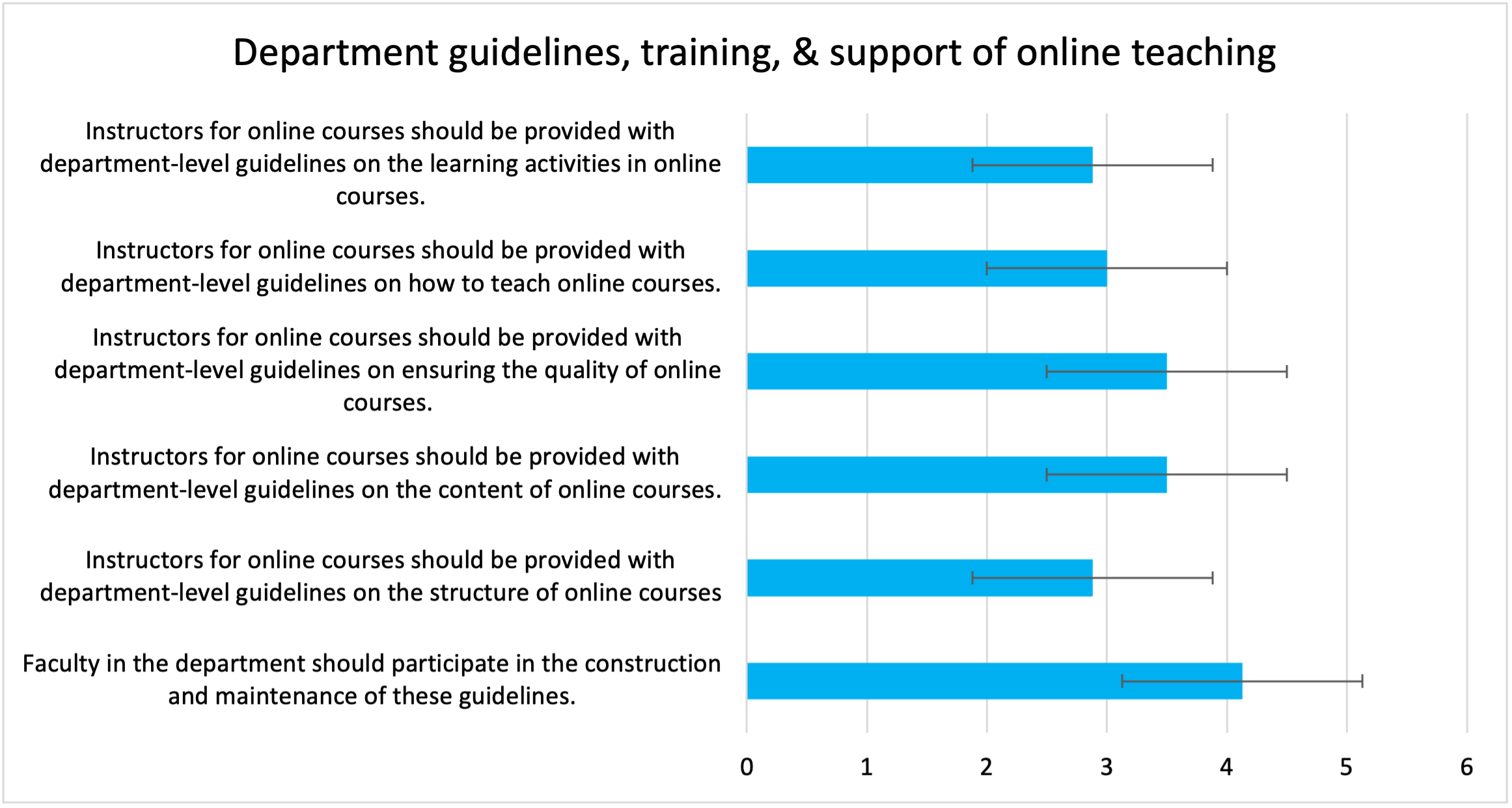 Figure 3. Mean responses to questions about department guidelines, training, and support of online teaching. Error bars depict the standard deviation.
 Finally, most departments disseminate information to faculty via email, slack, faculty meetings, and shared documents (Table).
Table 1. Methods for departmental dissemination of information to faculty.
| How do you disseminate information to faculty? | Percent |
|---|---|
| 100% | |
| Slack | 100% |
| Faculty Meetings | 87.5% |
| Department shared documents, such as Google Drive | 62.5% |
| Canvas shell for department information | 37.5% |
| Department website | 25% |