MSCI 6120 Solid State Materials Properties
MSCI 6120 Solid State Materials Properties
Purpose: to help other instructors teaching the same course
Common Course ID: MSCI 6120
CSU Instructor Open Textbook Adoption Portrait
Abstract: This open textbook is being utilized in a Materials Science course for graduate (master’s) students by Joyce Pham at California State University, San Bernardino. The open textbook provides general PDF of PPT slides that the instructor put together on physical properties discussed in class including: fundamental band and tight-binding theories, characterization of complex magnetism, magnetoelectric and magnetoresistance, basic superconductivity, optical electric materials including electro- and photo-luminescience, and nonlinear optical materials properties. The main motivation to adopt an open textbook was to minimize student cost and to utilize a plethora of resources, including primary literature, to expose students to the course content. Most students access the open textbook in PPT and/or PDF as posted by the instructor.
MSCI 6120 Solid State Materials Properties
Brief Description of course highlights: This is a survey of chemical bonding in extended solids and its impact on physical & chemical properties as related to electronic transport & magnetism. Broader applications of these properties as relevant to modern technological impacts may be discussed. Link: https://catalog.csusb.edu/colleges-schools-departments/natural-sciences/mat-sci-ms/
Student population: Master’s students in material’s science with a background in chemistry, physics, and or materials engineering. Typical prerequisite includes a bachelor in a physical sciences discipline.
Learning or student outcomes: Students learn how to (1) rationalize properties of solid state materials and interpret the results of physical property measurements, and (2) discuss current literature as related to electronic transport and magnetism.
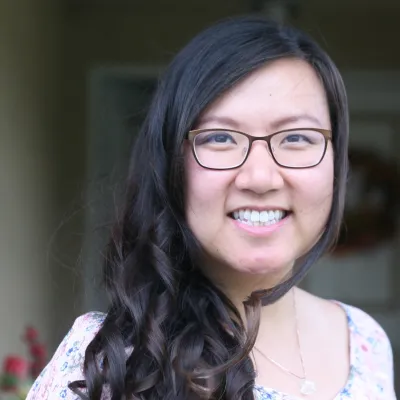
Instructor Name - Joyce Pham
I am a Chemistry professor at California State University, San Bernardino.
 Please provide a link to your university page.
https://www.csusb.edu/profile/joyce.pham
Please describe the courses you teach I teach general, inorganic, solid-state, materials chemistry courses.
CHEM 4300(L): Inorganic Chemistry Lecture and Laboratories
CHEM 5150: Materials Chemistry
CHEM 5800: Chemistry & Biochemistry Seminar
MSCI 6120: Solid State Materials Properties
MSCI 6500/L(partial): Materials Advanced Instrumentation and Experimentation
Describe your teaching philosophy and any research interests related to your discipline or teaching. My teaching goal is to cultivate my students’ curiosity and motivate a deeper sense of critical thinking via chemistry as “forum”. I aim to strike a delicate balance between simplifying scientific concepts while retaining sufficient intricacy so that students gain a greater appreciation for the role of chemistry in society.
Research: solid state, inorganic, materials chemistry; chemical bonding, electronic structures; crystallography
OER/Low Cost Adoption Process
Provide an explanation or what motivated you to use this textbook or OER/Low Cost option.
1. Students get a variety of resources plus research articles directly from when a concept was first discussed
2. Students do not have to pay for textbooks
3. Instructor learns from multiple sources in summarizing content to students as a course
4. Instructor stays up to date in the field
How did you find and select the open textbook for this course? Primary research articles, two-three different textbooks with content that were pulled from for class, my own notes from taking analogous classes as student, and writeups from a textbook in preparation.
Sharing Best Practices:
1..Can be more time-consuming
2. Students may be “overly saturated” with supplemental reading resources
3. Original research articles can be dense and more difficult to digest than textbooks
4. Designing problem-sets was less straight-forward
Key challenges faced and how resolved: Students can feel overwhelmed with primary literature sources and the wide spectrum of class resources. One recommendation is to dissect the literature/primary sources as they are most relevant to the in-class discussions.
Textbook or OER/Low cost Title: No single textbook was adopted
Brief Description: A variety of resources, including primary literature in putting together the PDFs/PPTs for class.
Please provide a link to the resource
https://faculty.sites.iastate.edu/gmiller/teaching Burns_CrystalFieldTheory_Ch2and3.pdf
MSCI6120_CombinedNotes.pdf
Authors: Joyce Pham and others (see links above)
Student access: Via Canvas with notes as posted by instructor.
Provide the cost savings from that of a traditional textbook.
~$94/student/textbook
License: Specify the license for the material. (i.e. Creative Commons license). For more information on CC license go to https://creativecommons.org/