The Wavy Pattern on Your Katana Has a Name (and Purpose)
The Wavy Pattern on Your Katana Has a Name (and Purpose)
Historians still argue about why the katana sparks so much myth, but the simple sight of that blade is half the answer. Hunters of antique steel chase not just its edge but the hazy, cloud-streaked line that shimmers after a careful polish.
Japanese smiths label that phenomenon the hamon, and they guard its secret like a password, handing the trick down on whispers beside a furnace. The mark proves that beauty can be born from pure thermal science, so every fresh bruise on the tempering fire becomes art you can touch.
The Katana's Place in Japanese History
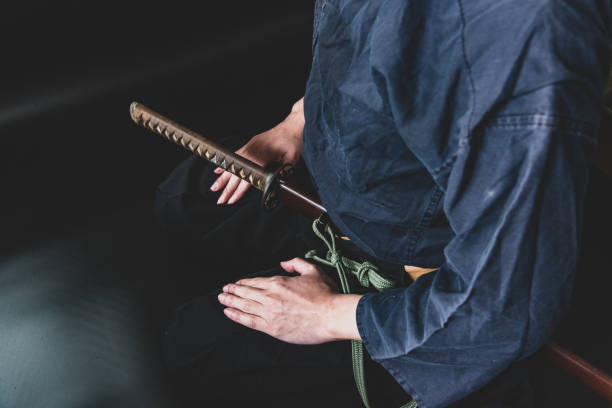
Samurai first slid these blades onto their belts during the Kamakura Era, when cavalry shock tactics forced metalworkers to reinvent cutting angles overnight. Other cultures still wielded straight knives; the curved single edge of the real katana looked almost like a trick of perspective.
Generations of ryōkō craftsmen ground fine charcoal into clay block furnaces called tatara until shimmering tamahagane steel poured free. Each forge trial was a gamble: hammer the metal too long and it shatters; slack off and the edge curls like a leaf.
Ask any collector why a blade speaks to them, and most will point to the hamon-as if the wavy line is a voice no photograph can capture. That subtle ridge divides a rock-hard cutting edge from a spine that still whispers flexibility, yet it somehow feels decorative, almost personal to the maker.
Realizing the hamon on the anvil springs from a quirky trick called differential hardening. The phrase sounds like dry science, yet in the forge it lives as sweat-soaked instinct plus a deep gut feeling for metal behavior. Even a seasoned smith sometimes blinks at the heat and hopes for the best.
To pull it off, the craftsman first slathers the blade with a homemade clay paste. The mud cloak never sits evenly; the edge wears a thin skin for bite, while the spine gets an armored slab to cushion shocks. Some makers fine-tune the mix with charcoal dust or iron powder just to tweak how slow each section cools.
Once the steel hits a cherry-red glow-near 750C-and the light almost lies about its color, the blade dives into water or oil. The exposed tip hardens in a blink, locking martensite in place, but the bulging spine lags and settles into a softer pearlitic weave. That cooling race, and the stress it leaves behind, soon blooms into the jagged wave every sword fan wants to trace with their fingertip.
The polishing stage stretches on for weeks, sometimes months, as a single artisan painstakingly uncovers the hamons hidden glow. Layer after layer, progressively finer stones-whose grits slip into the thousands-are worked over the steel, each one leaving the surface a little smoother and a lot more revealing. Only from that slow build of careful abrasion does the wavy line finally slip into view, standing out against the mottled textures of the blade.
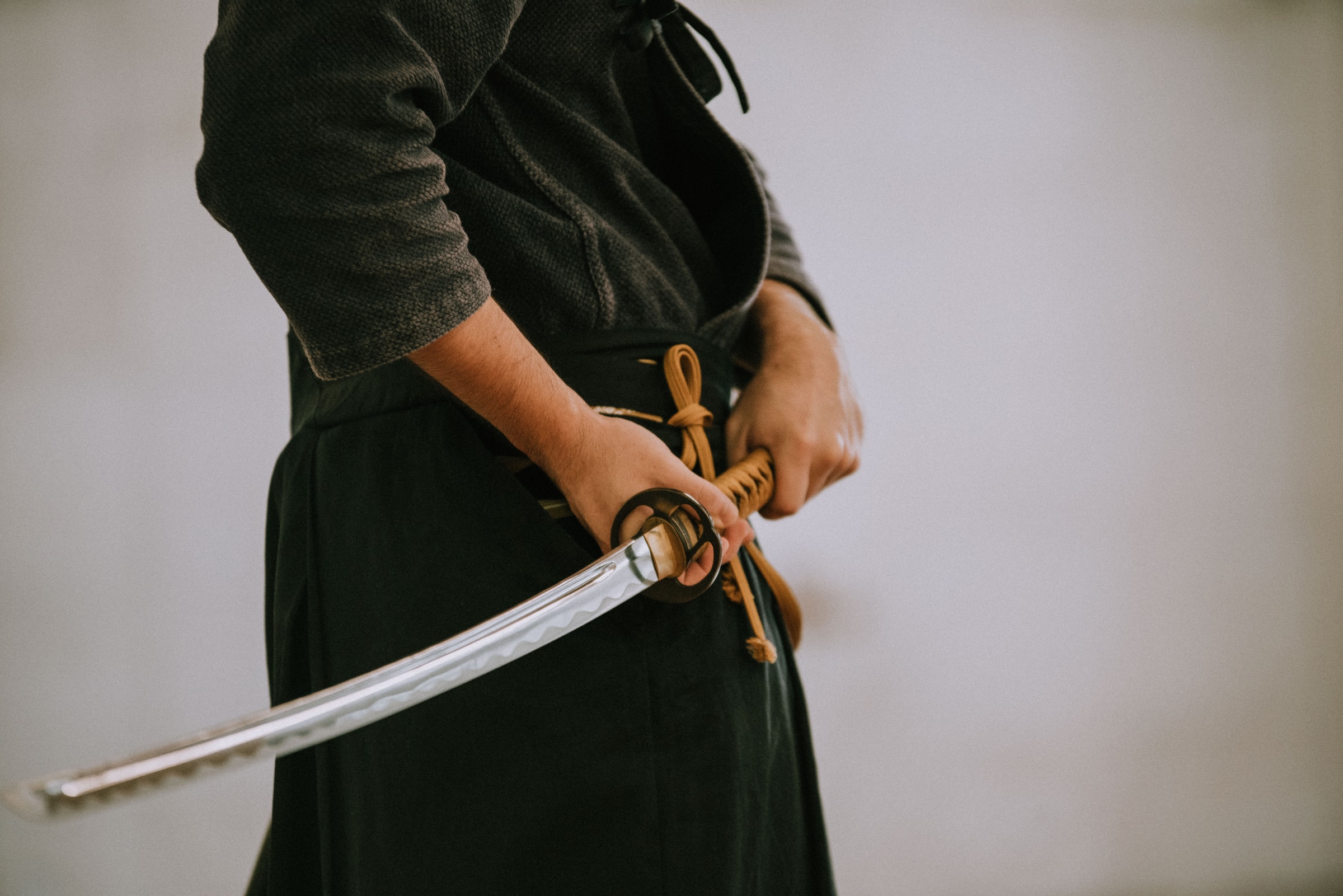
Names for the different hamon styles read like shorthand for a smiths skill. Each shape on the spine also carries hints of where the blade was forged and what traditions lived in that valley or factory.
The suguha sits near the edge with hushed confidence. That tight, straight ridge looks easy, yet pulling it off requires a cold-focus that famous makers sweat to nail.
The notare aches in and out like a brisk surf. Those curves say the heat was coaxed-not slapped-on, letting the steel find rhythm in the quench. Think of choji as the blade version of a flower bud. The rounded nubs pewter from the main line scream for exact clay placement, and only the sharpest hands dare chase that look.
Gunome, or the Comma-shaped Pattern
Small, half-moon notches peppering the hamon give gunome its name and general appearance. Depending on the sword, those curves can shrink to pinpricks or swell into eye-catching crescents. Many famed Edo-period forges claimed the look as their own hallmark.
Midare, the Irregular Pattern
Midare lives up to its title by splattering the spine with chaos-no two sections, sometimes no two inches, repeating the same shape. Within that disorder, hints of gunome, kikko, and other motifs often appear, almost as if the steel is improvising while it cools. Only a smith comfortable in the fire can pull off such a wild show of confidence and skill.
Why the Hamon Matters
Beyond pure decoration, the hamon fuses form with utility the way Japanese makers always hoped their work would do. Heat-treat unevenly, and hardness levels dance across the blade, granting a razor-steel edge and a spine soft enough to bend without snapping. Rivals knives and swords of the era rarely matched that balance of toughness and finesse.
The hamons very wave-like contour also plays a secret role when a sword meets bone or armor. Sharp impacts slice neat as planned, yet the ripples redirect shock out of a single crack-prone spot, spreading it thin like paper. That trick adds months or even years to a warriors working life with the same blade.
The hamon, that subtle wave atop the steel, turns every katana into a miniature gallery piece. Even blades forged under the same roof on the same afternoon can end up looking like twins raised in different houses. Watch light slide along the spine and the edge, and the design almost seems to breathe, shifting like a memory half-forgotten.

Serious collectors spend hours tracing those lines because each ridge whispers secrets about its maker, the year, and the forge it called home. A close match between the pattern and a known reference can save a blade from being dismissed as a fake. Sometimes one look is all it takes to declare the artisan a true master.
Protecting a katana and its hamon is less showmanship than instinct; damage done in seconds can haunt a blade for generations. Savvy owners lean on time-tested routines rather than chasing the latest gadget. Traditional habits feel routine, yet they silently guard a blade's character.
Sweat, fingerprints, even the dust from a quiet room can corrode the hamon if left unchecked. A soft cotton cloth wiped along the flat, spine, and tang takes care of most sins in a single pass. Steel is tougher than skin, but sandpaper or rough rags will still scratch the polish, so caution wins.
A thin film of oil cuts off moisture before it ever lands, and that barrier is plenty if applied with restraint.
Old-school choji blended from clove remains the favorite; the scent feels like walking past a forge on a chilly morning. Modern synthetic oils work too, yet anything smeared on in a hurry-blob here, puddle there-never looks right.
The way you store a blade will mostly decide whether it lives or rusts. A gentle climate, reliable humidity-no oaky, sweaty swings in the weather. Lay the sword flat so the steel isnt tempted to bow on its own.
Vintage or museum steel sometimes needs a pro, someuco-keeps-away polishing hand that talks to the hamon instead of grinding it down. An expert can coax out old lantern-light patterns without treating the edge like a frying pan.
Leave real-history sharpening to the shelf; one slip turns a priceless heirloom into lawn-art. Modern factory blades take a whetstone without crying, so wear out your nervous energy on them. Authentic scars arent lessons to fix, theyre lessons to remember.
A craftsman never threw the temper line onto the blade-it showed up later, like fate coming back to sign its name. That wavy ridge, the hamon, is equal parts science and slow, steady prayer.
Fighters study it because the line feels the same in motion as it does in metal. Collectors hunt each curl because they parse ownership stories in those little waves. Anyone with an eye for steel realizes that Japan stopped making just swords two or three centuries ago; it started making tradition.
Next time a blade catches your eye, try to follow the subtle wave of the hamon. That delicate ridge signals years of smithing lore and relentless testing. It turns dull metal into a slice of living history, whether youre standing in a glass case or holding a fresh factory-made copy.