Engineering 305: Appropriate Technology
Engineering 305: Appropriate Technology
Purpose: to help other instructors teaching similar courses
Common Course ID: ENGR 350
CSU Instructor Open Textbook Adoption Portrait
Abstract: This open textbook described, is being utilized in multiple engineering courses for undergraduate and graduate students by Lonny Grafman at Cal Poly Humboldt. The open textbook provides detailed math, diagrams, and project examples for building small-scale photovoltaic projects around the world. The main motivation to adopt an open textbook was the combination of limited credible material appropriate for university courses available for this topic, the high cost of the available material, and the global importance of the material. Most student access the open textbook in pdf, but it is also available as a physical book, an ebook, on multiple platforms and in multiple languages.
Engineering 305: Appropriate Technology
Brief Description of course highlights: Engineering technology principles. Energy, waste disposal, food production technologies. Lab exercises involve working systems at Campus Center for Appropriate Technology. https://catalog.humboldt.edu/preview_course_nopop.php?catoid=10&coid=56302
Student population: This course counts as a general education upper division science elective and is open to all majors and students that have completed a lower division science course. While it is an engineering course, the course attracts students from multiple majors with the majority coming from Environmental Science and Environmental Studies.
Learning or student outcomes: Upon completing this requirement students will:
- apply scientific concepts and theories to develop scientific explanations of natural phenomena.
- critically evaluate conclusions drawn from a particular set of observations or experiments.
- discuss value systems and ethics associated with scientific endeavors.
- be able to effectively size multiple sustainable resource systems including rainwater catchment and small-scale solar power.
Syllabus and/or Sample assignment from the course or the adoption: Check out example projects made by the students of the course at https://www.appropedia.org/Engr305_Appropriate_Technology_Projects
Key challenges faced and how resolved: The largest challenge was the large range of previous knowledge of the students in the course. Student teams are made around specific real projects with a real client. Students are expected to work together to apply their knowledge and complete their project in one semester. The projects are funded and supported by outside non-profit clients such as the Campus Center for Appropriate Technology, Arcata Elementary School, Potawot Health Village, and more.
Textbook or OER/Low cost Title: To Catch the Sun
Brief Description: The sun lands on us with incredible power. Yet we often find ourselves without sufficient power for our needs. This book is for anyone looking for inspiration and capability with small-scale solar power in order to meet their needs. We focus on small-scale, but the learnings in this book can be applied to large-scale micro-grids or even larger solar farms. That said, our focus will be mostly on off-grid systems that are 1 kW or smaller. Some specific examples include:
- A small home in a financially rich country
- A few homes in a financially poor country
- School rooms and community spaces
- Isolated loads like electric gates, pumps, and telecommunications equipment
- A tiny home or van life
- Glamping and backpacking equipment
- Emergency supply, e.g., powering an oxygen machine during a power outage
- Zombie-apocalypse equipment
- Laptop and cellphone chargers
- Solar entrepreneurship devices
To Catch the Sun emphasizes adaptability and iteration to meet your needs. It is one of the few photovoltaic books to cover very small systems with and without batteries, in a global context, for everyday designers everywhere.
This book can be utilized in curriculum so that students have context for learning about electricity, power and energy, photovoltaics, spreadsheets, and basic math concepts. There are many resources and professionals out there to help in building larger systems. This book will mostly focus on the small-scale, distributed, resilient systems that you can build yourself. In addition, this book is meant to be a deep knowledge starting point. Ultimately, you might find a video online that is exactly what you want to build. This book can help you determine what to build, what to avoid, and assess if the video is accurate. Building a deeper and broader understanding will help you leverage the most current research, resources, blogs, YouTube videos, etc., so that you can adapt to your, and your community’s, specific needs. This book is for anyone looking to build solar projects and knowledge:
- Students and teachers. Especially high school and undergraduate university levels in science, math, engineering, environmental and social justice, and technical fields.
- Community organizers and builders looking to build solar projects.
- Entrepreneurs and inventors looking to build solar products.
- Families looking to learn together!
Please provide a link to the resource: https://tocatchthesun.com
Authors: Lonny Grafman and Joshua Pearce
Student access: The book is available on their Canvas page as a PDF, or in local bookstores, online at multiple platforms and in multiple formats including at Mediawiki.
Supplemental resources: Many supplemental resources are available free at https://www.appropedia.org/To_Catch_the_Sun, for example this step by step manual to make a very small learning system https://www.appropedia.org/Step_by_step_40W_solar_manual
Provide the cost savings from that of a traditional textbook. Books I looked at before this book ranged from $85 to $160.
License: The entire book and support materials are licensed as CC-BY-SA-4.0.
OER/Low Cost Adoption Process
Provide an explanation or what motivated you to use this textbook or OER/Low Cost option. Save students money while providing a resource for the world to use for designing small-scale solar powered systems.
How did you find and select the open textbook for this course? I wrote it with Dr. Joshua Pearce after searching for something that would fit our needs.
Sharing Best Practices: There are increasingly more options for remixing opensource materials, searching for CC-BY-SA materials let’s you reuse as you’d like as long as you continue to share and attribute, allowing us to build on each other's work. For example, there are thousands of projects and pages at Appropedia.org to build books from using the free book builder at https://www.appropedia.org/Help:Books. Disclosure, I am a part of Appropedia and they take zero money from any users (except in the form of very optional donation) and never sell any private information.
Describe any key challenges you experienced, how they were resolved and lessons learned. Since the book is licensed at CC-BY-SA others have taken it and reposted it, in some cases with missing information and in other cases selling access to it.
Instructor Name - Lonny Grafman
I am an Engineering instructor at Cal Poly Humboldt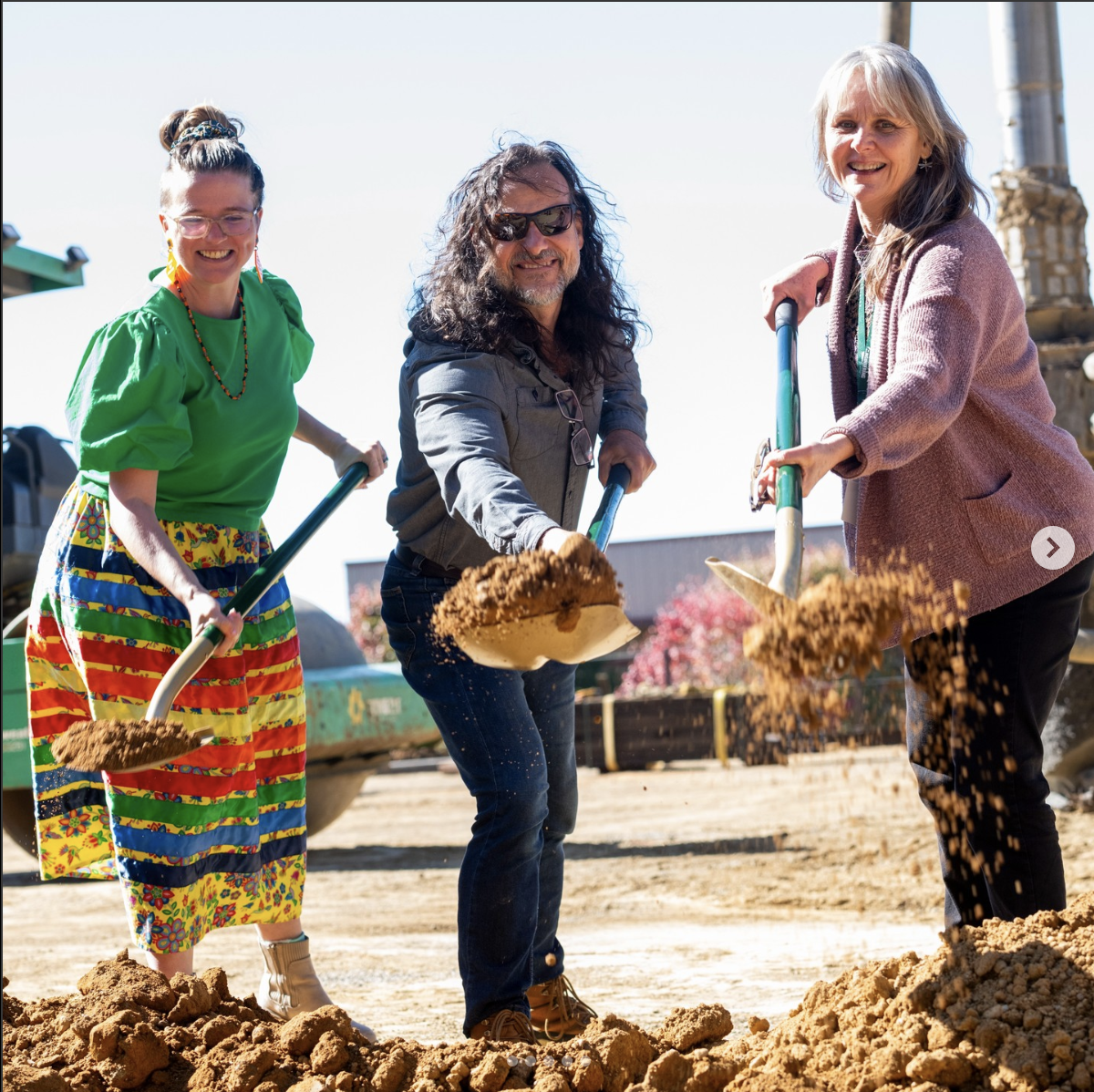
Please provide a link to your university page https://engineering.humboldt.edu/people/lonny-grafman
Please describe the courses you teach I teach Introduction to Design, Fabrication, Appropriate Technology, and many more classes related to designing and building the things you and your community need.
Describe your teaching philosophy and any research interests related to your discipline or teaching. I love working with awesome people to make great things happen.
My international experience includes teaching at Universities in Mexico, Spain and Dominican Republic, and India, as well as founding a summer abroad, full immersion programs in resilient community technologies.
As a teacher, I have a passion to foster creativity, deepen analytic abilities, increase competence, strengthen connections, and generally broaden knowledge in students primarily by working on real projects, with real clients, that ameliorate existing conditions by leveraging local knowledge, wealth and labor through transparency and stakeholder participation. Ultimately, I want the synthesis of the experience to engender a strong, and accurate, sense of competence and integrity in students, so that they can go on to accomplish their own goals.
In my classroom, I try to foster a sense of openness through humor, fallibility, and modeling positive actions to critical feedback. Together, the students and I continue to improve the curriculum by collaboratively developing and evolving our course. As part of honoring the value that each of us bring, and celebrating that diverse teams are necessary to tackle the problems facing the world, we engage many styles that allow students of various needs, skills, and ways of being to thrive.
I focus on building resilience in communities, organizations, and individuals by leveraging our own resources to meet our own needs. I do this in the teaching ways noted above and through my roles as the president of Appropedia (sharing these solutions), director of the AWEsome Business Competition (hacking capitalism and giving more opportunities to these projects), author of books like To Catch the Rain and To Catch the Sun (so anyone can start catching their own resources), and advising with people, projects, and organizations. You might like to check out our solarpunk projects like Waterpod and Swale (a floating food barge in New York).