SOSC 303 (W): Cultural Concepts: Human Social Evolution
SOSC 303 (W): Cultural Concepts: Human Social Evolution
Purpose: to help other instructors teaching the same course
Common Course ID: 1-LEC (4860) & 72-LEC (4861)
CSU Instructor Open Textbook Adoption Portrait
Abstract: Each week, the instructor highlights that week's topic through an Indigenous lens using OER materials—including journal articles, videos, and news articles—that were created by and for Indigenous teaching. These open educational resources are being utilized in SOSC 303 (W): Cultural Concepts: Human Social Evolution, an upper-division undergraduate course taught by Ashlyn Weaver, M.A., RPA, at California State University, Chico. The course materials provide diverse, Indigenous-centered perspectives on themes such as human social evolution, cultural development, and systems of knowledge, and include curated supplemental resources like reflective discussion prompts and guided reading questions to support deeper student engagement. The main motivation to adopt OER materials was to provide culturally relevant, inclusive content that centers Indigenous voices and knowledge systems while also removing financial barriers to student access. Most students access the OER materials in Canvas through PDF uploads and active links.
SOSC 303 (W): Cultural Concepts: Human Social Evolution
Brief Description of course highlights: This is an exploration of the fundamental concepts of human biological, social, and cultural evolution. It is a comparative study of adaptation, social organization, religious, and other ideological systems in contemporary non-Western societies. With a multidisciplinary approach, the course covers the biological basis of human social behavior, fossil evidence for human evolution, and relevant ethnographic and archaeological evidence of human social evolution.
Practical Description - This course is intended to provide a broader context for the work you have been doing thus far as a Social Science major at Chico State. In this class we will learn about the social sciences’ place within the academic environment, and practice written communication skills as we focus our attention on anthropologic, ethnographic, and environmental platforms.
Student population: SOSC 303 (W): Cultural Concepts: Human Social Evolution primarily serves students in the Social Science Multidisciplinary Studies major. This option attracts students seeking a broad foundation in the social sciences, with coursework in Economics, History, Geography, and Political Science. A significant portion of students in this course are preparing for careers in education and plan to pursue a secondary (grades 6–12) teaching credential, often selecting this course as part of their preparation for the California Subject Examinations for Teachers (CSET) in Social Science.
Most students entering SOSC 303 are upper-division undergraduates (typically juniors and seniors) who have completed lower-division general education courses in the social sciences. They generally come in with a foundational knowledge of U.S. and world history, basic economic and political systems, and an introduction to cultural or anthropological perspectives.
The course often attracts a diverse student body, including first-generation college students, future educators, and those with a strong interest in interdisciplinary and Indigenous-centered approaches to understanding human societies. Students are typically motivated, community-oriented, and interested in exploring how cultural evolution and social structures impact contemporary issues.
Learning or student outcomes: The Learning Outcomes for our degree program flow from the recognition that certain essential intellectual and practical skills rest at the foundation of a high-quality education. This course addresses the following SLOs through assignments at a/an introductory/practice/mastery level:
- Written Communication: Demonstrates the ability to question, investigate and draw well-reasoned conclusions and to formulate ideas through effective written communication appropriate to the intended audience.
- Practice Level
- Clarity and Coherence: Students effectively convey their ideas with clear, concise, and logically organized writing, ensuring that their message is easily understood by the reader.
- Grammar, Punctuation, and Syntax: Students consistently demonstrate a strong command of grammar, punctuation, and sentence structure, enhancing the readability and professionalism of their writing.
- Appropriate Tone and Style: Students tailor their writing to the intended audience and purpose, using the correct academic tone, style, and formatting to meet assignment requirements.
- Practice Level
- Oral Communication: Demonstrates effective listening and speaking skills necessary to organize information and deliver it effectively to the intended audience.
- Practice Level
- Clear and Organized Delivery: Students present their ideas in a structured and coherent manner, ensuring their message is easy to follow and understand during oral presentations or discussions.
- Engagement and Interaction: Students actively engage their audience through effective use of eye contact, body language, and vocal variety, encouraging participation and demonstrating confidence in their communication.
- Active Listening and Responsiveness: Students listen attentively to questions or feedback, respond thoughtfully, and adjust their communication as needed to address the concerns or interests of their audience.
- Practice Level
- Information Literacy: efficiently search for, evaluate, and use information from credible sources. Students critically assess the quality of information, synthesize findings from multiple perspectives, and apply proper citation practices to ensure academic integrity, supporting their research and assignments effectively.
- Practice Level
- Effective Research Strategies: Students demonstrate the ability to efficiently search for, locate, and evaluate credible and relevant sources from a variety of databases, libraries, and digital platforms.
- Critical Evaluation of Sources: Students assess the quality, reliability, and bias of information, distinguishing between scholarly and non-scholarly sources and selecting the most appropriate for their assignments.
- Proper Citation and Ethical Use of Information: Students accurately cite sources using appropriate citation styles and consistently uphold academic integrity by avoiding plagiarism and properly attributing ideas and data.
- Practice Level
- Critical Thinking: Identifies issues and problems raised in written texts, visual media and other forms of discourse, and assesses the relevance, adequacy and credibility of arguments and evidence used in reaching conclusions.
- Master Level
- Analyzing and Evaluating Arguments: Students critically assess the strengths and weaknesses of various arguments, identifying logical fallacies, assumptions, and evidence supporting or undermining claims.
- Synthesizing Information: Students integrate ideas from multiple sources, disciplines, or perspectives to develop well-rounded, original insights and solutions to complex problems or questions.
- Constructing Well-Reasoned Conclusions: Students draw logical, evidence-based conclusions, demonstrating the ability to make informed decisions or recommendations supported by thorough analysis and critical evaluation.
- Master Level
Key challenges faced and how resolved:
1. Limited Availability of Comprehensive, Interdisciplinary OERs
Challenge: While general OER materials exist in disciplines like sociology or psychology, few fully address the interdisciplinary and philosophical foundations central to SOSC 303W. In particular, content on epistemology, paradigmatic debates, and scientific methodology across the social sciences was either fragmented or absent.
Resolution: Conducted a comprehensive review of existing repositories (e.g., BCcampus, LibreTexts, MERLOT) to identify partial resources, then supplemented gaps with original instructional content. Created curated modules combining existing OERs, public domain texts, and newly authored explanations and activities tailored to course themes like positivism vs. interpretivism and reflexivity in research.
2. Ensuring Pedagogical Coherence Across Curated and Original Materials
Challenge: Integrating diverse sources risked inconsistency in tone, depth, and learning scaffolding, which could confuse students and hinder engagement.
Resolution: Developed a consistent instructional framework for each module, including introductions, learning objectives, key terms, reflection questions, and activities. Created custom reading guides and contextual notes to unify disparate sources and maintain alignment with learning outcomes. Peer feedback was solicited to refine clarity and coherence.
3. Technical Challenges with Publishing Platforms and Accessibility
Challenge: Formatting content on platforms like Pressbooks and LibreTexts, while ensuring ADA compliance and multimedia integration, presented logistical and technical hurdles.
Resolution: Received support from the campus library “how-to” guides and CSU’s instructional design guides to troubleshoot formatting and implement Universal Design for Learning (UDL) best practices. Accessibility tools were used to caption videos, provide alt text, and structure content with screen-reader compatibility in mind.
4. Time Constraints for Development and Testing
Challenge: Creating, curating, and editing a full suite of OER modules during a single summer posed a time management challenge, especially with the goal of piloting in Fall 2025.
Resolution: Structured development around a clear weekly timeline with manageable milestones Prioritized foundational content for the summer phase, with plans to iteratively expand and refine during Fall based on feedback.
5. Student Engagement and Navigability of OER Content
Challenge: Students unfamiliar with non-traditional texts and platforms may find open-access content harder to engage with, especially in a writing-intensive capstone course.
Resolution: Piloted select OER materials in a prior semester to gather student feedback, which informed improvements in navigation, organization, and clarity.
OER/Low Cost Adoption Process
Provide an explanation or what motivated you to use this textbook or OER/Low Cost option. The primary motivation was to eliminate the financial barrier of expensive textbooks and ensure equal access to high-quality materials for all students from day one. In addition, this OER textbook offers flexibility in delivery (online, PDF, print), allowing me to customize readings or assignments based on course themes or student needs. Its diverse authorship also brings multiple perspectives and lived experiences, enriching cultural understanding beyond what a traditional textbook might offer.
What I wish I had known earlier: That open textbooks can be as rigorous and peer-reviewed as commercial ones—and students are genuinely appreciative when cost barriers are removed.
How did you find and select the open textbook for this course? I discovered the textbook through a former classmate/ colleague. I did compare multiple open-access options, I kept Perspectives due to its:
- Comprehensive coverage of key topics
- Peer-reviewed credibility
- Alignment with course learning outcomes
- Flexibility in format and delivery
Sharing Best Practices: If you're new to OER or low-cost teaching options, here are a few tips:
- Start by browsing curated OER platforms like OpenStax, MERLOT, or OER Commons.
- Connect with your campus librarian—they’re often experts in OER discovery.
- Join OER faculty communities for support and shared resources.
- Test one or two chapters first before committing to a full course adoption.
- Use Creative Commons filters when searching for adaptable content.
Describe any key challenges you experienced, how they were resolved and lessons learned.
- Missing Ancillary Materials: Unlike commercial textbooks, Perspectives lacked bundled quizzes, test banks, or pre-made slides, so I had to develop my own supplemental materials.
- Bookstore Confusion: Some students expected to buy a textbook; it took extra clarification to assure them the material was truly free.
- Printing Access: Not all students had convenient access to printers, so I made sure the digital versions were mobile-friendly and clearly labeled.
Instructor Name - Ashlyn Weaver
I am a Social Science professor at California State University, Chico. 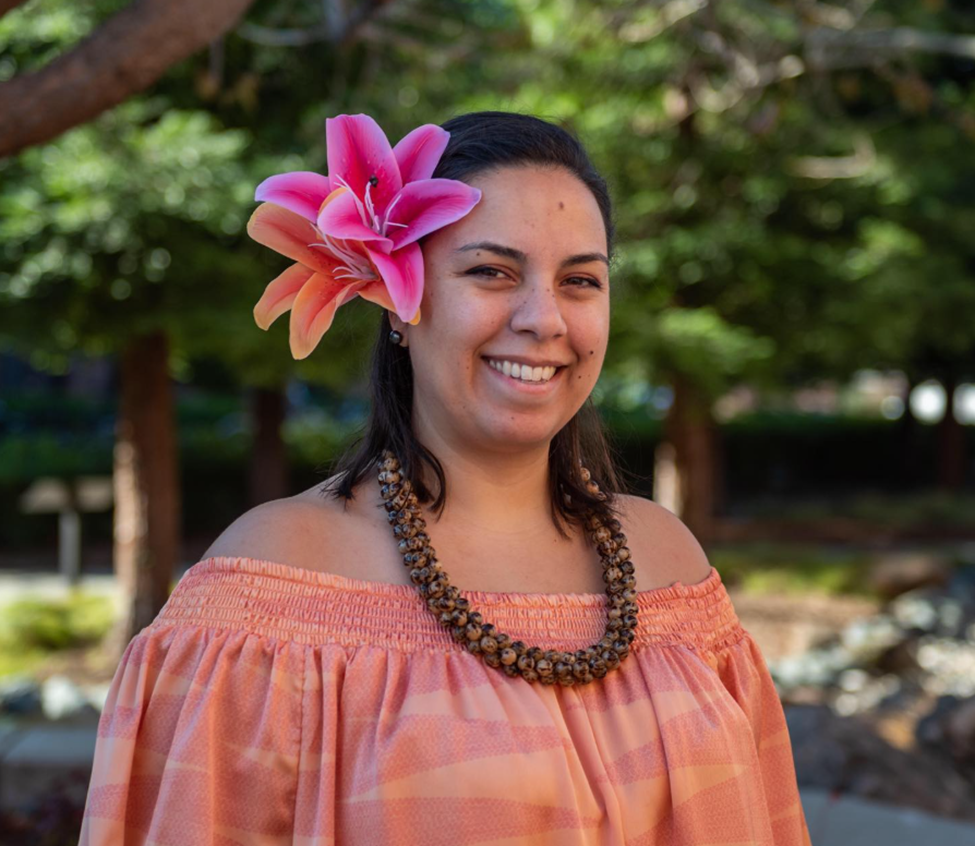
Please provide a link to your university page.
https://www.csuchico.edu/sosc/
Please describe the courses you teach
SOSC 303 (W): Cultural Concepts: Human Social Evolution - This is an exploration of the fundamental concepts of human biological, social, and cultural evolution. It is a comparative study of adaptation, social organization, religious, and other ideological systems in contemporary non-Western societies. With a multidisciplinary approach, the course covers the biological basis of human social behavior, fossil evidence for human evolution, and relevant ethnographic and archaeological evidence of human social evolution.
SOSC 495W – Capstone in Social Science - As a culminating experience, this course guides students through independent or group research projects that integrate interdisciplinary knowledge across the social sciences. Emphasis is placed on advanced writing, data analysis, ethical research practices, and public presentation of findings.
Describe your teaching philosophy and any research interests related to your discipline or teaching. As an educator, I value a student-centered, inquiry-driven teaching philosophy that encourages critical thinking, interdisciplinary exploration, and strong academic writing. I aim to create an inclusive learning environment where students can connect theoretical frameworks to real-world social issues.
I teach SOSC 303 (W): Cultural Concepts: Human Social Evolution and SOSC 495W: Capstone in Social Science, both of which emphasize evidence-based argumentation, analytical writing, and synthesizing diverse sources. These courses are designed to strengthen students’ ability to communicate complex ideas clearly and ethically in academic and applied settings.
My research interests include:
- Interdisciplinary pedagogy
- Anthropology
- Archaeology
- Archaeology of the Pacific
- Cultural Resource Management
- Na Mea Hawai’i
- Indigenous perspectives within higher education
- Indigenous based scholarship
- Public scholarship and social justice
- Writing across the curriculum (WAC)
- Civic engagement in higher education
I am committed to open education practices, especially using OER to increase access, promote equity, and support student success across diverse backgrounds.
Textbook or OER/Low cost Title: Perspectives: An Open Invitation to Cultural Anthropology 2nd Edition
Brief Description: The following information below illustrates the use of chapters that are sporadically used throughout the semester from Perspectives. Chapters such as Sustenance and Language will be used during those weeks. For this purpose, I will only highlight this particular OER, as it provides the most relevant information to this training. Supplemental OER information.docx
Please provide a link to the resource https://perspectives.americananthro.org
Authors: The textbook is an edited volume authored by multiple anthropologists, each contributing a chapter based on their area of expertise. Editors of the 2nd edition include:
- Nina Brown
- Thomas McIlwraith
- Laura Tubelle de González
Contributors are listed per chapter and come from diverse institutions and teaching backgrounds.
Student access: Students can access the textbook through:
- Directly via the website: https://perspectives.americananthro.org
- Downloadable PDF: Entire book or individual chapters
- Mobile and e-readers: Compatible via downloadable formats
- Print copy: Available for purchase through low-cost print-on-demand services
- LMS Integration: Instructors may embed or link materials in Canvas
No login or purchase is required for online or downloadable versions.
Supplemental resources:
- For Students:
- Currently limited; no built-in online homework system or interactive quizzes
- Some chapters may include reflection questions or suggested activities
- For Faculty (via community collaboration and instructor resources):
- Sample syllabi
- Slide decks
Provide the cost savings from that of a traditional textbook. Traditional cultural anthropology textbooks can cost $80–$150+. Perspectives is completely free, resulting in 100% cost savings for students.
License: Licensed under a Creative Commons Attribution-NonCommercial 4.0 International License (CC BY-NC 4.0) This allows free use, adaptation, and redistribution for non-commercial purposes with proper attribution.