
EECE 664 (Machine Learning for Engineers)
EECE 664 (Machine Learning for Engineers)
Purpose: to help other instructors teaching the same course
Common Course ID: EECE 664
CSU Instructor Open Textbook Adoption Portrait
Abstract: This open textbook is being utilized in an Electrical and Computer Engineering (EECE) course for graduate students by Zahrasadat Alavi at CSU Chico. The open textbook provides an in-depth introduction to pattern recognition and machine learning, designed for advanced undergraduate students, and graduate students. The main motivation to adopt an open textbook was to decrease student cost of courses outside of tuition. Most student access the open textbook in online pdf.
Machine Learning for Engineers - EECE 664
Brief Description of course highlights: The course presents a hands-on approach of exploring machine learning (ML) techniques and state of the art tools for engineering problems. Students gain the ability to identify types of data, formatting and cleaning data for an ML model. Students build, train, and test machine learning models using cutting-edge machine learning frameworks and modern artificial intelligence (AI) development environments along with ML deployment on hardware. 4 hours lecture. https://catalog.csuchico.edu/courses/eece/
Student population: This is a graduate course. It is the very first required course that graduate students need to take after joing the EECE Graduate program. The student population ranges from our previous bachelor’s students, who have been admitted to the Master’s program, to international students. The students must have Mathematics Background of Linear Algebra including Vectors, matrices, matrix multiplication, Eigenvalues/eigenvectors, Probability and Statistics including Random variables, probability distributions, Expectation, variance, Bayes' theorem and Calculus. The need to be proficient in a programming language such as Matlab or Python. The class capacity is 30 students.
Learning or student outcomes: Upon successful completion of this course, students should be able to:
- identify types of data, format and clean data for ML models.
- provide mathematical modeling of ML frameworks for real-world applications.
- analyze and modify ML frameworks to improve the performance of an ML model.
- build, train, and test ML models using MATLAB or Python for prediction and classification tasks to overcome engineering problems.
- perform hands-on research and provide rational interpretations for results obtained from development environments.
- Deployment of ML on Hardware.
- Write technical reports and verbally present research contents.
Key challenges faced and how resolved: The primary challenge was developing or sourcing lecture materials that made the highly mathematical and probability-intensive content of the textbook more accessible. The dense theoretical focus risked disengaging students from grasping the practical insights and applications of the algorithms. To overcome this, the instructor opted to find open-source materials previously used in similar courses, which could be freely adapted and modified for the class.
Textbook or OER/Low cost Title: Pattern Recognition and Machine Learning
Brief Description: This widely used textbook offers an in-depth introduction to pattern recognition and machine learning, designed for advanced undergraduate students, graduate students, researchers, and professionals in the field. It assumes no prior background in pattern recognition or machine learning. Notably, it is the first textbook to thoroughly cover recent advancements, including probabilistic graphical models and deterministic inference techniques, while presenting the material from a modern Bayesian viewpoint.
Please provide a link to the resource https://www.microsoft.com/en-us/research/publication/pattern-recognition-machine-learning/
Authors: Christopher M. Bishop.
Student access: They can access it via the above link or Canvas.
Supplemental resources: Slides from University of Pennsylvania.
Provide the cost savings from that of a traditional textbook. The cost saving would be approximately $140.
License: The textbook is openly licensed and under CC-BY-ND
OER/Low Cost Adoption Process
Provide an explanation or what motivated you to use this textbook or OER/Low Cost option. My intention in selecting this textbook was to help students reduce their expenses.
How did you find and select the open textbook for this course? This textbook is widely used, and after exploring the available resources associated with it, I discovered that it is freely accessible on the Microsoft website. Given its accessibility and comprehensive content, I determined it to be the most suitable choice.
Sharing Best Practices: Faculty Learning Communities promote the use of open educational resources and introduce participants to a variety of valuable tools. By joining these communities, you can contribute to reducing the financial burden on students.
Describe any key challenges you experienced, how they were resolved and lessons learned. Sourcing technical materials for engineering courses—particularly at the graduate level—can be difficult. It is even more challenging to find supplemental resources such as PowerPoint slides that both engage students and emphasize the broader concepts, as most available materials are heavily focused on complex mathematics. After considerable effort, I was able to locate a free textbook along with lecture slides that matched the appropriate academic level and supported effective teaching.
Instructor Name - Zahrasadat Alavi
I am an Associate Professor at the Electrical and Computer Engineering Department at California State University, Chico. 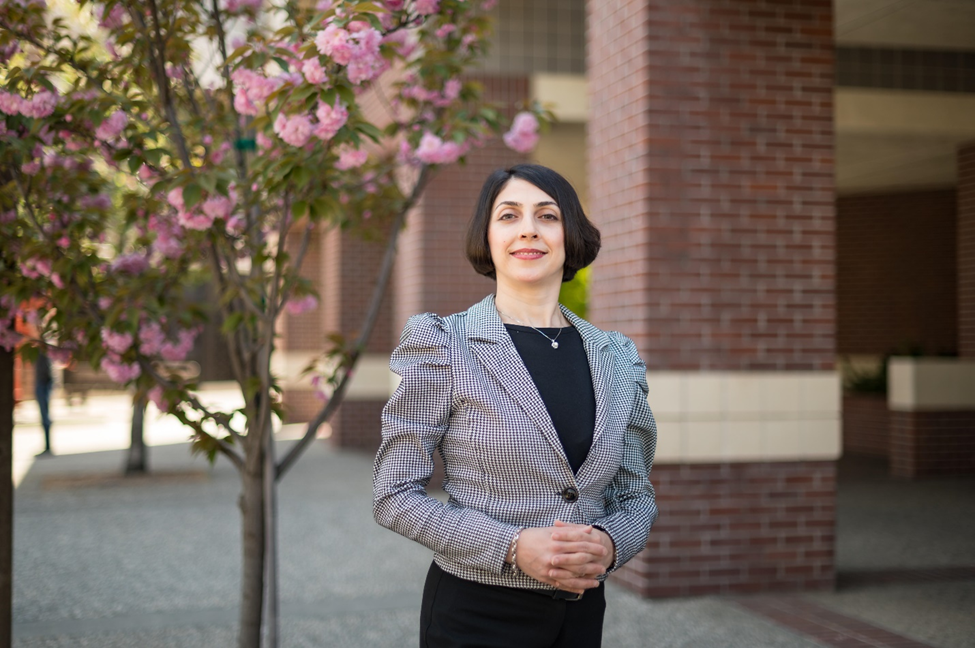
University page https://apps.csuchico.edu/directory/Employee/zalavi
Please describe the courses you teach
EECE 211 – Linear Circuits I Introductory course in electrical engineering focused on linear circuit analysis. Students learn about basic circuit components such as resistors, capacitors, and inductors, as well as fundamental laws like Ohm’s Law and Kirchhoff’s Laws. Course emphasizes DC and steady-state AC circuit analysis techniques, including node voltage and mesh current methods, Thevenin and Norton theorems, and first-order transient analysis.
EECE 311 – Linear Circuits II A continuation of EECE 211, this course deepens the analysis of AC circuits using complex frequency (phasor) techniques and Laplace transforms. It introduces frequency response, resonance, and power in AC circuits. Students also explore two-port networks and begin to see how these principles apply in practical electronics and systems.
EECE 365 – Signals, Systems, and Transforms Course provides the foundational theory of signals and systems. Topics include classification of signals (continuous/discrete, periodic/non-periodic), linear time-invariant systems, convolution, Fourier series, Fourier transforms, and Laplace transforms. Students learn how systems respond to different types of inputs, which is critical for fields such as control, communications, and signal processing.
EECE 482 – Control System Design Course covers the principles of feedback control systems. Students learn about system modeling, time and frequency response analysis, stability criteria (like Routh-Hurwitz and Nyquist), root locus, and Bode plots. The course also includes controller design techniques such as PID, lead-lag compensators, and implementation considerations in practical control systems.
EECE 566 – Applied Digital Image Processing Course introduces the fundamentals of image processing with a focus on practical applications. Students explore image enhancement, filtering, edge detection, morphological operations, segmentation, and feature extraction. Programming assignments are often performed using tools like MATLAB or Python to process and analyze real images.
EECE 664 – Machine Learning for Engineers Designed for engineering students, this course covers core machine learning concepts with a focus on applications in engineering. Topics include supervised and unsupervised learning, neural networks, support vector machines, decision trees, clustering, dimensionality reduction, and model evaluation. Students gain hands-on experience applying algorithms to engineering datasets using programming languages like Python or MATLAB.
EECE 490B – Engineering Economics and Project Implementation Course emphasizes engineering project planning, cost estimation, budgeting, and economic analysis techniques such as net present value and rate of return. It prepares students for professional practice by combining engineering economics with real-world project implementation, including team collaboration, report writing, and presentations.
Describe your teaching philosophy and any research interests related to your discipline or teaching. My teaching philosophy centers on empowering students to become critical thinkers and problem solvers by connecting theoretical concepts to real-world applications. In foundational courses such as Linear Circuits I & II and Signals, Systems, and Transforms, I emphasize conceptual understanding through interactive examples, hands-on labs, and simulations, to build a solid analytical foundation. In advanced courses such as Control System Design and Machine Learning for Engineers, I guide students to explore complex systems by integrating software tools such as MATLAB and Python, encouraging experiential learning and data-driven decision-making. Courses such as Applied Digital Image Processing and Engineering Economics and Project Implementation provide students with opportunities to engage in interdisciplinary projects that reflect industry challenges, promoting collaboration, technical communication, and innovation. Across all courses, I foster an inclusive and supportive learning environment where diverse perspectives are valued, and students are encouraged to ask questions, experiment, and learn from failure. My goal is not only to teach engineering principles but also to inspire a mindset of lifelong learning and adaptability.
My research interests include AI and Machine Learning, digital image processing and analysis, computed tomographic imaging, FTIR micro-spectroscopic imaging, Reinforcement Learning and control systems design and engineering education.