Cultural Diversity in Art Education (W)
Cultural Diversity in Art Education (W)
Purpose: to help other instructors teaching the same course
Common Course ID: ARTE 592W (000816)
CSU Instructor Open Textbook Adoption Portrait
Abstract: This open textbook is being utilized in an art education course for undergraduate or graduate students by Dr. Sangmin Lee at California State Univeristy, Chico. The open textbook provides opportunities to learn how to integrate culturally responsiveness through their readings, art lesson designs, and workshops. The main motivation to adopt an open textbook was support pre-service art educators to have equitable access for promoting their culturally responsive mindset without financial barriers. Most student access the open textbook in Zero-Cost Course Materials (ZCCM) which are freely accessible through Meriam Library and Canvas.
ARTE592W – Cultural Diversity in Art Education (W)
Brief Description of course highlights: This course offers students an opportunity to critically engage with diverse cultures, fostering an inclusive approach to teaching and learning art. Through the activities in the course, students examine how cultural identity shapes artistic expression and pedagogical practices.
Student population: Primarily undergraduate Art Education majors. Most students are pre-service art educators with foundational knowledge in art history, art studio, and art education. Art Studio, Art History, Liberal Studies, and Asian Studies students are also welcome to take this course. Students often come from diverse cultural backgrounds.
Learning or student outcomes:
- Through an experiential learning framework, gain a familiarity with diverse topics, including ethnicity, racism, intersectionality, disability, and climate justice, to apply this understanding to art instruction.
- Demonstrate a critical understanding of cultural diversity, social justice, and ethical considerations in art education.
- Critically analyze and articulate diversity concepts and various perspectives on human differences and social justice in art education.
- Develop and apply art instructional frameworks and strategies to effectively promote cultural diversity, inclusion, and equity in art education.
- Design and teach art curricular and lesson plans that incorporate diversity and social justice principles.
- Evaluate and address current issues in art education by integrating them into pedagogical practices and curricular development.
- Create an inclusive and supportive learning environment through active participation in art, cultural events, and collaborative projects in various pedagogical settings.
Key challenges faced and how resolved: Key challenges were ensuring that course materials reflected a wide range of cultural narratives and supporting students to save costs in this course. These challenges were addressed by curating a set of Zero Cost Course Materials (ZCCM), including peer-reviewed Open Educational Resources (OER), articles available through campus library’s licensed databases, and relevant curriculum resources accessible through websites.
#1 Textbook or OER/Low cost Title: Culturally responsible approach to teaching East Asian Art in the Classroom. Journal of Cultural Research in Art Education, 38, 122-138.
Brief Description: This open-access scholarly article provides a culturally responsive framework for teaching diverse art and culture, particularly East Asian art. Moving beyond Eurocentric art pedagogy, this article provides a holistic lens that connects artworks with worldview, culture, and life practices by integrating art history, philosophy, and pedagogy. The pedagogical approach emphasizes using local knowledge and insider perspectives, integrating cultural philosophies alongside visual analysis, and critically examining issues of representation and power in art education. While not a traditional textbook with problem sets, it offers analysis frameworks and discussion points adaptable for reflection journaling, and culturally responsive lesson planning. https://journals.librarypublishing.arizona.edu/jcrae/article/id/4800/
Authors: Shin, Ryan; Yang, Xuhao
Student access: Canvas (course management system) or Meriam Library (campus library at California State University, Chico)
Supplemental resources: Reflection questions – 1) Have you ever learn diverse cultural context in your art classes? How was your experience? 2) How does the hybrid cultural identity reflected in the lives and works of artists inform you understanding of cultural diversity in art education?, 3) If you were to integrate Asian art and culture into your art lesson, what themes or projects would you design?
#2 Textbook or OER/Low cost Title: Queer eye for Disney: Unveiling LGBTQIA2S+ representations through Visual literacy Art Education 77(3), 19-26
Please provide a brief description: This open-access article provides a framework for integrating LGBTQIA2S+ representation into art education by critically analyzing Disney and Pixar animations. Through integrating visual literacy, intersectionality, and queer theory, it models strategies for detecting explicit and implicit queer portrayals, unpacking heteronormative narratives, and fostering inclusive dialogue. Preservice art teachers engage in film analysis, discussion, and creative projects that connect personal identity to social issues.
https://research-ebsco- com.mantis.csuchico.edu/c/yi7bvj/viewer/pdf/at3d6r6vnz?route=details
Authors: Yang, Meng-Jung ; Hsieh, Kevin
Student access: Canvas (course management system) or Meriam Library (campus library at California State University, Chico)
Supplemental resources: Canvas Activity – Choose one Disney animation, Hollywood movie, and/or Netflix TV show that includes misrepresentation or stereotypical description on LGBTQIA2S+. You can focus on specific character or story plot in general. Critically analyze the character/story plot with the lens of micro- intersectionality and macro-intersectionality. Transform the character/story plot more affirmative to LGBTQIA2S+. You can share your transformative ideas in visual form (ex: drawing, painting, digital art, etc.) or written description.
Provide the cost savings from that of a traditional textbook. Art, Teaching, and Learning (Written by Dr. Teresa Cotner & Dr. Masami Toku) $68.24
License: Accessible through our campus library, while it doesn’t indicate OER license
OER/Low Cost Adoption Process
Please provide an explanation or what motivated you to use this textbook or OER/Low Cost. The main motivation was to eliminate textbook costs while ensuring access to a wide range of diverse cultural context, supporting culturally responsive teaching in art education.
How did you find and select the open textbook for this course? Identify and review open-access resources from Zero-Cost Course Materials (ZCCM)
Sharing Best Practices: The topics of cultural diversity in art education may need to be updated regularly, reflecting on socio-cultural climate. It might be good for updating the curated list to ensure diverse voices represented in the selections.
Describe any challenges you experienced, and lessons learned. Some topics are not delivered in OER textbook. Instructor may need to curate their own set of resources through the other forms of Zero-Cost Course Materials (ZCCM).
Instructor Name - Sangmin Lee
PI am an Assistant Professor of Art Education at California State University, Chico 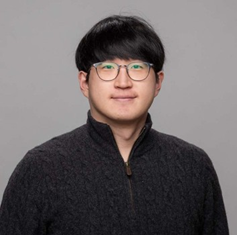
Please provide a link to your university page.
https://apps.csuchico.edu/directory/Employee/slee29
Please describe the courses you teach
ARTE489 Art Teaching Internship (In-person) This course is designed to provide comprehensive and engaging arts-based service-learning opportunity for advanced art education, art history, studio art, and elementary education students. Instructor and interns collaboratively prepare “Kids@theTurner”, 11-week community-based art workshop for local K-9th students. After a few weeks for preparation, interns facilitate museum activities and art lessons connecting with the current art exhibition at the Janet Turner Print Museum.
ARTE493 Development of Children’s Art (P-8) (In-person / Online) This course prepares elementary education students to teach art in the self-contained classroom. The course focuses on the exploration of materials as an instructional tool for the Pre-K-8 educational environment. Various art teaching methods are explored through student participation in lectures, discussions, art making, art lesson design, and teaching demonstration to the class. This course is intended to support the students in successful implementation of a standards-based art curriculum. This course also touches upon a range of other contemporary art education approaches and content areas appropriate to Pre-K-8 classroom setting.
ARTE494 Development of Youth Art (In-person) This course prepares art education students to teach art in multiple art education settings, including but not limited to secondary schools, museums, and local community. Various contemporary art education theories and methodologies are explored for developing their own instructional framework. Students participate in several art pedagogical projects.
ARTE592W Cultural Diversity in Art Education (Hybrid) This course prepares art education students to explore multicultural, cross-cultural issues, as well as topics related to gender, environment, and social justice in art education. Various contemporary perspectives and theories are explored through student participation in lectures, discussions, art activities, art curriculum design, and cultural engagement. The course emphasizes developing an equity, diversity, and inclusion mindset that students can apply to their future art teaching. The coursework is designed to support students in successfully implementing a culturally responsive art curriculum in Pre-K-12 classroom as well as community settings.
Describe your teaching philosophy and any research interests related to your discipline or teaching. I believe that art education in context is necessary to build the teaching environment meaningful for and connected to the students’ lives. I prioritize building inclusive and comfortable learning environments to satisfy students' unique capacity and needs as well as welcome all various races, genders, and identity. I care each student’s situation and flexibly accommodate them to ensure their success in the courses.