Editor’s Toolkit for Methods and Statistics in Psychology
Editor’s Toolkit for Methods and Statistics in Psychology
Purpose: to help other instructors teaching the same course
Common Course ID: PSYC 4908
CSU Instructor Open Textbook Adoption Portrait
Abstract: This open textbook is being utilized in a psychology course for undergraduate or graduate students by Jake Womick at California State University Bakersfield. The open textbook provides concise descriptions, graphics, examples and corresponding assessments for key methods and statistics students need to understand to conduct and critically evaluate research. The main motivation to adopt an open textbook was to provide a no-cost resource targeted to these specific needs. Most students access the open textbook in a PDF file provided through CANVAS.
Senior Seminar (PSYC 4908)
Brief Description of course highlights: This is a capstone course that integrates students learning experiences, teaches them how to critically evaluate psychological research, and facilitates them integrating insights from this research into their future career path.
Student population: This is typically the final course taken for psychology seniors. They have learned about content areas, research methods, and statistics in psychology, and are integrating these into a unified understanding of the field, their educational experiences, and how these translate to their path after graduation. Their demographics are representative of the student body.
Learning or student outcomes: List student learning outcomes for the course.
Goal 1: Content Knowledge and Applications
1.1 Describe key concepts, principles, and theories in psychological science
1.2 Develop a working knowledge of psychology’s major subfields
1.4 Apply psychological content to solve practical problems
1.5 Provide examples of psychology’s integrative themes
Goal 2: Scientific Inquiry and Critical Thinking
2.1 Exercise scientific reasoning to investigate psychological phenomena
2.2 Interpret, design, and evaluate basic psychological research
2.3 Incorporate sociocultural factors in scientific research practices
Goal 4: Communication, Psychological Literacy, and Technology Skills
4.1 Interact effectively with others
4.2 Write and present effectively for different purposes for different purposes
4.3 Provide evidence of psychological literacy
4.4 Exhibit appropriate technological skills to improve communication
There are also general education learning outcomes:
Goal 1. Students will articulate how their foundational skills, other General Education coursework, and other major and minor coursework has prepared them for their career and will help or has helped them achieve other life goals.
- Outcome 1A. Students will articulate how their foundational skills and other General Education coursework has prepared them for their career and will help or has helped them achieve other life goals.
- Outcome 1B. Students will articulate how their major and minor coursework has prepared them for their career and will help or has helped them achieve other life goals.
Goal 2. Students will demonstrate proficiency in critical thinking, information literacy, oral communication, written communication, and quantitative reasoning.
- Outcome 2A. Students will demonstrate critical thinking, information literacy, oral communication, written communication, and quantitative reasoning skills appropriate for a bachelor's degree.
- Outcome 2B. Students will create and deliver an effective oral presentation in a professional manner using information and techniques appropriate for the subject and audience.
Key challenges faced and how resolved: I have not used this class before and needed an instructional tool to help students learn outside of the classroom. I did not want to use a textbook because of the financial burden to students. I did two things. First, because students are learning to critically evaluate research, I curated freely-available peer reviewed publications for them. Second, I also wanted to provide them refresher information on key considerations for common methods and statistics in psychology, as well as the limitations that come along with these, so they’re ready to critically evaluate research. To solve this challenge, I wrote a mini textbook.
Provide an explanation or what motivated you to use this textbook or OER/Low-Cost option. I did not want to use a textbook because of the financial burden to students. Additionally, I have had trouble finding freely available reading materials on these topics that both cover the breadth of subjects I need for my class, but also do not get too much into the weeds about them.
How did you find and select the open textbook for this course? I wrote it.
Sharing Best Practices: Its ok to start small!
Describe any key challenges you experienced, how they were resolved and lessons learned. Requiring paid textbooks excludes students from learning experiences, especially those who are already at the margins of our university. Math often scares students, but if you stay on a conceptual level first, they are often capable to learning about more complex subjects than they would otherwise believe in themselves to be able do.
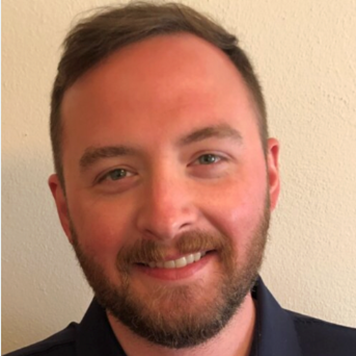
Instructor Name - Jake Womick
I am an Assistant Professor at California State University Bakersfield. I teach lecture, lab, and seminar courses on personality psychology. https://www.csub.edu/psychology/faculty-and-staff.shtml
 Please describe the courses you teach In senior seminar, students role play as journal editors organizing a special issue on a topic of their choice that helps them better understand their career path. Throughout the semester, they complete scaffolding assignment, readings, and activities that equip them with the skills they need to identify a career path, critically evaluate research, and curate their special issue.
Describe your teaching philosophy and any research interests related to your discipline or teaching. I leverage science based practices, such as UDL, information literacy, and self-determination theory to help students grow in a space where they feel confidence, a sense of belonging, joy, and intrinsic motivation. This philosophy informs my pedagogy in the classroom and mentorship in the lab. In the lab, we research topics on political psychology, such as authoritarianism, willingness to participate in violent conflict, and anti-immigration attitudes.
Textbook or OER/Low cost Title: Editor’s Toolkit: Methods, Statistics and Limitations in Psychology
Brief Description: Students are role playing as journal editors organizing a special issue on a topic of their choice that helps them better understand their career path. Thus, the title indicates it is a toolkit for editors. The book is organized into 5 chapters that focus on key information students need to critically evaluate literature, as well as how to identify limitations associated with these present in journal articles. As they progress through the book, they will complete 5 reading quizzes (student facing, these are “called editor training checks”). In class, we will discuss peer reviewed articles each week, with a focus on how we can leverage concepts from the textbook into our evaluation of the work. Students then use these tools to curate their own special issue of a journal for the final assignment of the semester.
Please provide a link to the resource
Book: https://csub.box.com/s/xn1ax3rpfx07sfw8wybjd88i5ooqs9b3 Publications: https://csub.box.com/s/zorj446814ftkqn5vcv0yha20fw0jwsx
Authors: Jake Womick
Student access: Canvas
Supplemental resources: These are still a work in progress. Here are rudimentary slides that accompany the textbook. https://csub.box.com/s/ok7zskkmizvb94l2bbrwp70oargst1w0 If you are interested in using corresponding assignments, please contact me:
Provide the cost savings from that of a traditional textbook. ~$100/student
License: For the articles, almost all of these are from our library database. For two articles, the journals are open access. That would include Science and Journal of Social and Political Psychology. The only other exception is the article about how to read and write academic articles by Patrick Savage. This is a pre-print that the author uploaded to PsyArXiv.