Intro to Mass Communication
Intro to Mass Communication
Purpose: to help other instructors teaching the same course
Common Course ID: HCOM 170-01
CSU Instructor Open Textbook Adoption Portrait
Abstract: This affordable learning resource is being utilized in a Humanities and Communications course for undergraduate students by Ajit Abraham at California State University Monterey Bay. The affordable resource chosen for this course provides a compilation of lessons to help readers understand the evolution of U.S. mass media and disruptive media technologies, including overviews of media law, media ethics and media literacy. This title emphasizes media literacy, media law, mass media history, and social media use in an ethical manner. The main motivation to adopt an affordable resource was reducing student costs for textbooks and promoting affordable learning at Cal State University Monterey Bay. Students can access this OER textbook via a free, unlimited license, e-book format.
Introduction to Mass Communication HCOM 170-01
Brief Description of course highlights: This course introduces students to the historical, social, legal, economic, political and technological aspects of mass communication, including media such as radio, newspapers, television, and the internet. Students also are introduced to mass communication theories, such as gatekeeping, agenda-setting, and framing. https://catalog.csumb.edu/search_advanced.php?cur_cat_oid=11&search_database=Search&search_db=Sear ch&cpage=1&ecpage=1&ppage=1&spage=1&tpage=1&location=3&filter%5Bkeyword%5D=hcom+170
Student population: Undergraduate/ GE course, 4A Social & Behavioral Sciences, first and second year students, 3 unit course.
Learning or student outcomes: List student learning outcomes for the course.
- Identify and define major vocabulary, concepts, value systems, assumptions, theoretical perspectives, and ethical issues in mass communication.
- Demonstrate an understanding of one or more social issues related to mass communication across historical, cultural, geographical, economic, political, or institutional dimensions.
- Demonstrate an awareness that one or more social issues or concepts vary across global contexts or that a social issue has global impacts.
- Demonstrate an understanding of how the study of mass communication applies a range of social scientific methods of inquiry to understand human behavior within established ethical and/or professional frameworks.
Assigned Textbook: The Mass Media Landscape, Compiled and written by Dave Bostwick and Alyssa Riley Edited by Dominique Andrea Montiel Valle. Found here: https://uark.pressbooks.pub/massmedialandscape/front-matter/about/
Textbook or OER/Low cost Title: The Mass Media Landscape (edited by Dominque Andrea MontielValle, Univ. of Arkansas Libraries, 2024)
Brief Description: The alternative textbook, The Mass Media Landscape, covers a wide range of foundational and contemporary topics within communication and media studies, including media literacy, journalism, public relations, advertising, and the influence of emerging technologies. Its structure makes it especially useful for course design: each chapter not only provides accessible explanations and relevant examples but also includes thoughtfully crafted discussion questions that encourage critical thinking and application of concepts. I plan to integrate these questions into a weekly assignment that will guide students in connecting the readings to real-world media issues. Additionally, the chapters begin with clear and concise learning objectives, which align well with best practices for transparent teaching. These objectives will help me frame weekly modules in Canvas, making it easier for students to understand what they are expected to learn, track their progress, and see how the readings connect to broader course outcomes
Please provide a link to the resource
https://uark.pressbooks.pub/massmedialandscape/front-matter/about/
Authors: Bostwick, Dave, and Alyssa Riley.
Student access: CSUMB Library, OER repository, mobile app, laptop, smartphone
Supplemental resources:
https://plato.stanford.edu/
New York Times (free subscription)
https://app.adfontesmedia.com/chart/interactive
CSUMB Library Databases
CSUMB Library Research Guides
Provide the cost savings from that of a traditional textbook. $100/student
License: Creative Commons Attribution-NonCommercial-ShareAlike 4.0 International License
OER/Low Cost Adoption Process
Provide an explanation or what motivated you to use this textbook or OER/Low Cost option. Adopting open educational resources (OER) not only helps save students a significant amount of money by eliminating the need to purchase costly commercial textbooks, but it also improves the quality and accessibility of learning materials. In addition, OER makes it possible to adapt to new technologies and learning formats beyond the traditional textbook and classroom resources.
How did you find and select the open textbook for this course? Met with CSUMB Librarian, Kelsey Nordstrom-Sanchez, who introduced me to OER. She guided me through the resources and I found Merlot. Afterwards, I did my own digging into Merlot and found a suitable OER textbook for my course. This guide was very helpful as well. https://csumb.libguides.com/affordablelearning
Sharing Best Practices: My advice to other faculty interested in using OER would be to always keep your students at the center of the decision. The effort you put into identifying and adopting free and accessible course materials directly benefits them by reducing costs and ensuring equitable access from day one. Persevere in your search because even if it takes time to find the right fit your students’ learning experience is well worth it.
I also recommend making full use of our excellent library resources and the expertise of our librarians, who can help navigate OER platforms, suggest alternatives, and even support the integration of digital tools into your course.
Describe any key challenges you experienced, how they were resolved and lessons learned. I’ve learned that there are many OER resources available! It can be challenging and time consuming to locate OER for your course, but it is very worth it. Being able to tell my students in this class that their textbook cost is $0 is a wonderful feeling. The students appreciate every step faculty take to give them a more affordable and equitable education.
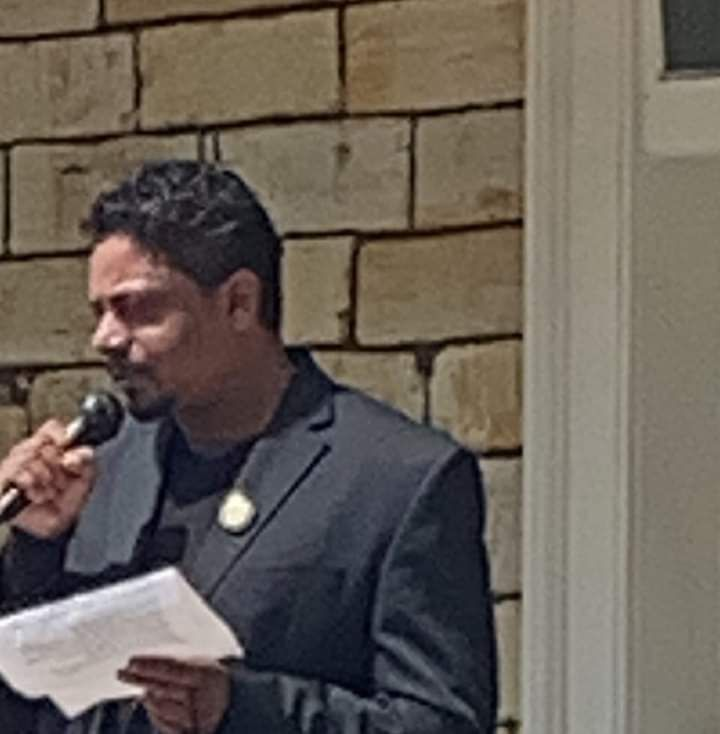
Instructor Name - Dr. Ajit Abraham
I am a lecturer faculty in HCOM/Social Sciences/Global Studies - GE to Upper Division/Capstone level courses, at California State University, Monterey Bay.
Please provide a link to your university page.
https://csumb.edu/directory/1253672642/
Please describe the courses you teach I teach SOC320, HCOM 170, HCOM 110, HCOM 202, HCOM 301, HCOM 312, GS 362, GS 206 as well as Capstone courses.
Describe your teaching philosophy and any research interests related to your discipline or teaching. My primary commitment as a teacher is to encourage students to make vital, applicable connections between their own cultural contexts and the world in which we live. This includes one’s identity and social location. I believe all learning, and therefore all teaching, is contextual and diverse. Students bring their own stories, identities, passions, behaviors, beliefs, and attitudes. Consequently, my responsibility as a teacher is to facilitate dialogue, translate complex theories, and motivate students to critically think and understand global and ethical issues, and to prepare them for their respective vocational and professional goals. I also strive to make all learning experiences inclusive and accessible/affordable.