Introduction to Graduate Studies in Psychology
Introduction to Graduate Studies in Psychology
Purpose: to help other instructors teaching the same course
Common Course ID: PSY 5020
CSU Instructor Open Textbook Adoption Portrait
Abstract: Open educational resources are being used in a Psychology course for undergraduate or graduate students by Yvette Szabo, PhD at California State University, Los Angeles. These resources include peer reviewed articles on the topics being discussed and relevant blog, LinkedIn posts and professional organization websites as professional development resources. The main motivation to adopt open educational resources was to reduce cost while maintaining access to critical foundational information. Most students access the resources online directly through Canvas.
PSY 5020: Intro to Graduate Studies in Psychology
Brief Description of course highlights: Provides an overview of the graduate program and the critical analysis of research. Analytical application of research design; program requirements, thesis preparation, and career planning are reviewed. Department of Psychology - California State University, Los Angeles - Modern Campus Catalog™
Student population: Students are first year graduate students in the MA in Psychology or MS in Forensic Psychology programs. The vast majority majored in Psychology in their undergraduate degrees with some minoring in Psychology.
Learning or student outcomes: ● Articulate a timeline and plan for the completion of the graduate program and thesis. ● Understand how to consume scientific research and discuss the strengths and limitations of the extant literature in your sub-field, as well as engage in ethical research practices. ● Articulate a plan of action for future professional development. ● Demonstrate effective oral and written communication skills on a variety of topics relating to research and career development
Textbook or OER/Low cost Title:
Brief Description: This course covers three modules – Orientation to the program, Research and Communication Skills, then Professional Development. The course materials include freely accessible online materials, peer-reviewed research, and professional resources.
Author and link information for resources: While some materials are not open educational resources (OER), all are available online at no cost to students and are used under fair use for educational purposes. Some sample sources and their copyright in [ ]:
Paolacci, G., & Chandler, J. (2014). Inside the Turk: Understanding Mechanical Turk as a participant pool. Current Directions in Psychological Science, 23(3), 184-188. https://doi.org/10.1177/0963721414531598 [fair use copyright]
Appleby, D. C., & Appleby, K. M. (2007). How to avoid the kisses of death in the graduate school application process. Eye on Psi Chi, 11(3), 20-21. [Freely accessible online article]
American Psychological Association. (n.d.). Education & Career. Retrieved October 16, 2025, from https://www.apa.org/education-career [Freely accessible website]
Indeed Editorial Team. (2025, June 9). How to convert a resume to a CV (with examples). Indeed. Retrieved October 16, 2025, from https://www.indeed.com/career-advice/resumes-cover-letters/converting-resume-to-cv [Freely accessible online article]
Student access: Students access the materials through course management system, including internal links to articles at the campus library.
Supplemental resources: Students also have access to faculty-only resources of lecture slides.
Provide the cost savings from that of a traditional textbook. $78.00
License: This course uses a combination of copyrighted materials (used under fair use) and freely accessible online resources.
OER/Low Cost Adoption Process
Provide an explanation or what motivated you to use this textbook or OER/Low Cost option. I chose to use freely accessible and fair-use materials to lower costs for students and to customize the educational content for each topic in the course.
How did you find and select the open textbook for this course? I used recommendations from other faculty and evaluated other resources from my own search for sources. I also consulted with the librarians about accessing some of the resources I found.
Sharing Best Practices: I wish I had known sooner that databases exist with open access textbooks through our campus library.
Describe any key challenges you experienced, how they were resolved and lessons learned. One challenge I experienced was some articles I found were not available to the students from the library.
Instructor Name - Yvette Z. Szabo, PhD
I am an assistant professor in the department of Psychology at Cal State LA. 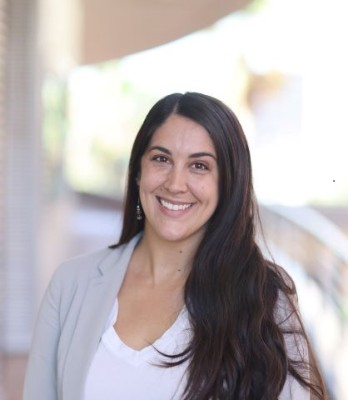
Please provide a link to your university page.
Yvette Z. Szabo, PhD | Cal State LA
Please describe the courses/course numbers that you teach. I teach Research Methods, Psychopathology and Introduction to Clinical and Counseling Psychology at the undergraduate level and Advanced Psychopathology at the graduate level.
Describe your teaching philosophy and any research interests related to your discipline or teaching. My approach to teaching varies based on the course (lecture vs. seminar), but across classrooms I want to ensure that students develop a sense of mastery over core topics, fine tune critical thinking skills and build knowledge that stays with them for years to come. My research examines factors that connect stress and trauma to poor health, with a focus on inflammation, emotion and cognition.