Public Speaking COMM 20
Public Speaking COMM 20
Purpose: to help other instructors teaching the same course
Common Course ID: COMM 20
CSU Instructor Open Textbook Adoption Portrait
Abstract: This open textbook is being utilized in a COMM 20 course for undergraduate students by Professor Anya Iyengar at San Jose State University. The open textbook addresses all the major concerns, issues, and material that an introductory, freshmen-level public speaking course involves. The book was written with students in the open-access college and specifically with diversity in mind. The main motivation to adopt an open textbook was for the purpose of equity, to enable students from all backgrounds to have open access to the same resource. Students can access the open textbook online via the link I have included in my syllabus.
Course Title and Number - Public Speaking COMM 20
Brief Description of course highlights: Principles of rhetoric applied to oral communication; selecting, analyzing, adapting, organizing, and delivering ideas effectively. COMM 20: Public Speaking
Student population: Prerequisites for the course are: Area 1C: Basic Skills, Oral Communication. COMM 20 is one of five options listed to satisfy the GE Oral Communication requirement for graduation from a CSU. It is generally considered an Introductory-level course, which is a bit less daunting for many. Therefore, the majority of students in all majors choose COMM 20 among the five possible Area 1C course options required to satisfy the Oral Communication GE requirement.
Learning or student outcomes: Identify and critically evaluate socially significant topics, then compose and deliver oral extemporaneous presentations on these topics:
- Engage in critical and analytical listening;
- Analyze audiences and adapt oral presentations to accomplish the purpose of a speech;
- Create a clear central message that demonstrates an understanding of socially significant issues; and
- Demonstrate the ethical responsibilities of a public speaker by addressing the economic, legal, and social aspects of topics; and by locating and evaluating sources and integrating research through appropriate citation.
Syllabus and/or Sample assignment from the course or the adoption: Weekly Quizzes are given on the Chapters. Below is an example of one of these quizzes:
You may use your text, Exploring Public Speaking, 4th edition by Barton & Tucker, to respond to the quiz questions below. There is a half-hour time limit within which you must answer the questions. You will receive 3 attempts to answer the questions correctly. Your highest score will be the one that gets recorded.
Exploring Public Speaking 4th edition Chapters 1 & 2 Links to an external site.
Textbook or OER/Low cost Title: Exploring Public Speaking: Edition 4.2
Brief Description: The text addresses all the major concerns, issues, and material that an introductory, freshmen-level public speaking course involves. Beginning with the value of public speaking to one's life and overcoming public speaking anxiety, the subsequent chapters cover listening and audience analysis; plagiarism and ethics; invention and thesis development; research; organization; introductions, conclusions, and transitions; supporting material; delivery; visual aids; language choices; informative speaking; persuasive speaking; logic and fallacies; and special occasion speeches.
The two principal reasons I chose this textbook are:
1. The introduction states the following: “The book was written with students in the open-access college and with diversity in mind.” These words spoke to me as an instructor in the diversity-rich Bay Area. I felt this was the ideal textbook for my students to use.
2. The fact that this text was free and available on multiple platforms, including Libre Text, for which I am currently writing a textbook as well was especially appealing.
Please provide a link to the resource
https://oer.galileo.usg.edu/communication-textbooks/1/
https://socialsci.libretexts.org/Bookshelves/Communication/Public_Speaking/Exploring_Public_Speaking_4e_(Barton_and_Tucker)
Authors: Tucker, Barbara, et al.
Student access: In my syllabus, I have included the link to the Galileo Open Learning Materials repository. The text and ancillary materials are downloadable from this site.
Supplemental resources: Lecture slides are available to be downloaded, as well, though I do not require them in my classes.
Provide the cost savings from that of a traditional textbook. My former textbook was Public Speaking: Concepts and Skills for a Diverse Society by Clella Jaffe. That text used to cost students between $53 and $77. I felt so guilty that I created Cliff Notes for the text and uploaded them to my Canvas shells. They were not as information-rich, but captured the essence of the text. This was not an ideal option, but I just didn’t want my students to have to pay the extra money for a textbook they would only use for a few months. So I was overjoyed when the possibility of implementing a zero-cost textbook became available. Now, my students are saving a good amount of money by not having to pay for the Barton & Tucker Text.
License: This work is licensed under a Creative Commons Attribution-Non Commercial-Share Alike 4.0 International License.
OER/Low Cost Adoption Process
Provide an explanation or what motivated you to use this textbook or OER/Low Cost option. My main motivation to use this textbook was equity. I have students who come to class late every day because they have to rely upon public transportation. Some of them do not have a laptop, as they can’t afford one. I guide them to the resources available on campus for free electronic materials. And in my class, I make them pay for nothing: my textbook is open to them online, I supply a presentation clicker, and even notecards for them to use during speeches. Students are paying enough for their tuition, which is increasingly difficult, especially for those from lower socioeconomic backgrounds. I don’t want to burden them any further with the responsibility of purchasing a textbook.
How did you find and select the open textbook for this course? I browsed OER sites and read the introductions for several textbooks. This one spoke to me the most because of the beautiful narrative in the introduction. Dr. Tucker details the struggle she went through to get the book published after the tragic passing of her co-author, Dr. Kristin Barton. This inspiring story, along with the mission to make their book equitable and applicable to diverse populations, spoke deeply to me. I knew this was the book I wanted my students to have.
Sharing Best Practices: It only takes one person to show you the ropes. For me, that person was Shagun Kaur, our OER Facilitator at De Anza College. Her passion is contagious, and I caught the bug. I hope to pass what I have to all of my colleagues at SJSU, and we can infect our entire campus. Knowledge is power, and it should be free. As educators, we have the innate desire to impart knowledge to our students as well as to our colleagues. That is why OER is such a fabulous initiative, as it addresses all of these touchstones of education, particularly in higher ed.
In terms of Best Practices, I suggest the following:
1. Take some time and browse different platforms such as:
- LibreText
- Galileo
- OpenStax
- Adapt
- Creative Commons and others
You will be floored by the treasure troves that have yet to be explored.
2. Reach out to an OER representative to get started. I recommend Delmar Larsen: delmar@libretexts.org. Professor Larsen is a chemistry professor at UC Davis. It upset him to assign $200 textbooks every quarter to his already cash-strapped students. He was thus inspired to start the zero/low cost textbook initiative. The man is a gem. He pretty much eats, sleeps and breathes OER!
Describe any key challenges you experienced, how they were resolved and lessons learned. I think that since OER is in its relative infancy, it is not very easily found by faculty. A lot of instructors simply don’t know how or where to locate these materials. Perhaps if:
- Representatives from different OER platforms visited our campus and conducted a training session for all faculty.
- Perhaps some type of incentive (besides the wonderful intrinsic benefits of saving our students money) for instructors to include OER textbooks in their syllabi, as opposed to defaulting to costly physical textbooks, which are constantly becoming outdated.
Instructor Name - Anya Iyengar
I am a Communication Studies professor at San Jose State University.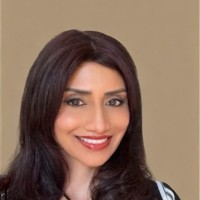 Please provide a link to your university page. Communication Studies Faculty
Please describe the courses that you teach. Public Speaking and Fundamentals of Oral Communication.
Describe your teaching philosophy and any research interests related to your discipline or teaching. My goals with the Public Speaking class are: To enable students to develop strategies for designing well-organized, researched, extemporaneous speeches on socially significant topics that they can seamlessly adapt to a diverse audience.
The Fundamentals of Oral Communication (at DeAnza College) is a survey course that combines Public Speaking, Small Group Communication, and Interpersonal Communication. My goals with this class are: To give students an introduction to the various contexts and methods of oral communication. I emphasize improving their speaking and listening skills in the multicultural contexts (which is ubiquitous in the Bay Area) of interpersonal, small group, and public communication. I also train them in research methodology.